Can Women Get Hair Restoration? Costs, Safety, and Top Clinics in China
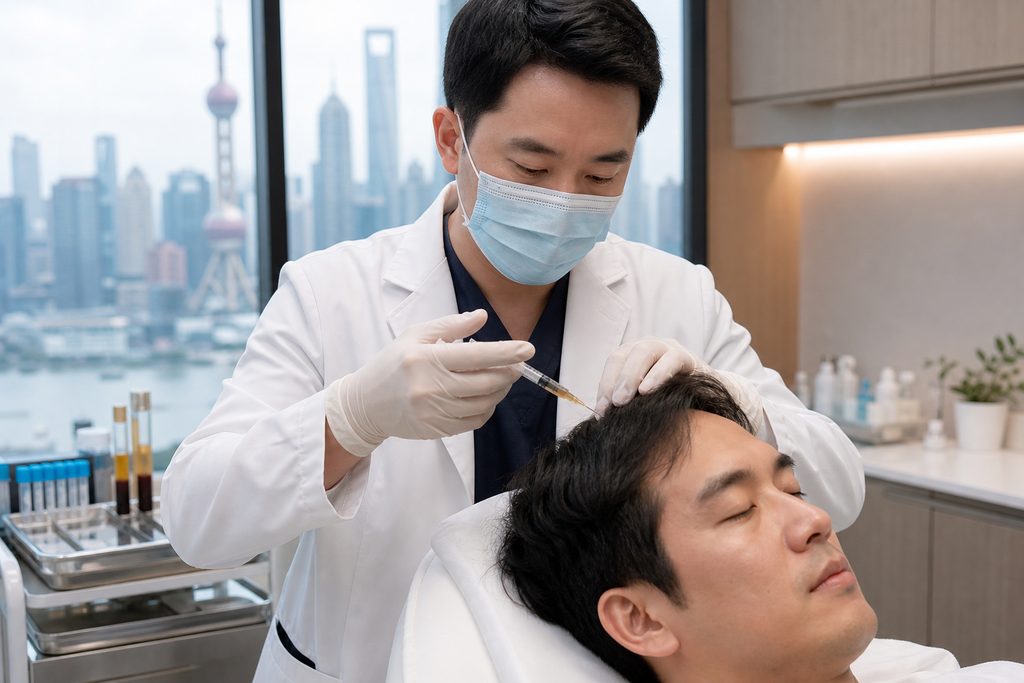
Can Women Get Hair Restoration? Understanding Female Hair Transplants and the Real Hair Transplant Cost China for Women
While a woman in Los Angeles might pay $15,000 for a 2,000-graft FUE procedure and wait four months for a consultation, a patient flying to Shanghai can receive the same graft count for roughly $4,000 to $6,000 — with a surgical slot available within three weeks. The hair transplant cost China for women is not just lower; the clinical infrastructure behind it is built on volume that most Western clinics never see.
Female hair loss affects approximately 30 million women in the United States alone, according to the American Academy of Dermatology. Androgenetic alopecia in women — female pattern hair loss — typically presents as diffuse thinning across the crown rather than the receding hairline men experience. That distinction matters enormously for surgical candidacy. Not every woman who searches “Can women get hair restoration?” is a good surgical candidate. But for those who are, China’s top hair restoration centers offer a combination of cost, surgeon experience, and scheduling speed that deserves serious evaluation.
Our team at China Medical Services has spent years helping international patients navigate exactly this decision. We are not a hospital. We do not perform surgery. What we do is connect you with the right clinical team, translate your records, and handle the logistics that would otherwise consume weeks of your time.
Key Takeaways
- Female hair transplants in China typically cost $2 to $4 per graft, bringing a 2,000-graft procedure to $4,000–$8,000 — roughly one-third of US pricing.
- Top Chinese hair restoration surgeons perform 300–500 FUE procedures annually, a volume that directly correlates with lower transection rates and better graft survival.
- Not all female hair loss is surgical. Diffuse unpatterned alopecia, active telogen effluvium, and certain autoimmune conditions require medical management first.
- Visa, language, and post-operative follow-up are real logistical hurdles. A bilingual companion service costs from $300 per day and removes most of the friction.
The Problem: Female Hair Loss Is Underdiagnosed, Undertreated, and Overpriced in the West
By age 50, approximately 40% of women show visible signs of hair loss. Yet fewer than half ever seek medical evaluation. The reasons are structural: dermatology wait times in the UK’s NHS routinely exceed 18 weeks for non-urgent referrals. In Canada, a hair loss specialist consultation can take six to nine months to secure. And in the United States, the average cost of a female hair transplant runs between $8 and $15 per graft — meaning a 2,500-graft session lands anywhere from $20,000 to $37,500.
That is the status quo. Women are told to try minoxidil, wait it out, or accept it. Meanwhile, the underlying cause — whether androgenetic alopecia, traction alopecia, or scarring alopecia — goes unclassified. Without a proper diagnosis, no treatment plan can work.
And here is the uncomfortable truth: many clinics in Western countries treat female hair restoration as a niche add-on. The surgeon might perform 40 female cases a year. The team may not have dedicated protocols for female donor harvesting, which requires different extraction patterns than male procedures because female donor areas are often thinner and more diffuse.
Why China Delivers Results for Female Hair Restoration
Clinical Volume Creates Surgical Precision
Hair restoration is a numbers game. A surgeon who performs 400 FUE procedures a year has encountered nearly every follicular challenge: curly donor hair, fragile grafts, scarred recipient zones, unusual hairline geometry. At major centers in Shanghai and Beijing, dedicated hair restoration teams routinely handle 15 to 25 surgical cases per week. That is more than many Western clinics complete in a month.
The practical effect? Lower transection rates — the percentage of follicles damaged during extraction. Published benchmarks suggest experienced surgeons keep transection below 5%, while less experienced operators may damage 10–15% of grafts. Volume is not a marketing slogan. It is a measurable quality indicator.
Female-Specific Protocols Are Standard, Not an Afterthought
Women’s hair restoration differs from men’s in three ways. First, the donor area — typically the occipital scalp — is evaluated more conservatively because female donor density can be 10–15% lower than male density. Second, the recipient zone for women usually covers the central parting line and crown, requiring denser packing in a smaller area. Third, women are more likely to have underlying conditions — iron deficiency, thyroid dysfunction, polycystic ovary syndrome — that must be stabilized before surgery.
Top Chinese hair centers run pre-operative panels that include ferritin, TSH, free testosterone, and DHEA-S as standard. If a patient’s labs show active telogen effluvium, the surgical team will delay the procedure. That discipline protects results. It also explains why is hair transplant safe for women in China is a question with a data-backed answer: when proper screening is done, complication rates for female FUE are under 2%, with the most common being temporary shock loss that resolves within three to six months.
The Structural Reason Costs Are Lower — Without Cutting Corners
Labor economics explain most of the price gap. A senior hair restoration surgeon in Shanghai earns a fraction of what a comparable US surgeon bills. Nursing staff, facility fees, and anesthesia costs are all lower. But the technology is identical: the same FUE punches, the same microscopes, the same implantation tools used in Beverly Hills or London.
So when you see a female hair restoration Shanghai price of $3,000 to $5,000 for a 1,500-graft session, you are not buying a discount procedure. You are buying the same technique at Chinese cost structure. The savings are structural, not a reflection of quality.
What the Procedure Actually Looks Like for a Woman: Step by Step
A female hair transplant in China typically spans two days at the clinic, plus a third day for a follow-up wash and check. Here is the concrete timeline.
Day 0 — Arrival and consultation. You meet the surgical team in person. They examine your donor area under magnification, review your blood work, and map the recipient zone. The surgeon marks the parting line and crown with a surgical pen. You sign consent forms. The clinic takes pre-operative photos from five angles.
Day 1 — Extraction and implantation. The procedure starts around 8:30 AM. Local anesthesia is administered to the donor area. The surgeon extracts grafts using a 0.8–1.0 mm punch, depending on your hair caliber. A team of technicians sorts grafts under microscopes — singles, doubles, and triples separated for natural placement. Implantation begins after extraction. For a 2,000-graft session, expect six to eight hours in the chair, with breaks for lunch and bathroom.
Day 2 — Bandage removal and first wash. You return to the clinic. The team removes the donor dressing, checks for any early complications, and teaches you how to wash the recipient area without dislodging grafts. You receive a post-operative kit: saline spray, antibiotic ointment, and a written protocol.
Day 10–14 — Scab removal. By this point, most patients have returned home. The clinic schedules a video follow-up to guide you through removing the remaining scabs. Grafts are secure by day 10, so the risk of dislodging them is minimal.
Month 3–4 — Shock loss and early regrowth. This is the hardest phase psychologically. Transplanted hairs often shed. Native hairs around the recipient zone may thin temporarily. The clinic’s post-op team should be reachable by WeChat or WhatsApp for questions. If they are not, that is a red flag.
Month 6–9 — Visible density. New growth typically becomes cosmetically meaningful around month six. By month nine, most patients see 60–70% of final density.
Month 12 — Final assessment. The full result is evaluated. If density is insufficient, a second session can be planned — often at a reduced per-graft rate.
How to Choose a Clinic Without Getting Burned: Decision Criteria That Matter
Expect $2 to $4 per graft at reputable Shanghai clinics. A typical female session ranges from 1,500 to 2,500 grafts, putting the total at $3,000 to $10,000. Unshaven FUE costs 20–30% more. Prices vary by surgeon seniority, clinic tier, and case complexity. Always get a written per-graft quote before booking.
Beijing pricing is comparable to Shanghai, typically $2.50 to $4.50 per graft. Beijing has several top-tier public hospital dermatology departments with dedicated hair restoration units. The main difference is availability — Shanghai clinics often have shorter surgical queues for international patients. Both cities offer equivalent technical quality.
You can arrange a remote video consultation first, which costs $100–$300. During that call, the surgeon reviews your photos and medical history and gives a preliminary graft estimate. But no reputable clinic will book surgery without an in-person consultation. The remote step narrows your options and prevents wasted travel. The final surgical plan is confirmed on site.
Graft survival rates for FUE are typically 85–95% when performed correctly. If density is insufficient at the 12-month mark, a touch-up session is the standard remedy. Many Chinese clinics offer reduced per-graft rates for touch-up procedures performed within 18 months. Document everything — pre-op photos, graft count, post-op timeline — in case you need to negotiate.
Your Next Step
Female hair restoration is a real, evidence-backed option for the right candidate. The hair transplant cost China for women — typically $4,000 to $8,000 for a full procedure — makes high-quality surgical care accessible to patients who would otherwise be priced out. But candidacy screening, surgeon selection, and post-operative follow-up determine whether that investment pays off.
We help you evaluate whether China is the right path for your specific case. China Medical Services is not a hospital and does not provide medical diagnoses. What we do is connect you with vetted hair restoration teams, coordinate your remote consultation, and handle the on-the-ground logistics if you decide to travel. If you want to explore whether a female hair restoration consultation in China makes sense for you, start with a conversation. No pressure, no obligation — just a clear-eyed assessment of your options.
Frequently Asked Questions
Yes. The hospitals used for international patients are JCI-accredited and follow the same international safety standards as top hospitals in the US and Europe. Surgical teams perform high volumes of procedures — often more than their Western counterparts — which studies show leads to better outcomes.
Costs vary by procedure and hospital, but international patients typically save 40-80% compared to US prices — even when factoring in travel and accommodation. A consultation with our team will give you an exact, all-inclusive quote with no hidden fees.
Send us your existing medical reports to get started. We handle everything from hospital selection and appointment scheduling to visa assistance and post-operative recovery planning. Your medical records are reviewed by the specialist before you even book a flight.
For more medical information and treatment options in China, visit chinamedservices.com (China Medical Services).
