Remote Second Opinion: Comparing Hospitals in China for Cost and Quality
Remote Second Opinion: Comparing Hospitals in China for Cost and Quality
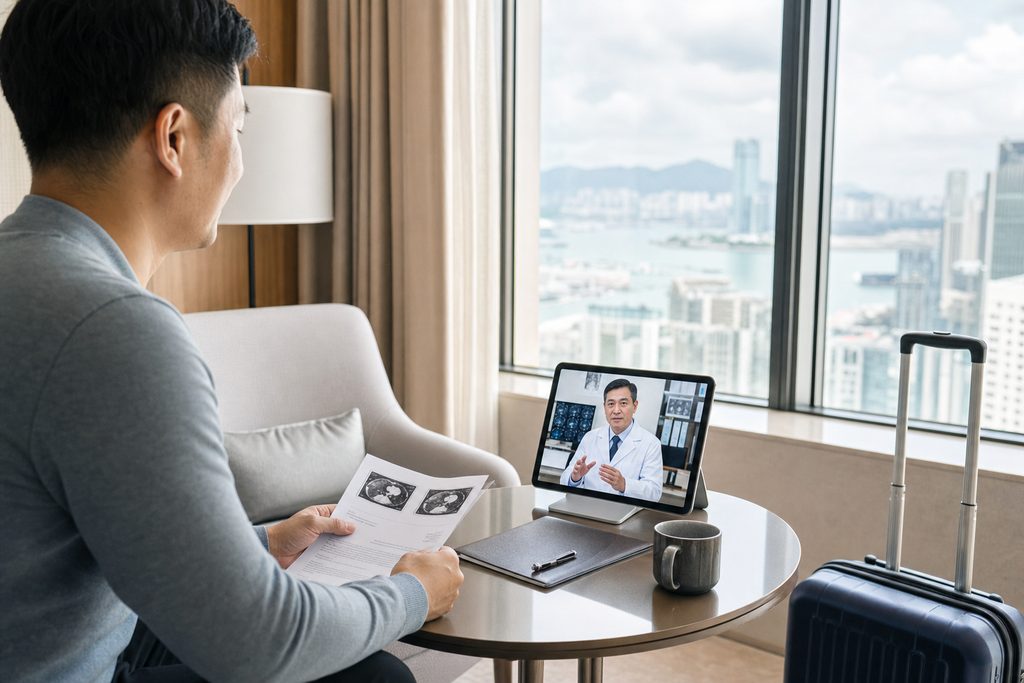
A remote second opinion means sending your existing medical records — scans, pathology reports, blood work, treatment history — to a specialist who has never met you. That specialist reviews everything, then writes a detailed analysis of your diagnosis and recommended next steps. No travel. No waiting room. Just a second set of expert eyes on a decision that might shape the rest of your life.
For many Western patients, the cost of second opinion from hospital in China is the first number they look up. And it is often a fraction of what they would pay at home. But cost alone tells you little. The real question is whether a remote review from a Chinese hospital is thorough, reliable, and actionable. That depends on which hospital you choose, how the process is structured, and what you send them.
Key Takeaways
- A written second opinion from a top Chinese hospital typically costs $300–500, while a video consultation with a senior specialist runs $500–800.
- China’s top-tier hospitals handle patient volumes that dwarf Western centers — Fuwai Hospital alone performs over 14,000 cardiac surgeries annually.
- Remote reviews are limited by the quality of records you submit; incomplete imaging or missing pathology slides reduce the value of any second opinion.
- You cannot book a public hospital outpatient appointment from overseas — remote second opinions are the practical first step before committing to travel.
The Problem: A Second Opinion at Home Can Cost Thousands and Take Months
In the United States, a second opinion from a specialist at a major academic center often costs between $800 and $2,500 out of pocket, depending on the specialty and whether new imaging or pathology review is required. If your insurance does not cover it, that is the entire bill. And the wait? A new patient appointment with a top oncologist or cardiothoracic surgeon can take four to eight weeks. Some patients wait longer. For aggressive cancers or rapidly progressing conditions, that delay is not a minor inconvenience. It is a clinical risk.
The same pattern holds across much of Western Europe and Canada. Public systems may charge less, but wait times stretch even further — in some Canadian provinces, median wait times for specialist consultations exceed 20 weeks. Patients with serious diagnoses do not have 20 weeks to spare. So they look elsewhere. Some fly to another city. Some pay for concierge services. Increasingly, some look to Asia.
Why China Delivers Results for Remote Second Opinions
China’s top hospitals operate at a scale that most Western institutions cannot match. A single large public hospital in Beijing or Shanghai may see 10,000 outpatient visits in one day. That volume is not just a statistic. It translates into specialists who see rare presentations regularly, not once a year at a conference.
Clinical Volume Drives Pattern Recognition
Take cardiac surgery. Fuwai Hospital in Beijing performs more than 14,000 cardiac surgeries annually — the highest volume of any heart center in the world. A surgeon there sees more complex valve cases in a month than many Western surgeons see in a year. The same applies to oncology. Major cancer centers in Shanghai and Guangzhou treat tens of thousands of new patients annually. When you request a remote second opinion from these institutions, you are tapping into that accumulated clinical exposure.
Volume matters for diagnostic accuracy. Studies have repeatedly shown that high-volume centers achieve better outcomes for complex procedures. The same logic applies to interpretation of imaging and pathology. A radiologist who reads 50 liver MRI scans a week is more likely to catch subtle findings than one who reads five.
Technology and Efficiency at Scale
Chinese hospitals adopted digital imaging and telemedicine infrastructure rapidly over the past decade. Most top-tier hospitals now operate fully integrated PACS systems, meaning your CT or MRI scans can be reviewed digitally by multiple specialists without physical film. That makes remote review practical. A specialist can pull up your DICOM files, zoom into a 2mm lung nodule, and compare it against reference cases — all from a workstation in Shanghai while you sit at home in London or Toronto.
Some hospitals have dedicated international departments that handle overseas inquiries. These teams coordinate with department heads, arrange translation of your records into Chinese for the reviewing physician, and schedule video consultations across time zones. The infrastructure exists. The bottleneck is knowing which hospital to contact and how to structure the request.
How Does Remote Second Opinion Work in China?
The process is straightforward but requires preparation. You submit your medical records — ideally in English, though translation services are available. A coordinator at the hospital’s international department reviews your file, identifies the appropriate specialty, and forwards everything to a senior physician. That physician produces a written report, usually within five to ten business days. If you opt for a video consultation, you speak directly with the specialist after they have reviewed your records.
What you get back is a document: a summary of the reviewing physician’s interpretation of your diagnosis, an assessment of your current treatment plan, and recommendations for next steps. It is not a prescription. It is not a treatment order. It is an expert opinion, meant to inform decisions you make with your local doctors.
Comparing Hospitals: What Separates a Strong Remote Second Opinion from a Weak One
Not all remote second opinion services are equal. The difference comes down to three things: the seniority of the reviewing physician, the depth of the written report, and the hospital’s experience with international patients.
A strong report names the reviewing specialist, states their department and years of experience, and addresses your specific case in detail — not generic paragraphs about the disease. A weak report reads like a textbook chapter. It summarizes the condition but never engages with your actual scans, your actual pathology, your actual treatment history.
Here is a comparison of what you can expect across different hospital tiers in China:
| Hospital Type | Written Second Opinion Cost | Video Consultation Cost | Typical Turnaround | Best For |
|---|---|---|---|---|
| Top-ranked public hospital (Fudan Top 100, international department) | $300–500 | $500–800 | 5–10 business days | Complex oncology, cardiac surgery, rare conditions |
| Private international hospital (JCI-accredited) | $200–400 | $100–300 | 3–7 business days | Straightforward cases, English-first communication |
| Specialized center (e.g., Fuwai for cardiac, cancer hospital for oncology) | $400–600 | $600–900 | 7–14 business days | Single-organ complex disease |
These figures are starting points. The final cost of second opinion from hospital in China varies by hospital, specialty, and case complexity. A multidisciplinary review involving three specialists will cost more — typically $1,500–2,000 — but may be worth it for cases where treatment decisions cross specialties.
Is a Remote Second Opinion from a Chinese Hospital Reliable?
The short answer: yes, with conditions. A second opinion from a senior specialist at a top Chinese hospital is as reliable as one from any major Western center — provided you submit complete, high-quality records. The physician can only analyze what you send. Missing a key pathology slide or sending low-resolution scans undermines the review.
There is another consideration. Chinese clinical guidelines sometimes differ from Western ones. A Chinese oncologist may recommend a treatment protocol that is standard in China but less common in the US or Europe. That is not a flaw. It is a different evidence base. The value of a remote second opinion from China often lies precisely in that difference — you gain access to perspectives shaped by a different clinical environment, different patient populations, and sometimes different drug availability.
You should treat the opinion as advisory. It does not override your local physician’s judgment. It adds information. For patients facing high-stakes decisions — whether to proceed with surgery, whether to switch chemotherapy regimens, whether a diagnosis is correct — that additional information can be decisive.
Booking a Remote Second Opinion: Beijing vs. Shanghai vs. Specialized Centers
Beijing and Shanghai dominate the landscape for international patients. Both cities host multiple Fudan Top 100 hospitals with established international departments. But the right choice depends on your condition.
For cardiac issues, Fuwai Hospital in Beijing is the obvious reference point. For oncology, you might look to Fudan University Shanghai Cancer Center or Peking University Cancer Hospital. For orthopedics, Jishuitan Hospital in Beijing and Shanghai Sixth People’s Hospital both carry strong reputations. The specialty rankings across 45 departments are a useful starting point for narrowing your search.
If you want to book remote second opinion with Beijing hospital, the process typically starts with an inquiry to the hospital’s international medical department. Some hospitals accept direct inquiries. Others route international patients through coordination services. Response times vary — private international hospitals usually reply within 24–48 hours, while top public hospitals may take a week or more.
Shanghai offers a slightly different profile. The best hospital for remote second opinion Shanghai depends on your specialty, but Zhongshan Hospital (Fudan University) and Ruijin Hospital both maintain active international programs. Shanghai’s private international hospitals — Jiahui, Parkway — offer faster turnaround and fully English-native workflows, at a modest premium.
Practical tip: Before contacting any hospital, organize your records into a single PDF bundle: referral letter, imaging reports, pathology reports, current medication list, and a one-page summary of your case written in plain language. Incomplete submissions are the most common reason for delayed or superficial second opinions.
Practical Considerations: Records, Payment, and Follow-Up
The logistics of a remote second opinion from China are manageable, but they require attention. Here is what actually matters.
Medical records. Hospitals need your imaging in DICOM format — not JPEG screenshots. Request the original files from your imaging center. Pathology slides may need to be digitized or shipped if a pathology review is required. Most remote second opinions are based on written reports and imaging; full slide review is a separate, more expensive service.
Payment. Public hospitals in China typically require prepayment via bank transfer or, increasingly, international credit card through their international departments. Private international hospitals accept major credit cards and sometimes direct insurance billing. Expect to pay before the review begins. Reimbursement from your home insurance is possible but not guaranteed — check with your insurer first.
Language. Top public hospitals with international departments provide English-language coordination and translation of your records into Chinese for the reviewing physician. The written report you receive will be in English. Private international hospitals operate primarily in English throughout. If you work with a coordination service, bilingual staff handle the interface.
Follow-up. After you receive the written opinion, you may have questions. Many hospitals allow one round of clarifying questions via email within a set window — often 30 days. Video consultations typically include the opportunity to ask questions live. After that, further engagement usually requires a new consultation.
Frequently Asked Questions
Most written second opinions are delivered within five to ten business days after the hospital confirms receipt of complete records. Private international hospitals are often faster — three to seven days. Complex cases requiring multidisciplinary review may take two to three weeks.
Some international insurance plans cover second opinions regardless of where the reviewing physician is located. Others restrict coverage to in-network providers. You need to check with your insurer before committing. The hospital will provide an invoice and report, but reimbursement is between you and your insurer.
Disagreement is not a problem — it is information. You take both opinions back to your local physician and discuss the differences. Sometimes the Chinese perspective confirms your current plan. Sometimes it raises questions worth exploring further. You are never obligated to act on the second opinion.
Yes. The remote review is often the first step. If the Chinese specialist identifies a treatment approach you want to pursue in China, the written opinion and your records form the basis for further coordination. Some patients start with a remote review and later travel for an in-person consultation or procedure.
Your Next Step
A remote second opinion from a top Chinese hospital is a low-cost, low-commitment way to pressure-test a serious diagnosis. It gives you a second set of expert eyes without getting on a plane. At China Medical Services, we help international patients navigate this process — from selecting the right hospital to preparing records and coordinating with international departments. We are not a hospital and we do not provide medical advice; we connect you with physicians who do. When you are ready to explore the option, a conversation costs nothing.
For more medical information and treatment options in China, visit chinamedservices.com (China Medical Services).
