Acid Reflux Surgery Cost in China: Real Prices and Top Hospitals
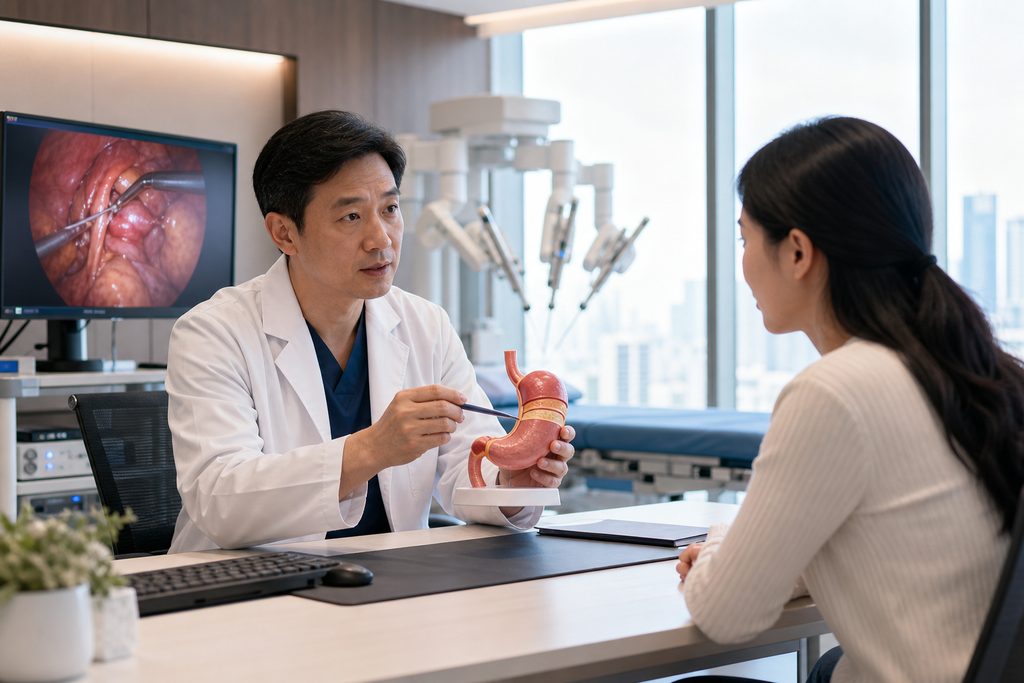
Acid Reflux Surgery Cost in China: What International Patients Actually Pay
You’ve probably heard that going abroad for surgery means cutting corners. In China, the opposite is often true. The acid reflux surgery cost China hospitals charge — typically $6,000 to $15,000 for a laparoscopic Nissen fundoplication — buys you an operating room at a hospital that performs more of these procedures in a month than many Western centers do in a year. That same operation in the United States runs $30,000 to $80,000 before insurance.
The gap is real. But price alone shouldn’t decide where you have surgery. What matters is whether the hospital is right for your case, whether the surgeon has genuine volume in anti-reflux procedures, and whether you understand the full journey — records, visa, consultation, recovery — before you book a flight. This guide walks through all of it.
How This Actually Works, Step by Step
Nothing about arranging surgery in China happens in one phone call. The process is staged, and each stage exists to protect you from committing too early.
Step 1 — You send your records. We ask for your existing examination reports: endoscopy results, 24-hour pH monitoring, esophageal manometry, barium swallow imaging, medication history, and any prior surgical notes. These get translated into Chinese by medical translators, not general linguists.
Step 2 — A Chinese specialty team reviews them. Depending on your case, this goes to a thoracic surgery, general surgery, or gastroenterology department at a top-tier hospital. They assess whether surgery is even indicated — and roughly 30% of the time, the answer is that it isn’t yet.
Step 3 — You receive a written second opinion. This comes back in English with the department’s analysis, treatment suggestions, and a direction. It is for reference only, not a prescription.
Step 4 — Optional video consultation. If you want to speak directly with the specialty team, we arrange a live session so you can describe symptoms and goals and hear their recommendations.
Step 5 — Planning and arrival. Once a feasible plan is agreed, we coordinate hospital communication, appointment scheduling, and arrival logistics. Admission and treatment decisions always remain with the hospital.
What Drives the Price of Anti-Reflux Surgery in China
Four variables move the number more than anything else.
Hospital tier and channel. A standard public tertiary hospital charges less than its international or VIP department. The VIP route typically costs 1.5 to 2 times the standard channel — you’re paying for English-speaking staff, shorter waits, and a more navigable experience. For patients who don’t speak Mandarin, that premium is often worth it.
Procedure type. A laparoscopic Nissen fundoplication is the most common. Partial fundoplications (Toupet, Dor) and magnetic sphincter augmentation cost differently. Revision surgery after a failed prior operation costs more again.
City. Beijing and Shanghai sit at the top of the range. Chengdu, Wuhan, and Nanjing can be meaningfully lower for equivalent surgical quality.
Length of stay. Most uncomplicated laparoscopic cases involve 3 to 5 days in hospital. Complications, or a need for pre-operative testing, extend that.
| Cost Component | Typical Range (USD) | Notes |
|---|---|---|
| Laparoscopic Nissen fundoplication (public tertiary) | $6,000 – $10,000 | Standard channel, shared ward |
| Same procedure via international/VIP department | $10,000 – $15,000 | English service, private room |
| Pre-operative workup | $800 – $2,000 | Endoscopy, pH study, manometry |
| Hospital stay beyond 5 days | $300 – $600 per day | Varies by ward class |
| Written second opinion | $300 – $500 | Top-hospital specialist review |
| Video consultation | $100 – $300 | Standard international department |
| Bilingual medical companion | from $300 per day | Registration, queues, translation |
For comparison: the same operation in the US averages $30,000 to $80,000, and in the UK private sector £8,000 to £15,000. Chinese pricing lands at roughly one-fifth to one-tenth of American figures for equivalent laparoscopic technique.
Every number above is a range. Final quotes depend on hospital and case complexity, and no responsible coordinator will give you a firm figure before your records have been reviewed.
Which Hospitals Handle the Most Complex GERD Cases
China has over 35,000 hospitals. Our database covers 340+ top-ranked institutions across 37 cities — the top 5% by Fudan University rankings and JCI accreditation.
For anti-reflux and esophageal surgery, the strongest concentrations sit in Beijing, Shanghai, and Guangzhou. Beijing alone hosts 21 Fudan Top 100 hospitals; Shanghai has 18. Departments with high-volume thoracic and upper gastrointestinal surgery are where you want your case reviewed — not simply the most famous hospital name.
The specialty rankings by department let you see which hospitals place in China’s top 10 for thoracic surgery, gastroenterology, and general surgery. That’s a better filter than brand recognition. A hospital ranked A++++ overall may still not be the right fit if its anti-reflux volume is modest.
Private international hospitals are a separate category. Facilities like United Family, Jiahui, Parkway, and Raffles offer English-speaking staff, JCI accreditation, direct insurance billing, and Western-style care. They cost more. For straightforward laparoscopic cases in patients who prioritize comfort and language over raw surgical volume, they’re a legitimate option.
A Realistic Timeline
Patients routinely underestimate this. The surgery itself takes two hours. Everything around it takes weeks.
| Stage | Typical Duration | What Slows It Down |
|---|---|---|
| Records gathering and translation | 3 – 7 days | Incomplete endoscopy or pH reports |
| Specialist review and written opinion | 5 – 10 days | Department workload; need for extra imaging |
| Video consultation scheduling | 3 – 7 days | Time zone coordination |
| S2 visa application | 1 – 3 weeks | Embassy processing; invitation documents |
| Appointment and admission coordination | 1 – 2 weeks | Surgeon availability; pre-op testing slots |
| Arrival, in-person consultation, surgery | 5 – 8 days | In-person exam is required before scheduling |
| Recovery before flying home | 2 – 3 weeks | Surgeon clearance; diet progression |
Realistic total: six to ten weeks from first contact to flying home. Anyone promising surgery within ten days of your first email is skipping steps that exist for your safety.
What Can Go Wrong — and What Happens Then
Honest failure modes matter more than success stories.
Surgery turns out not to be indicated. This happens. If your pH study shows only mild reflux, or your motility testing reveals a disorder that makes fundoplication risky, the department will say so. You’ve spent a few hundred dollars on a second opinion instead of thousands on an operation you didn’t need. That’s a good outcome.
The visa is delayed. S2 applications require supporting hospital documents, and consulates vary in processing speed. If your visa doesn’t arrive in time, we reschedule. Nothing is lost except calendar time.
You can’t get the appointment you wanted. We don’t guarantee a specific surgeon or a specific date — no one honestly can. If we cannot secure the appointment shown in your order, the coordination fee is refunded in full.
Complications occur. Any abdominal operation carries risks: bleeding, infection, difficulty swallowing, gas-bloat syndrome. Chinese tertiary hospitals handle these routinely, but you should discuss complication rates with your surgeon directly and understand your follow-up plan before you fly home.
Language breaks down at a critical moment. This is the most common practical failure, and the most preventable. A bilingual medical companion stays with you through registration, payment, pre-operative instructions, and discharge — the moments where misunderstanding carries real cost.
How to Judge Whether a Provider Is Right for You
Ask three questions of anyone coordinating your care, in China or anywhere else.
Do they review your records before quoting? A coordinator who names a price before seeing your endoscopy report is guessing.
Do they describe their role as case management or as access? Ours is case management: medical record translation, appointment coordination through the hospital’s official international or special-needs channel, and bilingual accompaniment. We are not selling a queue-jumping pass, and we don’t pretend otherwise.
Do they tell you what they can’t do? We cannot promise admission, cannot promise a clinical outcome, and cannot promise a named surgeon. Anyone who does is selling something they don’t control.
Practical Considerations: Records, Visa, Payment, Follow-Up
At a Shanghai public tertiary hospital, expect roughly $7,000 to $11,000 through the standard channel, or $11,000 to $15,000 via an international department. Shanghai’s cost of living and hospital pricing both run higher than cities like Chengdu or Wuhan.
You can begin the process — records review, written opinion, video consultation, and appointment coordination. What you cannot do is lock in a surgical date from overseas. Public hospitals require an in-person outpatient consultation before scheduling any operation.
No single package covers hospital charges, and you should be skeptical of anyone claiming otherwise. Our coordination services cover records translation, appointment arrangement, and bilingual accompaniment. Hospital fees, flights, accommodation, and visa costs are separate and quoted transparently.
Then you’ve saved yourself an unnecessary operation. The department will explain why and often suggest alternatives — medication optimization, lifestyle modification, or further testing. That written opinion is still yours to share with your doctor at home.
Your Next Step
The core message is simple: acid reflux surgery in China costs a fraction of Western prices, and the quality at top-tier hospitals is genuinely competitive — but only if your case is properly evaluated before you commit to anything. Our team at China Medical Services connects international patients with 340+ top-ranked hospitals across 37 cities. We are not doctors, and we don’t diagnose or promise outcomes. We translate records, coordinate appointments through official hospital channels, and accompany you in person so nothing gets lost in translation. If you’d like a written opinion on your case, start with a free consultation — no pressure, and no obligation to travel.
This article is for general information only and does not constitute medical advice. Treatment decisions should always be made with a qualified physician who has reviewed your individual case.
Frequently Asked Questions
Yes. The hospitals used for international patients are JCI-accredited and follow the same international safety standards as top hospitals in the US and Europe. Surgical teams perform high volumes of procedures — often more than their Western counterparts — which studies show leads to better outcomes.
Costs vary by procedure and hospital, but international patients typically save 40-80% compared to US prices — even when factoring in travel and accommodation. A consultation with our team will give you an exact, all-inclusive quote with no hidden fees.
Send us your existing medical reports to get started. We handle everything from hospital selection and appointment scheduling to visa assistance and post-operative recovery planning. Your medical records are reviewed by the specialist before you even book a flight.
For more medical information and treatment options in China, visit chinamedservices.com (China Medical Services).
