Healthcare in Tianjin for Foreigners: Hospitals, Costs & English Care
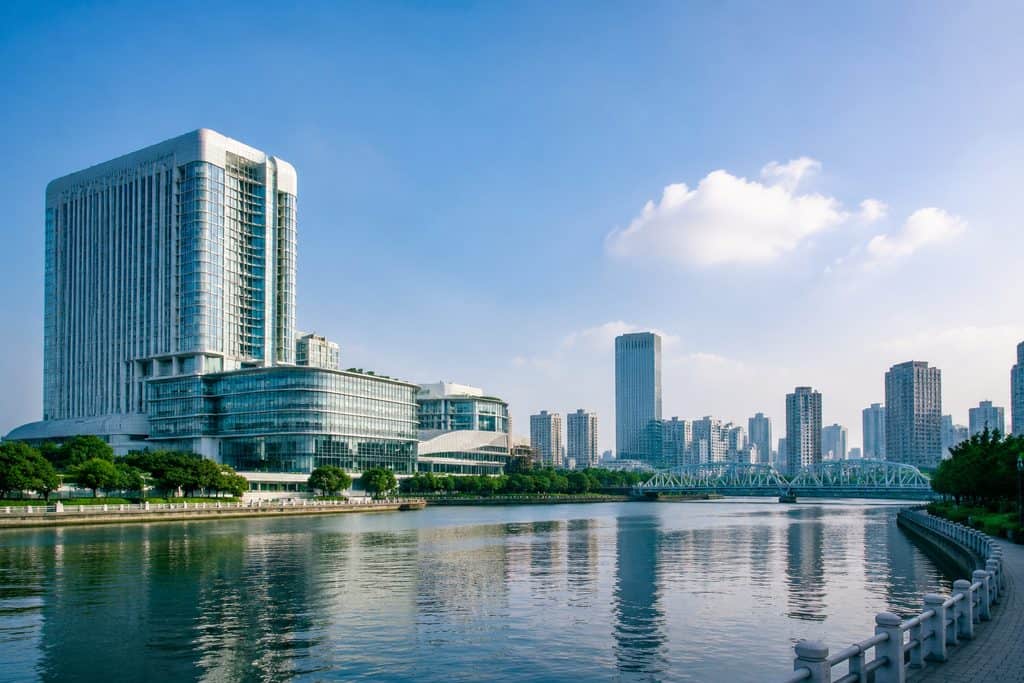
What if you could access world-class medical care in a city of 13 million people — without speaking a word of Mandarin? Tianjin sits 30 minutes from Beijing by high-speed rail, yet most international patients have never heard of its hospitals. That gap is exactly why we wrote this.
The short answer: yes, Tianjin has genuine international hospitals and English-speaking departments at major public hospitals. But the system works differently than anything you’ve experienced in London, Toronto, or Houston. Understanding those differences before you book a flight is the difference between a smooth treatment journey and a frustrating one.
International Hospitals in Tianjin: The Short Answer
Tianjin offers three tiers of care for foreign patients. Private international hospitals with English-speaking staff and direct insurance billing. Public tertiary hospitals (known as “Sanjia” or 3A hospitals) with dedicated international or VIP departments. And Traditional Chinese Medicine facilities for chronic conditions and rehabilitation.
The city is not Beijing or Shanghai in terms of sheer volume of international medical infrastructure. But it has real depth in specific specialties — oncology, cardiac surgery, orthopedics, and reproductive medicine among them. And because it draws fewer medical travelers than its neighbor to the northwest, wait times for international department appointments are often shorter.
One important reality check. At ordinary public hospital outpatient clinics, you cannot pre-book from overseas. Registration happens on the day, in person, in a queue. Surgery requires an in-person consultation first. That rule is universal across Chinese public hospitals. If you want to lock in a specialist appointment before you travel, you go through the hospital’s international or VIP channel — and that costs roughly 1.5 to 2 times the standard fee.
Who This Is Right For — and Who It Isn’t
Tianjin makes sense for a specific set of patients. It’s less ideal for others.
Good candidates:
- Patients seeking a second opinion or specialist consultation who want to combine it with a Beijing trip (the cities are 30 minutes apart by rail)
- Those needing cardiac, orthopedic, or oncology procedures where Chinese top-tier hospitals have strong track records
- Patients from Northeast Asia, Russia, and Southeast Asia for whom Tianjin is geographically convenient
- Anyone pursuing TCM treatment for chronic pain, recovery, or conditions where Western medicine has plateaued
- Cost-conscious patients comparing quotes — Chinese surgical fees often run one-fifth to one-tenth of US prices for equivalent procedures
Who should think twice:
- Patients with rare diseases requiring highly specialized multidisciplinary teams — Beijing and Shanghai concentrate more of those
- Anyone expecting a Western-style hospital experience at a public facility. Public hospitals here are enormous, busy, and not designed around patient comfort
- Patients who cannot travel or who need urgent care. This is not an emergency system for foreigners
- Those unwilling to work through a coordinator or companion. Without Mandarin, navigating a public hospital alone is genuinely difficult
The Options, Compared
Here’s how the three care pathways stack up on the factors that matter most to foreign patients.
| Factor | Private International Hospital | Public Hospital International Dept. | Public Hospital Standard |
|---|---|---|---|
| English service | Full English staff | English coordinators available | Limited to none |
| Advance booking from abroad | Yes | Yes | No — same-day registration |
| Relative cost | Highest (2-4x standard) | 1.5-2x standard | Baseline |
| Insurance billing | Direct billing common | Pay first, claim later | Pay first, claim later |
| Specialist seniority | Varies | Senior experts | Senior experts |
| Wait time | Short | Short to moderate | Can be long |
Which column fits you? If budget is secondary and comfort plus language matter most, the private route wins. If you need a specific senior specialist and can pay a premium, the public international department is the sweet spot. And if you’re already in China, have a Mandarin-speaking companion, and want the lowest cost, standard public care works — with patience.
Tianjin Hospital English Speaking Doctors: What to Realistically Expect
This is where expectations need calibrating. “English-speaking” in a Chinese hospital context doesn’t always mean fluent conversation. It often means a doctor who can read English medical literature, or a department with one staff member who handles foreign patients.
Private international hospitals are the reliable option here. They staff English-speaking physicians as a baseline requirement, not a bonus. Public hospital international departments typically assign an English-speaking coordinator who accompanies you through registration, consultation, and payment — the doctor may or may not speak English directly, and the coordinator translates.
For complex cases, this is where a professional bilingual medical companion earns their fee. They handle registration, queueing, payment, wayfinding, and real-time translation. Our team arranges this through our patient consultation and support service, and it’s the single most common request we get from Tianjin-bound patients.
If your condition involves nuanced discussion — cancer staging, surgical options, medication adjustments — do not assume you can manage without interpretation. You can’t. And a miscommunication in a medical setting isn’t a minor inconvenience.
How Much Does Medical Treatment Cost in Tianjin China?
Cost is the question everyone asks first. Here are realistic ranges for common procedures at Tianjin’s top-tier hospitals. These are illustrative figures — actual quotes vary by hospital, case complexity, and whether you use the international channel.
| Procedure | Typical Range in Tianjin (USD) | US Comparison (USD) |
|---|---|---|
| Coronary artery bypass graft | $12,000 – $20,000 | $120,000+ |
| Knee replacement | $8,000 – $15,000 | $35,000 – $70,000 |
| Cataract surgery (per eye) | $1,500 – $3,500 | $3,500 – $7,000 |
| Comprehensive health checkup | $300 – $1,500 | $1,000 – $5,000 |
| Specialist consultation | $50 – $300 | $300 – $600 |
These figures cover hospital and physician fees. They don’t include flights, accommodation, visa costs, or companion services. Add those to your budget. A two-week treatment trip with a companion can easily add $3,000 to $6,000 in logistics.
One more thing worth knowing. Chinese public hospitals require prepayment. You pay upfront, then file insurance claims afterward. Private international hospitals increasingly offer direct billing with international insurers — confirm this before you commit.
Is Healthcare in China Safe for Foreigners?
This question deserves a straight answer. China’s top-tier hospitals perform enormous surgical volumes — some cardiac centers handle more than 14,000 heart operations annually. Volume correlates with experience, and experience correlates with outcomes in high-complexity procedures.
The safety concerns that matter aren’t about surgical competence. They’re about systems. Blood transfusion protocols, drug traceability, infection control standards, and informed consent practices vary between hospital tiers. Top-tier public hospitals and JCI-accredited private facilities meet international standards. Smaller regional hospitals may not.
Our guidance: stick to hospitals ranked in the Fudan Top 100 or holding JCI accreditation. You can browse these by city and specialty through our directory of top-ranked Chinese hospitals. That single filter eliminates most of the risk.
Language is the other safety factor. If you can’t communicate symptoms, medication reactions, or post-operative concerns, you’re exposed to preventable errors. This isn’t unique to China — it applies to any healthcare system where you don’t speak the language.
Book Medical Appointment Tianjin International Clinic: How It Actually Works
The booking process differs by facility type. Here’s the sequence.
For private international hospitals, you can typically email or submit an online request with your medical records. They’ll respond with available appointment slots and a cost estimate. This usually takes a few business days.
For public hospital international departments, the process is similar but may require a written second opinion first. You send your examination reports, the relevant specialty reviews them, and you receive written analysis plus treatment direction. That step costs from $300 to $500 depending on the hospital and specialty — and it’s genuinely useful, because it tells you whether traveling to Tianjin is worthwhile before you book flights.
Video consultations are another option. A remote session with a Chinese specialty team runs $100 to $300 for a standard international department, or $500 to $800 for a top specialist. Multidisciplinary team reviews, where several specialists weigh in together, run $1,500 to $2,000.
For Tianjin medical tourism packages for foreigners, be cautious of anything promising a fixed price for a surgical procedure before a doctor has seen your records. Real quotes require real clinical information.
Practical Considerations: Visas, Records, and Payment
Visa. Foreign patients coming to China for medical treatment use the S2 visa, with a notation for medical purposes. Stays exceeding 180 days require the S1 category. Accompanying family members apply for S2 as well. The M visa is strictly for commercial and trade activities — it is not a medical visa, and using it for treatment is a mistake. Requirements shift, so confirm current rules with the nearest Chinese embassy or consulate and bring supporting documents from the hospital.
Medical records. Bring everything. Imaging on disc, pathology reports, lab results, medication lists, and a summary letter from your current physician. Have them translated into Chinese if possible — it speeds up every step.
Payment. Public hospitals take prepayment via bank transfer or card. Private international hospitals accept international cards and often bill insurers directly. Carry a backup payment method; foreign card acceptance varies.
Follow-up after returning home. Arrange this before you leave. Ask for discharge summaries, operative notes, and imaging in a format your home physician can read. Getting records after you’ve left China is slower and harder.
Accommodation. Stay near your hospital. Tianjin’s traffic is real, and post-operative travel should be minimal.
Frequently Asked Questions
Can I see an English-speaking doctor in Tianjin without a local contact?
At private international hospitals, yes — English service is standard, and you can book directly. At public hospitals, expect to work through an international department coordinator. For anything beyond a simple consultation, having a bilingual companion makes the process dramatically smoother.
How much should I budget for medical treatment in Tianjin, all-in?
Beyond the procedure itself, budget $150 to $400 per night for international-standard accommodation, $200 for round-trip airport transfers, and from $300 per day for a bilingual medical companion. Add visa fees and flights. A realistic all-in figure for a surgical trip runs 20 to 40 percent above the quoted hospital cost.
What happens if something goes wrong during treatment?
Top-tier Chinese hospitals have established protocols for complications, and international departments are experienced with foreign patients. But your legal recourse differs from your home country, and malpractice frameworks are not equivalent. This is a genuine consideration, not a footnote. Travel insurance with medical evacuation coverage is not optional — it’s essential.
Do I need a visa specifically for medical treatment?
You need the S2 visa with a medical notation for short stays, or S1 for stays over 180 days. Supporting documents from the treating hospital strengthen the application. Approval is never guaranteed, and requirements vary by consulate.
Your Next Step
Tianjin isn’t the first city most international patients consider. That’s partly why it works — solid specialty depth, shorter queues, and proximity to Beijing without Beijing’s congestion. The system has real friction points, and knowing them in advance is what separates a manageable trip from a stressful one.
We’re China Medical Services, a coordination platform connecting international patients with 340+ top-ranked hospitals across 37 Chinese cities. We are not a hospital and we don’t provide diagnoses. What we do is help you understand your options, coordinate appointments through official hospital channels, and provide bilingual support on the ground. Start with a free consultation through our patient services page — no pressure, no obligation, just a conversation about whether Tianjin is right for your situation.
This article is for informational purposes only and does not constitute medical advice. Treatment decisions should always be made in consultation with qualified healthcare professionals. Costs and visa requirements are subject to change.
For more medical information and treatment options in China, visit chinamedservices.com (China Medical Services).
