How Foreigners Access Dialysis in China: Costs, Hospitals, and Step-by-Step Coordination
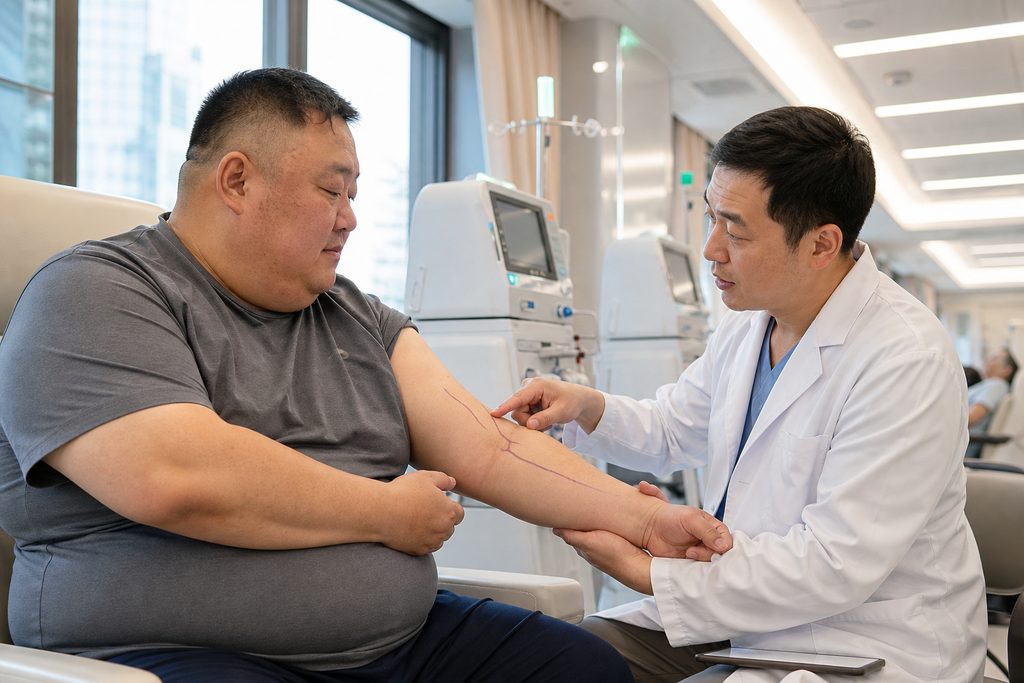
How Foreigners Access Dialysis in China: Costs, Hospitals, and Step-by-Step Coordination
You have probably been told that arranging medical care abroad is a bureaucratic nightmare — months of faxes, unanswered emails, and a vague sense that nobody will actually be waiting for you when you land. For dialysis, the fear is sharper. Miss two sessions and the consequences are medical, not administrative. So here is the reality: China treats a very large number of dialysis patients every year, and the dialysis cost China for foreigners pays is typically a fraction of what the same treatment costs in the United States or Western Europe. The hard part is not the medicine. The hard part is access — knowing which hospital will accept an international patient, what paperwork they need, and how to lock in a schedule before you book a flight.
That is the gap our team works in every day. We are not nephrologists, and nothing here is individual medical advice. We are the coordination layer between you and the hospital’s international department. What follows is how the process genuinely works, what it costs, and where it breaks down.
How This Actually Works, Step by Step
The sequence is more predictable than most people expect. It just is not instant, and it does not start with a plane ticket.
Step one: you send records, not requests. A Chinese hospital’s international office cannot schedule dialysis for someone they know nothing about. What they need is a recent nephrology summary, your dialysis prescription (dialyzer type, blood flow rate, session duration), your most recent labs — creatinine, potassium, hemoglobin, PTH — your vascular access type and its condition, and your hepatitis B, hepatitis C, HIV and syphilis serology. That last set is non-negotiable. Chinese dialysis units separate patients by infection status, and a missing serology report stalls everything.
Step two: the nephrology department reviews. A physician on the receiving team reviews the file and confirms whether the case fits their unit. Some hospitals accept stable maintenance hemodialysis patients readily. Complex cases — recent ICU admissions, active infections, unstable cardiac status — may be declined or redirected to a higher-acuity facility. This review usually takes a few business days, longer if translation is needed.
Step three: you receive a written plan and a quote. The hospital tells you which unit, how many sessions per week they can hold for you, and the per-session charge. You confirm.
Step four: a slot is reserved. This is where the international department or VIP channel matters. Standard outpatient registration in a Chinese public hospital is a same-day queue system — you cannot reserve a recurring treatment slot from overseas through the ordinary window. The international department can.
Step five: you arrive, register, and start. Bring your passport, your visa, the original records, and a payment method. First session usually includes a brief in-person assessment before the needles go in.
What Dialysis Costs in China for International Patients
Here is the number people search for, and here is the honest version. A single hemodialysis session at a top-tier Chinese public hospital, billed through the international or VIP channel, generally runs in the range of $150 to $400. Ordinary domestic rates are far lower, but those are subsidized resident prices and are not what a foreign patient on a self-pay basis is charged. Private international hospitals sit higher, commonly $400 to $800 per session, and include English-speaking nursing staff, private rooms, and often direct insurance billing.
Compare that to the United States, where a single outpatient hemodialysis session is frequently billed at $500 to $1,000 or more before insurance, and to parts of Western Europe where non-resident self-pay rates are similar or higher. Over a month of three-times-weekly treatment — twelve to thirteen sessions — the difference compounds fast.
| Setting | Typical cost per session (USD) | Language support | Insurance billing |
|---|---|---|---|
| Top public hospital, international/VIP channel | $150 – $400 | English coordinator, varies by hospital | Pay upfront, claim reimbursement at home |
| Private international hospital | $400 – $800 | English-speaking clinical staff | Direct billing with many insurers |
| United States (outpatient, self-pay equivalent) | $500 – $1,000+ | Native English | Insurance-dependent |
These are ranges, not quotes. Final pricing varies by hospital and case complexity — session length, dialyzer reuse policy, whether erythropoietin and iron are included, and whether you need additional monitoring. Always confirm the written quote before committing. For a broader picture of how Chinese hospital pricing compares across specialties, our overview of top-ranked hospitals in China is a useful starting point.
Which Hospitals Accept International Dialysis Patients
Not every hospital with a dialysis unit accepts foreign patients. The ones that do tend to fall into two groups.
Large public hospitals with active international departments. Beijing and Shanghai have the deepest concentration. In Beijing, expect the major teaching hospitals affiliated with Peking Union Medical College and the large general hospitals in the Chaoyang and Dongcheng districts to have international patient offices. Shanghai’s cluster around Fudan University-affiliated hospitals and the major municipal general hospitals is similarly well developed. Guangzhou, Chengdu, Hangzhou, and Shenzhen all have capable units with varying degrees of English support.
Private international hospitals. Facilities such as United Family, Jiahui, Parkway, and Raffles operate with English-speaking staff, JCI accreditation in several cases, and direct insurance billing. They are the easier landing for a short stay, and the more expensive one.
For a city-by-city view, our pages on Beijing hospitals for international patients and Shanghai medical services break down which facilities serve foreign patients and what each is known for. If your travel plans are flexible, matching the city to the hospital is usually easier than matching the hospital to the city.
A Realistic Timeline
People underestimate this section. Dialysis cannot be arranged in a week from a standing start, and the delays are almost never clinical.
| Stage | Realistic duration | What causes delay |
|---|---|---|
| Collecting and translating records | 3 – 10 days | Missing serology, illegible flow sheets, no English prescription |
| Nephrology review and acceptance decision | 2 – 7 business days | Department workload, requests for additional labs |
| Slot reservation and written quote | 2 – 5 business days | Availability in the international unit |
| S2 visa application | 1 – 3 weeks | Consulate processing times, invitation documents from the hospital |
| Travel and arrival | 1 – 3 days | Flight availability, jet lag before first session |
| First session and in-person assessment | Day 1 after arrival | Registration, payment setup |
Total, from first email to first treatment: four to eight weeks is a comfortable planning window. Three weeks is possible if your records are already complete and the visa office is moving quickly. Anyone promising treatment in seventy-two hours is either selling you something or has not read your file.
What Can Go Wrong — and What Happens Then
This is the section most articles skip. We will not.
The hospital declines your case. This happens, and it is not personal. Units with limited capacity prioritize their existing domestic patients. If you are declined, the recourse is to approach a different hospital — usually a larger one, or a private international facility with more flexible capacity. A coordinator who works with multiple hospitals can reroute you in days rather than restarting from zero.
Your serology is out of date or missing. Chinese units require current infectious disease screening. If your home unit did not run it recently, you will need it done before acceptance. Some hospitals will run it on arrival; many will not start treatment until results return. Get it done at home.
The slot disappears. Dialysis machines get taken by emergency admissions. A reserved schedule is a strong commitment, not an absolute guarantee. Build a buffer day into your arrival, and do not schedule your first session for the morning after a long-haul flight if you can avoid it.
Payment friction. Public hospitals require prepayment. International cards sometimes fail at hospital terminals. Bring a backup card and confirm in advance whether the hospital accepts international credit cards or requires a bank transfer. Private hospitals are generally smoother here.
Language breakdown at the worst moment. This is the most common real-world failure, and the least discussed. A Chinese public hospital may see ten thousand or more outpatients in a single day. Signage, registration, and nursing communication are in Chinese. If your potassium is high and someone needs to explain a change in your prescription, you want a human being in the room who speaks both languages.
Is Dialysis in China Safe for Foreign Patients?
This is the question underneath all the others, and the answer is straightforward: the major Chinese hospitals treating international patients meet international standards. Dialysis is a mature, protocol-driven therapy with well-established safety benchmarks, and the top-tier Chinese units run the same equipment families — Fresenius, Nipro, Baxter — that you would see in a Western unit. Water treatment standards are regulated, dialyzer reuse policies are documented, and infection control is segregated by serology status.
What varies is not the medicine. It is the surrounding experience. A private international hospital will feel familiar. A large public hospital will feel overwhelming, efficient, and entirely Chinese. Both can deliver safe, competent dialysis. Only one of them will hold your hand through registration.
Two practical safety points. First, bring your complete dialysis history and your most recent cardiology and access assessments — a new unit needs to know your dry weight, your typical ultrafiltration volume, and whether your fistula or graft has any history of problems. Second, arrange continuity before you leave home. Your nephrologist at home should know your travel dates and be prepared to receive records back.
Practical Considerations: Records, Visa, Payment, and Follow-Up
Records. English or Chinese. If your documents are in another language, get certified translations. Bring physical copies and digital copies. Hospitals will ask for both.
Visa. Foreign patients coming to China for medical treatment use the S2 visa, which covers short-stay private affairs including medical treatment, and requires supporting documents from the receiving hospital. Stays exceeding 180 days fall under the S1 category. Accompanying family members apply under the same S2 category. Requirements change, so confirm current documentation with the nearest Chinese embassy or consulate before applying. Note that the M visa is a commercial and trade visa and is not the correct category for medical treatment.
Payment. Public hospitals: prepay, then claim reimbursement from your insurer at home. Private international hospitals: many bill your insurer directly. Confirm before you arrive, not after.
Insurance. Call your insurer before booking anything. Ask specifically whether they cover elective dialysis abroad, whether they require pre-authorization, and what documentation they need for reimbursement. Get the answer in writing.
Follow-up at home. Ask the Chinese unit for a discharge summary and a session log covering your entire stay. Your home nephrologist will want both.
Frequently Asked Questions
You send your nephrology records, dialysis prescription, recent labs, and infectious disease serology to a hospital with an international patient department. The nephrology team reviews the file, confirms acceptance, and reserves a recurring session slot. You then travel on an S2 visa, register in person, and begin treatment. The critical step is going through the international or VIP channel rather than the ordinary outpatient queue, which cannot be reserved from abroad.
Short-stay visitors can receive dialysis in Shanghai, but not as a walk-in. Shanghai’s major public hospitals and private international facilities both accept foreign patients, and several have English-speaking coordinators. The practical requirement is advance arrangement — usually two to four weeks minimum — plus complete records and current serology. Arriving without a confirmed schedule risks days of delay during which you would miss sessions.
At the major hospitals serving international patients, yes. Equipment, water treatment, and infection control protocols align with international practice, and units segregate patients by infectious disease status. The variables that affect your experience are language support, payment logistics, and how smoothly the unit handles foreign patients — which is why choosing a hospital with an established international department matters more than choosing the closest one.
A session at a top Chinese public hospital through the international channel typically runs $150 to $400. Private international hospitals charge $400 to $800. In the United States, the same outpatient session is commonly billed at $500 to $1,000 or more. Over a month of three-times-weekly treatment, the savings are substantial. Exact pricing varies by hospital and case complexity, so always request a written quote.
You can begin the process, and you should — hospital acceptance letters are part of the S2 visa application. But do not purchase flights until you have both the hospital’s written acceptance and a confirmed session schedule. Visa processing typically takes one to three weeks, and consulate requirements can change, so verify current documentation with the embassy or consulate handling your application.
Your Next Step
Accessing dialysis in China is a logistics problem, not a medical one. The hospitals are capable, the costs are dramatically lower than in the West, and the path is well worn — provided you start with records, go through the right channel, and give yourself four to eight weeks. What most patients lack is someone on the ground who knows which units accept foreign patients, how to get a file reviewed quickly, and how to keep a session schedule intact once you arrive.
That is what we do at China Medical Services. We are a coordination service — we translate records, work through hospital international departments, arrange appointments, and provide bilingual companions who sit with you through registration, payment, and treatment. We do not practice medicine, we do not promise a specific physician or a guaranteed slot, and we do not sell access. If a hospital cannot take your case, we tell you and look for one that can.
If you are planning dialysis in China, start with a conversation. Send us your records and your travel window, and we will tell you honestly what is realistic.
For more medical information and treatment options in China, visit chinamedservices.com (China Medical Services).
