Eye Surgery Access for Foreigners in China: Costs, Hospitals, and How It Works
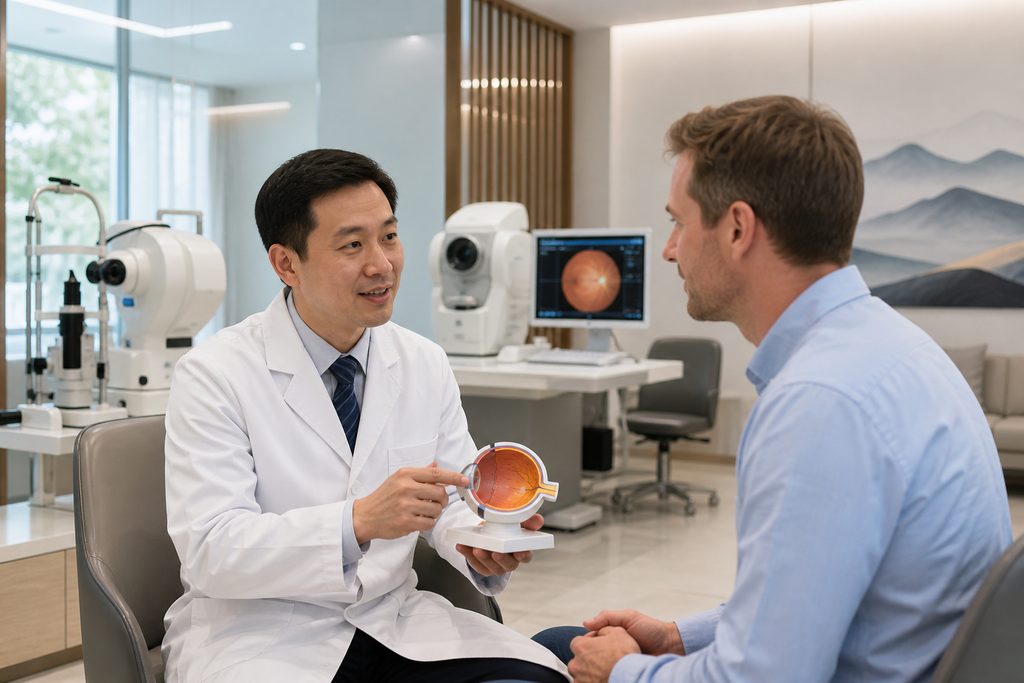
Eye Surgery Access for Foreigners in China
In the United Kingdom, the median wait for cataract surgery on the National Health Service reached 18 to 20 weeks in recent reporting, and many patients wait considerably longer. At the same time, high-volume eye centers in Beijing and Shanghai complete thousands of cataract and refractive procedures each year, often scheduling surgery within days of a confirmed consultation. For international patients comparing options, the practical question is no longer whether care exists — it is how to reach it. Eye surgery cost China is the headline number most people search first, and it is genuinely lower than Western pricing, but the full picture involves hospital tier, visa category, and how you actually get on a surgeon’s schedule.
Here is the honest version, including the parts that are inconvenient.
Eye Surgery Access for Foreigners in China: The Short Answer
Yes, foreigners can receive eye surgery in China, and the cost is typically 60 to 85 percent below comparable US pricing for the same procedure. Cataract surgery with a standard monofocal intraocular lens commonly runs $1,500 to $3,500 per eye at a top public hospital, versus $6,000 to $12,000 in the United States.
The caveat is structural. Public hospitals in China generally do not allow overseas patients to book a surgery slot directly from abroad. You must be seen in person at an outpatient consultation first, and only then can the surgical date be arranged. Skipping that step is not possible through normal channels — which is exactly why international departments and coordination services exist.
Who This Is Right For — and Who It Isn’t
China is a strong option for a specific kind of patient. It is a poor option for others, and saying so plainly matters more than a sales pitch.
Typically a good fit:
- Patients facing long public waitlists at home for cataract, glaucoma, or retinal procedures
- People paying out of pocket or with limited insurance coverage, where a 70 percent cost difference is decisive
- Refractive candidates (LASIK, SMILE, ICL) who want high-volume surgeons using current-generation laser platforms
- Patients willing to travel with a companion and stay 10 to 21 days
- Individuals with a straightforward diagnosis that can be confirmed remotely from existing imaging and reports
Probably not the right fit:
- Anyone with an unstable systemic condition — uncontrolled diabetes, recent cardiac events, active infection — where travel itself is the risk
- Complex revision cases requiring a specific surgeon you have already identified by name; we cannot promise a named specialist
- Patients needing emergency care. This is a planned-care pathway, not an emergency one
- People who cannot tolerate a hospital environment where English is not universal outside international wings
The Options, Compared
Cost is only meaningful next to the alternatives. The table below compares common eye procedures across three settings: a top-tier Chinese public hospital, a private international hospital in China, and typical US pricing.
| Procedure | China — Top Public Hospital | China — Private International | United States (Typical) |
|---|---|---|---|
| Cataract (per eye, standard IOL) | $1,500 – $3,500 | $4,000 – $7,000 | $6,000 – $12,000 |
| Cataract (premium multifocal IOL) | $3,500 – $6,000 | $7,000 – $11,000 | $12,000 – $20,000 |
| LASIK / SMILE (both eyes) | $1,800 – $3,200 | $4,000 – $6,500 | $4,000 – $8,000 |
| ICL implantation (both eyes) | $4,000 – $7,000 | $8,000 – $12,000 | $8,000 – $14,000 |
| Vitrectomy / retinal detachment repair | $4,000 – $9,000 | $10,000 – $18,000 | $15,000 – $30,000 |
| Pre-operative assessment package | $150 – $400 | $400 – $900 | $300 – $800 |
Which column suits you depends on what you are optimizing for. Top public hospitals offer the deepest expertise and the lowest price, but the experience is crowded and requires navigation support. Private international hospitals deliver English-speaking staff, direct insurance billing, and a calmer environment — at roughly double the public rate and still well under US pricing. Patients who value predictability over savings tend to choose the private tier. Patients with a tight budget and a willingness to be guided choose public.
Finding the Best Eye Hospital in Shanghai for Foreigners — and Elsewhere
Shanghai is often the first city international patients consider, and for good reason. It has a dense concentration of high-ranking ophthalmology departments, strong international infrastructure, and direct flights from most major hubs. When people search for the best eye hospital Shanghai for foreigners, they are usually looking for three things at once: clinical depth, English capability, and a workable appointment path.
China’s hospital landscape is enormous — more than 35,000 hospitals nationwide. The institutions worth your attention sit in the top 5 percent, as ranked by the Fudan Hospital Rankings and JCI accreditation standards. Our own database covers 340+ top-ranked hospitals across 37 cities, and the Fudan Top 100 alone is spread across 23 cities, with Beijing hosting 21 and Shanghai 18.
For ophthalmology specifically, the specialty reputation rankings matter more than the general list. A hospital that ranks in the national top tier for overall care may not be the strongest for retinal surgery, and vice versa. That is why we point patients toward specialty-level rankings rather than brand names. You can browse specialty rankings across 45 departments to see how ophthalmology leaders compare, or review the broader Fudan Top 100 hospitals by city if you are still choosing a destination.
Beyond Shanghai, Beijing and Guangzhou both host major eye centers with international departments. Chengdu and Hangzhou have grown quickly as alternatives with shorter queues and lower living costs during recovery.
What Eye Surgery Costs in China — and What Drives the Variance
The spread between a $1,500 cataract and a $9,000 vitrectomy is not arbitrary. Several factors move the number.
The lens or implant. A standard monofocal intraocular lens is inexpensive. A premium multifocal or toric lens can add $2,000 to $3,000 per eye. This is often the single largest variable in cataract pricing.
Public versus private tier. Private international hospitals charge roughly 1.5 to 2 times the public rate for the same procedure, in exchange for English-speaking staff, shorter waits, and direct insurance settlement.
Case complexity. A routine cataract in a healthy eye is straightforward. A dense cataract, a previous retinal surgery, or a coexisting glaucoma diagnosis adds surgical time and equipment.
What is included. Ask specifically whether the quoted price covers pre-operative testing, the surgeon’s fee, anesthesia, the facility fee, the lens itself, and post-operative follow-up visits. Some hospitals bundle; others itemize. A low headline number that excludes the lens is not a low number.
What is generally not included: flights, accommodation, airport transfers, and the cost of a bilingual companion if you use one. For a two-week trip, budget separately for lodging and daily expenses in your chosen city.
Practical Considerations: Visas, Records, Payment, and Follow-Up
This is where most planning falls apart, so it deserves detail.
The visa question. Foreigners traveling to China for medical treatment generally apply under the S2 visa category, which covers short-stay private affairs including medical treatment, and requires supporting documentation from the receiving hospital. Stays exceeding 180 days fall under S1. Accompanying family members typically apply under the same S2 category. Note that the M visa is a commercial and trade visa and is not the correct category for medical travel. Requirements shift, so confirm current specifics with the nearest Chinese embassy or consulate before applying. We provide guidance on documentation, but visa decisions rest entirely with the consulate — no service can guarantee approval.
Medical records. Bring recent imaging, prior surgical notes, current medication lists, and any relevant lab work, translated into English or Chinese. For a written second opinion, these documents are the entire basis of the review. Without them, a remote assessment is guesswork.
Payment. Public hospitals in China generally require prepayment, with insurance reimbursement handled afterward in your home country. Private international hospitals more often bill insurers directly. Confirm the mechanism before you commit, and check whether your insurer covers treatment abroad at all.
Language. China’s top hospitals see tens of thousands of outpatients daily. Outside international wings, English is limited. Registration, payment, pharmacy pickup, and pre-operative instructions all happen in Chinese. This is not a reason to avoid China — it is a reason to plan for it.
Follow-up after you go home. Arrange a local ophthalmologist before you travel, and ask your Chinese surgeon for a written post-operative plan you can hand to them. Most routine follow-up can be done at home; complex cases may require a return visit.
Frequently Asked Questions
At accredited top-tier hospitals using current-generation laser platforms, refractive outcomes are broadly comparable to Western benchmarks. Safety depends far more on proper candidate screening than on geography. The real risk is choosing a provider based on price alone without verifying accreditation, surgeon volume, and equipment generation. Ask those three questions before committing.
At a top public hospital, expect roughly $1,500 to $3,500 per eye with a standard lens, and $3,500 to $6,000 with a premium multifocal or toric lens. Private international hospitals in Beijing run higher, often $4,000 to $7,000 per eye. Final pricing depends on lens selection and case complexity, and should be confirmed directly with the hospital.
Not directly through standard public hospital channels. Public hospitals require an in-person outpatient consultation before scheduling surgery. What can be arranged in advance is a remote review of your records, a video consultation with the specialty team, and coordination of your in-person appointment. The surgical date is set after the examination.
This is a legitimate concern and deserves a direct answer. Serious complications after routine cataract or refractive surgery are uncommon but not impossible. Before traveling, identify a local ophthalmologist who will accept you as a follow-up patient, and obtain a written post-operative plan from your Chinese surgeon. For complex cases, budget for the possibility of a return trip. Travel insurance covering medical complications abroad is worth arranging.
Your Next Step
The core message is simple: eye surgery in China is accessible to foreigners, meaningfully cheaper than Western pricing, and clinically serious — provided you respect the process, which starts with a confirmed diagnosis rather than a booked flight. Our team is not a hospital and does not diagnose or treat anyone. We translate records, coordinate appointments through official international departments, arrange bilingual accompaniment, and guide you through the visa paperwork. If you would like to understand your options before making any commitment, start with a free consultation and we will tell you honestly whether China is a sensible path for your case.
This article is for general information only and is not medical advice. Treatment decisions should always be made with a qualified physician who has reviewed your individual case.
For more medical information and treatment options in China, visit chinamedservices.com (China Medical Services).
