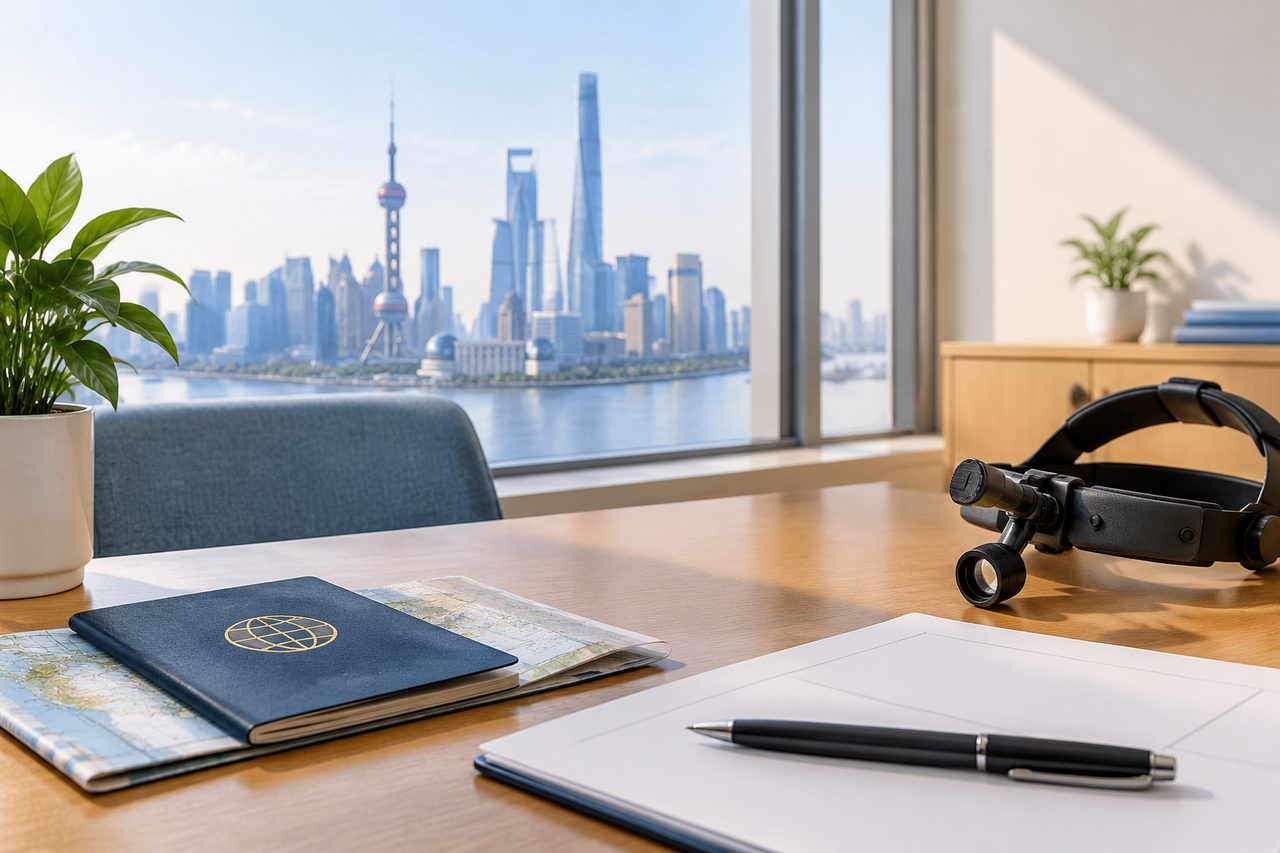
ENT Care for Foreigners in China: Costs, Top Hospitals, and How to Book
ENT Care for Foreigners in China: The Short Answer
Yes, you can get excellent ENT care in China as a foreigner. A good ent clinic Shanghai for foreigners will usually see you within days, not months. Private international hospitals offer English-speaking specialists and direct insurance billing. Top public hospitals offer world-class surgeons at a fraction of Western prices.
But there is a catch, and it matters. Public hospital ENT departments rarely let you book a specialist appointment from overseas in advance. You show up, you queue, you get a same-day slot. For anything surgical, you need an in-person consultation before the operation can be scheduled. That single rule shapes everything about how you plan a medical trip here.
Who This Is Right For — and Who It Isn’t
China’s ENT system suits some patients far better than others. Being honest about that saves everyone time.
Typically a good fit:
- Chronic sinusitis, nasal polyps, or deviated septum needing surgery at a fraction of US prices
- Tonsillectomy, adenoidectomy, or sleep apnea surgery for adults and children
- Hearing loss evaluation, cochlear implant assessment, or ear surgery
- Thyroid and head-and-neck procedures handled by high-volume surgical teams
- Patients already traveling to China for other reasons who need ENT follow-up
Probably not a good fit:
- Anyone with an unstable airway or active severe bleeding — go to your nearest emergency room, not a plane
- Patients needing urgent cancer staging where a two-week delay changes the plan
- Anyone unwilling to accept that a public hospital visit means crowds, queues, and a translator at your side
- Cases where your home country’s insurance fully covers treatment and travel adds no value
The Options, Compared
Three real paths exist, and they are not interchangeable. The table below uses typical figures; every number varies by hospital and case complexity.
| Factor | Public Hospital (Standard) | Public Hospital International/VIP Wing | Private International Hospital |
|---|---|---|---|
| English service | Limited; interpreter needed | Yes, dedicated staff | Yes, native-level |
| Advance booking from abroad | Generally no | Often possible | Yes |
| Cost level | Lowest | About 1.5–2x standard | Highest |
| Insurance billing | Pay first, claim later | Pay first, claim later | Direct billing common |
| Typical sinus surgery range | $3,000–$6,000 | $5,000–$9,000 | $9,000–$18,000 |
| Wait for consultation | Same day to 1 week | Days | Days |
If budget drives the decision and you can handle a busy environment with support, the standard public route delivers the most surgery per dollar. If you want predictability and English at every step, the VIP wing is the middle ground. Private international hospitals suit patients with international insurance or those who value a calm, Western-style experience above all.
Finding the Best ENT Hospital in Beijing for International Patients
Beijing concentrates more top-ranked hospitals than any other Chinese city — 21 of the Fudan Top 100 sit there. For ENT specifically, the strongest departments cluster around a handful of large teaching hospitals, and several run international wings built for foreign patients.
What should you actually look for? Three things. First, surgical volume. A department performing hundreds of the exact procedure you need each year has seen your complication before. Second, an international office that answers email in English. Third, a clear price quote in writing before you commit.
Shanghai competes closely, with 18 Fudan-ranked hospitals and a dense cluster of private international facilities. If your priority is an ent clinic Shanghai for foreigners can reach easily, the city’s private hospitals and public international wings both work well. Guangzhou rounds out the top three with 10 ranked hospitals and strong ENT departments serving Southeast Asian patients.
Our hospital database covers 340+ top-ranked hospitals across 37 cities — roughly the top 5% of China’s 35,000+ hospitals by Fudan and JCI standing. You can browse Fudan-ranked hospitals grouped by city or look at specialty rankings across 45 departments to see which ENT teams lead their field.
What It Costs: ENT Surgery Prices in China
Cost is usually the first question, and it deserves a straight answer. The table above shows ranges; here is what drives them.
- Procedure complexity. A straightforward septoplasty costs far less than revision sinus surgery with navigation.
- Hospital tier. VIP wings run roughly 1.5 to 2 times standard public pricing.
- Length of stay. Most ENT surgeries need 2–5 inpatient days.
- Implants and materials. Cochlear implants and specialized grafts add significant cost.
For context, the same sinus or septal surgery in the United States commonly runs $15,000 to $40,000 before insurance. China’s top public hospitals land in the $3,000–$9,000 band. Cardiac surgery tells the same story at scale — bypass operations at leading Chinese centers cost $12,000–$20,000 versus $120,000+ in the US.
Practical Considerations: Visas, Records, and Language
Paperwork trips people up more than medicine does. Get this part right.
Visa. Foreigners coming to China for medical treatment typically use the S2 visa, which covers short-stay medical and private affairs and requires supporting hospital documents. Stays beyond 180 days fall under S1. Accompanying family members also apply for S2. Note that the M visa is for commercial and trade activity — it is not a medical visa. Always confirm current requirements with your nearest Chinese embassy or consulate, since rules shift.
Medical records. Bring your imaging on disc, pathology reports, and a translated summary of prior treatments. Chinese specialists read English reports reasonably well, but a clean translated summary speeds everything up.
Payment. Public hospitals expect prepayment; you claim reimbursement from your insurer afterward. Private international hospitals frequently bill insurance directly. International credit cards work at larger hospitals, but carry a backup payment method.
Language. China’s top hospitals see tens of thousands of outpatients daily. Signage, registration kiosks, and pharmacy counters operate in Chinese. Without help, a simple appointment becomes an all-day puzzle.
Why Written Second Opinions and Video Consults Come First
Here is the part most patients skip, and it costs them. You do not need to fly to China to learn whether surgery there makes sense.
A written second opinion works like this: you send your existing examination reports, the relevant Chinese ENT specialty reviews them, and you receive written analysis with treatment direction. Cost runs $300–$500. A video consultation adds a live conversation with the specialty team — $100–$300 at a standard international department, $500–$800 with a top specialist, and $1,500–$2,000 for a multidisciplinary panel.
Any consultation fee is credited in full toward on-the-ground coordination if you travel within 90 days. That is a one-time credit applied to the coordination service, never to hospital treatment charges.
Proxy consultation is a third option. You designate a city, hospital, department, or specialist, and we handle registration, medical card creation, and an in-person visit using your materials. Admission afterward remains subject to hospital rules.
Is ENT Treatment in China Safe for Foreigners?
Safety questions deserve evidence, not reassurance. China’s leading hospitals perform ENT surgery at volumes that rival anywhere in the world, and their complication rates at top centers are published and monitored. JCI-accredited private hospitals follow international safety protocols directly.
The honest caveats: standards vary enormously between a top-tier hospital and a small regional one. That gap is exactly why hospital selection matters more here than in countries with uniform care quality. Choose a Fudan-ranked department or a JCI-accredited facility, and you are in good hands. Choose randomly, and you are rolling dice.
Frequently Asked Questions
Functional endoscopic sinus surgery at a top public hospital typically runs $3,000–$6,000; international wings charge $5,000–$9,000, and private hospitals $9,000–$18,000. Final pricing depends on hospital tier, case complexity, and length of stay. Request an itemized quote before committing.
At private international hospitals, usually yes. At standard public hospitals, generally no — registration happens on the day, and surgery requires an in-person consultation first. International and VIP wings of major public hospitals often accept advance bookings. This is where coordination help saves the most time.
At Fudan-ranked public hospitals and JCI-accredited private facilities, yes — these centers meet international safety standards and handle high surgical volumes. Safety depends heavily on which hospital you choose, so verify credentials rather than assuming all Chinese hospitals are equivalent.
The S2 visa covers short-stay medical treatment and requires supporting hospital documentation; S1 applies for stays over 180 days. Family members accompanying you also apply for S2. The M visa is for business and does not apply to medical travel. Confirm details with your nearest Chinese embassy before applying.
At private international hospitals, no — staff speak English. At public hospitals, yes, realistically. Registration, payment, pharmacy pickup, and doctor conversations all happen in Chinese, and the buildings are enormous. A bilingual medical companion handles queuing, registration, payment, wayfinding, and translation throughout your visit.
Your Next Step
ENT care in China offers genuine value — top-tier surgical expertise at a fraction of Western prices — but only if you match the right hospital to your case and plan the logistics properly. The consultation-first model exists precisely because flying blind wastes money and time.
We are China Medical Services, a coordination service, not a hospital. We do not diagnose or treat anyone. What we do is connect you with the right ENT department, arrange written second opinions and video consultations, coordinate appointments through official international channels, and provide bilingual companions on the ground. If you want to explore whether China makes sense for your ENT situation, start with a free consultation — no pressure, just a clear picture of your options.
This article is for general information only and is not medical advice. Treatment decisions should always be made with a qualified physician who has reviewed your individual case.
For more medical information and treatment options in China, visit chinamedservices.com (China Medical Services).
