Why Patients Choose Shanghai for Care: A Guide for International Patients
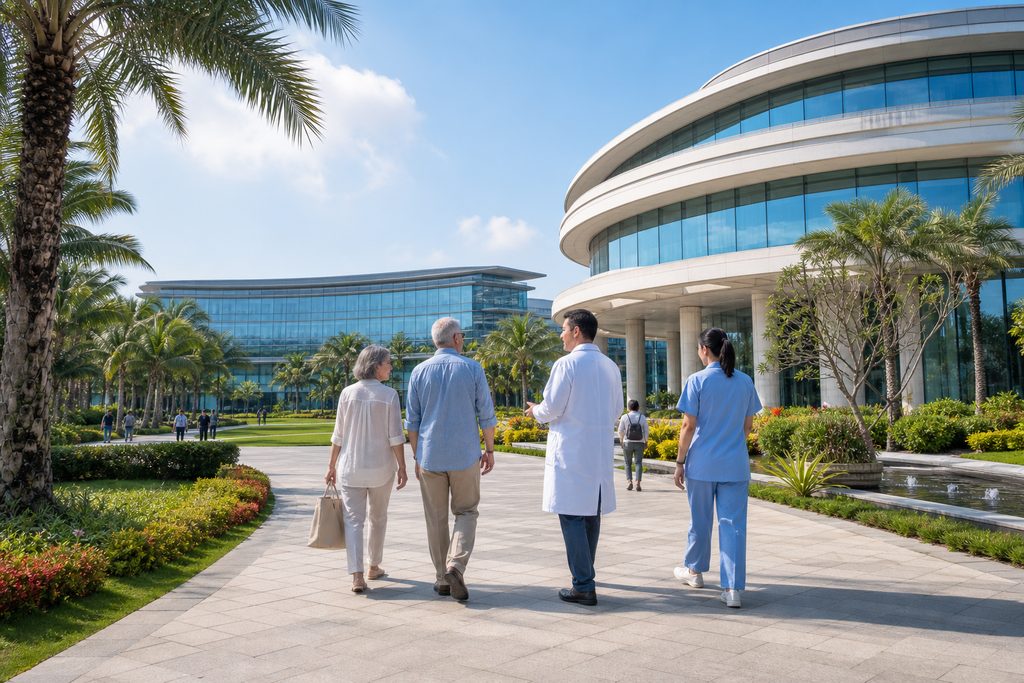
Why Patients Choose Shanghai for Care: A Guide for International Patients
A knee replacement in the United States can run past $35,000. In Shanghai, the same procedure at a top public hospital often lands between $8,000 and $15,000 — with surgeons who perform hundreds of these operations each year. That gap is one reason a growing number of international patients are asking how to find the best hospital in Shanghai for international patients. But cost alone doesn’t explain the shift. Language support, hospital quality, and a clear pathway through a complex system matter just as much.
Shanghai sits at the center of China’s medical landscape. Eighteen of the country’s top-ranked hospitals operate here, second only to Beijing. For foreign patients weighing treatment abroad, the city offers something rare: world-class clinical volume paired with a service infrastructure built specifically for people who don’t speak Mandarin.
How This Actually Works, Step by Step
Most international patients assume they can book a specialist appointment from abroad the way they would at home. In China’s public system, that isn’t how it works. General outpatient slots open on the day of the visit, and surgery can only be scheduled after an in-person consultation. Understanding this sequence saves weeks of confusion.
Here is the realistic path, from first inquiry to follow-up care:
- Send your records first. You share existing examination reports, imaging, and lab results. A relevant Chinese specialty reviews them and returns a written analysis with treatment direction — typically within a few business days.
- Speak with the specialty team. A video consultation lets you explain your symptoms and goals directly, and hear the medical team’s recommendations. This is where most patients decide whether traveling makes sense.
- Confirm a plan and a hospital. Once a feasible plan is clear, appointment coordination begins — registration, medical card creation, and scheduling through the hospital’s international or VIP channel.
- Arrange the visa and travel. Medical travel to China uses the S2 visa, with supporting hospital documents. Family members accompanying you apply under the same category.
- Arrive and complete treatment. A bilingual companion handles queuing, registration, payment, and translation on the ground. Admission itself remains subject to hospital rules.
That last point matters. No service can promise admission, a specific surgeon, or a clinical outcome. What a good coordinator does is remove friction and make sure the hospital sees an accurate, complete picture of your case.
Shanghai’s Hospital Landscape: What Sets It Apart
China has more than 35,000 hospitals. The top 5% — ranked by the Fudan University hospital index and JCI accreditation — represent a genuinely different tier of care. Shanghai holds 18 of the Fudan Top 100, and several of its institutions rank among China’s top 10 in specific specialties.
Zhongshan Hospital, affiliated with Fudan University, is consistently recognized for cardiology and general surgery. Ruijin Hospital carries a strong reputation in endocrinology and hematology. For cardiac surgery specifically, Fuwai Hospital in Beijing performs over 14,000 operations a year — the highest volume globally — and Shanghai’s cardiac centers operate at comparable technical levels.
Beyond public giants, Shanghai hosts a cluster of private international hospitals: United Family, Jiahui, Parkway, and Raffles. These facilities offer English-speaking staff, JCI certification, direct insurance billing, and Western-style care environments. They cost more than public hospitals but far less than equivalent care in the US or Europe.
A Realistic Timeline
Every case differs, but here is a typical sequence for a patient traveling from abroad for a procedure. Ranges reflect real variability — visa processing and appointment lead times are the two biggest swing factors.
| Stage | Typical Duration | What Happens |
|---|---|---|
| Record review & written second opinion | 3–10 days | Specialty team analyzes your reports and returns written guidance |
| Video consultation | 1–2 weeks from first contact | Direct discussion with the medical team; treatment direction confirmed |
| Appointment coordination | 1–3 weeks | Registration, medical card, scheduling via international channel |
| Visa application (S2) | 1–4 weeks | Requires hospital invitation documents; timing varies by consulate |
| Travel & arrival | 1–3 days | Airport transfer, accommodation, pre-visit preparation |
| Consultation & admission | 2–7 days | In-person exam, pre-op testing, hospital admission |
| Treatment & recovery | Varies by procedure | Procedure, inpatient stay, discharge planning |
| Follow-up | Ongoing | Local follow-up at home; remote check-ins with the Chinese team |
Total time from first inquiry to treatment often runs four to ten weeks. Rushing the visa stage is the most common mistake. Consulates won’t process medical visas without proper hospital documentation, and that paperwork takes time to assemble.
What Can Go Wrong — and What Happens Then
Honest planning means naming the failure modes. Here are the ones that come up most often, and the actual recourse for each.
Your case turns out not to be treatable in China. Sometimes the record review reveals that your condition needs a different approach, or that the specialty team can’t offer a meaningful advantage over care at home. You’ve spent a few hundred dollars on a second opinion instead of thousands on travel. That’s a good outcome, not a bad one.
The appointment can’t be secured. Top specialists book out. If a coordinator can’t secure the appointment shown in your order, the standard practice is a full refund of the coordination fee. What no one can promise is a specific surgeon or a specific surgical date.
The visa is delayed or refused. Consular decisions rest entirely with the embassy. If timing slips, treatment dates shift with it. Building a two-week buffer into your schedule absorbs most of this risk.
Complications arise during treatment. This is medicine. Chinese hospitals handle complications through their own clinical protocols, and your coordinator’s role is communication — making sure you and your family understand what’s happening. Clinical decisions belong to the treating physicians.
Shanghai Medical Tourism Cost: What You’re Actually Paying For
Cost is the headline reason many patients look at Shanghai, but the numbers deserve context. The comparison below reflects typical ranges for self-paying international patients. Actual quotes vary by hospital and case complexity.
| Procedure | Shanghai (Top Public Hospital) | United States |
|---|---|---|
| Coronary artery bypass | $12,000–$20,000 | $120,000+ |
| Knee or hip replacement | $8,000–$15,000 | $35,000–$60,000 |
| Spinal fusion | $10,000–$18,000 | $80,000–$150,000 |
| Comprehensive health screening | $500–$2,500 | $2,000–$8,000 |
Same procedure, roughly one-fifth to one-tenth of the US price. That’s the pattern across most surgical categories. Private international hospitals in Shanghai land higher than public rates but still well below Western pricing, and they often bill insurance directly.
One structural difference to plan around: public hospitals require prepayment, and you seek reimbursement from your insurer afterward. Private international hospitals frequently settle with international insurers directly. If you’re weighing private international hospitals with direct insurance billing, that distinction can matter more than the sticker price.
Service costs sit separately from hospital charges. A bilingual medical companion runs from $300 per day. Written second opinions from top-hospital specialists range $300–$500. Video consultations run $100–$300 for a standard international department, or $500–$800 with a top specialist. Appointment coordination starts at $300. Any consultation fee is credited in full toward on-the-ground coordination if you proceed within 90 days — a one-time credit applied to the coordination fee, never to hospital treatment charges.
Is Treatment in China Safe for Foreigners?
This is the question that stops people mid-search. The honest answer: China’s top-tier hospitals meet international clinical standards, and the safety record of high-volume surgical centers is well documented. Fuwai’s cardiac surgery outcomes, for instance, are published and compare favorably with global benchmarks.
Where the system differs is process, not medicine. Public hospitals are enormous — some see over 10,000 outpatient visits a day. Without Mandarin, navigating registration, payment, and pharmacy pickup is genuinely difficult. That’s an access problem, not a safety problem, and it’s exactly what bilingual support solves.
For patients who want a familiar environment, the private international hospitals remove most of the friction. English-speaking physicians, Western-style wards, and international accreditation. You pay for that comfort, but you’re still saving substantially against US rates.
Practical Considerations: Records, Visas, Payment, and Language
Medical records. Bring everything: imaging on disc, pathology reports, lab results, medication lists. Chinese specialists work best with complete documentation, and missing records delay the review stage.
Visa category. Medical travel to China uses the S2 visa, annotated for medical treatment. Stays beyond 180 days require the S1. Accompanying family members apply under S2 as well. Requirements shift — always confirm current rules with the nearest Chinese embassy or consulate. Note that the M visa is for commercial and trade activities and has nothing to do with medical treatment.
Payment. Public hospitals: prepay, then claim reimbursement. Private international hospitals: often direct billing. Bring a card that works internationally, and confirm payment methods with your coordinator before arrival.
Language. If you’re wondering how to find an English-speaking doctor in Shanghai, the answer usually runs through the hospital’s international department or a bilingual companion service. Private hospitals employ English-speaking staff directly. Public hospitals concentrate English capability in their international and VIP channels.
Follow-up at home. Arrange a local physician before you leave. Chinese hospitals provide discharge summaries and imaging that your home doctor can work from. Remote check-ins with the Chinese team are possible but shouldn’t replace local care.
Frequently Asked Questions
For international departments and private hospitals, yes — appointments can often be arranged in advance through a coordinator. For standard public outpatient clinics, no. Those slots open on the day of the visit, and surgery can only be scheduled after an in-person consultation. This is the single most important thing to understand before planning travel.
Surgical procedures typically run one-fifth to one-tenth of US prices. A coronary bypass at a top public hospital lands around $12,000–$20,000 versus $120,000+ in the US. Add service costs: companion support from $300 per day, consultations from $100, and coordination from $300. Final quotes depend on the hospital and the complexity of your case.
At top-ranked hospitals, clinical standards and safety protocols align with international norms. The real challenge is navigation, not medicine. Language barriers, unfamiliar payment systems, and sheer hospital scale create friction that a bilingual companion is designed to remove. No outcome can be guaranteed by anyone, in any country.
Yes. The S2 visa covers short-stay medical treatment, and accompanying family members apply under the same category. Supporting documents from the hospital are required. Processing times vary by consulate, so build in a buffer. Confirm current requirements with your nearest Chinese embassy before applying.
Private international hospitals and public hospital international departments offer structured packages covering consultation, diagnostics, and treatment with English-language service. These typically include appointment coordination, interpretation, and sometimes accommodation. Pricing varies widely — request a written quote tied to your specific case rather than relying on published package rates.
Your Next Step
Shanghai offers a rare combination: top-tier clinical volume, meaningful cost savings, and a growing infrastructure for international patients. The catch is that the system rewards preparation. Send your records early, understand the visa timeline, and don’t assume you can book a public specialist from overseas.
At China Medical Services, we connect international patients with 340+ top-ranked hospitals across 37 cities. We are not doctors and we don’t provide medical advice — we handle records, appointment coordination through official hospital channels, bilingual companionship, and visa guidance. If you’d like to understand what’s possible for your situation, start with a free consultation. No pressure, no obligation — just a clear picture of your options.
This article is for general information only and does not constitute medical advice. Treatment decisions should always be made with qualified healthcare professionals who can review your individual case.
For more medical information and treatment options in China, visit chinamedservices.com (China Medical Services).
