Pancreatic Cyst in China: Shanghai Case Assessment Guide
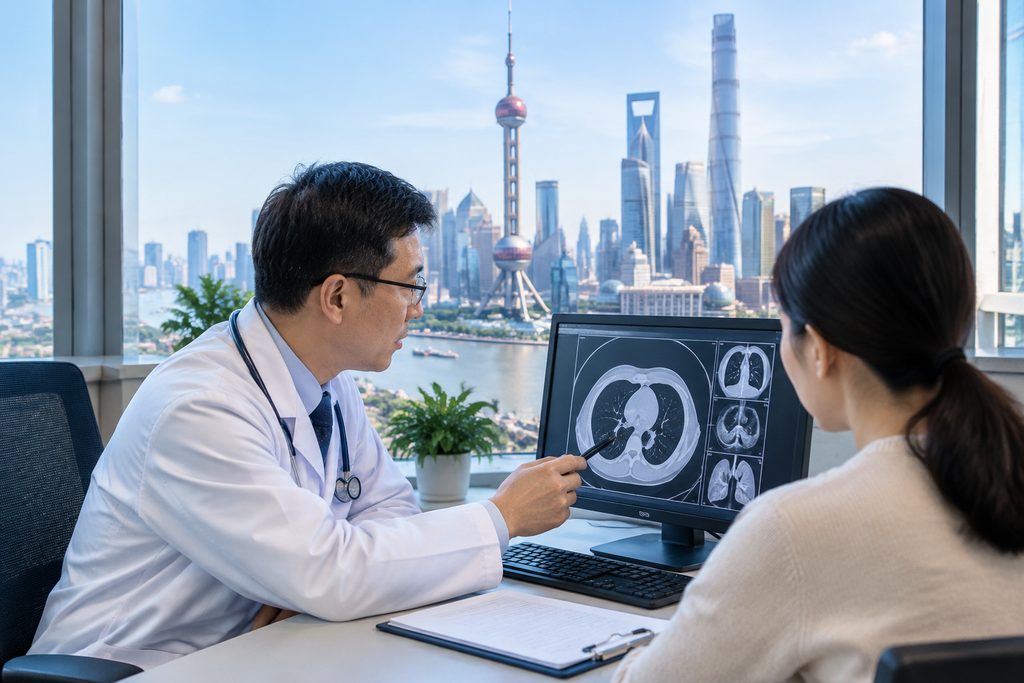
Pancreatic Cyst in China: The Short Answer
When 54-year-old Elena from Rotterdam received an MRI report describing a 2.1 cm cystic lesion in the head of her pancreas, her Dutch gastroenterologist used one phrase that stuck with her: “We can watch it.” Watch it. For six months. Then scan again. She wanted a second read, and she wanted it faster than her local system could deliver.
That search is what brings many international patients to China. A pancreatic cyst in China can typically be assessed within one to three weeks of first contact — including a repeat MRI or EUS, a specialist review, and a written opinion — at a fraction of what the same workup costs in the United States or Western Europe. The catch is real, though. Public hospital outpatient slots cannot be booked from overseas in advance, and without a bilingual coordinator the process becomes a maze.
Who This Is Right For — and Who It Isn’t
Pancreatic cysts are common. Autopsy and imaging studies suggest they appear in roughly 2–3% of asymptomatic adults, and the number climbs past 10% after age 70. Most are benign. A minority — mainly mucinous cysts such as IPMN and MCN — carry malignant potential and need structured surveillance or surgery.
So who benefits from having that assessment done in Shanghai?
- Patients on a long surveillance queue at home who want a second read of the same imaging, faster
- People whose cyst has “worrisome features” — a dilated main duct, a mural nodule, rapid growth — and who want a multidisciplinary opinion before committing to surgery
- Patients paying out of pocket who need a high-quality MRI/MRCP plus EUS without a five-figure bill
- Anyone whose home system offers only one pancreatic specialist within reasonable travel distance
And who should probably stay home?
- Anyone with acute symptoms — jaundice, unexplained weight loss, severe abdominal pain, new-onset diabetes with a cyst — needs urgent local care, not a plane ticket
- Patients whose cyst is already biopsy-proven malignant and who have a scheduled resection date. Do not delay that.
- People who cannot travel for medical reasons, or who cannot be off work for the 10–14 days a proper workup usually takes
- Anyone hoping a Chinese hospital will simply operate on a cyst without a full in-person evaluation. That is not how it works anywhere, and it is not how it works here
The Options, Compared
For a stable pancreatic cyst, the real question is not “which country” but “how fast can I get a specialist read, and at what cost.” Here is how the main pathways stack up.
| Pathway | Typical time to specialist review | Estimated out-of-pocket cost | Language support |
|---|---|---|---|
| Home public system (EU/UK/Canada) | 4–12 weeks for surveillance MRI | $0–$500 (covered or subsidized) | Native language |
| US private gastroenterology | 1–3 weeks | $3,000–$8,000 for MRI + EUS + consult | Native language |
| Shanghai public tertiary hospital, standard track | Same-day registration; 1–2 weeks to complete imaging | $800–$2,000 for MRI/MRCP + EUS + consult | Limited; interpreter needed |
| Shanghai public hospital international department | Pre-booked; 3–7 days | $1,500–$3,500 (roughly 1.5–2× standard) | English-speaking staff |
| Private international hospital (Shanghai) | Pre-booked; 2–5 days | $2,500–$6,000 | Full English service |
| Written second opinion only, no travel | 5–10 business days | from $300 | Translated report in English |
Which column fits you? If the cyst is stable and you simply want a second set of eyes on the images, the written second opinion row is the cheapest and least disruptive. If you want a full re-imaging with EUS and a face-to-face pancreatic multidisciplinary review, the international department track is the pragmatic middle. Private hospitals suit patients who prioritize comfort and direct insurance billing over price.
How Shanghai Pancreatic Centers Actually Assess a Cyst
This is where a Shanghai case assessment differs from a typical Western workup, and it matters for anyone planning the trip.
The evaluation almost always starts with imaging you already have. Bring the DICOM files — the actual disc or a secure cloud link — not just the radiologist’s report. Chinese pancreatic teams re-read the raw images themselves. A 2023 consensus from the International Association of Pancreatology (IAP) and the European Study Group on Cystic Tumours of the Pancreas set the framework most major centers follow: cyst size, main pancreatic duct diameter, presence of a mural nodule, and growth rate over time.
From there, three things usually happen:
- MRI with MRCP — the preferred first-line study for characterizing cyst morphology and duct communication
- Endoscopic ultrasound (EUS) — used when the MRI is equivocal, when a mural nodule is suspected, or when fluid sampling is warranted
- Multidisciplinary team (MDT) review — surgeons, gastroenterologists, radiologists, and pathologists jointly classify the cyst as low-risk, worrisome, or high-risk
That MDT step is the real value. In a single afternoon, you get a consensus rather than a chain of referrals. For a cyst sitting in the gray zone — say, 2.5 cm with a 6 mm duct and no nodule — that consensus is exactly what determines whether you get surveillance in six months or surgery in six weeks.
What It Costs and How Long It Takes
Costs below are estimates for international patients paying out of pocket. They vary by hospital and case complexity, and no quote is final until the hospital reviews your records.
- Written second opinion (records review by a pancreatic specialist, English report): from $300
- Video consultation with a gastroenterology or hepatobiliary team: $100–$300 at a standard international department, $500–$800 with a top-tier specialist
- Multidisciplinary team video consultation: $1,500–$2,000
- In-person top-specialist consultation coordination: $800–$1,200
- Hospital appointment coordination (imaging, EUS, consultation): from $300
- Bilingual medical companion: from $300 per day (half-day or full-day)
On the hospital side, expect $800–$2,000 for MRI/MRCP plus EUS plus consultations at a standard public tertiary hospital, or $1,500–$3,500 through an international department. Private international hospitals run higher. For comparison, the same workup in the US commonly lands between $3,000 and $8,000.
Timeline-wise, most patients who arrive with imaging in hand complete the full assessment — repeat MRI, EUS, and specialist review — within 7 to 10 days. Add 3 to 5 days for arrival, hospital registration, and any repeat labs. Two weeks on the ground is a comfortable buffer.
Practical Considerations: Records, Visa, and Payment
Records. Gather your MRI and CT discs, the radiology reports, any prior EUS reports, blood work including CA 19-9, and a short medical history in English. Send these ahead. The specialist reviews them before you fly, which is what makes a 10-day trip realistic instead of a 3-week one.
Visa. Medical travel to China uses the S2 visa, annotated for medical treatment purposes. Stays exceeding 180 days require the S1 category. Accompanying family members apply for S2 as well. The M visa is strictly for commercial and trade activities and has nothing to do with medical care — do not apply for it. Requirements change, so confirm current documentation with the nearest Chinese embassy or consulate and request supporting documents from the hospital’s international office.
Payment. Public hospitals require prepayment; insurance reimbursement happens afterward. Private international hospitals often bill insurers directly. Bring a card that works internationally and confirm the hospital’s accepted payment methods in advance.
Language. China’s top hospitals see thousands of outpatients daily. English signage exists in international departments but not throughout the main campus. A bilingual companion handles registration, queueing, payment, and translation so you are not navigating a 10,000-patient-per-day facility alone.
Follow-up at home. Before you leave, ask for a written surveillance plan with imaging intervals and the specific findings that would trigger intervention. Hand that document to your local gastroenterologist. Continuity matters more than where the first scan happened.
If you are still weighing destinations, our overview of top-ranked hospitals in China and the Shanghai hospital directory show which facilities hold national rankings in gastroenterology and hepatobiliary surgery.
Frequently Asked Questions
Yes. Send your imaging and reports for a written second opinion, or book a video consultation with a gastroenterology or hepatobiliary team. Many patients use this step to decide whether travel is worth it. If surgery is later recommended, it still requires an in-person evaluation and hospital admission approval — no remote consultation can guarantee either.
Most pancreatic cysts are low-risk and managed with surveillance. Surgery is typically considered when there is a solid component, a mural nodule, main duct dilation beyond 5–10 mm, or rapid growth. Only a qualified specialist reviewing your actual images can classify your cyst. Do not delay care if you have jaundice, severe pain, or unexplained weight loss — seek local emergency evaluation.
You are never obligated to proceed. The written opinion is for reference only and is not a prescription. You can take the report to your home specialist, request a second Chinese opinion, or choose surveillance. Any admission or procedure remains subject to hospital rules and your informed consent.
Your Next Step
A pancreatic cyst diagnosis is stressful precisely because the answer is usually “it depends” — and the only way to shorten that uncertainty is a specialist read of your actual images. Shanghai offers that read quickly and affordably, provided you plan the logistics properly.
We are China Medical Services, a coordination team, not a hospital and not a clinician. We do not diagnose, and we do not promise outcomes. What we do is connect you with the right specialty team, arrange record translation and hospital registration, and provide bilingual support on the ground. Start with a free consultation at our patient services page — no pressure, no commitment, just a clear next step.
This article is for general information only and does not constitute medical advice. Always consult a qualified physician about your individual condition.
For more medical information and treatment options in China, visit chinamedservices.com (China Medical Services).
