Maternity Care at Xiamen Maternity and Child Health Hospital: Full Family Coordination
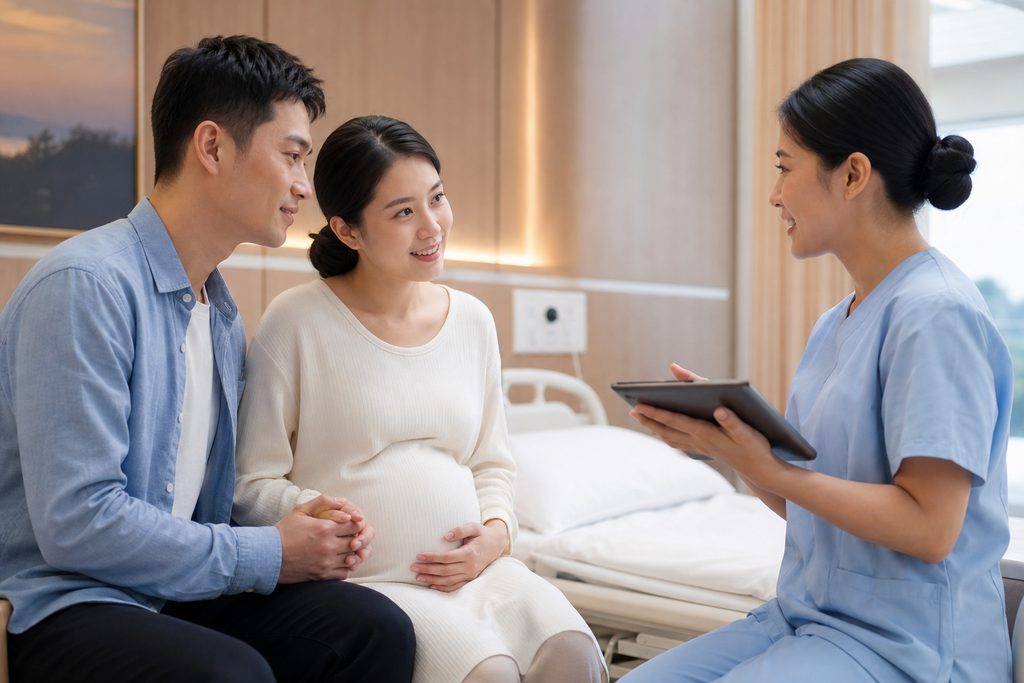
When Sarah, an English teacher from Manchester, found out she was pregnant six months into her contract in Fujian, her first Google search was frantic: “Can I give birth safely in China?” Her second search was more specific. She wanted to know if her husband could stay with her. She needed to understand the maternity care cost at Xiamen hospital facilities. And she had no idea where to start.
Our team hears versions of Sarah’s question every week. The anxiety is real. You are far from your home country’s medical system, facing one of life’s biggest moments.
The short answer is this: Xiamen Maternity and Child Health Hospital (officially Xiamen Women and Children’s Hospital, linked to Xiamen University) is the city’s designated hub for handling complex pregnancies and deliveries. It delivers over 20,000 babies annually. It has specific international patient delivery packages in Xiamen that include private rooms where a partner or family member can stay. The hospital actively encourages full family coordination during labor and postpartum recovery.
But the practical details matter. The packages are not advertised on a glossy English website. You need to know which building to enter, which floor handles international registration, and what documentation unlocks the family-centered care you want. That is where the gap sits between what the hospital offers and what a non-Mandarin-speaking patient can easily access.
Who This Is Right For — and Who It Isn’t
Xiamen Maternity and Child Health Hospital works well for a specific type of international patient. It is not the right fit for everyone.
You are likely a good candidate if you are an expat living in Fujian province with a stable, low-risk or moderately managed pregnancy. The hospital’s maternal-fetal medicine unit handles gestational diabetes, mild preeclampsia, and twin pregnancies routinely. You want a vaginal delivery with epidural available. You want your partner present during labor and in the room afterward. You have a realistic budget for private-package care and understand that China’s public hospital system operates differently from Western private maternity wards.
You should look elsewhere if you are planning a medical tourism trip solely for a luxury birth experience. This is a high-volume public hospital, not a five-star hotel. The private rooms are comfortable but clinical. If you have a complex cardiac condition complicating pregnancy, a hospital co-located with a full adult cardiology department—like Zhongshan Hospital in Xiamen—may be safer. If you require a full English-speaking obstetric team at all hours without a bilingual companion, a private international hospital in Shanghai or Beijing will fit better. And if you want a home-birth or midwife-led unit model, that is extremely rare in China’s public system. Be honest about what you need.
The Options, Compared
Xiamen offers three genuine paths for maternity care. Each has different implications for family coordination and cost.
| Option | Typical Delivery Room | Partner Present? | Private Postpartum Room | Estimated Cost (Vaginal Delivery) | Estimated Cost (C-Section) |
|---|---|---|---|---|---|
| Public Ward (Standard) | Shared or single | Usually no | 3-6 bed shared room | $800 – $1,500 | $2,000 – $3,500 |
| VIP/International Package | Private LDR room | Yes | Private single room with family cot | $3,000 – $5,000 | $5,000 – $8,000 |
| Private International Hospital | Private suite | Yes | Private suite, hotel-style | $8,000 – $15,000 | $12,000 – $20,000 |
The public ward option is what the majority of local families use. It is safe and medically sound. But family coordination is minimal. Your partner will not be allowed in the delivery room, and visiting hours in the postpartum ward are strict.
The VIP/International package at Xiamen Maternity and Child Health Hospital is the middle ground most expats choose. You get a private labor-delivery-recovery room. One family member stays throughout labor. After delivery, you move to a private room with a bed for your partner. The package includes three to five days of postpartum stay for vaginal delivery, longer for cesarean. This is what “full family coordination” means in practice: the hospital has built the physical space and staffing model to keep your family unit together.
The private international hospital route—facilities like United Family in Shanghai or Guangzhou—offers a Western-style experience with full English communication. But you leave Xiamen. For a family already settled in Fujian, that adds travel stress, accommodation costs, and separation from local support networks.
How Family Coordination Actually Works at Xiamen Maternity
The term “full family coordination” sounds like marketing language. Here is what it means on the ground.
When you book the international patient delivery package in Xiamen, you are assigned to the hospital’s VIP floor—usually on the higher levels of the inpatient building. The delivery room is a single-occupancy LDR suite. Your partner or designated family member receives a wristband that allows 24-hour access. There is no “kicking dad out at 9 p.m.” The nursing staff expects the family member to be present and will show them how to support you during labor.
After delivery, you transfer to a private postpartum room. The room has a bathroom, a television, a small refrigerator, and a fold-out bed or cot for one family member. Meals are provided for the mother. The hospital cafeteria and nearby restaurants on Hubin South Road cover the partner’s needs.
The hospital also offers a postpartum rehabilitation center on-site. This is a Chinese-style “confinement” floor where new mothers can stay for 28 days with nursing support, lactation consulting, and traditional postpartum meals. Family can visit freely. Booking this requires advance reservation—often months ahead—and adds roughly $4,000 to $8,000 to the total cost.
One hard truth: the coordination is spatial and logistical, not linguistic. The VIP floor nurses may speak basic English. The obstetricians likely read English medical literature but may not feel comfortable discussing nuanced birth plans in English. A bilingual medical companion bridges this gap. Our team has seen too many couples assume the hospital will provide a translator, only to find themselves using hand gestures during critical moments. Do not let that be you.
What It Costs: Maternity Care Cost at Xiamen Hospital Breakdown
The maternity care cost at Xiamen hospital depends on three factors: delivery type, room choice, and whether complications arise. Let’s break down the numbers.
For a standard vaginal delivery with epidural under the VIP package, expect $3,000 to $4,500. This covers the LDR room, the delivery itself, anesthesia, basic newborn care, and three nights in a private postpartum room. Medications and routine lab work are included. It does not include prenatal care leading up to delivery.
A scheduled cesarean under the same package runs $5,000 to $7,000. The higher cost reflects operating room fees, surgical anesthesia, and an extended five-night postpartum stay.
If complications arise—an emergency C-section after attempted vaginal delivery, neonatal ICU admission, or maternal hemorrhage requiring intervention—costs climb. NICU care adds roughly $300 to $500 per day. The hospital’s NICU is well-equipped, but it is a separate billing category from the maternity package.
What is not included: prenatal checkups before admission. Those typically cost $50 to $150 per visit in the VIP clinic. You will have roughly 10 to 12 prenatal visits over a full-term pregnancy. Ultrasounds and blood work are billed separately. Budget $1,500 to $2,500 total for prenatal care.
Payment is upfront. The hospital requires a deposit upon admission—usually $3,000 to $5,000 for the VIP package, settled by credit card or cash. They do not direct-bill international insurance. You pay, then submit claims to your insurer for reimbursement. Confirm with your insurance provider before the third trimester that they cover delivery at a Chinese public hospital’s international wing.
What to Expect Giving Birth in Xiamen Hospital: The Practical Timeline
Knowing what to expect giving birth in Xiamen hospital removes half the fear. Here is the sequence most international patients experience.
Weeks 34–36: Pre-registration. You visit the hospital’s international clinic on the third floor of the outpatient building. Bring your passport, your Chinese visa, your pregnancy records, and a translator if needed. The staff opens a file, confirms your due date, and takes a deposit for the package. You tour the VIP floor. You discuss your birth preferences—epidural, delayed cord clamping, skin-to-skin contact—through your bilingual companion. These preferences are noted in your file. They are not a binding contract, but the VIP team respects documented requests.
Labor onset: You enter through the emergency entrance on the ground floor. The triage nurse assesses you. If you are in active labor, you go directly to the VIP LDR floor. Your partner stays with you. The anesthesiologist is available 24 hours for epidurals—a fact that surprises many expats who heard epidural access was limited in China. At this hospital, it is not.
Delivery: One obstetrician, one midwife, and one pediatrician attend the birth. Your partner remains at the head of the bed. Immediate skin-to-skin is standard unless the baby needs intervention. The pediatrician examines the newborn in the room.
Postpartum: You transfer to the private room. Nurses check vitals every few hours. A lactation consultant visits on day one. The hospital encourages breastfeeding but does not pressure. Formula is available if you choose. Your partner can stay overnight. The bathroom has a squat toilet—a small detail that matters after delivery. Bring your own toiletries and postpartum supplies. The hospital provides basics, but the quality is basic.
Discharge: For vaginal delivery, you leave on day three or four. For cesarean, day five or six. The hospital issues a birth certificate in Chinese. You will need to arrange an official translation for your home country’s registration. The hospital’s international clinic can guide you to a notary service.
How Is Childbirth Care at Xiamen Maternity and Child Health Hospital Different from Home?
The question “how is childbirth care at Xiamen Maternity and Child Health Hospital” compared to a Western hospital deserves an honest answer. There are real differences.
The medical skill is high. The obstetricians manage over 50 deliveries daily across the hospital. They have seen everything. The volume breeds competence. Complication rates for common issues like postpartum hemorrhage are comparable to good Western hospitals.
The nursing model is different. In a Western hospital, one nurse typically manages one or two laboring patients. Here, the nurse-to-patient ratio is higher. The VIP floor mitigates this somewhat—you get more attention than in the public wards—but do not expect a dedicated nurse sitting with you for hours. The midwife checks in periodically. Your partner or doula fills the continuous support role.
Intervention rates trend higher. Cesarean section rates in Chinese public hospitals hover around 35–40%, above the WHO’s recommended 10–15%. The VIP team is more open to physiological birth if you advocate for it, but the default inclination leans toward active management. Having a bilingual companion who can repeatedly state your preferences helps counter this.
Postpartum practices reflect Chinese cultural norms. You will be encouraged to stay in bed, avoid cold foods, and keep warm. The hospital may offer traditional Chinese herbal soups for lactation. These are optional. The staff will not force them on a foreign patient who declines, but they will offer them. The confinement center on-site follows these traditions more rigorously. Some expat mothers love the structured support. Others find it stifling. Know yourself.
Practical Considerations: Booking Maternity Care China for Expats
If you want to book maternity care China for expats at this hospital, the paperwork and planning start earlier than you think.
Visa status matters. If you are already in China on a work or student visa, your pregnancy does not change your status. The hospital treats you like any other resident with a valid visa. If you are coming specifically to give birth, you need an S2 visa with supporting documentation from the hospital. We handle this coordination. The hospital issues an invitation letter confirming your booking. You take that to the Chinese embassy or consulate in your home country. Processing takes two to four weeks. Do not book flights until the visa is in hand.
Medical records need translation. The hospital’s international clinic accepts English-language prenatal records, but the doctors prefer a Chinese summary. We provide this translation service. Key documents include your blood type, Rh factor, rubella immunity, hepatitis B and C status, HIV status, glucose tolerance test results, and any ultrasound reports showing fetal anomalies or placental position.
Payment is upfront and in Chinese yuan. International credit cards work at the hospital’s VIP payment counter. Notify your bank before swiping a large deposit—foreign transactions on a Chinese hospital POS terminal sometimes trigger fraud alerts.
After discharge, follow-up happens at the hospital’s VIP clinic. The six-week postpartum check is standard. Pediatric visits for the newborn happen in the children’s health department on a separate floor. Vaccinations follow the Chinese national schedule, which overlaps substantially with Western schedules but differs in timing for some shots. The hospital provides a vaccination booklet in Chinese and English.
Frequently Asked Questions
Can my husband and my mother both stay with me during labor?
The hospital’s policy allows one family member in the LDR room during delivery. If you want both your partner and your mother present, discuss this with the VIP floor head nurse during your pre-registration visit. Exceptions are sometimes made, particularly if a bilingual companion is also translating. Do not assume a yes. Ask explicitly and get confirmation in writing on your file.
What if my baby needs NICU care? Can we stay nearby?
The NICU is on a different floor from the postpartum rooms. If your baby is admitted, you will be discharged from your private room on schedule. The hospital does not provide accommodation for parents of NICU babies. Nearby hotels on Hubin South Road offer weekly rates. Our team can arrange a short-term rental within walking distance. The NICU allows parents to visit during designated hours and provides daily updates through the nursing station. A bilingual companion can help you understand the medical details during these conversations.
Is epidural anesthesia guaranteed with the VIP package?
An epidural is available 24 hours at this hospital, which is not true of all Chinese maternity facilities. However, it is not “guaranteed” in the sense of a contractual right. The anesthesiologist must be available and you must meet medical criteria. In practice, VIP patients requesting an epidural receive one over 90% of the time. The anesthesiology department prioritizes the VIP floor. Still, there is a small chance—perhaps during a night when multiple emergency C-sections occupy the team—that you wait longer than you would like. Discuss this with your obstetrician during pre-registration so expectations are clear.
Can I have a VBAC (vaginal birth after cesarean) at this hospital?
VBAC is offered but cautiously. The hospital requires that your previous cesarean was a low-transverse incision, that you have no other uterine scars, and that you deliver in the operating room rather than the LDR suite as a precaution. Continuous fetal monitoring is mandatory. The obstetrician will discuss the risks in detail. Some expat patients have had successful VBACs here. Others were strongly encouraged toward repeat cesarean after the discussion. The decision depends on your specific history and the attending physician’s comfort level.
How do I handle the language barrier if I don’t speak Mandarin?
The VIP floor has some English-speaking staff, but coverage is not 24/7. The obstetricians’ English proficiency varies widely. For critical moments—admission, birth plan discussions, consent for interventions, discharge instructions—a bilingual medical companion ensures nothing is lost. This is not a luxury. It is a safety measure. Our companions know the hospital’s layout, the VIP floor protocols, and the medical terminology in both languages. They stay with you from admission through discharge, including overnight if needed.
Your Next Step
Giving birth in a foreign country is never going to feel exactly like home. But Xiamen Maternity and Child Health Hospital’s VIP package offers something real: medical competence, private space for your family, and a system that has adapted to welcome international patients. The gap is not in the medical care. It is in the coordination—the paperwork, the translation, the advocacy during labor, the navigation of a massive public hospital in a language you may not speak.
Our team at China Medical Services handles exactly this gap. We are not a hospital and we do not provide medical advice. We coordinate your booking, translate your records, secure your pre-registration, and place a bilingual companion at your side from admission to discharge. We have walked this specific hospital’s corridors with dozens of expat families.
If you are in your second trimester and considering Xiamen for your delivery, reach out for a free consultation. We will tell you honestly whether this hospital fits your situation, what the current package availability looks like, and what a realistic timeline requires. No pressure. Just the practical information you need to make a clear-eyed decision for your growing family.
For more medical information and treatment options in China, visit chinamedservices.com (China Medical Services).
