Heart Surgery at Zhongshan Hospital Fudan University: Our Full Arrangement Guide
When 42-year-old Michael from Manchester was told he needed a double bypass, the first thing he felt wasn’t fear. It was confusion. The NHS wait time stretched past four months. His private quote back home hit £23,000. He couldn’t afford it. He couldn’t wait. He typed “heart bypass surgery cost Shanghai Fudan” into Google at 2 a.m., hoping for something he hadn’t yet found: a clear path forward.
That search is what brings many patients to us. Not because they lack options at home. Because the math doesn’t add up—the cost is too high, the wait too long, or both. Our team exists to bridge the gap between that late-night search and a fully coordinated cardiac procedure at one of China’s most respected heart centers. We are not a hospital. We are the logistical layer that makes treatment here possible for someone who doesn’t speak Mandarin, doesn’t know the system, and needs to get it right the first time.
Key Takeaways
- Heart bypass surgery at Zhongshan Hospital typically runs from $12,000 to $20,000—a fraction of the $120,000+ price tag common in the United States.
- Zhongshan’s cardiac surgery team performs over 5,000 open-heart procedures annually, a volume that directly correlates with lower complication rates.
- No international patient can simply book a surgery slot online. All cases require an in-person consultation first, and the public queue operates on its own timeline.
- You need a clear understanding of the S2 visa process, required medical documentation, and the role of a local coordinator before committing to travel.
The Problem: When the Wait at Home Is the Real Risk
Cardiovascular disease doesn’t wait for hospital scheduling committees. A 2023 British Heart Foundation report noted that over 390,000 people in England were on the cardiac surgery waiting list, with nearly 40% waiting longer than the 18-week target. In Canada, the Fraser Institute’s annual survey found a median wait of 13.6 weeks between seeing a specialist and receiving cardiac surgery. These aren’t just numbers. They represent people living with chest pain, declining ejection fractions, and the daily anxiety of a ticking clock.
And then there is the cost. The American Heart Association’s 2024 statistical update pegged the average billed charge for a coronary artery bypass graft in the U.S. above $120,000. Even insured patients can face out-of-pocket maximums that wipe out savings. For the uninsured or underinsured, the system simply locks them out. Michael’s situation wasn’t unusual. It was a quiet crisis playing out in thousands of homes every day.
Why Zhongshan Hospital’s Cardiac Program Delivers Results
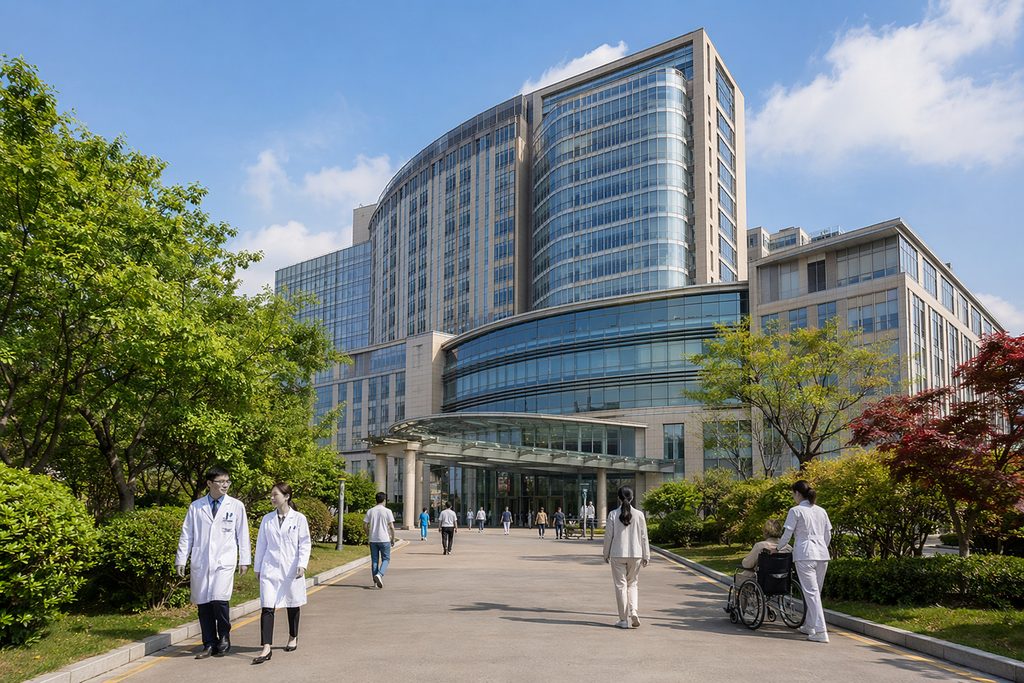
Zhongshan Hospital, affiliated with Fudan University in Shanghai, sits in the highest tier of China’s hospital ranking system. Its Department of Cardiac Surgery is not just busy—it is one of the highest-volume centers in the world. Volume matters in heart surgery. A 2017 study in the New England Journal of Medicine found that hospitals performing more than 300 bypass surgeries annually had significantly lower mortality rates than lower-volume centers. Zhongshan far exceeds that threshold. The team completes over 5,000 open-heart cases each year. Repetition breeds precision. Precision saves lives.
Clinical Volume Drives Better Outcomes
Consider the numbers. A surgeon at Zhongshan may perform 200 to 300 valve replacements or bypass procedures annually. The average cardiac surgeon in the United Kingdom performs around 100 to 125, based on Society for Cardiothoracic Surgery data. This isn’t a critique of individual skill. It’s a structural reality. High-volume centers see the rare complications, the unusual anatomies, and the edge cases often enough that they become routine. For a patient with complex multivessel disease or a calcified valve, that institutional experience translates into a smoother operation and a shorter intensive care stay.
The hospital also operates a dedicated hybrid operating suite, allowing teams to combine minimally invasive catheter-based interventions with open surgery in a single session when needed. That flexibility means fewer trips to the OR and less cumulative trauma for the patient.
Technology Deployed at Scale
Zhongshan was among the first centers in Asia to adopt transcatheter aortic valve replacement (TAVR) as a routine option for intermediate-risk patients. Their imaging protocols lean heavily on 3D transesophageal echocardiography and cardiac CT angiography for surgical planning. The perfusion team uses goal-directed perfusion strategies to reduce the inflammatory response during bypass. These are not experimental techniques. They are standard operating procedure, refined across thousands of cases.
The hospital’s intensive care units are equipped with continuous renal replacement therapy and extracorporeal membrane oxygenation (ECMO) capability, meaning the backup systems exist if a recovery gets complicated. That safety net matters when you are traveling 6,000 miles from home for an operation.
The Structural Reason Costs Stay Low
Let’s address the elephant in the room directly: how can a top-tier cardiac center charge $12,000 to $20,000 for a bypass when the same procedure bills at six figures in the U.S.? The answer has nothing to do with cutting corners. Labor costs in China’s healthcare sector are fundamentally different. A senior cardiac surgeon’s annual compensation, while competitive domestically, is a fraction of what an American cardiothoracic surgeon earns. Hospital construction costs, pharmaceutical pricing, and device costs—particularly for domestically manufactured valves and stents that meet international CE or FDA-equivalent standards—are all structurally lower.
This is not “cheap care.” It’s care delivered in an economy where the cost inputs are different. The sterilization standards, the surgical checklists, and the anesthesia protocols follow the same evidence base. The price difference reflects economics, not quality dilution.
How We Arrange Your Heart Surgery at Zhongshan Hospital: The Step-by-Step Reality
Here is where most international patient guides get vague. We won’t. The process of arranging heart surgery at Zhongshan Hospital Fudan University Shanghai has specific, non-negotiable steps. Understanding them before you book a flight is the difference between a smooth experience and a wasted trip.
Step 1: Remote Case Review and Written Second Opinion
You cannot simply call Zhongshan’s international department and book a surgery date. The hospital requires a face-to-face consultation before any surgical scheduling. But flying to Shanghai without knowing if the team will accept your case is a gamble. So we start with a written second opinion. You send us your full medical file: coronary angiogram images and reports, echocardiogram results, recent blood work, stress test data, and a summary of your cardiac history. Our team translates these documents into clinical Chinese and submits them through the hospital’s official international referral channel.
A senior cardiac surgeon reviews your file and provides a written analysis. They will confirm whether surgery is indicated, what procedure they recommend, and whether your case is suitable for treatment at Zhongshan. This written opinion costs from $300 to $500. It is not a prescription. It is a professional assessment that tells you whether it makes sense to get on a plane. If you later proceed to in-person treatment coordination with us, that fee is credited in full toward the coordination service—a one-time credit that applies within 90 days.
Step 2: The In-Person Consultation and Preoperative Workup
Assuming the written opinion is positive, we coordinate your travel. You will need an S2 visa, which is the short-stay category used for private affairs including medical treatment in China. We provide the supporting documentation—an official invitation letter from the hospital’s international department, a detailed treatment plan summary, and proof of accommodation arrangements. The visa application goes through your local Chinese embassy or consulate. Processing typically takes one to two weeks. We guide you through the paperwork, but we don’t control the embassy’s timeline. No one does.
Once you land in Shanghai, we handle the practical chaos. A bilingual medical companion meets you at the airport, gets you to your accommodation, and accompanies you to the hospital the next morning. They handle registration, queue management, payment deposits, and translation during the face-to-face surgical consultation. The surgeon will conduct a physical exam, review your imaging, and order any additional tests the hospital requires—often a repeat echocardiogram and updated labs. This is not redundancy. It is surgical due diligence.
Step 3: Surgery Scheduling and Hospital Admission
After the surgeon confirms the surgical plan, the hospital’s scheduling office assigns a date. This is not instant. The public queue moves according to clinical urgency and bed availability. For international patients going through the VIP or international department channel, the wait is typically shorter—often one to two weeks from consultation to surgery, depending on the surgeon’s schedule and your clinical stability.
Admission requires a deposit. The international department will provide an estimate based on your procedure. For a straightforward bypass, expect a deposit in the range of $15,000 to $25,000, with final billing adjusted to actual costs. Payment is made via wire transfer or major credit card. The hospital does not bill international insurance directly. You pay, then seek reimbursement from your insurer. We provide fully itemized receipts and translated discharge summaries to support your claim.
Step 4: The Procedure and In-Hospital Recovery
Your companion stays with you through admission, translates preoperative instructions, and is present on the day of surgery to keep your family updated. The surgical team handles the rest. Postoperatively, you will spend one to three days in the cardiac surgical ICU, then transfer to a step-down ward. The average total hospital stay for an uncomplicated bypass is seven to ten days. Your companion visits daily, translating rounds discussions, coordinating with nursing staff, and handling any issues that arise.
Step 5: Discharge and Postoperative Follow-Up
Before discharge, the surgical team provides a detailed recovery plan. We translate this into clear English. We also coordinate a follow-up appointment approximately two weeks post-discharge if you are staying in Shanghai for initial recovery. Many patients choose to stay locally for two to four weeks after surgery before flying home. We can recommend serviced apartments near the hospital that are suitable for early recovery.
Once you return home, you will need local cardiac follow-up. We provide a comprehensive discharge package—operative note, anesthesia record, ICU flow sheet, discharge summary, medication list, and follow-up imaging—all translated. Your home cardiologist gets everything they need to take over your care seamlessly.
What the Zhongshan Hospital Cardiac Surgery Package Price Actually Covers
Patients searching for a “Zhongshan hospital cardiac surgery package price” often expect a fixed, all-inclusive number. The reality is more nuanced. The hospital bills on a fee-for-service basis, not a packaged rate. However, based on cases we have coordinated, we can provide realistic ranges that help you plan financially.
| Procedure | Estimated Cost Range (USD) | Typical Hospital Stay |
|---|---|---|
| Coronary Artery Bypass Graft (CABG) | $12,000 – $20,000 | 7–10 days |
| Single Valve Replacement (Mechanical) | $14,000 – $22,000 | 7–10 days |
| Single Valve Replacement (Bioprosthetic) | $16,000 – $24,000 | 7–10 days |
| Minimally Invasive Valve Surgery | $18,000 – $28,000 | 5–8 days |
| Combined CABG + Valve | $22,000 – $35,000 | 10–14 days |
| TAVR (Transcatheter Aortic Valve Replacement) | $30,000 – $45,000 | 5–7 days |
These figures include the surgeon’s fee, anesthesiologist fee, operating room charges, standard ICU stay, ward bed, routine medications, and basic postoperative imaging. They do not include the cost of a private room upgrade, non-standard prosthetic devices, extended ICU stay due to complications, or your accommodation and living expenses in Shanghai. The final bill varies by hospital and case complexity. We always recommend budgeting 20% above the midpoint estimate as a contingency.
The question “is heart valve replacement safe in China” deserves a direct answer. The data says yes, at centers like Zhongshan. A 2020 study published in the Journal of the American College of Cardiology comparing TAVR outcomes across international registries found that Chinese centers with high procedural volumes achieved 30-day mortality rates comparable to those in North American and European registries—in the 1.5% to 2.5% range for intermediate-risk patients. Safety is not a function of geography. It is a function of volume, protocol adherence, and institutional experience. Zhongshan has all three.
Practical Considerations: Visas, Payments, and the Language Barrier
Let’s get into the details that trip people up. The S2 visa is the correct category for medical treatment. It is issued for short-term private affairs, typically with a stay duration of up to 180 days. Your accompanying family member also applies for an S2. The application requires an invitation letter from the Chinese hospital, which we facilitate through the international department. Processing times vary by embassy—plan for two to four weeks from application to passport return.
Payment at Zhongshan’s international department is accepted via UnionPay, Visa, Mastercard, or wire transfer. There is a daily transaction limit on foreign credit cards in China, often around $5,000 to $10,000 depending on the issuing bank. Large deposits may need to be split across multiple transactions or sent via wire transfer in advance. We walk you through this before you travel so there are no surprises at the admissions desk.
Language is the single biggest friction point for any international patient in China’s public hospitals. Zhongshan’s international department has English-speaking administrative staff, but the ward nurses, technicians, and many junior doctors communicate primarily in Mandarin. Relying on translation apps during a postoperative recovery is not realistic. A bilingual companion bridges this gap—handling everything from explaining medication schedules to clarifying discharge instructions. This is not a luxury. It is a safety measure.
For patients considering medical tourism China cardiac surgery fast track options, it is important to understand what “fast track” actually means. It does not mean skipping clinical evaluation. It means using the hospital’s VIP or international channel to compress the administrative and scheduling delays that exist in the public queue. The clinical process—consultation, workup, surgery, recovery—remains the same. What changes is the speed of access to that process. Our coordination service is designed to make that channel available to you efficiently, with transparent pricing and no false promises about guaranteed dates or outcomes.
Frequently Asked Questions
No. Zhongshan Hospital, like all public Chinese hospitals, requires an in-person consultation before scheduling surgery. You cannot secure a surgery date remotely. What you can do is obtain a written second opinion through our service, which confirms whether the surgical team will accept your case. That gives you the confidence to travel knowing that surgery is clinically indicated and the hospital is willing to proceed. The actual date gets scheduled after you arrive and complete the preoperative workup.
Zhongshan’s cardiac ICU is equipped to manage the full spectrum of postoperative complications, from bleeding and tamponade to acute kidney injury and low cardiac output syndrome. The hospital has ECMO capability and a dedicated cardiac surgical intensivist team in-house 24 hours a day. Your informed consent process before surgery will cover the specific risks of your procedure. We strongly recommend that all international patients carry medical travel insurance that includes complication coverage and medical evacuation, though the need for evacuation is rare given the hospital’s capabilities.
Plan for a minimum of four weeks: one week for preoperative consultation and workup, one week for the surgery and inpatient recovery, and two weeks for early outpatient recovery before flying. Some patients stay longer—up to six or eight weeks—to complete initial cardiac rehabilitation and attend a follow-up echocardiogram before returning home. Long-haul flights immediately after sternotomy are uncomfortable and carry a small thromboembolic risk. Your surgeon will clear you for travel based on your clinical status, typically around two to three weeks post-discharge for uncomplicated cases.
Almost always, yes. The key is providing complete, well-translated documentation. We prepare a comprehensive discharge package that includes the operative note, anesthesia record, perfusion data, ICU summary, discharge medication list, and any postoperative imaging on a USB drive. This is the same documentation your home cardiologist would receive if you had surgery locally. We have never encountered a case where a home cardiologist refused to provide follow-up care when given proper records. If you are concerned, we recommend speaking with your cardiologist before you travel to establish the follow-up plan.
Your Next Step
Arranging heart surgery abroad is not a decision you make lightly
For more medical information and treatment options in China, visit chinamedservices.com (China Medical Services).
