Multiple Brain Tumors Care at Huashan in China: What Families Need to Know
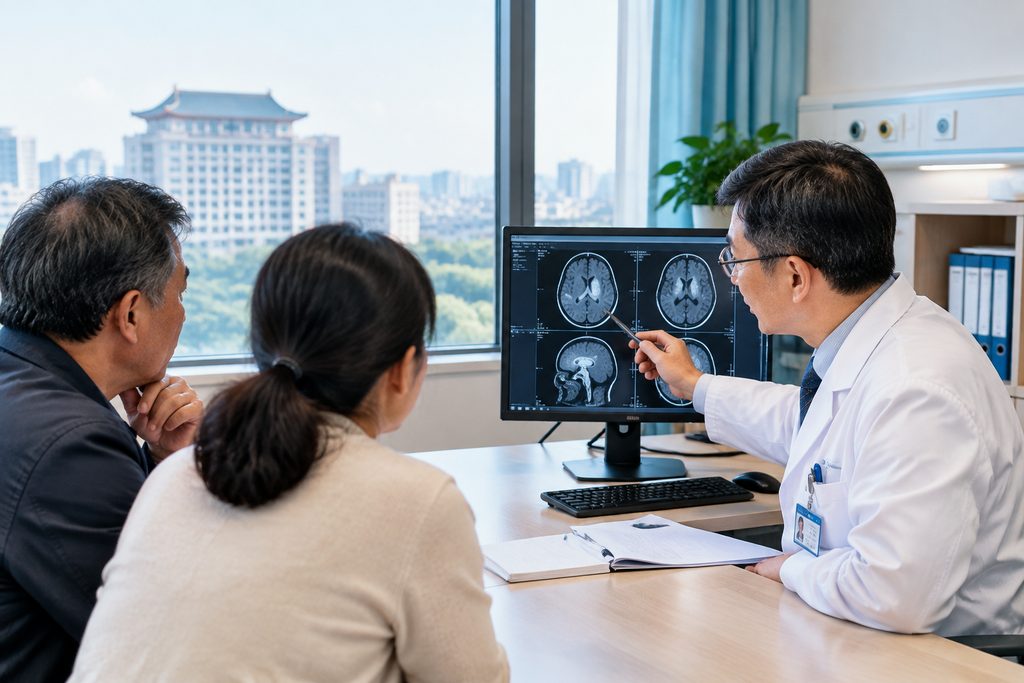
Multiple Brain Tumors Care at Huashan in China: What Families Need to Know
When a scan shows more than one lesion in the brain, the first question families ask is rarely about hospitals. It is about time. Multiple brain tumors care at Huashan in China draws international attention for one reason: Huashan Hospital, affiliated with Fudan University in Shanghai, is consistently ranked among China’s leading centers for neurosurgery and neurology. For patients facing a diagnosis that often requires urgent, coordinated decisions, that reputation matters.
But reputation alone does not get you an appointment. It does not translate your MRI reports, secure a visa, or explain why the surgeon wants a specific scan repeated. This guide walks through what international patients actually encounter when pursuing care at Huashan — the process, the costs, the timeline, and the honest limitations.
The core reality: Huashan’s neurosurgery department sits in the Fudan University Hospital Ranking’s top tier for its specialty, and the hospital treats a very high volume of complex neuro-oncology cases each year. Access for foreign patients runs through the international department, not the standard outpatient queue.
How This Actually Works, Step by Step
Here is the real sequence, from the moment a family decides to explore Huashan to the point where a treatment plan exists.
Step one: gather and translate records. You collect what you already have — MRI and CT imaging on disc or in DICOM format, pathology reports if a biopsy was done, surgical notes, medication lists, and recent bloodwork. These get professionally translated into Chinese. Radiology images matter more than the written report here; Huashan’s neuroradiologists will read the actual scans.
Step two: written second opinion. The translated file goes to the relevant specialty team — typically neurosurgery, neuro-oncology, or radiation oncology depending on the tumor type. A written analysis comes back: how the case reads to them, what additional imaging or testing they would want, and whether they see a surgical, radiotherapeutic, or systemic treatment pathway. This usually takes five to ten business days.
Step three: video consultation. If the written opinion suggests a path forward, you speak directly with the Chinese team online. You describe symptoms, ask about their approach, and hear their recommendations in real time with interpretation. This is where most families decide whether to travel.
Step four: appointment coordination and visa. Once you commit to coming, the international department coordinates registration, the medical card, and a consultation slot. You apply for an S2 visa, the short-stay category used for medical treatment and private affairs, with supporting hospital documentation. Processing typically runs four to ten business days at most consulates, though this varies.
Step five: arrival, in-person consultation, and admission. You meet the specialist in person. If surgery or another intervention is recommended and you agree, admission is arranged subject to the hospital’s own scheduling and bed availability. Nothing about this stage is guaranteed in advance.
Why Huashan Specifically Attracts Neuro-Oncology Patients
Huashan Hospital’s Department of Neurosurgery is one of the largest and busiest in China. The hospital is regularly listed in the top tier of the Fudan University Hospital Ranking for neurosurgery, and its neurology department carries similar standing. That concentration of cases produces something hard to replicate elsewhere: pattern recognition.
Multiple brain tumors — whether metastatic spread from a primary cancer elsewhere, multifocal gliomas, or lesions from conditions like neurofibromatosis — sit at the intersection of several specialties. Neurosurgery, medical oncology, radiation oncology, pathology, and neuroradiology all have a voice. Huashan runs multidisciplinary team (MDT) discussions for exactly these cases, and that format is where complex decisions get made.
Volume matters too. A center that reviews hundreds of multifocal brain cases a year develops judgment that a lower-volume hospital simply cannot. This is not a marketing claim; it is how surgical and oncological expertise accumulates.
For a broader look at how Chinese specialty rankings work across 45 departments, our department-by-department Top 10 hospital guide breaks down where each field’s strongest centers sit.
A Realistic Timeline
Families consistently underestimate how long the administrative layers take. Here is a grounded picture.
| Stage | Typical Duration | What Causes Delays |
|---|---|---|
| Record collection & translation | 3–7 days | Missing imaging discs, incomplete pathology |
| Written second opinion | 5–10 business days | Specialist review queue, requests for extra scans |
| Video consultation scheduling | 3–7 days | Time zone alignment, interpreter availability |
| S2 visa application | 4–10 business days | Consulate workload, incomplete hospital invitation documents |
| Appointment & travel | 1–3 weeks | Flight availability, specialist clinic slots |
| In-person consult to admission | 2 days–3 weeks | Bed availability, pre-op testing, MDT scheduling |
Total from first contact to sitting in front of a Huashan specialist: roughly four to eight weeks in a non-emergency case. Genuine emergencies move faster, but they also require the hospital to accept the case first.
What Can Go Wrong — and What Happens Then
Honesty here is more useful than reassurance.
The specialist may decline the case. If the imaging suggests the patient is better served by a treatment available closer to home, or if the disease stage makes travel inadvisable, Huashan’s team will say so. That is a legitimate outcome, not a failure.
The plan may change after arrival. Remote review is based on images and reports. An in-person examination, fresh imaging, or a new biopsy can shift the recommendation entirely. Families should budget for this possibility emotionally and financially.
Appointment slots may not match your preferred date. Public hospital scheduling is dense. If a specific specialist’s clinic is full, the international department may offer a different consultant of comparable seniority. We coordinate as best we can, but we cannot promise a named surgeon or a fixed surgery date.
Visa timing can slip. Consulates occasionally request additional documents. Build a buffer week into your plans.
Language breakdowns happen. Even with English-speaking staff at the international desk, the clinical environment runs in Chinese. This is the single most common source of stress for families, and the reason bilingual accompaniment exists.
Understanding Costs Before You Commit
Cost is where China’s hospitals offer the most dramatic contrast with the US and Western Europe — and where patients most often get surprised by the details.
For complex neurosurgery, published comparisons place Chinese tertiary hospital charges at a fraction of US rates for equivalent procedures. A craniotomy for tumor resection at a top Chinese public hospital typically falls in the range of $15,000–$35,000 including hospital stay, before complications. The same procedure in the US commonly exceeds $100,000. These figures vary substantially by hospital, tumor complexity, ICU days, and whether radiation or systemic therapy follows.
Public hospitals in China require prepayment. International insurance is usually reimbursed after the fact, not billed directly — except at private international hospitals, which often do offer direct billing.
Accessing Huashan’s senior specialists through the international department costs roughly 1.5 to 2 times the standard channel rate. That premium buys English-language coordination and a faster path to a consultant-level appointment.
Our directory of 340+ top-ranked Chinese hospitals across 37 cities lets you compare centers by city and specialty before deciding where to focus.
Practical Considerations: Records, Visa, Payment, and Follow-Up
Records. Bring imaging in DICOM format, not just printed reports. Pathology slides or blocks, if a biopsy was performed, should travel with you — Huashan’s pathologists may want to re-review them.
Visa category. The S2 visa is the applicable short-stay category for medical treatment and private affairs; stays beyond 180 days fall under S1. Accompanying family members apply under the same category. Note clearly: the M visa is for commercial and trade activity and has nothing to do with medical care. Requirements shift, so confirm current rules with the nearest Chinese embassy or consulate.
Payment. Expect to prepay at public hospitals. Carry proof of funds and confirm the payment methods the international department accepts before arrival.
Follow-up at home. Ask early how post-operative imaging and oncology follow-up will be handled once you return. Some Chinese centers coordinate with your local oncologist; others hand off entirely. Clarify this before surgery, not after.
Frequently Asked Questions
Not through the standard public outpatient channel, which operates on same-day registration. International patients go through the hospital’s international department, which handles registration, medical card creation, and consultation scheduling. A written second opinion and video consultation usually come first, so the team can assess whether an in-person visit is warranted.
It depends heavily on the treatment path. Surgical resection at a top public hospital generally runs $15,000–$35,000 including stay, before complications. Radiation therapy and systemic treatment add separate costs. Written second opinions run $300–$500, and top-specialist video consultations $500–$800. Final figures require case-specific review — no honest provider quotes a fixed number upfront.
That happens, and it is useful information. If the team concludes that travel would not change the outcome, or that a treatment available in your home country is equivalent, they will tell you. You lose the consultation fee, not the trip. Any consultation fee is credited in full toward on-the-ground coordination if you proceed within 90 days.
Your Next Step
Multiple brain tumors demand fast, well-informed decisions, and Huashan’s neuro-oncology depth is a genuine asset for families willing to navigate the logistics. The path runs through records, a written opinion, a video conversation, and only then travel — a staged approach that avoids committing to a long trip before you know whether it makes sense.
China Medical Services connects international patients with top-ranked Chinese hospitals. We are not physicians and we do not practice medicine; we handle translation, appointment coordination through official international departments, and bilingual accompaniment on the ground. If you want to understand your options, start with a free consultation at our patient services page — no pressure, just a clear picture of what is possible.
This article is for general information only and does not constitute medical advice. Treatment decisions should always be made with qualified clinicians who have reviewed your individual case.
For more medical information and treatment options in China, visit chinamedservices.com (China Medical Services).
