Neuromuscular Scoliosis in Shanghai: How to Book Expert Care
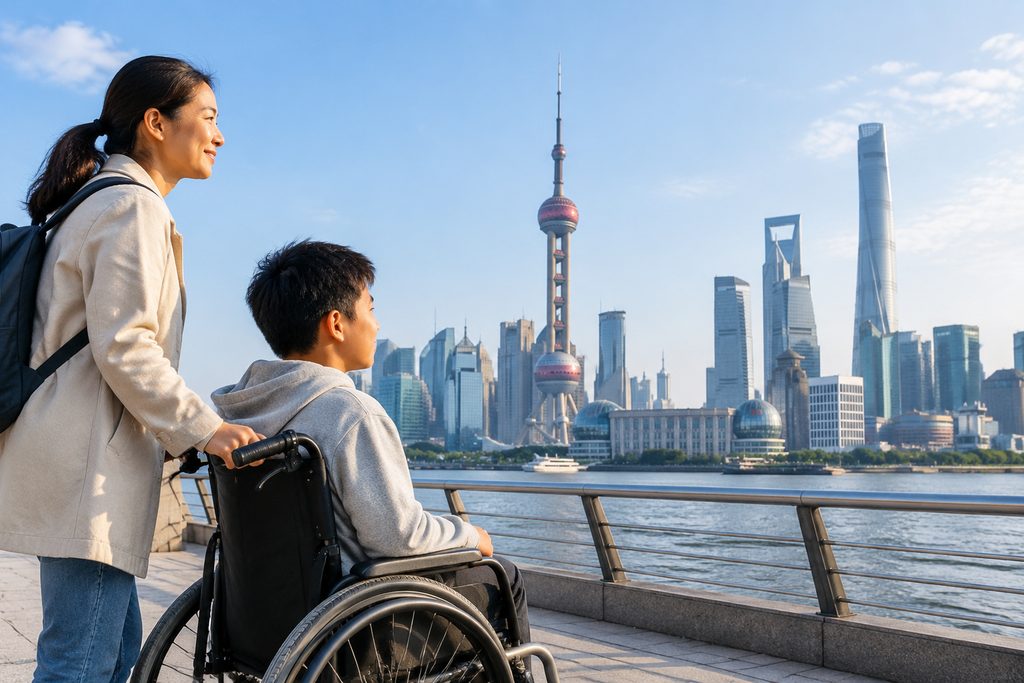
Neuromuscular Scoliosis in Shanghai: How to Book
You have probably heard that booking surgery in China means compromising on quality — that foreign patients get the leftover slots, the rushed consultations, the surgeons who don’t speak your language. For neuromuscular scoliosis, that fear is understandable. This is a complex spinal deformity tied to an underlying neurological or muscular condition, not a straight-forward curve. The reality of Shanghai’s top-tier spine centers runs opposite to the stereotype. The hard part is not the surgery. It is the booking pathway, and most families get lost there before they ever reach a surgeon. This guide walks you through the neuromuscular scoliosis surgery cost Shanghai families actually face, how to book, and what to expect at each stage.
What Is Neuromuscular Scoliosis Treatment in Shanghai?
Neuromuscular scoliosis is not the same as adolescent idiopathic scoliosis. It develops because the muscles and nerves that support the spine don’t work normally — conditions like cerebral palsy, spinal muscular atrophy, muscular dystrophy, or spina bifida sit behind it. The curve tends to progress faster, involves the pelvis, and often needs a longer fusion than idiopathic cases. That changes everything about the treatment plan.
Shanghai’s major public hospitals handle these cases within their orthopedic and spine surgery departments. The city hosts 18 hospitals on the Fudan Top 100 ranking — the second-largest concentration in China after Beijing. Several of them run dedicated spine deformity programs with high annual surgical volumes. What does that volume mean for you? Repetition. Teams that perform complex pediatric and adult deformity corrections week after week develop patterns, protocols, and complication-management routines that lower-volume centers simply don’t have.
Treatment itself usually follows a staged logic. Bracing and observation for younger or milder curves. Growth-friendly instrumentation in some skeletally immature patients. Definitive posterior spinal fusion with instrumentation when the curve is severe or progressive. Because neuromuscular curves often extend into the pelvis, the surgical plan is individualized — there is no template. That is exactly why the evaluation phase matters more here than in almost any other spine condition.
How This Actually Works, Step by Step
Here is the real sequence, from your living room to a Shanghai operating room.
Step one — you send records. You gather what you already have: recent X-rays, MRI or CT scans of the spine, a neurologist’s or physiatrist’s report, genetic testing if available, and any documentation of the underlying condition. Digital files, DICOM format for imaging. No travel yet.
Step two — a Chinese spine specialist reviews them. Through a written second opinion, the relevant department reads your imaging and history and returns a written analysis: is surgery indicated, what approach is likely, what additional tests would be needed in person, and roughly what the case involves. This is analysis and direction, not a prescription.
Step three — you speak with the team. A video consultation lets you ask the questions that matter to you: expected correction, fusion length, recovery trajectory, what happens with the underlying neuromuscular condition. You hear recommendations directly rather than through a summary.
Step four — appointment coordination. Once a plan looks feasible and you agree, our team coordinates registration through the hospital’s international or VIP channel, creates the medical card, and arranges the in-person consultation. Public hospitals in China generally cannot be pre-booked from overseas through the standard outpatient queue — you take a number the same day. Locking a specific surgeon and date ahead of arrival means going through the international department, which typically runs 1.5 to 2 times the standard channel price.
Step five — you arrive, consult, and are admitted. The surgeon examines you in person, confirms the plan, and admission follows hospital rules. Nobody can promise admission in advance. What we can do is make sure the paperwork, imaging, and communication are ready so the decision happens quickly.
What Does Neuromuscular Scoliosis Surgery Cost in Shanghai?
Packages vary widely and there is no industry standard. A complete arrangement usually covers hospital matching, appointment coordination, bilingual companion services, airport transfer, and visa guidance. Surgery and hospitalization are billed separately by the hospital. Be cautious of any quote that bundles everything into one figure without a line-item breakdown.
Safety depends on the individual case, the anesthesia team, and the hospital’s experience with these patients. Neuromuscular scoliosis carries higher baseline risk than idiopathic curves, and any qualified surgeon will discuss this openly. No outcome can be guaranteed. The right approach is a thorough remote evaluation followed by an honest in-person assessment.
The S2 visa covers short-stay medical treatment, and accompanying family members apply under the same category. Processing times vary by consulate and season, typically a few weeks. Requirements change, so verify current rules with your local Chinese embassy. Approval is never guaranteed.
For complex deformity surgery, plan on four to eight weeks minimum: pre-operative evaluation, surgery, hospital recovery, and early rehabilitation. Surgeon clearance is required before long-haul flights, and that usually comes six to twelve weeks after surgery. Build flexibility into your return plans.
Your Next Step
The core message is simple: Shanghai’s top spine centers handle complex neuromuscular deformity at high volume and a fraction of Western cost, but the booking pathway — not the surgery — is where families stumble. Start with records, get a written opinion, and let the medical picture drive the logistics. China Medical Services connects international patients with 340+ top-ranked hospitals across 37 cities, and we are clear about what we are not: we are not doctors, we cannot promise admission or outcomes, and we will tell you when a plan doesn’t make sense. If you want a straight answer about whether Shanghai is the right next step for your case, start a free consultation and we will walk through it with you.
This article is for general information only and does not constitute medical advice. Treatment decisions should always be made with a qualified physician who has reviewed your individual case.
Frequently Asked Questions
Yes. The hospitals used for international patients are JCI-accredited and follow the same international safety standards as top hospitals in the US and Europe. Surgical teams perform high volumes of procedures — often more than their Western counterparts — which studies show leads to better outcomes.
Costs vary by procedure and hospital, but international patients typically save 40-80% compared to US prices — even when factoring in travel and accommodation. A consultation with our team will give you an exact, all-inclusive quote with no hidden fees.
Send us your existing medical reports to get started. We handle everything from hospital selection and appointment scheduling to visa assistance and post-operative recovery planning. Your medical records are reviewed by the specialist before you even book a flight.
For more medical information and treatment options in China, visit chinamedservices.com (China Medical Services).
