Beijing Tiantan Hospital International Patient Service: Neurosurgery and Neurology for Foreigners
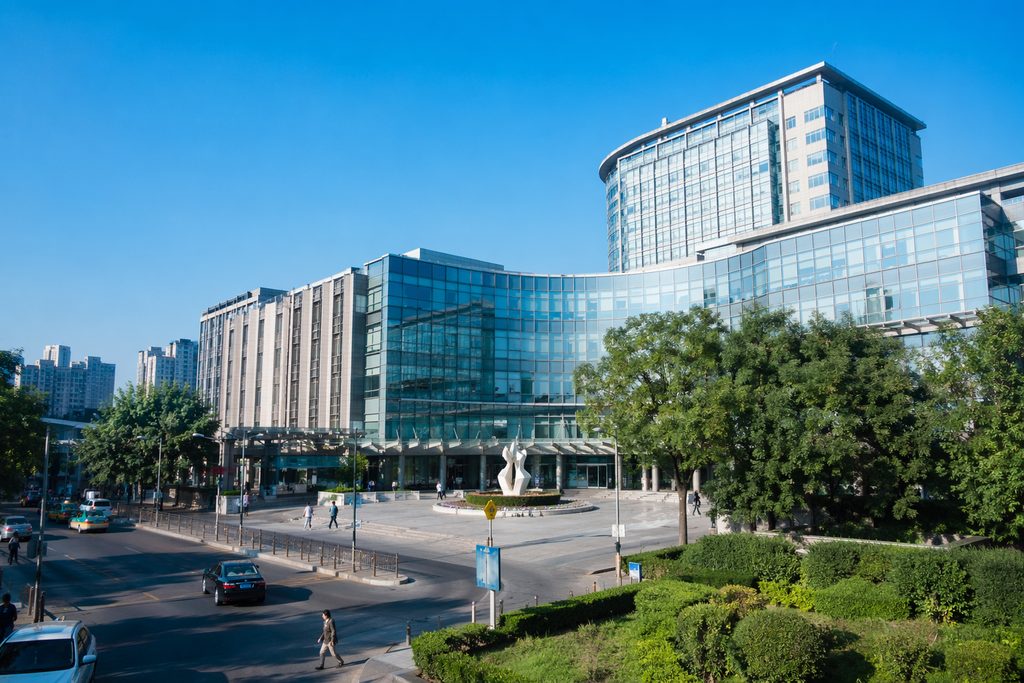
Key Takeaways
- Beijing Tiantan Hospital performs over 10,000 neurosurgeries annually, making it one of the highest-volume neurosurgical centers on the planet — volume that directly correlates with better patient outcomes.
- The international patient price at Beijing Tiantan Hospital for complex brain tumor surgery typically ranges from $25,000 to $45,000, compared to $150,000 to $300,000 in the United States.
- Navigating Tiantan’s public registration system without Mandarin fluency is functionally impossible — the hospital’s international department exists specifically to bridge this gap for foreign patients.
- You cannot book neurosurgery remotely before an in-person consultation. Any service promising a locked-in surgery date from abroad is misrepresenting how Chinese public hospitals operate.
The Problem: A Brain Tumor Diagnosis Comes With Two Clocks Ticking
According to the American Brain Tumor Association, approximately 90,000 people in the United States receive a primary brain tumor diagnosis each year. For many, the news arrives with a second, quieter blow: the wait. In Canada, the median wait time from specialist consultation to neurosurgery stretches to 33 days for non-emergency cases, per the Fraser Institute’s 2023 report. In the UK’s NHS, the constitutional target of 18 weeks from referral to treatment is missed for roughly one in three neurology patients. When a mass is pressing against your brain, weeks feel like months. And months can feel like a gamble you did not choose to place.
Then comes the financial reckoning. A craniotomy for tumor resection in the United States averages $150,000 to $300,000 in hospital charges alone. Even with solid insurance, out-of-pocket costs routinely exceed $30,000. For uninsured or underinsured patients, the numbers are simply prohibitive. They force impossible choices. Delay treatment. Drain retirement savings. Or search for options beyond their borders.
Who We Are
We are not a hospital. We do not employ surgeons, we do not diagnose conditions, and we do not make clinical recommendations. What we do is remove the logistical obstacles that stand between you and China’s most distinguished medical institutions. Our team coordinates the unglamorous but essential work: translating medical records, scheduling consultations through official hospital international departments, arranging bilingual medical companions who navigate the physical chaos of a 10,000-patient-per-day hospital campus, and guiding you through the S2 visa process. We are case managers and logistical architects. You bring the medical need. We handle everything wrapped around it.
Why Beijing Tiantan Hospital Dominates Global Neurosurgery
Beijing Tiantan Hospital is not simply “good” at neurosurgery. It is, by clinical volume, the largest neurosurgical center in the world. The hospital’s Department of Neurosurgery handles over 10,000 surgeries annually across 21 subspecialty wards. To put that in perspective: the average neurosurgery department at a major US academic medical center performs between 1,000 and 2,500 procedures per year. Tiantan does in one year what many excellent hospitals do in a decade.
This volume is not just a vanity metric. A 2020 systematic review published in The BMJ found a consistent inverse relationship between surgical volume and mortality across multiple high-risk procedures, including brain tumor resections. Surgeons who perform a procedure hundreds of times per year simply see complications that lower-volume peers encounter once in a career. They recognize them earlier. They respond faster. The pattern holds across specialties and across borders.
Clinical Volume Drives Better Outcomes
Tiantan’s neurosurgeons specialize to a degree that is structurally impossible in smaller systems. One team handles only skull base tumors. Another focuses exclusively on cerebrovascular malformations. A third manages pediatric neuro-oncology. This hyper-specialization is a direct product of patient volume. When you see 400 glioma cases per year instead of 40, pattern recognition sharpens. Surgical intuition deepens. The hospital’s own published data reports a gross total resection rate exceeding 90% for certain glioma subtypes — meaning the tumor is removed fully, with no visible residual on post-operative imaging. In glioblastoma, where extent of resection is one of the strongest predictors of overall survival, that number matters enormously.
But let’s be direct: outcome statistics from Chinese hospitals are not always published with the same rigor as Western registries. Independent verification is harder to come by. What we can say is that international patients who choose Tiantan are betting on volume and specialization — two variables with strong, peer-reviewed links to surgical outcomes.
Technology Deployed at Scale
Tiantan was an early adopter of intraoperative MRI (iMRI) in China, a technology that allows surgeons to scan the brain mid-surgery and verify that tumor removal is complete before closing. The hospital operates multiple iMRI suites alongside neuronavigation systems, intraoperative neurophysiological monitoring, and awake craniotomy protocols for tumors near eloquent brain regions. These are standard tools at top Western centers. What is different is the throughput: Tiantan’s imaging and surgical systems run extended hours, compressing wait times that stretch for weeks elsewhere into days.
For international patients, this efficiency translates into a tangible benefit. Once you arrive and complete your initial consultation, the pathway from diagnosis confirmation to surgery is measured in days, not months.
The Beijing Tiantan Hospital International Patient Price Reality
Let’s talk numbers. The Beijing Tiantan Hospital international patient price for a craniotomy with tumor resection typically falls between $25,000 and $45,000. This covers hospital fees, surgeon fees, anesthesia, and standard post-operative ICU care through the hospital’s international department. Complex cases — those requiring extended ICU stays, multiple surgical approaches, or combined procedures — can push the total toward $55,000 or higher.
Compare that to the United States, where the same procedure runs $150,000 to $300,000. Or to Western Europe, where private-pay rates for international patients at top centers hover between $60,000 and $120,000. The brain tumor surgery cost for foreigners China offers is, structurally, a fraction of what Western systems charge. Why? Not because Chinese surgeons earn less — though labor costs are lower — but because hospital operational models differ. Chinese public hospitals operate on thin margins with high throughput. They are not profit-maximizing in the way a US private hospital must be. The cost difference is real. It is not a signal of lower quality.
What You Need to Know Before Going Alone
Honesty matters here. Beijing Tiantan Hospital is a public institution that serves a domestic patient population of staggering size. Its main campus in Fengtai District handles outpatient visits numbering in the tens of thousands daily. The registration halls are loud, crowded, and operate entirely in Mandarin. Signage is sparse. Queues form before dawn. Even Chinese nationals from other provinces find the experience overwhelming. For a foreign patient with no Mandarin ability and no local guide, attempting to navigate Tiantan independently is not brave — it is a recipe for failure.
- You cannot book surgery from abroad: Chinese public hospitals require an in-person consultation before any surgical scheduling. This is non-negotiable. The surgeon must evaluate your imaging, take a history, and personally determine the surgical plan. Anyone offering a guaranteed surgery date before you have stepped foot in Beijing is either misinformed or dishonest. How to get neurosurgery at Beijing Tiantan Hospital starts with getting on a plane, having your records translated, and sitting across from the specialist.
- Payment is upfront: Public hospitals in China operate on a prepaid deposit system. You deposit funds at admission, the hospital deducts costs as treatment proceeds, and any remainder is refunded at discharge. Insurance reimbursement happens after the fact, between you and your insurer. The hospital does not bill Western insurance companies directly. This is a cash-flow reality that surprises many international patients.
- Language is a hard barrier: Tiantan’s international department provides English-speaking coordinators, but the surgeons, nurses, and technicians you encounter daily speak Mandarin. Your morning rounds, your pre-op instructions, your post-op rehabilitation guidance — all in Chinese. Without a bilingual medical companion, you will miss critical information and be unable to ask basic questions. This is not a minor inconvenience. It is a safety issue.
How We Help You Navigate This
You can schedule an initial consultation remotely through the international department. You cannot book surgery or inpatient treatment without an in-person evaluation. The process works like this: we coordinate your appointment, you travel to Beijing, the specialist reviews your case, and if surgery is indicated, you are placed on the surgical schedule. The wait from consultation to surgery is typically 3 to 10 days for urgent cases. This is significantly faster than most Western systems.
Tiantan has a dedicated rehabilitation department, but post-operative rehab is an area where expectations need calibration. Inpatient rehab stays are shorter than Western norms. Intensive physical, occupational, and speech therapy typically happens after discharge, often at separate rehabilitation facilities. For international patients, we often coordinate a hybrid approach: early rehab at Tiantan, followed by transfer to a private rehabilitation center in Beijing or continued therapy in your home country. Plan for this upfront — do not assume a seamless rehab experience without coordination.
The cost differential is structural, not qualitative. Chinese public hospitals operate on a high-volume, low-margin model. Physician salaries, while rising, are a fraction of US neurosurgeon compensation. Hospital construction costs, equipment amortization, and administrative overhead are all lower. Malpractice insurance premiums — a massive line item in US healthcare — are negligible in China’s system. None of these factors correlate with surgical quality. They are economic and regulatory differences, not clinical ones.
“Best” is always contextual. For pure neurosurgical volume and subspecialty depth, Tiantan is unmatched. But other Chinese centers excel in specific areas: Shanghai’s Huashan Hospital is world-renowned for gamma knife radiosurgery and pituitary tumor resection. Beijing’s Xuanwu Hospital leads in cerebrovascular intervention and stroke management. The best neurosurgery hospital in China for international patients depends on your specific diagnosis. Tiantan’s strength is breadth and volume across the full neurosurgical spectrum. For complex, high-risk tumor resections, it is almost always on the shortlist.
Your Next Step
A brain tumor diagnosis forces decisions under pressure. The system you were born into may not be the system that gives you the best shot. Beijing Tiantan Hospital represents a genuine alternative — high-volume, highly specialized, and priced at a level that does not require financial ruin to access. But it demands navigation. The gap between “excellent surgeon” and “successful foreign patient experience” is filled with logistics, language, and local knowledge. We exist to close that gap.
If you are weighing your options, reach out for a free consultation. No commitment. No pressure. Just an honest conversation about whether this path makes sense for your specific situation.
Frequently Asked Questions
Yes. The hospitals used for international patients are JCI-accredited or major Grade 3A tertiary centres and follow the same international safety standards as top hospitals in the US and Europe. Surgical teams perform high volumes of procedures — often more than their Western counterparts — which studies show leads to better outcomes.
Costs vary by procedure and hospital, but international patients typically save 40-80% compared to US prices — even when factoring in travel and accommodation. A consultation with our team will give you an exact, all-inclusive quote with no hidden fees.
Send us your existing medical reports. The relevant specialty reviews them and gives you a written opinion, including treatment direction and options, before you commit to any travel. From there you can add a video consultation with the doctor, or have us attend an appointment on your behalf.
For more medical information and treatment options in China, visit chinamedservices.com (China Medical Services).
