Suzhou Full Body Checkup: How to Arrange It Step by Step
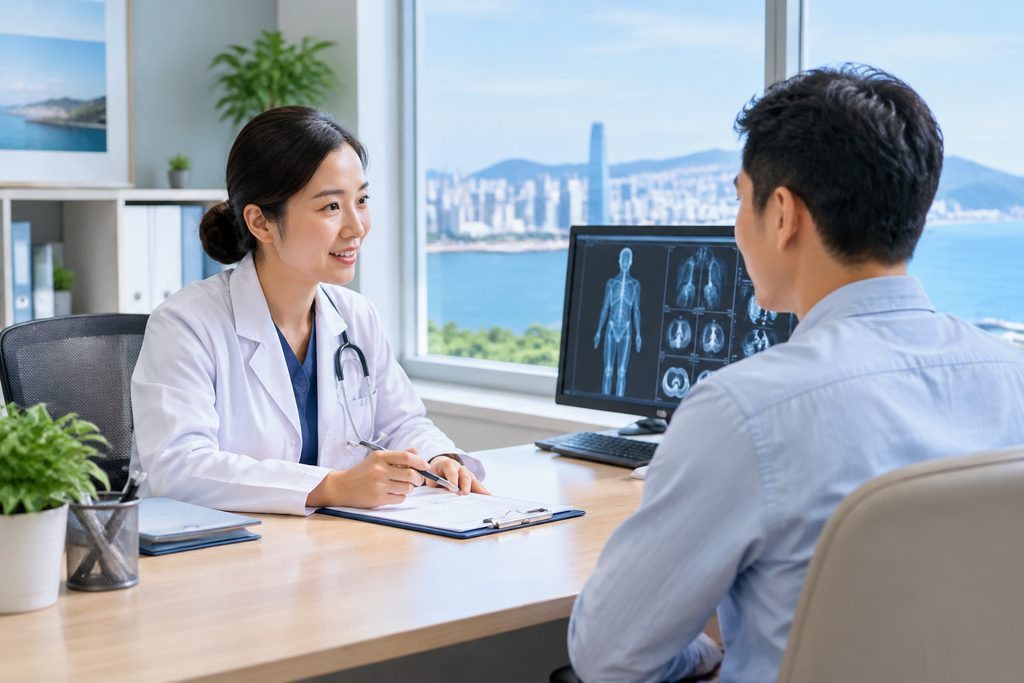
Key Takeaways
- A comprehensive full body checkup at a top-tier Suzhou hospital typically runs $400–$1,500, depending on how deep the screening goes — a fraction of equivalent executive physicals in the US.
- Suzhou sits in Jiangsu province, one of China’s strongest medical regions, with several Grade 3A (tertiary) hospitals offering dedicated international health screening centers.
- You cannot simply walk in and book online from overseas. Public hospital checkup slots usually require advance coordination, and popular packages fill weeks ahead.
- Language is the real barrier. Most checkup staff speak little English, so understanding your own report afterward matters as much as getting the scan.
Here is a number that surprises most people: a full-body MRI plus a comprehensive lab panel at a leading Chinese hospital can cost less than a single afternoon of imaging in the United States. For international patients weighing a health screening abroad, the full body checkup cost Suzhou offers is genuinely competitive — and the city’s hospitals are more capable than many travelers assume.
But cost is the easy part. The hard part is arranging it. China’s public hospitals do not run like Western clinics, and the booking process trips up first-time visitors. This guide walks through how to arrange a full body checkup in Suzhou, what it actually costs, which hospitals to consider, and where the friction points are.
The Problem: Health Screening Is Expensive and Slow Back Home
In the United States, a comprehensive executive physical — the kind with advanced imaging, cardiac screening, and a full metabolic panel — routinely runs $2,500 to $5,000 out of pocket. Insurance often covers none of it, because it is classified as preventive rather than diagnostic. In the UK, private full-body screening packages through major clinics start around £1,500 and climb past £3,000 for anything involving MRI.
Wait times add insult to injury. Non-urgent MRI appointments in parts of Canada and the UK can stretch weeks or months. And many people who want screening simply cannot get it — they are told they are “too young” or “not symptomatic enough” for advanced imaging under public systems.
That gap is why medical tourism for health screening has grown. Patients want answers about their own bodies without waiting for a crisis to justify the tests.
Why Suzhou Delivers Results for Health Screening
Suzhou is not usually the first Chinese city that comes to mind for medical travel. Beijing and Shanghai dominate the headlines. But Suzhou sits roughly 30 minutes from Shanghai by high-speed rail, and Jiangsu province ranks among China’s top medical regions. That proximity matters — you get access to a serious hospital network without Shanghai’s crowds.
Clinical Depth at Regional Scale
Suzhou’s major hospitals are Grade 3A facilities, the highest tier in China’s hospital classification. They handle high patient volumes daily, which means their imaging equipment runs constantly and their lab throughput is enormous. For a screening patient, that translates into fast turnaround — many full checkup packages deliver results within 24 to 72 hours, sometimes same-day for basic panels.
Equipment That Matches Global Standards
Top Suzhou hospitals operate 3T MRI scanners, 128-slice and higher CT machines, and digital PET-CT where available. These are the same platforms used in Western academic centers. The difference is not the hardware. It is the workflow — Chinese hospitals process far more scans per machine per day, which is why scheduling is faster once you are in the system.
Cost Structure Without Quality Trade-Offs
Lower prices in China come from labor economics and volume, not from cutting corners. Radiologist salaries, facility overhead, and administrative costs are structurally lower than in the US or Western Europe. The clinical standards at Grade 3A hospitals are set nationally and audited. You are paying less for the same imaging because the underlying cost base is different — not because the machine is older or the technician less trained.
| Checkup Package Level | Typical Suzhou Price (USD) | US Equivalent | What It Usually Includes |
|---|---|---|---|
| Basic screening | $400–$600 | $800–$1,500 | Blood panel, urinalysis, ECG, chest X-ray, basic ultrasound |
| Comprehensive | $700–$1,000 | $2,000–$3,500 | Above plus abdominal ultrasound, thyroid, tumor markers, cardiac stress test |
| Advanced / executive | $1,000–$1,500 | $3,500–$5,000+ | Above plus MRI, low-dose CT, gastroscopy, specialized screening |
Prices vary by hospital and case complexity, and add-ons like colonoscopy or PET-CT push the total higher. Treat these as reference ranges, not quotes.
How to Arrange a Full Body Checkup in China: The Actual Steps
This is where most guides get vague. Here is the real sequence.
Step 1 — Choose the hospital tier. Public Grade 3A hospitals offer the best value. Private international hospitals in the region offer English-speaking staff and shorter waits but cost 1.5 to 3 times more.
Step 2 — Pick the package, not the doctor. Health checkups in China are sold as bundled packages, not individual tests ordered by a physician. You select a tier, and the hospital runs the standardized panel. Customization is possible but limited.
Step 3 — Book in advance. Public hospital checkup centers often require booking days to weeks ahead, especially for packages including MRI or endoscopy. Walk-ins are sometimes accepted for basic panels but not for advanced imaging.
Step 4 — Bring your passport and prior records. You will need your passport for registration. Bring any previous imaging or lab results if you want the Chinese physicians to compare.
Step 5 — Attend fasting. Most comprehensive packages require 8 to 12 hours of fasting for blood work and abdominal ultrasound. Morning slots are standard.
Step 6 — Collect and understand the report. Results come in Chinese. This is the single biggest practical hurdle for foreign patients. Without translation, a report full of numbers is nearly useless.
Choosing the Best Hospital in Suzhou for a Full Body Checkup
There is no single “best” hospital — it depends on what you need. Here is how to evaluate your options.
For value and clinical depth: Look at the large public Grade 3A hospitals with dedicated health examination centers. These handle high volumes and offer the widest package range. You can browse comparable top-ranked facilities through our directory of China’s leading hospitals to understand the tier you are targeting.
For English service and comfort: Private international hospitals and the international departments of major public hospitals provide English-speaking coordinators, appointment scheduling, and translated reports. Expect to pay more.
For specialized screening: If your family history points to cardiac, oncological, or neurological risk, choose a hospital with strength in that department rather than a generic checkup center. Our specialty rankings by department can help you match the right facility.
One honest caution: the phrase “best hospital in Suzhou for full body checkup” gets thrown around loosely online. Rankings exist, but they are not the whole story. A hospital ranked highly overall may still have a routine checkup center that feels assembly-line. Ask about patient volume per day and whether a physician reviews your results with you personally.
Is a Full Body Checkup in China Reliable?
This is the question every prospective patient should ask, and the honest answer is: it depends on where you go and how you interpret the results.
Grade 3A hospitals in China follow national clinical standards and use internationally recognized equipment. Their imaging and lab results are technically reliable. Many Chinese hospitals participate in international quality accreditation programs, and some hold JCI certification.
The reliability concern is not the test itself — it is the interpretation and follow-up. A screening that flags an abnormality is only useful if someone explains what it means and what to do next. That requires either a Chinese-speaking physician you trust or a proper translation and second-opinion process.
Also worth understanding: Chinese checkup packages sometimes include tests that Western guidelines do not routinely recommend, such as broad tumor marker panels. These can produce false positives and anxiety. Discuss with a qualified physician which results actually warrant follow-up.
Practical Considerations for International Patients
Visa. Medical travel to China uses the S2 visa, which covers short-stay visits for medical treatment and private affairs. Accompanying family members apply under the same category. Requirements and supporting documents are set by the latest embassy or consulate guidance, and approval is never guaranteed — plan with buffer time. Note that the M visa is for commercial and trade activities and is not the correct category for medical visits.
Payment. Public hospitals generally require prepayment, with insurance reimbursement handled afterward by you. Private international hospitals often bill insurance directly. Bring a card that works internationally, and confirm accepted payment methods in advance.
Language. Assume no English at public hospital checkup counters. Registration, queueing, payment, and report collection all happen in Chinese. This is the most common point where independent travelers get stuck.
Timing. Budget two to three days in Suzhou: one day for the checkup itself, one to two days for results and any follow-up consultation.
Follow-up after returning home. Request your report in a translated format you can hand to your home physician. Without it, the screening loses much of its value.
Frequently Asked Questions
Rarely through the hospital’s own website, which is usually Chinese-only and not set up for foreign bookings. Most international patients arrange it through a coordinator who handles registration and scheduling with the hospital’s checkup center. Direct online booking exists at some private international hospitals.
Plan on $400 to $1,500 for the checkup itself, with advanced packages at the higher end. Add accommodation, meals, and transport. If you want the report translated and explained, factor that in separately. Final pricing varies by hospital and case complexity.
A screening can surface an abnormality that needs follow-up. Suzhou’s Grade 3A hospitals can arrange further diagnostic work, and you are close to Shanghai’s top-tier facilities if needed. But you should decide in advance how you would handle a concerning result — including whether you would stay for treatment or return home.
Yes, foreign nationals need an appropriate visa. The S2 category covers short-stay medical visits. Confirm current requirements with your nearest Chinese embassy or consulate before booking, and allow time for processing.
The imaging and lab work at accredited Grade 3A hospitals is technically sound. The variable is interpretation. Get your report translated and reviewed by a physician who can put the findings in context for your health history.
Your Next Step
A Suzhou full body checkup is genuinely affordable and clinically solid — the challenge is logistics, not quality. If you can solve the booking and language pieces, you get thorough screening at a fraction of Western prices.
Our team at China Medical Services connects international patients with 340+ top-ranked hospitals across 37 cities, including Suzhou and the wider Jiangsu region. We are not a hospital and we do not provide diagnoses. We handle appointment coordination, bilingual accompaniment, and report translation so the process runs smoothly.
If you would like help mapping out a checkup plan, start with a free consultation — no pressure, just a clear picture of your options.
This article is for general information only and is not medical advice. Screening decisions should be made with a qualified physician who knows your health history.
For more medical information and treatment options in China, visit chinamedservices.com (China Medical Services).
