Tongji Hospital Thoracic Surgery: Lung Cancer and Esophageal Care in Central China
What if the biggest barrier between you and world-class thoracic surgery isn’t the procedure itself—but knowing where to go and how much it really costs?
We hear this question constantly from patients across Southeast Asia, the Middle East, and Europe. They have been diagnosed. They have imaging and pathology reports. But the path forward feels blocked by uncertainty. Which hospital in China has genuine depth in lung cancer and esophageal surgery? What does “top-ranked” actually mean? And how do you even begin to navigate a system where the best surgeons perform thousands of procedures annually but operate inside a healthcare infrastructure that was never designed for international patients?
Tongji Hospital in Wuhan sits at the center of this conversation. It is one of Central China’s most significant medical institutions. Its thoracic surgery department handles complex lung and esophageal cases at volumes that rival—and often exceed—major Western centers. But understanding what that means for you, and what the Tongji Hospital lung cancer surgery cost actually looks like for an international patient, requires a clear-eyed look at the data, the process, and the practical realities.
Key Takeaways
- Tongji Hospital’s thoracic surgeons perform over 3,000 major chest procedures annually, placing it among China’s highest-volume centers for lung and esophageal cancer.
- Total lung cancer surgery costs at Tongji Hospital typically range from $12,000 to $22,000 for international patients—roughly one-fifth to one-eighth of comparable US surgery.
- Direct international patient access to public hospital specialists requires navigating a system with no centralized overseas booking platform; independent attempts often stall at the registration step.
- You should understand the distinction between the hospital’s public outpatient channel and its international VIP pathway before committing to any travel plans.
The Problem: Lung and Esophageal Cancer Diagnoses Demand Speed That Most Systems Cannot Deliver
Lung cancer remains the leading cause of cancer death worldwide, with approximately 2.2 million new cases diagnosed annually according to the World Health Organization. Esophageal cancer, while less common globally, carries an especially heavy burden across Asia—with China accounting for roughly half of all new cases worldwide each year.
Here is the hard truth. When a CT scan reveals a suspicious pulmonary nodule or an endoscopy confirms an esophageal tumor, the clock starts. Surgical resection offers the best chance for cure in early-stage and locally advanced disease. But in many healthcare systems, the gap between diagnosis and surgery stretches into weeks or months. In Canada, the median wait time from specialist consultation to thoracic surgery exceeds four weeks. In the UK’s NHS, the target is 62 days from urgent GP referral to first treatment—and many trusts miss that target. In parts of the United States, even insured patients can wait three to six weeks for a thoracic surgical slot at a high-volume center.
That delay is not just psychological. For esophageal cancer, tumor progression during preoperative waiting periods has been documented in multiple studies. A 2020 analysis in the Annals of Surgical Oncology found that delays beyond eight weeks from diagnosis to surgery were associated with measurable increases in pathologic tumor stage. The math is unforgiving.
So patients begin looking elsewhere. They search for centers with high surgical volume, experienced teams, and—critically—shorter paths to the operating room. Central China, and Tongji Hospital specifically, enters the frame. But making that decision without understanding the landscape is a gamble.
Who We Are
We are not a hospital. We do not provide medical treatment, clinical diagnoses, or surgical opinions. Our team at China Medical Services functions as your logistical bridge—connecting international patients with China’s top-tier hospitals, including Tongji Hospital in Wuhan. We handle hospital matching, appointment coordination through official international channels, bilingual medical companion services, visa guidance, and all the ground-level friction that makes independent medical travel exhausting. We work across 340+ top-ranked hospitals in 37 cities. Our role is to make sure you walk into the right department, with the right documentation, on the right day—without language barriers turning a serious medical trip into a logistical nightmare.
Why Tongji Hospital’s Thoracic Surgery Department Delivers Results
Surgical Volume That Builds Unmatched Experience
Volume matters in thoracic surgery. The relationship between hospital surgical volume and patient outcomes has been studied extensively. A landmark 2019 paper in The Journal of Thoracic and Cardiovascular Surgery examined over 125,000 lung cancer resections and found that patients treated at high-volume centers had significantly lower 30-day mortality and fewer major complications compared to low-volume hospitals. The effect was most pronounced for pneumonectomy and esophagectomy—two of the most technically demanding procedures in chest surgery.
Tongji Hospital’s thoracic surgery department operates at the high end of this volume curve. The department performs more than 3,000 major thoracic procedures annually. That includes over 1,500 lung cancer resections and approximately 800 esophageal cancer surgeries each year. To put that in perspective, the Society of Thoracic Surgeons database shows that the median US thoracic surgeon performs roughly 20 to 30 lung cancer resections per year. A single high-volume surgeon at Tongji may exceed 200 annually.
This volume translates directly into technical proficiency. Video-assisted thoracoscopic surgery, or VATS, has become the standard approach for early-stage lung cancer at Tongji. The department’s conversion rate from VATS to open thoracotomy is under 3%—a marker of surgical confidence and case selection that compares favorably with published benchmarks from major international centers. For esophageal cancer, the team routinely performs both the McKeown and Ivor Lewis esophagectomy approaches, with lymph node dissection yields that meet or exceed National Comprehensive Cancer Network guidelines.
Technology Infrastructure That Supports Precision
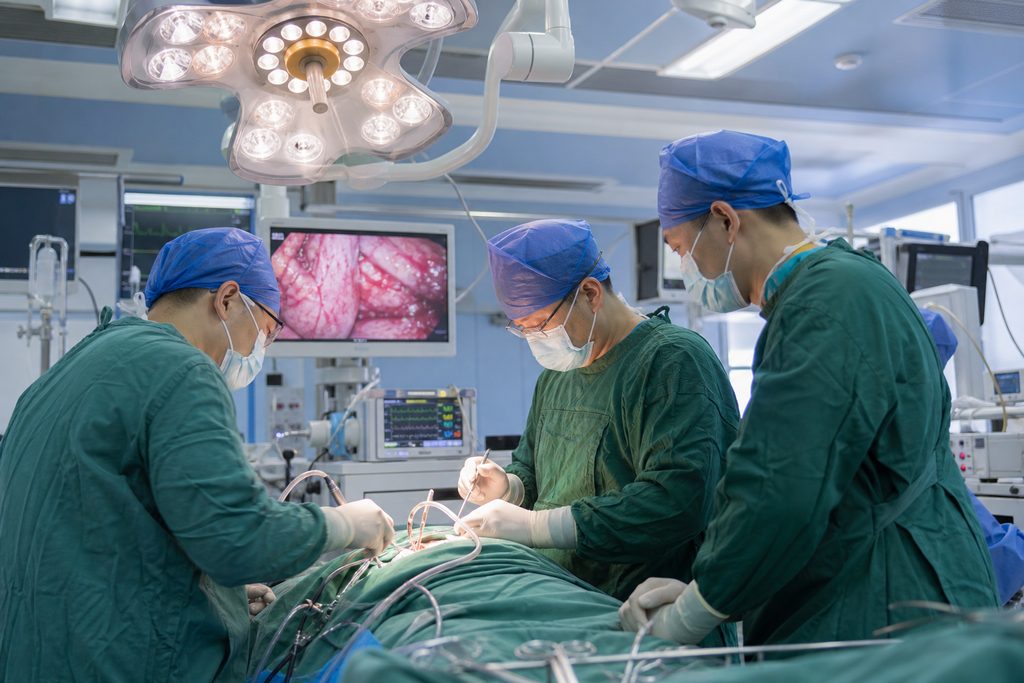
The hospital’s investment in thoracic surgical technology is substantial. The operating suites are equipped with 4K thoracoscopic systems and da Vinci robotic platforms. The robotic program, in particular, has grown rapidly. Robotic-assisted thoracic surgery at Tongji now accounts for roughly 30% of all minimally invasive lung resections. The precision advantages are real—robotic instruments offer seven degrees of freedom compared to four with standard VATS instruments, and the three-dimensional visualization allows surgeons to dissect around delicate hilar structures with greater confidence.
But technology alone does not guarantee outcomes. What distinguishes a center like Tongji is the integration of surgical, anesthetic, and perioperative care. The department runs a dedicated thoracic anesthesia team. Lung isolation techniques, intraoperative fluid management, and pain control protocols are standardized. Enhanced recovery after surgery pathways have been implemented and audited. The average length of stay for a VATS lobectomy at Tongji is now three to four days. For esophagectomy, it ranges from eight to twelve days depending on the surgical approach and patient factors.
Diagnostic capability also feeds surgical precision. The hospital’s endoscopy center performs over 60,000 procedures annually, including endoscopic ultrasound with fine-needle aspiration for mediastinal staging. PET-CT, 3T MRI, and next-generation sequencing for tumor genomic profiling are all available on-site. When a surgeon plans a resection, they are working with comprehensive staging data—not making intraoperative discoveries that could have been anticipated.
Is Tongji Hospital Wuhan Good for Lung Surgery? The Evidence Says Yes
Patients searching for “is Tongji Hospital Wuhan good for lung surgery” are asking a fair question. Reputation without data is marketing. So let us look at what is publicly verifiable.
Tongji Hospital is consistently ranked among China’s top-tier hospitals in the Fudan University Hospital Rankings, the country’s most authoritative hospital evaluation system. The hospital appears in the top tier of the Fudan comprehensive hospital ranking. In thoracic surgery specifically, the department is recognized among the leading programs in Central China, with a national reputation that draws patients from across Hubei province and neighboring regions.
The department is also a designated National Key Clinical Specialty by China’s National Health Commission—a designation awarded only to departments that meet rigorous standards for clinical volume, research output, and teaching. It hosts one of the largest thoracic surgery residency training programs in the region. The attending surgeons hold professorships at Huazhong University of Science and Technology’s Tongji Medical College, one of China’s most respected medical schools.
For international patients evaluating “best thoracic surgeon Wuhan China reviews,” the reality is that formal English-language review platforms for Chinese surgeons are sparse. Most patient feedback circulates within Chinese-language forums and word-of-mouth networks. This is one area where independent research hits a wall. Our team bridges that gap by connecting you with the hospital’s international department, which can provide surgeon credentials, case volume data, and—where available—outcome statistics for the specific procedure you need.
What You Need to Know About Tongji Hospital Lung Cancer Surgery Cost
Let us address the financial question directly. The Tongji Hospital lung cancer surgery cost for international patients typically falls between $12,000 and $22,000, depending on the surgical approach and complexity. A straightforward VATS lobectomy with uncomplicated recovery sits at the lower end. A more complex procedure—robotic segmentectomy, sleeve resection, or a case requiring extended lymph node dissection—pushes toward the upper range.
How does this compare internationally? In the United States, the average total cost for a lung cancer lobectomy ranges from $80,000 to $140,000 depending on geographic region and hospital pricing. Even insured patients with deductibles and co-insurance can face out-of-pocket costs exceeding $10,000 to $20,000. In the United Kingdom, the NHS covers costs for residents, but private payers and international patients face bills of £25,000 to £40,000 at major London teaching hospitals. In Australia, private hospital lung cancer surgery runs AUD $30,000 to $50,000.
China’s cost advantage is structural, not qualitative. Lower labor costs for hospital staff, different pharmaceutical pricing, and the sheer efficiency of high-volume surgical centers drive prices down. The surgeons operating at Tongji trained in the same techniques, read the same journals, and attend the same international conferences as their Western counterparts. The cost difference does not reflect a quality gap. It reflects economic reality.
| Procedure | Tongji Hospital (International Patient) | United States (Average) | United Kingdom (Private) |
|---|---|---|---|
| VATS Lobectomy | $12,000 – $18,000 | $80,000 – $120,000 | £25,000 – £35,000 |
| Robotic Lobectomy | $16,000 – $22,000 | $100,000 – $140,000 | £30,000 – £40,000 |
| Esophagectomy (Open or MIE) | $18,000 – $28,000 | $120,000 – $180,000 | £35,000 – £50,000 |
Esophageal cancer surgery price China follows a similar pattern. At Tongji Hospital, a minimally invasive esophagectomy typically costs between $18,000 and $28,000 for international patients. In the United States, the same procedure routinely exceeds $120,000. The gap is even wider when you factor in the longer hospital stays that esophagectomy requires.
These figures are estimates. Final costs vary by case complexity, length of stay, and whether any complications arise. The hospital provides a detailed cost breakdown before admission, and we help international patients review and understand that documentation before committing.
What You Need to Know Before Going Alone
Cost transparency is only one piece of the puzzle. Attempting to book lung cancer surgery at Tongji Hospital Wuhan independently introduces obstacles that can derail the process entirely.
- Public Outpatient Registration Cannot Be Done Remotely: Tongji Hospital’s standard outpatient clinics do not accept international remote bookings. You or a representative must physically appear at the hospital to register, queue, and obtain a consultation slot. The hospital sees over 20,000 outpatient visits daily across all departments. Thoracic surgery clinics fill quickly. Showing up without a plan means potentially waiting days for an available slot—and that slot is a consultation, not a surgery date.
- Language Barriers Are Absolute: Tongji Hospital is a Chinese public hospital. While some senior surgeons speak English, the vast majority of nursing staff, administrative personnel, registration clerks, and billing departments operate exclusively in Mandarin. Informed consent forms, surgical agreements, and discharge instructions are in Chinese. Miscommunication about medication instructions, follow-up schedules, or post-operative warning signs is a genuine clinical risk.
- Payment Systems Require Local Infrastructure: The hospital operates on a prepayment model. You deposit funds at admission, and costs are deducted as services are rendered. International credit cards are not universally accepted at public hospital cashier counters. WeChat Pay and Alipay dominate. International patients without a Chinese bank account or local payment setup face immediate friction at the point of admission.
- Visa Requirements Are Specific: Medical treatment in China requires an S2 visa annotated for medical purposes. This is not a tourist visa. The application requires an invitation letter from the treating hospital, proof of financial means, and documentation of the medical condition. Obtaining the hospital invitation letter without a local contact is the classic chicken-and-egg problem that stalls many independent attempts.
How We Help You Navigate This
These barriers are real. They exist for structural reasons—Chinese public hospitals were built to serve a domestic population of 1.4 billion, not to accommodate walk-in international patients. But they are navigable with the right support.
We start by reviewing your medical records. CT scans, pathology reports, pulmonary function tests, and prior treatment summaries. Our team translates and formats these documents for presentation to the hospital’s thoracic surgery department. This step alone saves weeks of back-and-forth. The hospital’s international department reviews the case and confirms whether they can offer treatment and which surgeon is appropriate for your specific diagnosis.
Once the hospital accepts the case, we coordinate the appointment. This goes through the hospital’s official international patient channel—not the public queue. We secure a consultation date, arrange for a bilingual medical companion to be present at every step, and handle the hospital invitation letter needed for your S2 visa application. Our companion service, starting from $200 per day, covers registration, queue management, payment processing, and real-time translation during consultations, pre-operative teaching, and discharge planning.
During your stay, we remain your logistical anchor. Airport transfers, accommodation recommendations near the hospital, and coordination of follow-up appointments all fall within our scope. We do not perform surgery. We do not make clinical decisions. But we ensure that nothing outside the operating room compromises your care.
Frequently Asked Questions
At Tongji Hospital, esophageal cancer surgery for international patients ranges from $18,000 to $28,000. In the United States, the same procedure typically costs $120,000 to $180,000. In the UK private sector, expect £35,000 to £50,000. The cost difference reflects structural economics—labor costs, pharmaceutical pricing, and hospital operational efficiency—not a difference in surgical technique or safety standards.
You cannot book surgery directly without a prior in-person consultation. Chinese public hospitals require the surgeon to evaluate you face-to-face before scheduling a procedure. What you can arrange in advance, through the hospital’s international department, is a confirmed consultation appointment with a thoracic surgeon. If the surgeon determines surgery is indicated and you are fit for the procedure, the operation is typically scheduled within one to three weeks—significantly faster than many Western systems.
Tongji Hospital’s thoracic surgery department is among the strongest in Central China and holds its own nationally. Beijing and Shanghai have more internationally recognized brand-name hospitals, but Tongji’s surgical volume, technology infrastructure, and clinical outcomes are firmly in the top tier. For patients from Southeast Asia or the Middle East, Wuhan also offers lower accommodation costs and a less congested urban environment than Beijing or Shanghai—factors that matter during a multi-week recovery period.
Tongji Hospital is a tertiary university hospital with full intensive care capability, interventional radiology for managing post-operative bleeding, and 24-hour in-house surgical coverage. The thoracic surgery department’s complication rates are tracked internally and benchmarked against national standards. For international patients, we maintain communication with the hospital’s international department throughout your stay. If a complication requires extended hospitalization, we help coordinate visa extensions and insurance communication. We do not disappear after admission.
Yes. Medical treatment in China requires an S2 visa annotated for medical purposes. The application requires a hospital invitation letter, which we help obtain once your case is accepted. Processing times vary by country but typically range from one to four weeks. Your accompanying family members also apply for S2 visas. You cannot enter on a tourist visa and then seek surgery—this violates immigration regulations and can result in treatment refusal.
Your Next Step
A lung cancer or esophageal cancer diagnosis forces decisions under pressure. The instinct to move quickly is correct. But moving quickly in the wrong direction wastes the one resource you cannot recover—time. Tongji Hospital offers a genuine combination of high surgical volume, modern technology, and cost accessibility that few Western centers can match. The barriers to access are real, but they are logistical, not clinical.
If you are weighing your options and want a clear, evidence-based assessment of whether Tongji Hospital fits your specific case, start with a free consultation. We review your records, answer your questions, and give you an honest picture of what is possible. No pressure. No sales pitch. Just the information you need to make an informed decision about where to place your trust.
For more medical information and treatment options in China, visit chinamedservices.com (China Medical Services).
