Checkup Packages in China: Cost by Tier for International Patients
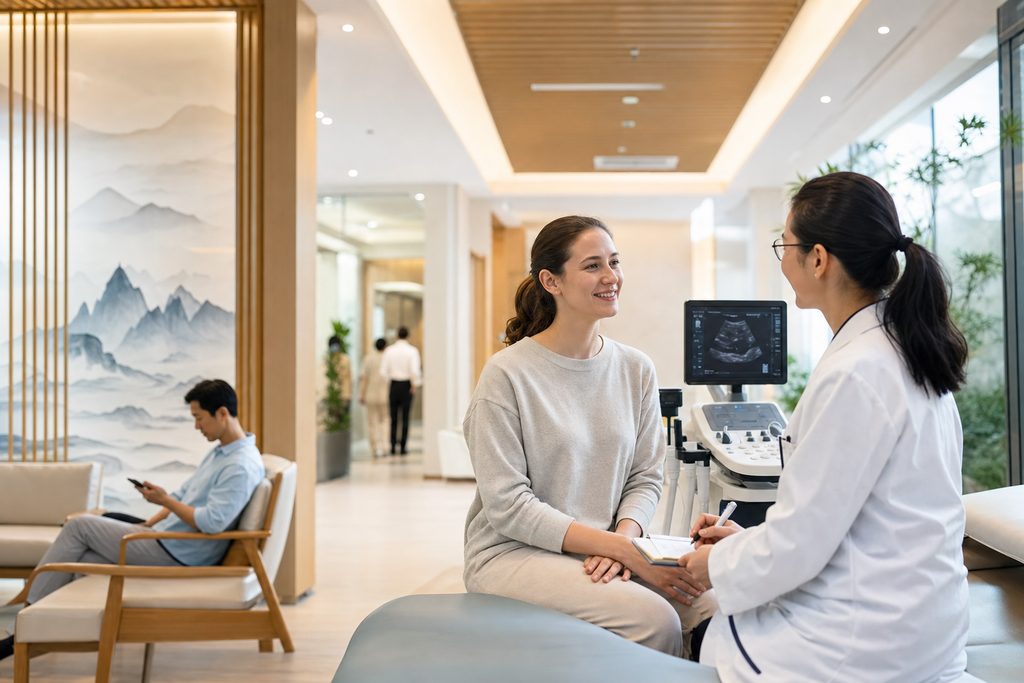
When Daniel, a 47-year-old logistics manager from Rotterdam, opened the quote from his local clinic, he laughed out loud. Eighteen hundred euros for a basic executive screening — bloodwork, an ECG, an abdominal ultrasound, and a fifteen-minute chat with a physician who kept glancing at the clock. His wife, a Shanghai native, suggested something different. Why not combine his next business trip with a proper physical in China? He had no idea where to start, or what anything should cost. That question — health checkup packages China cost — is one our team answers almost daily, and the honest answer is that the price depends almost entirely on which tier you choose.
Checkup Packages in China: The Short Answer
A standard full-body checkup at a reputable Chinese hospital runs roughly $400 to $1,200. An executive-tier package at a top-tier public hospital or a private international clinic lands between $1,500 and $3,500. Premium packages with advanced imaging — cardiac CT, full-body MRI, PET-CT screening — climb from $4,000 to well over $6,000. For context, the same breadth of testing in the United States frequently exceeds $10,000, and often far more.
But price alone tells you very little. What sits inside each tier varies enormously, and a $500 package in one hospital may include more than a $1,500 package in another. Reading the itemized list matters more than reading the number.
Who This Is Right For — and Who It Isn’t
Screening in China suits a specific kind of traveler. If you are already visiting for business, family, or tourism, adding a checkup to your itinerary costs you almost nothing in extra travel. If you want fast access to imaging — an MRI in many Western systems means weeks of waiting — Chinese hospitals can frequently schedule you within days at a fraction of the price. And if you are managing a chronic condition and want a comprehensive baseline, the depth of testing available is genuinely impressive.
Who should think twice? Anyone expecting a leisurely, spa-like experience at a public hospital. These institutions are busy — some see more than 10,000 outpatients a day. Corridors are crowded, signage is mostly in Chinese, and the pace is brisk. If you have a known, complex, or acute medical problem, a screening package is the wrong tool; you need a diagnostic consultation with a specialist, not a checklist. And if you require a specific doctor’s interpretation in your native language, confirm that before you book.
The Options, Compared
Here is how the tiers typically break down across public and private facilities. Prices are in USD and vary by hospital and case complexity.
| Tier | Typical Price | What’s Usually Included | Setting | English Support |
|---|---|---|---|---|
| Basic | $400–$800 | Blood panel, urinalysis, ECG, chest X-ray, abdominal ultrasound, basic vitals | Public hospital, standard health center | Limited; interpreter often needed |
| Standard Full-Body | $800–$1,200 | Above plus thyroid function, tumor markers, liver/kidney panels, gender-specific tests | Public hospital health management center | Varies; some international desks |
| Executive | $1,500–$3,500 | Above plus cardiac ultrasound, carotid Doppler, low-dose CT, specialist review | Top public hospital international wing or private clinic | Generally available |
| Premium / Advanced Imaging | $4,000–$6,000+ | Above plus cardiac CT, brain MRI, full-body MRI or PET-CT screening | Top-tier public international department, JCI private hospital | Full English service |
Which column fits you? If you are healthy, under 40, and simply want a solid annual baseline, the standard full-body tier delivers the best value by a wide margin. If you have a family history of heart disease or you are over 50, the executive tier’s cardiac imaging earns its premium. The premium tier is genuinely useful for specific concerns — but full-body MRI screening in asymptomatic people is debated even among physicians, and no package replaces a conversation with a doctor who knows your history.
Beijing or Shanghai? Where to Book Your Screening
Both cities host world-class facilities, and the price gap between them is smaller than most people assume — usually 10 to 20 percent. Beijing tends to be slightly cheaper for public-hospital packages and has the denser concentration of top-ranked institutions. Shanghai skews toward private international clinics with smoother English service, which pushes the average up.
If you want to compare checkup package prices Shanghai vs Beijing directly, the honest guidance is this: choose the city you are already visiting, then choose the facility tier that matches your needs. Among the best hospitals in Beijing for health screening, several sit inside the Fudan-ranked top 100 — institutions whose specialty departments are referenced by physicians worldwide. Shanghai’s private international hospitals offer another advantage: direct insurance billing, so you may not pay out of pocket at all.
Our own database covers 340+ top-ranked hospitals across 37 cities, which means the question is rarely “is there a good hospital” but “which one fits your dates, budget, and language needs.”
What Drives the Price Up or Down
Four factors move the number more than anything else. Imaging is the biggest — a PET-CT scan alone can cost more than an entire standard package. Hospital tier matters: a private JCI-accredited facility charges 1.5 to 2 times its public equivalent for a comparable test list. Gender and age shape the panel; women’s packages typically include mammography and cervical screening, men’s often add prostate markers. And speed: same-week appointments at premium facilities carry a premium.
What is usually not included: specialist consultation fees beyond the package, treatment of anything found, medications, and follow-up imaging. Ask for the itemized list before you commit. A package that looks cheap often excludes the one test you actually need.
Is a Health Checkup in China Worth It for Foreigners?
For many international patients, yes — with clear eyes. The value proposition is speed and depth per dollar. You can often complete in two days what takes weeks to schedule elsewhere, and the imaging equipment at top Chinese hospitals is current-generation. The trade-offs are real: language barriers, crowded public facilities, and a system that assumes you can navigate it. That last point is exactly why bilingual support exists.
Booking is also less straightforward than in the West. Most public hospitals do not let you reserve a standard outpatient slot from abroad in advance. What you can do is arrange a package through a hospital’s international department, or work with a coordinator who handles registration, the medical card, and the schedule on your behalf. If you are unsure how to book a medical checkup package in China, start by clarifying which tier you need — the booking follows from that.
One more consideration: bring your existing records. A Chinese physician interpreting your results without your history is working half-blind. Translated reports, prior imaging, and a medication list make the whole exercise far more useful.
Practical Considerations Before You Fly
Documentation first. Carry printed copies of prior test results and a medication list. If you take prescription drugs, bring enough for the trip in original packaging.
On visas: medical travel to China typically uses the S2 category, which covers short-stay visits for medical treatment and private affairs, subject to the latest embassy or consulate requirements and supporting hospital documents. Accompanying family members generally apply under the same category. The M visa is for commercial and trade activities and is not the right fit for a medical visit. Rules change, so verify current requirements with your nearest Chinese embassy before booking flights.
Payment is straightforward at private international hospitals, which often bill insurers directly. Public hospitals generally require prepayment, with insurance reimbursement handled afterward. Bring a card that works internationally, and confirm accepted payment methods in advance.
Finally, plan your follow-up. If a screening flags something, you will want a clear path — either a specialist consultation while you are still in China or a handover to your physician at home. Deciding this in advance saves stress later.
Frequently Asked Questions
A standard full-body package typically costs $800 to $1,200 at a reputable public hospital. Basic packages start around $400, while executive and premium tiers with advanced imaging range from $1,500 to $6,000 or more. Final pricing varies by hospital and case complexity.
Sometimes, but not always. Standard public-hospital outpatient slots usually cannot be reserved from overseas. International departments and private hospitals are more flexible. A coordinator can handle registration and scheduling on your behalf, though specific appointment times are never guaranteed.
At private international hospitals and top public-hospital international wings, generally yes. At standard public facilities, English support is limited and an interpreter is often necessary. This is one of the most common practical hurdles for foreign patients.
The package itself does not include treatment. Abnormal findings require follow-up with a qualified specialist. You can arrange a consultation in China before returning home, or have your translated results reviewed by your own physician. Neither route should be skipped.
Your Next Step
The core message is simple: checkup packages in China range from roughly $400 to $6,000+, and the right tier depends on your age, history, and what you are actually trying to find out. More testing is not automatically better testing. We are China Medical Services — a coordination service, not a hospital, and we do not diagnose or treat anyone. What we do is help international patients compare facilities, understand pricing, and navigate the practical side of care in China. If you would like a straightforward conversation about which tier makes sense for you, start with a free consultation — no pressure, just clarity.
For more medical information and treatment options in China, visit chinamedservices.com (China Medical Services).
