Full Body Checkup in China: How Long It Takes and What It Costs
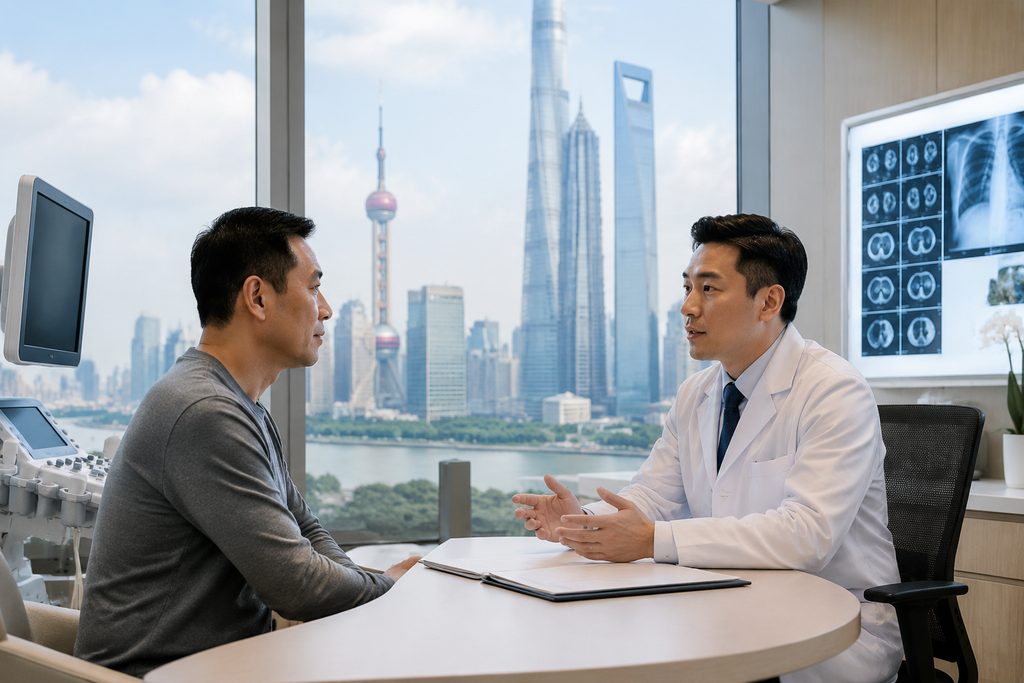
Roughly 300,000 international patients cross into China each year for medical care, according to industry estimates — and a fast-growing share of them are not coming for surgery at all. They are coming for a full body checkup. The pitch is simple: a comprehensive health screening that would cost $3,000 to $8,000 in the United States can often be completed in China for a fraction of that, with results in hand before the return flight. The full body checkup cost in China is not the only reason people book. Speed matters just as much. Most Western patients wait weeks for a single specialist referral; in China, an entire screening battery — blood work, imaging, cardiac testing, endoscopy — can be finished in a single morning.
But “how long does it take” has more than one answer, and the honest version depends on which hospital you choose, whether you need an interpreter, and how far in advance you start.
How This Actually Works, Step by Step
Here is the real sequence, from first inquiry to final report.
Step 1 — You send your goals and any existing records. Not just “I want a checkup.” Age, sex, family history, current symptoms, prior diagnoses, medications. A 34-year-old with no complaints and a 61-year-old with a father who died of colon cancer at 58 need completely different screening packages.
Step 2 — A hospital or international department reviews the request. At a top public hospital’s international wing, or at a private international hospital, a coordinator matches your profile to a package and flags anything that needs a specialist add-on — a cardiac stress test, a low-dose CT, a colonoscopy.
Step 3 — A date is confirmed and a quotation is issued. Public hospital checkup centers typically need 3 to 10 working days of lead time for a foreign patient. Private international hospitals can sometimes accommodate 48 hours’ notice, at a higher price.
Step 4 — You arrive, usually fasting. Most screening days start between 7:00 and 8:00 a.m. because blood draws and abdominal ultrasound require an empty stomach.
Step 5 — The screening day itself. Blood and urine collection, height and weight, blood pressure, ECG, chest imaging, abdominal ultrasound, and any gender- or age-specific tests. This is the part people underestimate: at a large Chinese hospital, departments sit in different buildings and floors. Without someone guiding you, a morning can stretch into a full day.
Step 6 — Results. Some values come back the same day. Imaging reports usually take 1 to 3 working days. A final bound report with physician interpretation typically arrives within 3 to 7 working days.
How Long Does a Full Body Checkup Take in China?
Two clocks are running at once, and conflating them causes most of the confusion.
The on-site clock is short. A standard package — bloodwork, ECG, ultrasound, chest X-ray, basic physical — takes about 3 to 5 hours at a private international hospital and 4 to 6 hours at a busy public hospital. Add a gastroscopy or colonoscopy under sedation and you add most of a day, plus a recovery period before you can leave. Add a cardiac stress test or a low-dose chest CT and you add 1 to 2 hours.
The total trip clock is longer. Realistically, plan 3 to 5 days in China if you want results interpreted face to face before you fly home. Some patients compress this to 48 hours by choosing a private hospital with same-day reporting and paying a premium. Others stretch it to a week and pair the checkup with a few days of recovery or sightseeing.
A Realistic Timeline
This is what a well-planned checkup trip looks like, with the waiting steps most people forget included.
| Stage | Typical Duration | What Happens |
|---|---|---|
| Initial inquiry and profile review | 1–3 days | You submit goals, history, and any prior reports; a coordinator proposes a package |
| Package confirmation and quotation | 2–5 days | Hospital confirms scope, price, and available dates |
| Document preparation | 3–7 days | Medical records translated if needed; hospital invitation letter issued for visa purposes |
| Visa application (S2 short-stay) | 4–10 working days | Applied for at the Chinese embassy or consulate in your country; processing times vary by location |
| Appointment lead time | 3–10 working days | Public hospital checkup centers book out faster than private ones |
| Travel and arrival | 1 day | Flight, airport transfer, hotel check-in |
| On-site screening | 3–6 hours (up to 1 full day with endoscopy) | Fasting required; departments are spread across a large campus |
| Report turnaround | 3–7 working days | Lab values same day; imaging and final bound report take longer |
| Physician interpretation | 1 day | Face-to-face review with a physician, ideally with interpretation |
Total, from first email to results in hand: 3 to 6 weeks if you are starting from zero, including visa processing. If you already hold a valid visa and choose a private hospital, that can compress to 7 to 10 days.
What Can Go Wrong — and What Happens Then
Honesty earns more trust than optimism here, so let us be direct about the failure modes.
You arrive without a confirmed appointment. This is the single most common mistake. At most Chinese public hospitals, routine outpatient registration happens on the day, in person, by queue. You cannot simply walk in from overseas and expect a slot. The exception is the hospital’s international or VIP department, where appointments can be arranged in advance — at roughly 1.5 to 2 times the standard price.
You did not fast. Blood lipids, glucose, and abdominal ultrasound require 8 to 12 hours without food. Eat breakfast and those tests get pushed to the next day. That is a wasted hotel night.
A result comes back abnormal. This is not a failure — it is the point of screening. But it changes your timeline. A suspicious finding on imaging may require a specialist consultation, a repeat scan, or a biopsy, adding 2 to 7 days. Occasionally it means a longer stay. Plan for the possibility rather than being surprised by it.
Language. At a top-tier public hospital, signage, forms, and most staff are in Chinese. A hospital that handles 10,000 outpatient visits a day does not slow down for a non-Mandarin speaker. This is exactly where a bilingual medical companion earns their fee — queuing, registering, paying, navigating between buildings, and interpreting results.
Payment surprises. Public hospitals generally require prepayment, with insurance reimbursement handled afterward in your home country. Private international hospitals often bill insurance directly. Confirm which model applies before you commit.
Best Hospitals in Beijing for Full Body Checkup — and How to Choose
Beijing concentrates more top-ranked hospitals than any other Chinese city — 21 of the Fudan Top 100 list, more than Shanghai’s 18 or Guangzhou’s 10. That density is an advantage, but it also makes choosing harder.
Broadly, you have three options.
- Top public hospitals (Grade 3A). Enormous scale, deep specialist backup, lower prices. If your screening uncovers something serious, you are already inside a system that can act on it. Downside: crowds, Chinese-language environment, and limited ability to pre-book routine slots from abroad.
- Private international hospitals. English-speaking staff, JCI accreditation, direct insurance billing, Western-style service, and short waiting times. Higher cost, and less depth if a complex problem emerges. Our guide to private international hospitals in China breaks down what each one offers.
- Traditional Chinese Medicine hospitals. A different model entirely — constitution assessment, herbal consultation, acupuncture — often paired with modern screening. Worth considering if your goal is preventive and lifestyle-oriented rather than purely diagnostic. See our TCM hospital directory for options.
For a general screening, a private international hospital in Beijing or Shanghai is usually the smoother first experience. For someone with a strong family history of cancer or heart disease, a top public hospital’s international department gives you access to specialist depth that private facilities cannot match.
You can browse hospitals by city and rank tier on our directory of top-ranked Chinese hospitals, which covers 340+ hospitals across 37 cities — the top 5% of China’s 35,000+ hospitals, ranked by Fudan and JCI criteria.
Is a Full Body Checkup in China Worth It?
For many international patients, yes — and the math is straightforward.
| Item | Typical Range in China (USD) | Typical Range in the US (USD) |
|---|---|---|
| Basic screening package | $300–$800 | $1,500–$4,000 |
| Comprehensive package with CT and endoscopy | $800–$2,500 | $4,000–$10,000 |
| Private international hospital premium | 1.5–2× public pricing | — |
| Bilingual medical companion | from $300/day | — |
| Airport transfer (round trip) | $200 | — |
Prices vary by hospital and case complexity, and the figures above are reference ranges rather than quotes. But the pattern holds: even after flights and hotels, a comprehensive screening in China frequently costs less than the same screening at home — and it happens faster.
The trade-off is real, though. You are traveling to a system where English is not the default, where appointment rules differ from what you know, and where a routine checkup cannot simply be booked online from another continent. That friction is the actual cost of the savings. Whether it is worth it depends on your budget, your timeline, and how much support you want.
Practical Considerations: Records, Visa, Payment, and Follow-Up
Records. Bring everything you have — prior labs, imaging, medication lists, vaccination history — ideally translated into English or Chinese. Radiologists reading a comparison scan need the earlier one.
Visa. Foreign nationals traveling to China for medical treatment typically apply for an S2 visa, the short-stay category used for medical treatment and private affairs, with supporting hospital documents. Stays exceeding 180 days generally fall under S1. Accompanying family members apply under the same S2 category. Note that the M visa is for commercial and trade activities and is not the medical route. Requirements change, so confirm current rules with the Chinese embassy or consulate in your country.
Payment. Public hospitals: prepayment, then reimbursement through your insurer at home. Private international hospitals: many bill insurers directly. Check your policy’s overseas coverage before booking.
Follow-up at home. Ask for a full written report, imaging on disc or via secure link, and English translations of key findings. Your physician at home will need all of it. A written second opinion from a Chinese specialist — typically $300 to $500 — can be a useful bridge if a finding needs deeper interpretation.
Frequently Asked Questions
The on-site screening usually takes 3 to 6 hours, or close to a full day if it includes endoscopy under sedation. Add 3 to 7 working days for the complete written report. Plan 3 to 5 days in China if you want results reviewed face to face before flying home.
Yes, but not through the ordinary public queue. Routine outpatient registration at most public hospitals happens in person on the day. Advance booking for international patients runs through the hospital’s international or VIP department, or through a private international hospital. Expect to pay roughly 1.5 to 2 times standard pricing for that access.
Basic packages generally run $300 to $800. Comprehensive packages including CT and endoscopy typically fall between $800 and $2,500. Private international hospitals charge more. Final pricing varies by hospital, package scope, and case complexity, so treat these as reference ranges rather than fixed quotes.
Cost and speed are the main advantages — comparable screening often costs a fraction of US pricing and can be completed within days rather than weeks. The trade-offs are language, unfamiliar hospital logistics, and the need to arrange follow-up care back home. For patients who want comprehensive imaging without a long wait, it is often worth it.
Your Next Step
A full body checkup in China is fast, thorough, and considerably cheaper than equivalent screening in most Western countries — but the logistics around booking, language, and follow-up are where trips go sideways. Our team at China Medical Services helps international patients navigate exactly that: hospital matching across 340+ top-ranked hospitals in 37 cities, appointment coordination, bilingual medical companions, and visa guidance. We are coordinators, not doctors — we do not diagnose, treat, or promise clinical outcomes, and any medical decision belongs with a licensed physician. If you would like to understand your options, start with a free consultation and we will walk you through what a checkup trip would realistically look like for your situation.
This article is for general information only and does not constitute medical advice. Screening recommendations vary by age, sex, family history, and individual risk factors. Always consult a qualified healthcare provider before making decisions about your health.
For more medical information and treatment options in China, visit chinamedservices.com (China Medical Services).
