Ultrasound in a Full Body Checkup in China: What It Costs and Where to Go
Ultrasound in a Full Body Checkup in China: The Short Answer
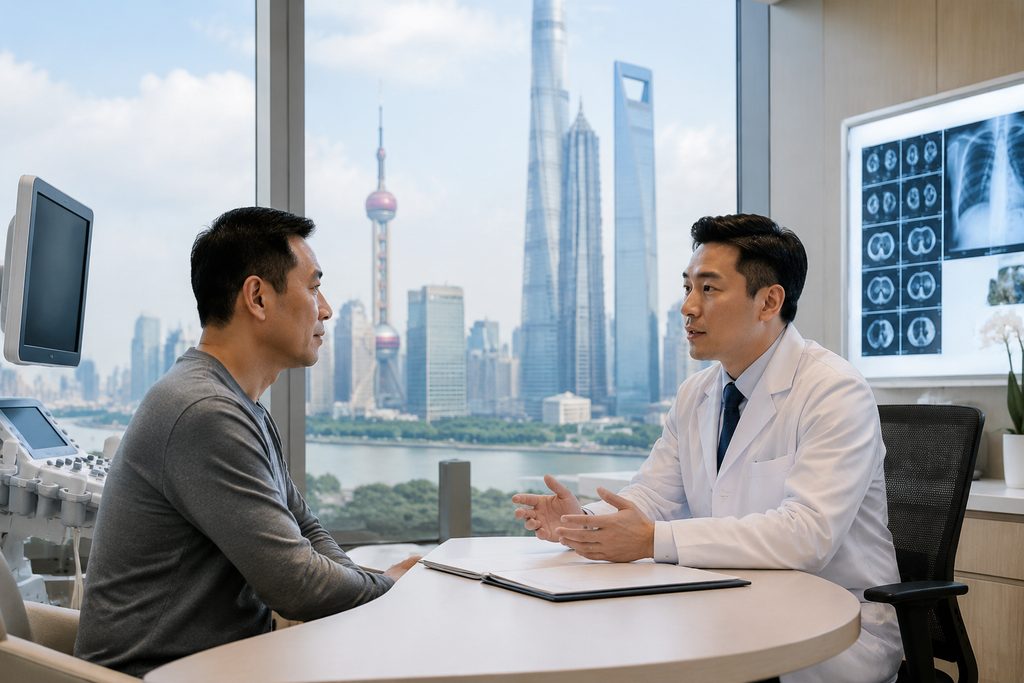
When 47-year-old Daniel from Seattle started getting annual physicals in Shanghai for his work assignment, he assumed the scan portion would cost a fortune. It didn’t. A comprehensive full body checkup that includes abdominal and thyroid ultrasound typically runs $300 to $1,200 at a top-tier Chinese hospital — roughly one-fifth of what the same panel costs in the United States. That’s the ultrasound full body checkup cost China patients actually pay, and it’s the number most people searching this topic want first.
The caveat is that “full body checkup” means different things at different hospitals. Some packages bundle ultrasound with bloodwork, ECG, and chest X-ray. Others charge per scan. And the price gap between a standard public hospital health screening center and a private international clinic can be threefold. Knowing which tier you’re booking is the whole game.
Who This Is Right For — and Who It Isn’t
A checkup with ultrasound makes sense for a specific kind of person. It is not a universal good.
Typically a good fit:
- Adults over 40 who want a baseline abdominal scan (liver, gallbladder, kidneys, pancreas, spleen)
- People with a family history of thyroid nodules, fatty liver, or kidney stones
- Expats and travelers already in China who want preventive screening without Western pricing
- Patients whose home-country waitlist for a non-urgent scan runs six months or longer
- Anyone combining a checkup with a specialist consultation they can’t easily get at home
Probably not the right move:
- Anyone with acute symptoms — chest pain, unexplained weight loss, a palpable lump. That needs a diagnostic workup, not a screening package.
- Patients who require a specific imaging protocol ordered by their own physician. Screening ultrasounds follow local templates, not your doctor’s.
- People expecting a Western-style primary care relationship. Chinese checkups are efficient and data-heavy, but they are not a 45-minute conversation.
- Travelers with less than 72 hours on the ground. Results interpretation and any follow-up imaging take longer than that.
The Options, Compared
Three tiers dominate the market. The table below reflects typical 2025 pricing for a package that includes abdominal ultrasound, thyroid ultrasound, blood panel, ECG, and urinalysis. Exact figures vary by hospital and case complexity.
| Tier | Typical Price (USD) | Wait for Appointment | English Support | Best For |
|---|---|---|---|---|
| Public hospital health screening center | $300 – $600 | 1–7 days | Limited; interpreter usually needed | Cost-focused patients, routine screening |
| Public hospital international / VIP department | $700 – $1,200 | 2–10 days | Full English service | Patients wanting senior radiologists and clear communication |
| Private international hospital | $900 – $2,000 | Same week, sometimes same day | Native-level English, direct insurance billing | Insured patients, families, anyone prioritizing comfort |
Which column suits you depends on two questions. Do you need your insurer to pay directly, or can you pay upfront and claim later? And do you want the cheapest credible scan, or the one with a radiologist who will sit down and explain the images? Most international patients land in the middle tier — the international department of a major public hospital, where the equipment is identical to the VIP wing but the price isn’t.
Where to Book: Beijing, Shanghai, and Beyond
At public hospitals, the scan and the written report are usually bundled, but an English translation may cost extra. At private hospitals, interpretation is included. A face-to-face conversation with the radiologist is rare at any tier unless you specifically request it.
That’s the scenario worth planning for. A screening scan can flag a nodule, a mass, or an abnormal organ contour — it cannot diagnose it. Follow-up means a specialist consultation, possibly a biopsy or CT, and those happen on separate appointments. Budget extra days and, if the finding is significant, be prepared to extend your stay or return home for treatment.
No. Ultrasound images soft tissue well but cannot see inside bone or lung, and it is not a cancer screening tool for most organs. A credible checkup pairs it with bloodwork, ECG, and age-appropriate imaging like mammography or colonoscopy. Treat ultrasound as one component, not the whole exam.
Your Next Step
An ultrasound-inclusive checkup in China costs a fraction of Western pricing, and the imaging quality at Fudan-ranked hospitals is genuinely world-class. The friction isn’t the scan — it’s the booking, the language, and the follow-up logistics. That’s the gap we exist to close. China Medical Services is not a hospital and does not diagnose or treat anyone; we match international patients with appropriate hospitals, coordinate appointments, and provide bilingual support through the visit. If you’d like a straight answer on which hospital and tier fits your situation, start with a free consultation — no obligation, and no pressure to book anything.
Frequently Asked Questions
Yes. The hospitals used for international patients are JCI-accredited and follow the same international safety standards as top hospitals in the US and Europe. Surgical teams perform high volumes of procedures — often more than their Western counterparts — which studies show leads to better outcomes.
Costs vary by procedure and hospital, but international patients typically save 40-80% compared to US prices — even when factoring in travel and accommodation. A consultation with our team will give you an exact, all-inclusive quote with no hidden fees.
Send us your existing medical reports to get started. We handle everything from hospital selection and appointment scheduling to visa assistance and post-operative recovery planning. Your medical records are reviewed by the specialist before you even book a flight.
For more medical information and treatment options in China, visit chinamedservices.com (China Medical Services).
