Medical Treatment in Urumqi China: Your Central Asia Cross-Border Gateway
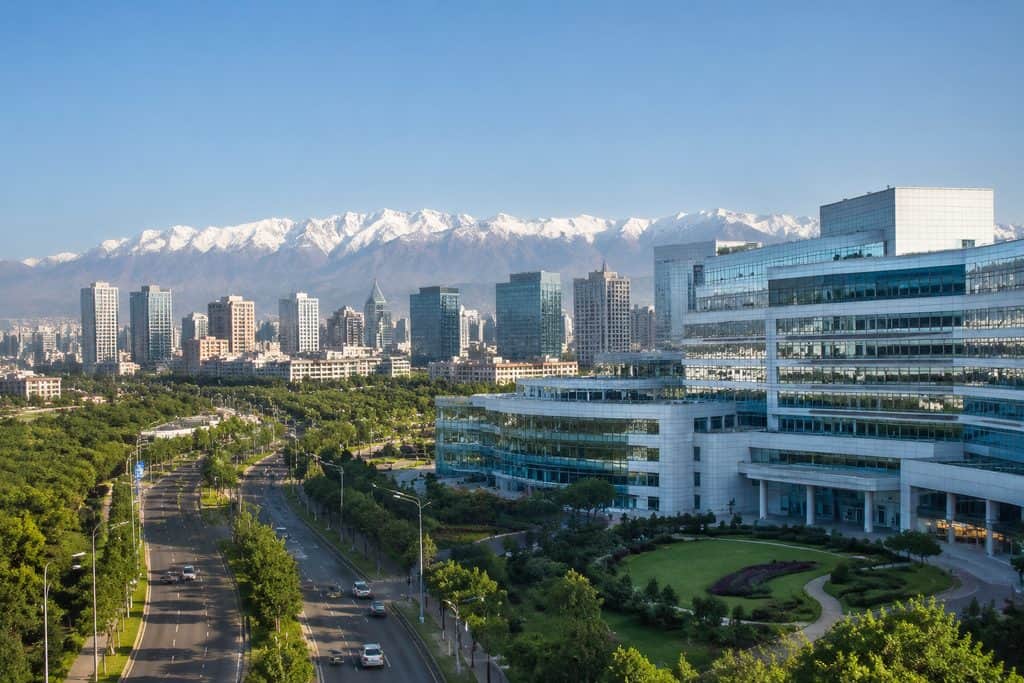
What if the specialist care you need isn’t thousands of miles away in a Western capital, but just a short flight from Central Asia, at a fraction of the price you’ve been quoted? That’s the quiet transformation happening in Urumqi. The city is no longer just a regional transit hub. For patients from Kazakhstan, Kyrgyzstan, Uzbekistan, and beyond, it has become the most logical destination for high-stakes medical decisions.
Key Takeaways
- Urumqi offers genuine cost advantages for international patients, with complex surgeries priced 60-80% below US benchmarks, making the medical tourism Urumqi cost equation compelling for Central Asian families.
- Language and cultural alignment give Urumqi a unique edge — many hospital staff speak Russian or Turkic languages, something rarely found in Beijing or Shanghai.
- Safety and visa logistics in Xinjiang require more preparation than other Chinese cities. We’ll walk through exactly what you need to know.
- Traveling independently for treatment here is extremely difficult without bilingual support. The gap between what hospitals expect and what foreign patients can provide on their own is wider here than in China’s eastern cities.
The Problem: When Your Local Options Run Out
You’ve been given a diagnosis that requires a procedure your home country can’t perform. Or the waitlist stretches past eighteen months. Or the quoted price is simply impossible — $45,000 for a surgery that a neighbor mentioned getting elsewhere for under $12,000. These are not hypothetical scenarios. They play out every week across Central Asia, where advanced oncology, complex cardiac interventions, and precision neurosurgery often mean a flight to Moscow, Istanbul, or Seoul. Each of those options comes with its own punishing price tag and visa labyrinth.
But there’s a structural reality that few international patient guides mention. Western China’s healthcare infrastructure has undergone two decades of concentrated investment. The resulting clinical capacity in Urumqi — a city of over 4 million people — now rivals that of many European capitals. The difference is that most of this capacity serves a domestic patient base. The doors are open to international patients, but the pathway inside is not well-marked. That’s where the frustration starts. And that’s exactly what this article is designed to solve.
Who We Are
Our team at China Medical Services is not a hospital. We do not provide medical treatment, clinical diagnoses, or surgical opinions. What we do is more specific: we are the logistical layer between you and China’s top-tier medical institutions. We handle hospital matching, appointment coordination, bilingual medical companion services, visa guidance, and every practical detail that turns a daunting cross-border journey into a structured, supported medical trip. We’ve helped patients navigate treatment in Beijing and Shanghai, and we know the Urumqi landscape well enough to be honest about both its strengths and its friction points.
Why Urumqi Delivers Results for Central Asian Patients
Urumqi occupies a strange space in the medical tourism conversation. It’s rarely mentioned alongside Bangkok or Seoul. But for patients coming from Central Asia, it outperforms those destinations on three dimensions that actually matter: clinical volume, cultural proximity, and cost structure. Let’s look at each one.
Clinical Volume That Western Surgeons Rarely See
A senior cardiac surgeon at a top Urumqi hospital might perform over 300 valve replacements annually. Compare that to the average US cardiac surgeon, who completes roughly 100 to 150 per year according to Society of Thoracic Surgeons data. Volume isn’t everything — but in complex procedures, it correlates strongly with complication rates. Urumqi’s largest hospitals function at a scale that’s hard to grasp until you see it. The First Affiliated Hospital of Xinjiang Medical University handles over 5 million outpatient visits per year. That’s not a typo. The clinical exposure is immense, and it translates into procedural fluency that benefits every patient on the table.
Language and Culture: The Hidden Multiplier
Here’s something Beijing cannot offer. In Urumqi, a significant portion of medical staff speak Russian, Kazakh, or Uyghur alongside Mandarin. For a patient from Almaty or Tashkent, this changes everything. Post-operative instructions are understood the first time. Pain levels are communicated accurately. The subtle cultural cues around family involvement in care decisions — which differ sharply between Central Asian and East Asian norms — are navigated more naturally. This isn’t a small comfort. It’s a clinical safety factor. Miscommunication in a recovery ward is not where you want to discover a language gap.
The Cost Reality: 60-80% Below US Benchmarks
Let’s put numbers on the table. A hip replacement in the United States costs between $30,000 and $50,000. At a top public hospital in Urumqi, the same procedure — using internationally approved prosthetics — runs between $8,000 and $15,000. Cardiac bypass surgery? $120,000 or more in the US. In Urumqi, $15,000 to $22,000. Even compared to private hospitals in India or Thailand, Urumqi’s pricing holds up well, especially when you factor in the shorter flight times and lower travel costs for Central Asian families. The medical tourism Urumqi cost advantage is structural, not promotional. It’s driven by China’s lower labor costs, the sheer volume of cases, and a hospital funding model that doesn’t depend on squeezing international patients for margin.
| Procedure | US Average Cost | Urumqi Range (USD) |
|---|---|---|
| Hip Replacement | $30,000 – $50,000 | $8,000 – $15,000 |
| Cardiac Bypass (CABG) | $120,000+ | $15,000 – $22,000 |
| Dental Implants (per tooth) | $3,000 – $6,000 | $600 – $1,200 |
| Knee Replacement | $35,000 – $55,000 | $10,000 – $18,000 |
Dental care deserves its own mention. Patients routinely ask about cheap dental implants Urumqi China — and the savings are real. A full-mouth restoration that might cost $50,000 in Western Europe can be completed in Urumqi for under $12,000, including lab work and follow-up visits. The materials are the same Straumann or Nobel Biocare systems used internationally. The difference is the lab cost and the dentist’s time.
What You Need to Know Before Going Alone
Urumqi is not an easy city to navigate independently as a foreign patient. The barriers are different from what you’d face in Shanghai or Guangzhou. Some are bureaucratic. Some are infrastructural. All of them are manageable with the right preparation — but ignoring them will cost you time, money, and possibly a treatment window.
- Visa Requirements Are Strict and Specific: Medical treatment in China requires an S2 visa, with a formal invitation letter from the hospital. This is not negotiable. An M visa — the business visa — will not work for medical purposes. The hospital must issue a stamped invitation document before you apply. Many patients ask us how to get medical visa for Xinjiang China, and the short answer is: you can’t self-initiate this. The hospital triggers the process. We coordinate that on your behalf.
- Payment Systems Are Local and Cash-Heavy: International credit cards work inconsistently in Urumqi hospitals. WeChat Pay and Alipay dominate, and linking a foreign card to these platforms often fails. Most hospitals require a deposit in RMB before admission. Without a local payment intermediary, you can find yourself unable to settle a bill even when you have the funds.
- Medical Records Must Be Translated Professionally: Urumqi hospitals will not accept medical records in Russian, Kazakh, or English without certified Chinese translation. Google Translate printouts get rejected. This is a hard gate. We handle this through our case management team, ensuring imaging files, pathology reports, and physician notes are formatted to Chinese hospital standards before they ever reach a department head’s desk.
How We Help You Navigate This
These barriers exist for structural reasons — not because anyone is trying to make things difficult, but because Urumqi’s hospital system was built for domestic patients and is only now adapting to international demand. Our job is to close that gap.
Before you travel, we match your case to the right department at one of the top hospitals in Urumqi for foreigners, arrange the invitation letter for your S2 visa, and coordinate a preliminary remote consultation if the hospital requires it. We translate and format your medical records. We confirm the deposit amount and payment method so you arrive knowing exactly what to expect.
During your stay, a bilingual medical companion — speaking Mandarin plus Russian, Kazakh, or English depending on your needs — meets you at the hospital entrance. They handle registration, queue management, payment processing, and real-time translation during every consultation. They also navigate the security checkpoints, find the right department in buildings that can sprawl across multiple city blocks, and ensure you’re not standing lost in a corridor while your appointment slot passes.
After discharge, we coordinate follow-up appointments, pharmacy runs, and accommodation extensions if recovery takes longer than planned. The goal is simple: you focus on healing. We handle everything that isn’t medicine.
Urumqi’s Hospital Landscape: What You’re Choosing From
The city’s medical infrastructure is concentrated in a few large public institutions. The First Affiliated Hospital of Xinjiang Medical University is the flagship — a comprehensive teaching hospital with strong departments in cardiology, oncology, and orthopedics. The Xinjiang Uygur Autonomous Region People’s Hospital has a well-regarded minimally invasive surgery center. For dental work, several specialized stomatology hospitals in the city center cater to international patients with pricing that makes cheap dental implants Urumqi China a reality, not a myth.
Some patients ask about Urumqi medical tourism packages Central Asia — bundled offerings that include treatment, accommodation, and local transport. These exist, but quality varies wildly. We’ve seen packages that look comprehensive on paper but outsource the actual medical work to clinics with no international accreditation. Our approach is different. We don’t sell packages. We build a custom coordination plan around the hospital and specialist your case actually requires. If that means a simpler, cheaper arrangement, we’ll tell you. If it means bringing in a sub-specialist from another department, we’ll arrange that too.
Frequently Asked Questions
For a procedure like a knee replacement, budget $10,000 to $18,000 for the surgery itself, $1,500 to $2,500 for two weeks of accommodation and meals, and $500 to $1,000 for round-trip flights from Central Asian capitals. Add $800 to $1,200 if you need our in-person specialist consultation coordination. Total all-in cost typically lands between $14,000 and $22,000 — still a fraction of the $35,000 to $55,000 for the surgery alone in the US.
It depends on the procedure. After a dental implant placement, you might feel fine exploring the Grand Bazaar the next day. After a cardiac bypass, you’ll be in the ICU, then a recovery ward, then on a flight home. Xinjiang is stunning — the Tian Shan mountains, Heavenly Lake, the Sunday market in Kashgar — but recovery timelines are non-negotiable. We advise patients to plan tourism for before the procedure, not after. And always with your surgeon’s explicit clearance.
This is the question every patient should ask. Urumqi’s top hospitals have ICU capabilities, emergency response protocols, and complication management experience comparable to any major international center. The risk isn’t clinical — it’s logistical. If you need an extended hospital stay, your visa may need adjustment. If a family member needs to fly in, they’ll need their own S2 visa. These are solvable problems, but they require fast, local coordination. That’s precisely the scenario where having a team on the ground changes the outcome. We’ve handled extended stays, visa extensions, and family arrivals under pressure. We plan for complications so you don’t have to improvise through them.
Yes — through the standard outpatient channel. You see the doctor, they evaluate you in person, and then they schedule the procedure. That’s the rule for domestic patients. International patients working through a hospital’s international department or VIP channel can often secure a surgical slot in advance, provided the specialist has reviewed your records and confirmed the diagnosis. The advance booking isn’t a loophole — it’s a different service track with different pricing, typically 1.5 to 2 times the standard rate. We coordinate through these channels exclusively.
Your Next Step
Urumqi is not the right choice for every patient. But for those coming from Central Asia — facing long waits, prohibitive costs, or a lack of specialist care at home — it represents something rare: a high-volume, culturally accessible, cost-effective medical destination that’s a short direct flight away. The pathway is there. It just isn’t signposted. If you’re considering treatment in Xinjiang, start with a clear-eyed assessment of your case. We can help with that — no pressure, no pitch. Just an honest conversation about whether Urumqi fits your medical needs and your budget. When you’re ready, request a free consultation and we’ll walk through the specifics together.
For more medical information and treatment options in China, visit chinamedservices.com (China Medical Services).
