Renji Hospital Shanghai: Liver Transplant & Gastroenterology Guide for International Patients
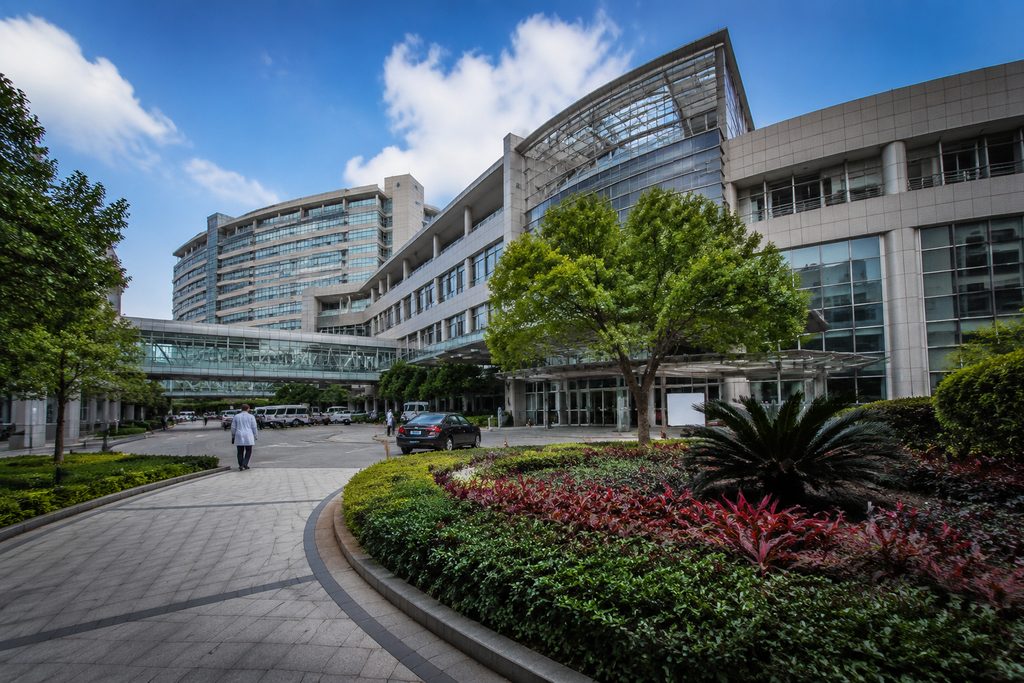
You have probably heard that getting complex medical care in a foreign country means sacrificing safety for savings. The assumption is understandable. But when it comes to liver transplantation and advanced gastroenterology, the data from Shanghai tells a completely different story. The gap is not in clinical quality. It is in navigation.
Key Takeaways
- Renji Hospital’s liver transplant program is one of the world’s largest by annual volume, with survival rates matching or exceeding benchmarks set by top Western centers.
- The all-inclusive Renji Hospital liver transplant cost typically ranges between $120,000 and $180,000 USD—a fraction of the $800,000+ bill common in the United States.
- Direct access as a foreigner is the real barrier. Without a local intermediary, you cannot schedule surgery remotely, and language gaps make the sprawling public hospital system nearly impossible to navigate independently.
- Your clinical outcome depends as much on logistical preparation—visas, medical records translation, payment structuring—as it does on the surgeon’s skill.
The Problem: When Time Is a Luxury You Do Not Have
End-stage liver disease does not wait. In the United States, over 10,000 patients sit on the liver transplant waiting list at any given moment. The median wait time for a deceased donor liver stretches past 11 months in many UNOS regions. In the United Kingdom, the figure hovers around 145 days for adults, but can exceed a year for certain blood types. For patients with decompensated cirrhosis or hepatocellular carcinoma, that window is a gamble they often lose. Approximately 1,500 Americans die each year waiting for a liver that never arrives.
Living donor transplantation shortens that timeline dramatically. But the cost in Western systems is prohibitive for many. A liver transplant in the U.S. carries a price tag that routinely exceeds $878,000 before insurance negotiations, including the first year of immunosuppressive therapy and follow-up. Even with solid coverage, out-of-pocket maximums, travel, and lost income can crush a family. The math is brutal.
This is not a rare problem. It affects professionals, retirees, and families across North America, Europe, and the Middle East. They share one thing: they need a high-volume center with documented outcomes, and they need a path to treatment that does not bankrupt them. That path increasingly leads to Shanghai.
Who We Are
We are not a hospital. We do not provide medical treatment, clinical diagnoses, or make promises about surgical outcomes. Our team functions as your logistical architects. We bridge the gap between you and the expertise housed within China’s top-tier medical institutions. We handle the structural barriers—visa documentation, certified medical translation, hospital selection based on the Fudan University rankings, appointment coordination through official international channels, and on-the-ground bilingual support. We exist so you can focus entirely on your health, not on navigating a foreign bureaucracy.
Why Renji Hospital Delivers Results for International Gastroenterology Patients
Renji Hospital, affiliated with Shanghai Jiao Tong University School of Medicine, is not just a name on a list. It is a powerhouse. The hospital is consistently ranked among China’s top 20 overall hospitals by the Fudan University Hospital Ranking, and its gastroenterology and hepatology departments are firmly placed in the national top 10. But the ranking alone is not the reason patients travel here. The reason is volume.
Clinical Volume Drives Better Transplant Outcomes
Renji’s liver transplant program, led by its Department of Liver Surgery, performs over 800 liver transplants annually. To put that in perspective, a busy transplant center in Europe might perform 120 to 150 per year. This is not just a statistic. Multiple studies, including a landmark 2023 analysis in the Journal of Hepatology, have confirmed a direct inverse relationship between center volume and post-transplant mortality. High-volume centers see fewer complications. Their teams have managed every possible anatomical variant, every immunological curveball. At Renji, the one-year patient survival rate after liver transplantation exceeds 90%, and the five-year survival rate is above 80%—numbers that align with the best programs in the world.
The hospital is a pioneer in living donor liver transplantation, particularly adult-to-adult right lobe grafts. This is a technically demanding surgery that many Western centers only perform in limited numbers. Renji’s surgeons have refined it into a reproducible, safe protocol. For a foreign patient, that means a shorter wait and a graft that functions immediately.
Gastroenterology Excellence Beyond Transplantation
Many international patients arrive at Renji not for a transplant, but for complex GI diagnostics and interventions. The hospital’s Division of Gastroenterology and Hepatology is a national key discipline. It handles a staggering volume of inflammatory bowel disease, autoimmune liver diseases like primary biliary cholangitis, and advanced therapeutic endoscopy. The GI endoscopy center performs over 150,000 procedures a year. ERCP, EUS-guided drainage, and complex polypectomies are routine here. When you need a diagnosis that has eluded your local specialists, the sheer pattern recognition that comes from this volume is the diagnostic tool no machine can replicate.
Cost Advantage Without Quality Compromise
Let’s address the elephant in the room directly. Lower cost does not mean lower quality in this context. It means a different economic structure. The Renji Hospital liver transplant cost, including the surgery, hospital stay, organ procurement, and initial immunosuppressive therapy, typically ranges from $120,000 to $180,000 USD for international patients paying out-of-pocket. That is for a living donor or deceased donor transplant through the hospital’s international department.
Why the gap? Not because of shortcuts. Chinese surgeons’ salaries, hospital operational costs, and pharmaceutical pricing structures are fundamentally different from those in the U.S. The same branded immunosuppressant that costs $3,000 a month in America is a fraction of that here. The operating room time does not carry the same administrative overhead. You are paying for the clinical expertise and the technology, not the inflated system around it. A comprehensive gastroenterology workup—including advanced imaging, endoscopy with biopsies, and specialist consultation—often totals between $3,000 and $7,000 USD. That is less than the deductible on many American insurance plans.
What You Need to Know Before Seeking Treatment at Renji Alone
We are direct about this because it matters. Renji Hospital is a public institution that serves over 15,000 outpatients daily across its campuses. Walking in without preparation is not a strategy. It is a fast track to frustration.
- Visa Requirements Are Specific and Non-Negotiable: Medical treatment in China requires an S2 visa, with a notation specifying the treatment purpose. Your accompanying family members also need S2 visas. You cannot enter on a tourist visa and then seek a transplant. The hospital must provide an official invitation letter and treatment confirmation before the visa is issued. Getting that letter as an individual, without a local contact, can take weeks of back-and-forth.
- Remote Scheduling Does Not Exist for the General Public: China’s public hospitals do not allow you to book a surgery from overseas through a website or a phone call. You must have an in-person consultation first. The international medical center at Renji can coordinate this, but the process requires Chinese-language documentation, local payment deposits, and a physical presence to register. There is no online portal for international credit card payments to secure a surgical slot.
- The Language Barrier Is Absolute: While Renji’s international department has English-speaking coordinators, the broader hospital ecosystem—nurses, technicians, billing staff, pharmacists—operates in Mandarin. A single missed instruction during a complex immunosuppressive regimen can have severe consequences. Bilingual support is not a luxury. It is a safety requirement.
How We Help You Navigate the International Patient Service at Renji Hospital
These barriers exist for structural reasons. They are not designed to exclude. They are simply the result of a system built for domestic scale. Our role is to translate that system into a clear, actionable pathway.
We start with your medical records. Before you book a flight, our team arranges a certified translation of your history, imaging, and pathology reports. We present these to the relevant department head at Renji through the official international patient channel. This is not a backdoor. It is the standard VIP and international coordination pathway that the hospital itself uses for overseas cases. We secure a preliminary treatment opinion and a cost estimate. That estimate is transparent. It includes the hospital’s fees, and our coordination fee is clearly separated.
Once you decide to proceed, we handle the invitation letter for your S2 visa application. We coordinate the exact date for your initial consultation and arrange your airport transfer. On the ground in Shanghai, a bilingual medical companion meets you at the hospital entrance. This person handles registration, queues for lab slips, guides you to the correct building on the massive campus, and sits with you during the consultation to ensure every word the surgeon says is accurately conveyed. You do not guess. You understand.
Payment is another friction point. Chinese public hospitals require upfront deposits. International wire transfers can take days. Our team helps structure the payment to match the hospital’s requirements, so your admission is not delayed. We also help with the logistics of post-operative recovery—finding a serviced apartment near the hospital for follow-up visits, arranging medication refills, and scheduling the required monitoring before you are cleared to fly home.
This is not about skipping a queue. It is about making the queue functional for someone who does not speak the language or understand the local administrative flow.
Frequently Asked Questions
For an international patient paying entirely out-of-pocket, the total package for a liver transplant at Renji Hospital typically falls between $120,000 and $180,000 USD. This covers the pre-transplant evaluation, the surgical procedure, the hospital stay, and the initial supply of immunosuppressive medications. It does not cover extended complications requiring prolonged ICU care, which would be billed additionally. The final figure always depends on whether the donor is living or deceased, the patient’s clinical stability at the time of surgery, and the length of the hospital stay.
If you have a willing and medically compatible living donor, the entire process—from initial record review to the day of surgery—can be completed in 6 to 8 weeks. This includes visa processing, donor and recipient evaluations in Shanghai, and the legal and ethical committee approvals required in China. For deceased donor transplantation, the timeline is unpredictable and depends entirely on organ availability, just as it does in any other country. There is no way to expedite the deceased donor waitlist through a coordination service.
For liver disease and transplantation, yes. Renji is consistently ranked among China’s top 10 for gastroenterology and hepatology. But Shanghai has multiple excellent hospitals. Zhongshan Hospital and Huashan Hospital also run world-class GI programs with different sub-specialty strengths. The best gastroenterology hospital Shanghai can offer for your specific case depends on whether you need a transplant, an advanced endoscopic resection, or management of a chronic condition like Crohn’s disease. Our team helps match your diagnosis to the right sub-specialty team, not just the most famous brand name.
No legitimate hospital will let you book a transplant slot without first examining you in person. What you can do is secure a preliminary acceptance and a treatment plan. Our written second opinion service, priced from $300 to $500 USD, gets your translated records in front of a Renji specialist. They will issue a formal assessment: whether you are a surgical candidate, what the risks are, and a proposed timeline. That document becomes the foundation for your S2 visa application and your travel planning. It is not a surgery date. It is the essential step that makes a surgery date possible.
This is a real concern we plan for from day one. Biliary strictures, rejection episodes, or infections can extend your stay in Shanghai by weeks or months. We help patients secure extended-stay accommodations near the hospital that are cost-effective for longer recovery periods. We also coordinate the visa extensions required if your medical stay exceeds the original S2 visa duration. Our team remains your point of contact for all follow-up appointments, medication adjustments, and communication with the surgical team. We do not disappear after the operation is over. We stay engaged until you are stable enough to be transferred back to your home country’s healthcare system, with a complete, translated medical summary in hand.
Your Next Step
Choosing to travel across the world for a liver transplant or complex GI care is not a decision you make lightly. It requires weighing clinical data against the emotional weight of leaving your local support system. The outcomes at Renji Hospital are real. The cost savings are substantial. But the path only works if it is navigated with precision. Understanding the international patient liver transplant China price is just the starting point. The real question is whether your specific case is a fit for this hospital’s expertise. That answer starts with a conversation—not a sales pitch, but a clinical and logistical assessment based on your actual medical records. When you are ready, our team is here to build that bridge.
For more medical information and treatment options in China, visit chinamedservices.com (China Medical Services).
