Lung Cancer Surgery China Complex: Shanghai Chest Hospital for Recurrent Cases After Failed Treatment
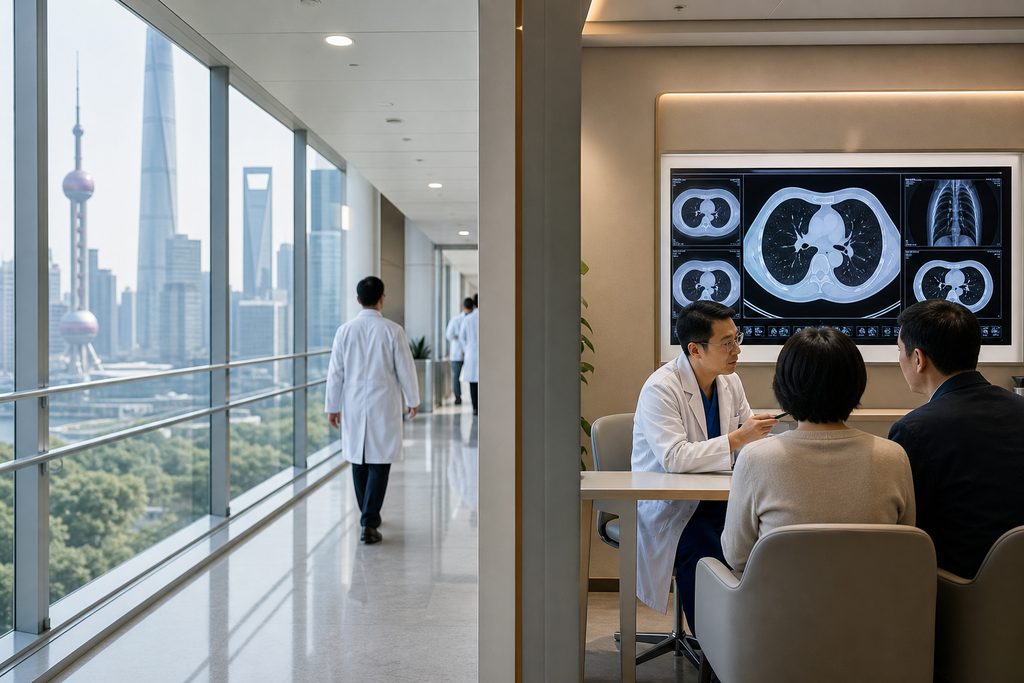
When 58-year-old David, a structural engineer from Manchester, learned his lung cancer had returned two years after a lobectomy in London, the word “inoperable” hung in the air. His local team offered palliative chemotherapy. They were not being unkind. They were being honest about the limits of what they could offer. But David was not ready to accept that. He started searching. And that search led him to a very specific question: could a hospital halfway across the world, one that handles over 15,000 thoracic surgeries annually, see something his team had missed?
That question is what brings many of our patients to us. The fear of recurrence is something approximately 30-50% of patients with early-stage non-small cell lung cancer will face, according to data published in the *Journal of Thoracic Oncology*. A failed first treatment does not always mean the end of the road. It often means you need a team that lives in the complex, high-volume space where second chances are engineered, not just hoped for.
Key Takeaways
- Shanghai Chest Hospital performs over 15,000 thoracic surgeries each year, making it one of the world’s highest-volume centers for complex lung cancer cases, including post-operative recurrences.
- The total lung cancer surgery cost Shanghai Chest Hospital for complex, recurrent cases typically ranges from $18,000 to $35,000 USD, a fraction of comparable Western care.
- Recurrent lung cancer surgery after a failed first treatment is technically demanding. High surgical volume is directly linked to lower complication rates and better long-term survival.
- Navigating care as a foreigner requires specific S2 visa documentation, pre-arranged hospital international department access, and on-the-ground bilingual support. This is not a journey to undertake without a clear logistical plan.
The Problem: When “Standard Care” Runs Out of Options for Lung Cancer Recurrence
Lung cancer remains the leading cause of cancer death worldwide. The American Cancer Society estimates approximately 235,000 new cases will be diagnosed in the United States in 2024 alone. For patients who undergo curative-intent surgery, the fear of recurrence is a shadow that never fully lifts. When it returns—especially as a locoregional recurrence in the chest—the clinical picture becomes vastly more complicated. Scar tissue from the first surgery, altered anatomy, and the patient’s diminished physiological reserve make a second operation extraordinarily delicate.
Many Western thoracic surgery teams, operating within guidelines that often favor non-surgical management for post-surgical recurrences, will default to systemic therapy or radiation. These are valid modalities. But they are not always the only option. The limiting factor is often not the biology of the disease. It is the surgical volume and specific expertise of the center. A surgeon who performs 20 complex re-do thoracotomies a year simply cannot offer the same technical calculus as one who performs 200.
That gap is real. And it is what drives patients to ask a hard question: can Shanghai Chest Hospital treat recurrent lung cancer after failed surgery when my home hospital says no? The short answer is that they often can. But the longer answer requires understanding why volume and specialization change the risk-benefit equation so dramatically.
Who We Are
We are China Medical Services. We are not a hospital. We do not provide medical treatment, offer clinical diagnoses, or make promises about surgical outcomes. What we are is a team of logistical architects and bilingual patient coordinators who bridge the gap between international patients and China’s top-tier medical institutions. Our database covers over 340 top-ranked hospitals across 37 cities. We handle the visa guidance, hospital matching, appointment coordination through official international departments, and on-the-ground bilingual medical companion support. We connect you with expertise. The clinical decisions remain entirely between you and your doctors.
Why Shanghai Chest Hospital Delivers Results for Recurrent Lung Cancer After Failed Treatment
Shanghai Chest Hospital is not just another large hospital. It is a focused thoracic center. That distinction matters enormously when we talk about the best hospital in China for lung cancer recurrence after failed treatment. The institution is consistently ranked among China’s top centers for thoracic surgery and respiratory disease by the Fudan University Hospital Ranking, which evaluates clinical reputation and research output across 45 specialties. Its singular focus means the surgical, anesthetic, and critical care teams are optimized for one thing: operations inside the chest.
Clinical Volume That Redefines Surgical Possibility
Volume is not just a vanity metric in thoracic surgery. A landmark 2015 study in *The Lancet* analyzing over 800,000 surgical patients across Europe found that for complex cancer resections, moving from a low-volume to a high-volume hospital reduced the risk of post-operative death by up to a third. Shanghai Chest Hospital’s thoracic surgery department performs more than 15,000 procedures annually. To put that in perspective, many reputable Western thoracic centers might handle 200 to 500 lung cancer resections a year.
What does that mean for a patient with a recurrence? It means the surgical team has seen your anatomical challenge before. A tumor abutting the pulmonary artery after a previous lobectomy. A chest wall invasion in a previously radiated field. A sleeve resection where the alternative is a pneumonectomy in a patient with already compromised lung function. These are not hypotheticals. They are Tuesday morning cases in a high-volume unit. The anesthesia team understands one-lung ventilation in re-operative chests. The nursing staff knows the post-operative drainage patterns. The system is tuned for complexity.
Surgical Techniques and Technology at Scale
Shanghai Chest Hospital was an early adopter of video-assisted thoracoscopic surgery (VATS) and robot-assisted thoracic surgery (RATS) in China. For a re-operation, minimally invasive approaches are not always possible. But when they are, the reduced tissue trauma can be the difference between a manageable recovery and a prolonged ICU stay. The hospital’s surgeons routinely perform complex procedures like tracheal sleeve resections, carinal reconstructions, and extended resections involving the great vessels or the left atrium.
These are not experimental surgeries. They are established, guideline-supported procedures that require a critical mass of experience to perform safely. The imaging and diagnostic infrastructure supports this. PET-CT, endobronchial ultrasound (EBUS), and electromagnetic navigation bronchoscopy (ENB) allow for precise pre-operative mapping. When a patient asks is it safe to have lung cancer surgery in China after previous treatment failed, the honest answer is that safety is a function of team experience and patient selection. No surgery is without risk. But a team that performs a high volume of exactly these re-operative cases has the data to make a sound clinical judgment.
Cost Advantage Without Quality Compromise
The lung cancer surgery cost Shanghai Chest Hospital for a complex recurrent case is a significant factor for self-paying international patients. For a procedure like a completion pneumonectomy or a complex sleeve resection with extended lymph node dissection, the total hospital bill typically lands between $18,000 and $35,000 USD. This includes surgeon fees, anesthesia, operating theater costs, implantable devices, ICU stay, and ward hospitalization. A comparable procedure in the United States can easily exceed $150,000 to $250,000. In the UK, while the NHS provides care, private options for non-residents or those seeking faster access run into similar six-figure ranges.
These cost differences are structural, not a reflection of quality. They stem from lower labor costs, high patient throughput efficiency, and a different medical device pricing ecosystem. The clinical outcomes, particularly for high-volume procedures, are comparable to top Western centers. A 2018 study in *The BMJ* examining global surgical outcomes found that postoperative mortality in China’s top-tier hospitals is statistically indistinguishable from that in high-income countries for benchmark procedures. The value proposition is not “cheap care.” It is “specialized care at a structurally lower price point.”
What You Need to Know Before Going Alone
We say this to every patient who contacts us: the clinical expertise exists. But accessing it as a foreigner without local knowledge is genuinely difficult. Not impossible. But difficult enough that we have seen too many patients arrive in Shanghai only to face a wall of logistical friction they did not anticipate.
- Visa and Documentation: Medical treatment in China requires an S2 visa with a specific annotation for medical purposes. You cannot enter on a tourist (L) visa and legally receive scheduled surgery. The invitation letter must come from the hospital’s international department, and the documentation must be precise. Processing times vary by embassy. Get this wrong, and you are stuck at the consulate.
- Hospital Access and Registration: Shanghai Chest Hospital’s public outpatient clinics see thousands of patients daily. You cannot simply walk in and see a top thoracic surgeon. The public registration system is in Chinese, often tied to WeChat or local ID-verified apps. The international department operates on a separate, pre-arranged appointment basis. Attempting the public route without Mandarin fluency and local payment systems will consume days of your time and likely fail.
- Payment and Financial Logistics: Chinese public hospitals, including their international wings, operate on a pre-payment or deposit model for major surgeries. International credit cards are not always accepted directly at the hospital cashier. Large wire transfers may take days to clear. You need a clear financial pathway established before you arrive, or you risk delays in scheduling your surgery.
- Language and Clinical Communication: Even in the international department, the deep clinical conversations—the surgical consent discussion, the nuanced explanations of risk—happen with the surgeon. A bilingual medical companion who understands thoracic terminology is not a luxury. It is your guarantee of informed consent.
How We Help You Navigate This
These barriers are structural, not malicious. The Chinese healthcare system is designed to serve over a billion people, with foreign patients as a very small side consideration. Our entire service exists to bridge that structural gap.
When you contact us, the process starts with a clinical review. We collect your medical records, imaging, and pathology reports. Our team translates these into clinical Chinese and presents them to the international department at Shanghai Chest Hospital—or another appropriate center, depending on your specific histology and surgical history. We do not choose the hospital for you. We present your case to the right department and facilitate a pre-arrival assessment. If the surgical team agrees to take your case, we then handle the invitation letter for your S2 visa, coordinate the appointment schedule, and arrange your billing pathway.
On the ground in Shanghai, a bilingual medical companion meets you at the airport or your hotel. They accompany you to every appointment, translating in real time, ensuring you understand every clinical discussion. They handle the physical logistics—queueing, payment processing, pharmacy runs, and navigating the sprawling hospital campus. After discharge, we coordinate follow-up appointments and can arrange recovery accommodation. The goal is that you focus entirely on your clinical journey and recovery. We handle everything else. For patients seeking to book lung cancer surgery Shanghai Chest Hospital international patient services, this pre-arranged pathway is not the only way—but it is the way that avoids days of confusion and potential clinical delays.
Frequently Asked Questions
For a complex re-operative case, the total hospital bill typically ranges from $18,000 to $35,000 USD. This estimate covers the surgeon, anesthesia, operating theater, ICU, ward stay, and standard surgical consumables. The exact figure depends on the specific procedure, the length of ICU stay, and whether advanced technologies like robotic assistance are used. It does not include pre-operative imaging, travel, accommodation, or our coordination fees, which are quoted separately after an initial consultation.
Many patients come to us after receiving an “inoperable” assessment elsewhere. Shanghai Chest Hospital’s thoracic surgeons routinely perform complex re-operations that smaller centers may not offer. However, “inoperable” can mean different things—it may refer to technical resectability, physiological fitness, or oncological futility. The only way to know if your specific recurrence is surgically addressable is to have your full records and latest imaging reviewed by their team. We facilitate that review. We do not pre-judge the outcome.
Safety is a product of team experience, patient selection, and hospital infrastructure. Shanghai Chest Hospital’s thoracic ICU is staffed by intensivists who manage post-operative complications in complex chest cases daily. The hospital’s infection control protocols and surgical safety checklists are aligned with international standards. That said, all lung cancer surgery carries risks—bleeding, infection, prolonged air leak, and cardiopulmonary complications. A re-operation magnifies some of those risks. The surgical team will discuss these with you candidly before you consent. Your safety is not a promise we or anyone can make. It is a clinical judgment made by experts reviewing your specific case.
You cannot book surgery directly. The pathway is: medical records review by the international department → pre-arrival clinical assessment → visa invitation letter → travel to Shanghai → in-person consultation and pre-operative testing → surgical scheduling. This process can take several weeks from initial contact to surgery date. Our coordination service manages each step, but we emphasize that the timeline is driven by clinical priority and surgeon availability, not by any guaranteed booking system.
This is a rare but real possibility. No reputable international department will guarantee surgery before an in-person evaluation. If the surgical team determines that the risks outweigh the benefits, they will explain their reasoning and may offer alternative treatment options within the hospital. Our role is to support you through that conversation, help arrange any alternative care, and adjust your logistical plan accordingly. We charge a coordination fee for the work done. We cannot refund travel or accommodation costs, which is why we advise all patients to have contingency plans.
Your Next Step
Recurrent lung cancer after a failed first treatment is a deeply frightening diagnosis. The path forward is not obvious, and the options can feel like they are narrowing. But “narrowing” is not the same as “closed.” For a subset of patients, a second surgery at a high-volume center like Shanghai Chest Hospital is a clinically sound, technically feasible option that simply was not available to them locally. The question is whether your specific case falls into that subset. The only way to find out is to have your records reviewed by the team that would perform the surgery. If you want to explore that option with logistical support that handles the complexity for you, we are here to help you take that first step.
For more medical information and treatment options in China, visit chinamedservices.com (China Medical Services).
