Hebei Provincial People’s Hospital Oncology for International Patients: A Realistic Guide
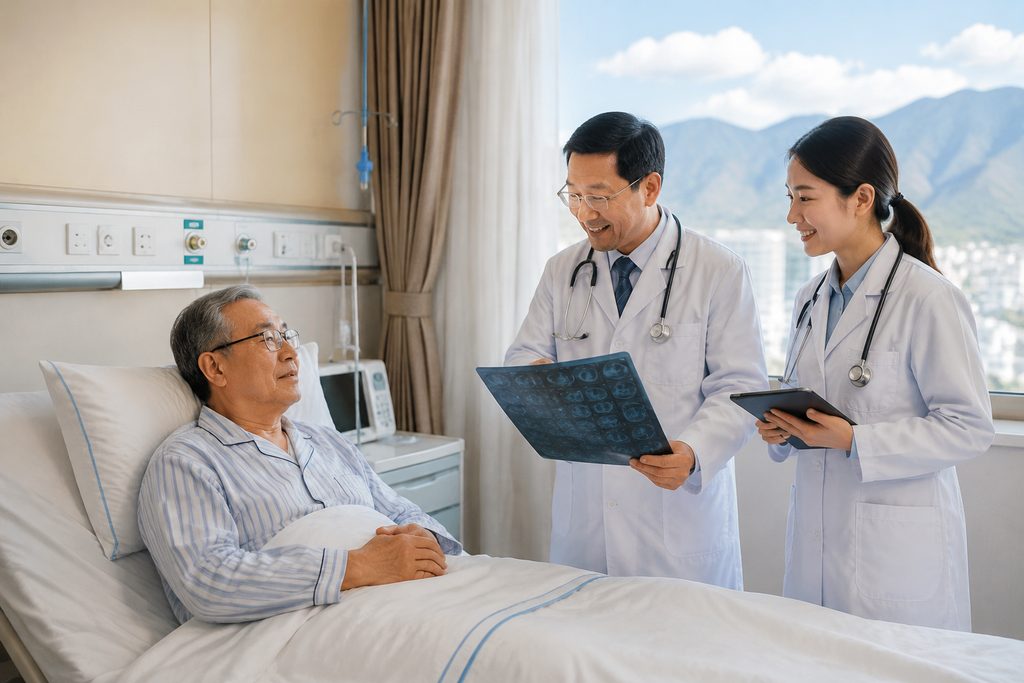
When 47-year-old Daniel from Manchester was diagnosed with stage II colorectal cancer, his first instinct was to look at treatment options in London. The wait for surgery was projected at six weeks. Then a colleague mentioned China. Daniel had never considered it. He didn’t speak the language. He didn’t know a single hospital name. What he did know was that he needed a plan, and he needed one quickly.
Daniel’s situation isn’t unusual. Every month we hear from patients and families asking the same question: is the best oncology hospital in China for foreigners something they can actually access, or just a theoretical idea? The answer is more practical than most expect — but it requires understanding which hospitals genuinely serve international patients, and which ones are better suited to domestic care pathways. Hebei Provincial People’s Hospital sits in an interesting middle ground. It is a major public institution with a strong oncology department, yet it is not one of the names most Western patients recognize. That gap between reputation and accessibility is exactly what this article will address.
We will walk through how the process actually works, what the oncology department at Hebei Provincial People’s Hospital offers, realistic timelines, what can go wrong, and how to evaluate whether this hospital — or one of Beijing’s top cancer centers — is the right fit for your specific case.
How This Actually Works, Step by Step
The path from “I’m considering treatment in China” to sitting in an oncology consultation is more structured than most patients assume. It is not a free-for-all. Here is the sequence we guide patients through.
Step one: You send your existing medical records. This means pathology reports, imaging studies (CT, MRI, PET-CT), blood work, and any prior treatment summaries. If the records are not in English or Chinese, they need translation. We handle that. Without complete records, no serious oncology department will give you a meaningful opinion.
Step two: The oncology team reviews your file. At Hebei Provincial People’s Hospital, the oncology department reviews foreign patient cases through the hospital’s international coordination channel. This is not the same as walking into the general outpatient clinic. The review determines whether your case fits their treatment capabilities and what additional tests might be needed.
Step three: You receive a written assessment or schedule a video consultation. This is where you learn whether the hospital can take your case, what treatment approach they recommend, and roughly what it will cost. A written second opinion from a top specialist typically runs $300–500. A video consultation with the treating team ranges from $100–300 for standard international department access, up to $500–800 if you want a named top specialist.
Step four: You decide whether to travel. If the recommendation makes sense, we coordinate the S2 visa application, appointment scheduling, and on-the-ground logistics. If the recommendation doesn’t fit — maybe the hospital suggests a treatment approach you’re not comfortable with — you walk away with a clear second opinion and no obligation to travel.
Step five: You arrive, meet the team in person, and treatment begins. Surgery, chemotherapy, radiation, or a combination. This is where the bilingual companion service becomes essential, because no amount of pre-trip planning prepares you for navigating a Chinese public hospital alone.
Hebei Provincial People’s Hospital Oncology: What You’re Actually Getting
Hebei Provincial People’s Hospital is a large tertiary hospital in Shijiazhuang, the capital of Hebei province, about 280 kilometers southwest of Beijing. Its oncology department treats a high volume of cancer patients each year — the kind of case volume that builds clinical experience. Lung cancer, gastric cancer, colorectal cancer, breast cancer, and liver cancer are among the most commonly treated malignancies here, reflecting the regional disease profile of northern China.
So is Hebei cancer hospital good for international patients? The honest answer is nuanced. The medical capability is solid. The hospital has modern radiation equipment, experienced surgical teams, and a full chemotherapy department. What it lacks, compared to Beijing’s elite centers, is a well-oiled international patient pipeline. English-speaking staff are fewer. The administrative pathway for foreign patients is less developed than at, say, Peking Union Medical College Hospital or Cancer Hospital Chinese Academy of Medical Sciences. That doesn’t mean you can’t be treated here. It means you need more coordination support.
For patients specifically researching cancer treatment cost Hebei Provincial People’s Hospital, the appeal is financial. Treatment in Shijiazhuang is generally less expensive than in Beijing or Shanghai. A course of chemotherapy that might cost $15,000 in a top Beijing international department could run 30–40% less in Hebei. Surgery costs follow a similar pattern. But cost savings must be weighed against the infrastructure for international patients. If you need frequent translation, logistical help, and a hospital accustomed to foreign insurance documentation, a Beijing center may serve you better.
Our database includes 340+ top-ranked hospitals across 37 cities, and Hebei Provincial People’s Hospital is one of them. But we are honest with patients: for complex oncology cases, the strongest options in northern China are concentrated in Beijing. You can review the oncology department rankings to see which hospitals consistently appear in China’s top 10 for cancer care.
Best Oncology Hospital in China for Foreigners: What the Rankings Actually Say
The phrase “best oncology hospital in China for foreigners” gets searched a lot. But the answer depends on what you mean by “best.” Best clinical outcomes? Best English support? Best cost-to-quality ratio? These are different hospitals.
China’s hospital rankings are published annually by Fudan University. The oncology specialty reputation list is the one that matters for cancer patients. Among the top cancer hospitals in Beijing for overseas patients, three names dominate: Cancer Hospital Chinese Academy of Medical Sciences, Peking University Cancer Hospital, and the oncology department at Peking Union Medical College Hospital. These are the institutions with the deepest experience treating complex and rare malignancies, the most advanced radiation platforms, and the most established international patient services.
But “best” also means accessible. A hospital with world-class outcomes but no mechanism for foreign patients to schedule appointments is not actually an option. That is where the international department or VIP channel matters. Public hospitals in China generally require in-person registration for general outpatient visits. Foreign patients cannot simply book online from abroad. The international departments exist precisely to bridge that gap — with English-speaking coordinators, priority scheduling, and higher fees (usually 1.5 to 2 times standard rates).
For patients who want to book oncology consultation China medical tourism, the practical route is: choose the hospital, submit records through a coordination service, get the review, then schedule. You cannot skip the review step. No reputable oncology department will accept a foreign patient sight unseen.
A Realistic Timeline
Here is what the process looks like in real time, based on cases we have coordinated. This assumes you already have a confirmed cancer diagnosis and complete medical records.
| Stage | What Happens | Typical Duration |
|---|---|---|
| Day 1–3 | You submit medical records; we review for completeness and arrange translation if needed | 2–3 days |
| Day 4–10 | Oncology department reviews your case; written second opinion prepared | 5–10 business days |
| Day 11–14 | Video consultation scheduled if you want to speak with the team directly | 3–7 days lead time |
| Week 3–5 | You decide to travel; S2 visa application submitted with hospital invitation documents | 2–4 weeks processing |
| Week 5–6 | Flights and accommodation booked; hospital appointment confirmed | 1 week |
| Week 6–7 | Arrival in China; in-person consultation; additional staging tests if required | 3–5 days |
| Week 7–8 | Treatment plan finalized; surgery or chemotherapy begins | Varies by case |
The step most patients forget is document translation. If your pathology report is in a language other than English or Chinese, the hospital cannot review it. Translation adds days, sometimes a week. Another hidden delay: the visa. S2 visa processing times vary by embassy and country of application. Some embassies process in one week; others take a month. Plan conservatively.
And here is a truth that surprises many Western patients: you cannot lock in a surgery date before you arrive. Chinese public hospitals require an in-person consultation before scheduling surgery. The international department can prioritize your case, but the surgeon must see you first. That is not bureaucratic obstruction. It is clinical caution.
What Can Go Wrong — and What Happens Then
We would rather tell you now than have you discover it in Shijiazhuang.
Your records are incomplete. This is the most common failure point. A patient sends a CT report but not the actual imaging files. Or the pathology report is missing immunohistochemistry markers. The oncology team cannot proceed. What happens: we go back to your home hospital, request the missing items, and restart the review. This adds one to two weeks.
The hospital declines your case. It happens. Some cancers are too advanced for the treatment approaches offered. Some cases require clinical trials that are not open to foreign nationals. What happens: we take the case to a different hospital. Our network includes multiple oncology centers, and a decline from one is not a dead end.
Your visa is delayed. You cannot control the embassy. What happens: we adjust the appointment schedule and, if necessary, push the consultation back. Treatment slots in international departments are more flexible than general outpatient queues, so a two-week delay usually does not derail the plan.
You arrive and the recommended treatment is different from what you expected. The in-person evaluation may reveal that surgery is riskier than anticipated, or that a different chemotherapy regimen is indicated. What happens: you make the decision with the treating team. You are never obligated to proceed. The consultation fees you paid are credited in full toward on-the-ground coordination if you do proceed within 90 days.
How to Evaluate a Chinese Oncology Hospital as a Foreign Patient
You cannot evaluate a hospital the way you would at home. The metrics are different. Here is what actually matters.
Case volume. How many patients with your specific cancer does the department treat annually? High volume correlates with surgical proficiency and protocol familiarity. Ask for this number. Reputable departments will share it.
International patient infrastructure. Does the hospital have a dedicated international department? English-speaking coordinators? Experience with foreign insurance documentation? If the answer is no to all three, you will struggle regardless of medical quality.
Multidisciplinary team structure. Top oncology centers in China run formal MDT reviews — surgeons, medical oncologists, radiation oncologists, pathologists, and radiologists discussing each complex case together. An MDT video consultation typically costs $1,500–2,000 and is worth it for complex or recurrent disease.
Equipment generation. Radiation oncology has changed dramatically in the last decade. Ask whether the hospital uses intensity-modulated radiation therapy (IMRT), volumetric modulated arc therapy (VMAT), or proton therapy where relevant. Older equipment is not necessarily worse, but for certain tumors the technology gap matters.
Cost transparency. A hospital that gives you a clear written estimate before you travel is a hospital that respects international patients. One that says “we’ll figure it out when you arrive” is a red flag. Our coordination fee for hospital appointments starts at $300, and if we cannot secure the appointment as specified, that fee is refunded in full.
For patients weighing Hebei Provincial People’s Hospital against Beijing options, the decision usually comes down to this: if you have a straightforward case and cost is the dominant factor, Hebei is viable. If your case is complex, recurrent, or rare, go to Beijing. The top-ranked hospitals in Beijing have the subspecialty depth that complex oncology demands.
Practical Considerations: Records, Visa, Payment, and Follow-Up
Let’s get specific about the logistics.
Medical records. You need: complete pathology report with molecular markers, all imaging studies in DICOM format on a CD or USB drive, surgical reports if applicable, chemotherapy or radiation summaries, and a current medication list. If your records are in Arabic, Russian, French, or any language other than English or Chinese, factor in translation time and cost.
Visa. The correct category for medical treatment in China is the S2 visa, endorsed for medical purposes. Accompanying family members also apply for S2. The M visa is for commercial and trade activities — it is not a medical visa. Processing times and documentation requirements vary by Chinese embassy, so check the specific consulate for your country. The hospital or coordination service provides the invitation letter and supporting documents.
Payment. Public hospitals in China, including their international departments, generally require prepayment. You deposit funds upfront and treatment draws down from that balance. Most foreign insurance plans reimburse after the fact; direct billing is rare in public hospitals and more common in private international facilities. Budget for the deposit to be substantial — major surgery can require a $10,000–$20,000 upfront deposit.
Language. Even in international departments, the nursing staff, radiology technicians, and pharmacy personnel may not speak English. A bilingual medical companion — from $300 per day — handles interpretation, queue management, payment processing, and navigation. Without this, a single day of tests can become an exhausting maze.
Follow-up at home. Before you leave China, the oncology team should provide a written treatment summary and a follow-up protocol. Your home oncologist needs to know exactly what was done, what drugs were used, and what monitoring is required. If your home doctor has questions, a follow-up video consultation can be arranged.
Frequently Asked Questions
You can try, but the general outpatient system is not designed for international patients. Most departments do not have English-speaking staff answering phones or emails from abroad. The practical route is through the hospital’s international coordination channel or a service like ours that handles the submission, translation, and scheduling.
Costs vary significantly by cancer type, stage, and treatment approach. As a general reference, chemotherapy courses in Hebei public hospitals run 30–40% less than equivalent treatment in Beijing international departments. Surgery for common cancers might range from $8,000 to $25,000 depending on complexity. Written estimates are provided after the oncology team reviews your records — never before.
Safety depends on the hospital, not the country. Top-tier Chinese oncology centers follow international treatment protocols and have extensive clinical experience. The risks for foreign patients are mostly logistical — language barriers, unfamiliar administrative processes, and difficulty navigating follow-up care. Those risks are manageable with proper coordination.
If you pay for a written second opinion or video consultation and then decide to proceed with treatment in China, that consultation fee is credited in full toward the on-the-ground coordination service. It is a one-time credit, applies only to the coordination fee, and never applies to hospital treatment charges.
Yes. Accompanying family members apply for S2 visas alongside the patient. They can stay with you during treatment. If your treatment extends beyond 180 days, you may need to apply for an S1 visa instead. We help with the documentation for both.
Your Next Step
Choosing where to receive cancer treatment is one of the most consequential decisions you will ever make. The right hospital for you depends on your specific diagnosis, stage, budget, and personal priorities. We help you sort through those variables with clear, evidence-based guidance — not marketing.
Our team at China Medical Services connects international patients with 340+ top-ranked hospitals across China. We do not provide medical advice. We coordinate records, scheduling, translation, and on-the-ground support so you can focus on treatment. If you want to explore whether Hebei Provincial People’s Hospital or a Beijing oncology center is right for your case, request a free consultation. We will review your situation and tell you honestly what your options are.
Daniel, the patient from Manchester, eventually chose a Beijing hospital over Hebei. His case was more complex than the initial staging suggested, and he needed the subspecialty depth that only a top-tier oncology center could provide. The point is not that Hebei was the wrong choice. The point is that he had a clear framework for making the right one. That framework is what we offer.
For more medical information and treatment options in China, visit chinamedservices.com (China Medical Services).
