Epilepsy Surgery in China: Costs, Top Hospitals, and How Foreigners Access Care
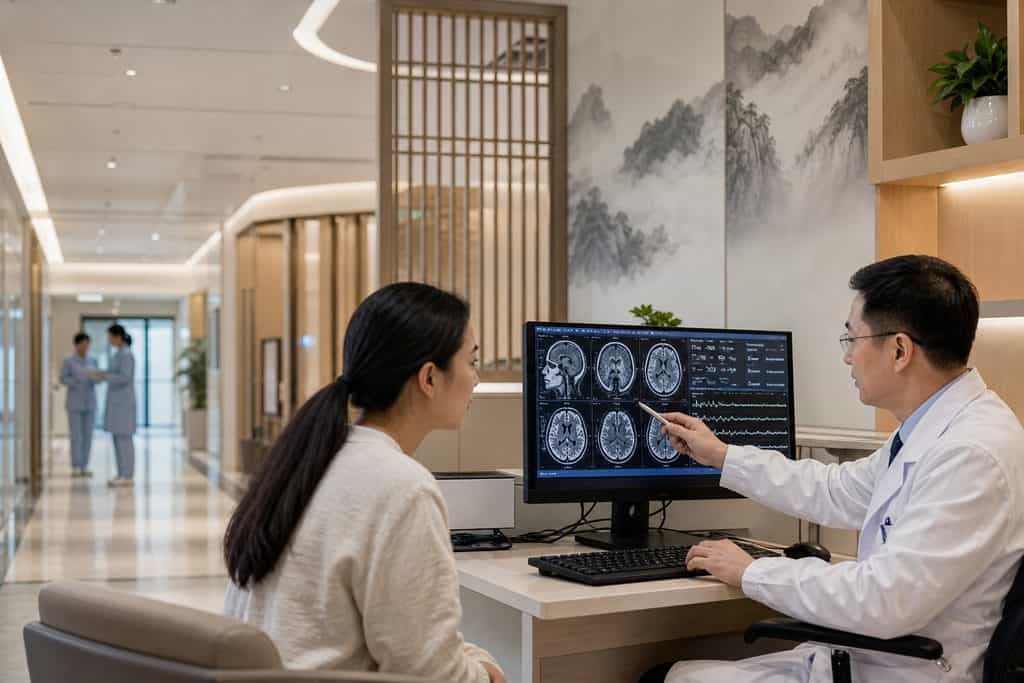
When 34-year-old Daniel from Manchester had his third tonic-clonic seizure in four months, his neurologist finally said the words he’d been dreading: “Your epilepsy is drug-resistant. We should discuss surgery.” Daniel had tried five anti-seizure medications. Nothing worked. Then came the second shock — the UK waiting list for pre-surgical evaluation stretched beyond 18 months, and private surgery quotes started at £45,000. He started searching online. One phrase kept appearing: epilepsy surgery cost China.
Daniel is not alone. Approximately 50 million people worldwide live with epilepsy, according to the World Health Organization. Roughly 30% of them — about 15 million people — have drug-resistant epilepsy. For many, surgery offers the only realistic path to seizure freedom. But in the US, the average epilepsy surgery costs between $50,000 and $100,000. In the UK, NHS wait times for epilepsy surgery evaluation routinely exceed one year. In Canada, the median wait from referral to surgery is 6–12 months.
China has emerged as a serious alternative. Top-tier Chinese neurosurgery centers now perform epilepsy surgeries with seizure-freedom rates comparable to Western benchmarks — at a fraction of the cost. But can foreigners actually access this care? Is it safe? How do you even start? This article answers those questions directly.
Key Takeaways
- Epilepsy surgery in China typically costs $15,000–35,000 at top public hospitals — roughly one-third to one-fifth of US prices.
- Leading centers in Shanghai and Beijing report seizure-freedom rates of 70–85% for temporal lobe epilepsy, matching outcomes at major Western epilepsy centers.
- Foreign patients cannot simply book surgery online — you need a formal pre-surgical evaluation first, and public hospital rules require in-person consultation before any operation is scheduled.
- You will need an S2 visa for medical treatment, comprehensive medical records translated into English or Chinese, and a plan for language support once you arrive.
The Problem: Drug-Resistant Epilepsy and the Global Wait for Surgery
Seizures that don’t respond to medication destroy more than brain function. They destroy careers, independence, and mental health. A 2022 study published in Epilepsia found that people with drug-resistant epilepsy face a mortality risk up to 5 times higher than the general population. Sudden unexpected death in epilepsy (SUDEP) remains the leading cause of epilepsy-related death. And yet, in many Western health systems, surgery is treated as a last resort — offered only after years of failed medication trials.
The economics compound the problem. In the United States, a comprehensive pre-surgical workup — including video-EEG monitoring, high-resolution MRI, neuropsychological testing, and sometimes intracranial EEG — can cost $30,000–60,000 before the actual surgery happens. The surgery itself adds another $50,000–100,000. Even with insurance, out-of-pocket costs frequently exceed $10,000. For uninsured patients, the numbers are simply impossible.
Wait times add another layer. In the UK, the National Institute for Health and Care Excellence (NICE) recommends that patients with drug-resistant epilepsy be referred to a tertiary epilepsy center within 6 months. In practice, many wait far longer. Canada’s provincial systems report median surgical wait times of 6–12 months after referral — and that’s after the 12–18 months it often takes to get the referral in the first place.
Every month of waiting is another month of seizures. Another month of risk. Another month of life on hold.
Why China Delivers Results for Epilepsy Surgery Cost and Outcomes
Clinical Volume Drives Surgical Expertise
Chinese neurosurgery departments operate at a scale that few Western centers can match. A single top-tier epilepsy center in Shanghai may perform 200–400 epilepsy surgeries per year. By comparison, the average US epilepsy center performs 30–80 surgeries annually, according to data from the National Association of Epilepsy Centers. Volume matters in brain surgery. Surgeons who perform hundreds of temporal lobe resections develop an intuitive mastery of the anatomy that no textbook can teach.
This scale is not accidental. China’s population of 1.4 billion means that even a rare condition like drug-resistant epilepsy generates tens of thousands of surgical candidates. Top hospitals concentrate these cases. The result: surgical teams that see more complex epilepsy cases in one year than many Western surgeons see in a decade.
Technology and Diagnostics Without the Wait
Modern epilepsy surgery depends on precise pre-surgical mapping. Chinese top-tier hospitals have invested heavily in the tools that make this possible: 3T and 7T MRI scanners, magnetoencephalography (MEG), stereo-electroencephalography (SEEG), and intraoperative neuromonitoring. A hospital like Huashan Hospital in Shanghai — consistently ranked among China’s top 10 for neurosurgery — runs a dedicated epilepsy center with integrated diagnostics and surgical planning.
But the real structural advantage is scheduling. In the US, getting a video-EEG monitoring bed can take 2–4 months. A high-resolution epilepsy-protocol MRI might take another 6–8 weeks. In China’s top centers, the same diagnostic sequence can often be completed in 2–3 weeks. That speed matters when every seizure carries risk.
Cost Advantage Without Quality Compromise
Let’s address the obvious question: does lower cost mean lower quality? The short answer is no. The structural reasons for the cost difference are straightforward. Chinese hospital labor costs are significantly lower than in the US or UK — neurosurgeons, nurses, and technicians earn far less than their Western counterparts. Hospital construction and equipment costs are also lower. And the sheer volume of cases spreads fixed costs across many more patients.
The result: a temporal lobe resection that costs $80,000 in the US might cost $18,000–25,000 at a top Chinese public hospital. A more complex procedure like a hemispherectomy or SEEG-guided resection might run $30,000–40,000 in China versus $150,000+ in the US. These are the numbers that make epilepsy surgery cost China a genuinely compelling option for self-paying international patients.
| Procedure | China (Top Public Hospital) | United States | United Kingdom (Private) |
|---|---|---|---|
| Pre-surgical evaluation (Video-EEG, MRI, neuropsych) | $3,000–6,000 | $30,000–60,000 | £15,000–30,000 |
| Temporal lobe resection | $15,000–25,000 | $50,000–100,000 | £40,000–70,000 |
| SEEG-guided resection (complex cases) | $25,000–40,000 | $100,000–200,000 | £70,000–120,000 |
| Vagus nerve stimulation (VNS) implantation | $18,000–30,000 | $40,000–80,000 | £30,000–50,000 |
Prices vary by hospital and case complexity. These ranges reflect typical self-pay rates through hospital international departments, not the standard public ward rates available to Chinese citizens.
Can Foreigners Get Epilepsy Surgery in China? Eligibility and the Real Process
Yes — foreigners can and do receive epilepsy surgery in China. But the pathway is not what most Western patients expect. You cannot email a hospital, send your records, and book a surgery date. Chinese public hospitals operate on a strict protocol: in-person consultation first, surgery scheduling second.
Here is the actual sequence, based on how top-tier Chinese hospitals handle international neurosurgery patients:
Step 1: Remote pre-screening. You send your existing medical records — seizure history, medication list, MRI images and reports, EEG results, and any previous surgical notes — to the hospital’s international department or a coordination service. A neurologist reviews them and determines whether you are a plausible surgical candidate. This step costs $100–300 for a video consultation or $300–500 for a written second opinion from a top specialist.
Step 2: In-person evaluation. If the remote review is positive, you travel to China for a comprehensive pre-surgical workup. Expect 1–3 weeks of testing: high-resolution epilepsy-protocol MRI, video-EEG monitoring (usually 3–7 days in hospital), neuropsychological assessment, and possibly PET or SPECT scans. This is the make-or-break phase. Not every patient who arrives will be deemed a surgical candidate.
Step 3: Surgical decision and scheduling. A multidisciplinary team — neurosurgeon, neurologist, neuroradiologist, neuropsychologist — reviews your case. If surgery is recommended, the operation is typically scheduled within 1–4 weeks after evaluation completion, depending on case complexity and operating room availability.
Step 4: Surgery and recovery. Most epilepsy surgeries require a hospital stay of 7–14 days. Post-operative monitoring includes repeat EEG and neurological assessment. You should plan to remain in China for at least 3–4 weeks after surgery before flying home.
Step 5: Follow-up. Your Chinese surgical team will want follow-up at 3, 6, and 12 months — usually via video consultation. You will also need ongoing care from your home neurologist.
Best Epilepsy Hospital Shanghai vs Beijing: How to Choose
Two cities dominate China’s epilepsy surgery landscape: Shanghai and Beijing. Both host multiple hospitals ranked in the top 10 nationally for neurosurgery. Choosing between them depends on your clinical needs, budget, and logistical preferences.
Shanghai’s advantage is concentration. Huashan Hospital, affiliated with Fudan University, operates one of China’s most established epilepsy surgery programs. Its neurosurgery department is ranked among China’s top 10 in the Fudan specialty reputation rankings. The hospital’s international medical center handles foreign patients daily and has English-speaking coordinators. Shanghai also offers easier international flight connections and a more expat-friendly environment than Beijing.
Beijing counters with scale and academic depth. Xuanwu Hospital, affiliated with Capital Medical University, runs a dedicated epilepsy center with a national reputation for complex cases. Peking Union Medical College Hospital (PUMCH) offers an integrated approach with strong neurology and neurosurgery departments. Beijing’s epilepsy surgery price tends to run 10–20% higher than Shanghai for comparable procedures, reflecting higher demand and operating costs.
For most international patients, the practical answer is: start with remote consultation at one hospital in each city, compare the medical recommendations, and choose based on which team communicates most clearly and which surgical plan makes the most sense for your specific epilepsy type. Our department rankings for neurosurgery and neurology provide a starting point for comparing hospitals across both cities.
Is Epilepsy Surgery Safe in China? What the Data Shows
Safety is the question every patient asks — and it deserves a direct answer. The honest truth: epilepsy surgery carries risk everywhere. The most common complications are infection (1–3%), hemorrhage (1–2%), and neurological deficits such as memory changes or visual field cuts (5–15% depending on resection site). Serious permanent deficits occur in roughly 2–5% of cases at major centers worldwide.
Chinese top-tier centers report complication rates within these same ranges. A 2021 retrospective study from a major Shanghai epilepsy center, published in a peer-reviewed Chinese neurosurgery journal, reported a serious complication rate of 3.2% across 412 temporal lobe resections — comparable to published Western series. Seizure-freedom rates at one year ranged from 72% to 85% depending on pathology, again matching international benchmarks.
What makes the difference in safety is not the country — it is the center. A hospital performing 300 epilepsy surgeries per year with a dedicated epilepsy team, modern imaging, and intraoperative monitoring is safer than a hospital performing 20 per year. China’s top 5% of hospitals — the ones we work with — operate at the high-volume, high-specialization end of the spectrum. These are the hospitals ranked in the Fudan Top 100 or holding JCI accreditation. You can browse the complete list of Fudan-ranked hospitals by city to see which centers meet this bar.
Critical safety note: Not every Chinese hospital offering epilepsy surgery meets international standards. The quality gap between China’s top-tier centers and its average hospitals is significant. Foreign patients should only consider hospitals with published surgical volumes, English-speaking international departments, and accreditation from recognized bodies. Do not choose a hospital based on price alone.
Practical Considerations: Visas, Records, and Money for Medical Travel to China
If you are seriously considering epilepsy surgery in China, here is what you need to handle before you go.
Visa. Medical treatment in China falls under the S2 visa category — a short-stay visa for private affairs, including medical treatment. Your accompanying family member also applies for an S2 visa. You will need a supporting letter from the Chinese hospital confirming your treatment plan, plus standard documentation: passport, photo, application form, and proof of funds. S2 visas are typically issued for 30–90 days, which is usually sufficient for evaluation plus surgery. If your treatment plan requires a stay longer than 180 days, you would apply for an S1 visa instead. Visa requirements change frequently — always check the latest rules with the Chinese embassy or consulate in your home country before applying.
Medical records. Chinese hospitals require complete, organized records. This means: a detailed seizure diary or history, all MRI images (not just reports — the actual DICOM files), EEG tracings and reports, medication history with dosages and dates, and any prior surgical or hospital records. Records in English are generally acceptable at top-tier international departments, but Chinese translations speed up the review process significantly.
Payment. Chinese public hospitals require prepayment for international patients. You will typically deposit an estimated treatment amount upfront — often $20,000–40,000 for epilepsy surgery — and the hospital draws down from that deposit as services are provided. Any unused balance is refunded. Payment methods include international bank transfer, major credit cards (with limits), and sometimes Alipay or WeChat Pay linked to international cards. Cash is also accepted. US and European health insurance rarely covers treatment in China, so most international patients self-pay and then seek reimbursement from their insurer afterward. Private international hospitals in China — like United Family or Jiahui — offer direct insurance billing, but their epilepsy surgery prices run 50–100% higher than top public hospitals.
Language. Top Chinese hospitals have English-speaking staff in their international departments. But the moment you step outside that department — into radiology, the EEG lab, or the ward — English support thins out quickly. A bilingual medical companion who can translate during consultations, explain test instructions, and help you navigate the hospital’s physical layout makes a measurable difference in both safety and peace of mind.
Follow-up. Epilepsy surgery is not a one-and-done event. You will need anti-seizure medication for at least 1–2 years after surgery, even if you become seizure-free. Your home neurologist must be willing to manage your post-surgical care and communicate with your Chinese surgical team. Before you travel, confirm that your home neurologist will accept post-operative responsibility — some refuse to manage patients treated abroad.
Frequently Asked Questions
For a standard temporal lobe resection at a top-tier public hospital, expect to pay $15,000–25,000 for the surgery itself, plus $3,000–6,000 for the pre-surgical evaluation. More complex cases requiring SEEG or intracranial monitoring run $25,000–40,000. These are self-pay international patient rates and vary by hospital and case complexity. Total costs including travel, accommodation, and coordination services typically land between $25,000 and $50,000.
Most US and European insurance plans do not cover elective surgery in China. Some international health insurance policies (like Cigna Global or Bupa International) may offer partial coverage if you have a plan that includes worldwide treatment. You will almost certainly need to self-pay upfront and then pursue reimbursement. Get written pre-authorization from your insurer before committing to any treatment plan.
This happens in roughly 20–30% of cases. You will have spent $3,000–6,000 on the evaluation and learned that surgery is not appropriate for your epilepsy type. That is frustrating — but it is also valuable information that prevents a risky, ineffective operation. The remote pre-screening step exists specifically to reduce this risk. A thorough remote review by a Chinese epilepsy specialist can identify obvious non-candidates before you spend money on travel.
How do I know a Chinese hospital is legitimate?
Check for Fudan ranking (China’s most authoritative hospital ranking system), JCI accreditation, and a dedicated
For more medical information and treatment options in China, visit chinamedservices.com (China Medical Services).
