Brachial Plexus Injury Surgery China: Nerve Transfer for Arm Paralysis
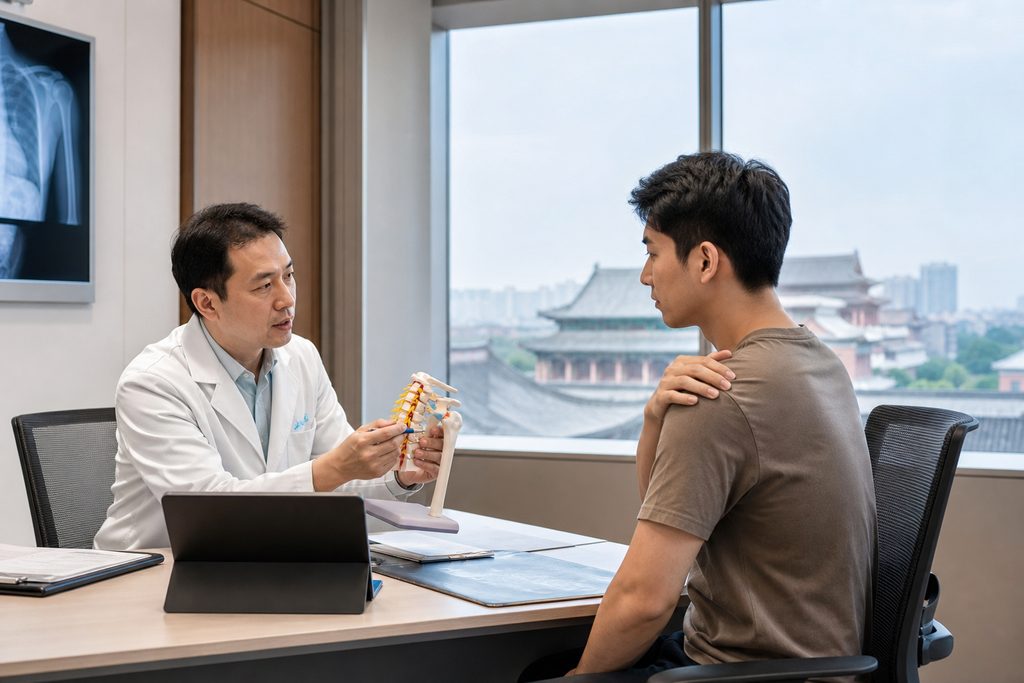
Brachial Plexus Injury Surgery China: Peripheral Nerve Transfer for Upper Limb Paralysis
A brachial plexus injury severs the connection between your spinal cord and your arm. The nerves that once commanded your shoulder, elbow, wrist, and hand fall silent. A peripheral nerve transfer takes a healthy, less critical nerve nearby and reroutes it to the paralyzed muscle—restoring function by giving the signal a new path. Our team has coordinated this exact procedure for patients from London, Dubai, and Sydney who exhausted options at home. They came to China for one reason: volume. Chinese nerve surgeons perform these delicate reconstructions at a scale unmatched in most Western centers. The nerve transfer surgery cost China typically ranges from $18,000 to $35,000, a fraction of what you would pay elsewhere. But cost is only part of the story.
Key Takeaways
- Peripheral nerve transfers for brachial plexus injuries in China cost $18,000-$35,000, compared to $80,000-$150,000 in the United States—a savings of roughly 70%.
- Top centers in Shanghai perform over 200 brachial plexus reconstructions annually, giving their surgical teams a depth of experience that directly influences outcomes.
- Language barriers, visa requirements, and post-operative follow-up logistics are real obstacles. A self-planned trip can fall apart at the registration desk.
- Nerve transfer surgery is time-sensitive. The best window for reconstruction is typically 3 to 6 months after injury. Waiting too long leads to irreversible muscle atrophy.
The Problem: A Life Interrupted by a Silent Arm
Roughly 1 in 1,000 trauma patients sustains a brachial plexus injury severe enough to require surgical intervention. Motorcycle accidents account for nearly 70% of these cases. High-speed collisions. Industrial falls. A moment of impact, and then a limb that simply does not respond. In the United States, a patient with a complete upper trunk avulsion might wait 4 to 6 months just for an initial surgical consult at a specialized peripheral nerve center. Those months matter. Denervated muscle begins irreversible atrophy after 12 to 18 months. The clock ticks.
Then comes the financial blow. A multi-nerve transfer with sural nerve grafting in the US runs between $80,000 and $150,000. That is the hospital and surgeon fee alone. Add pre-operative EMG studies, advanced MR neurography, and months of occupational therapy. Many insurance plans classify certain nerve transfers as experimental. Denials are common. Appeals take months. Patients sell homes. They drain retirement accounts. Some simply give up and learn to live with a flail arm.
What if there was a path that cut both the wait and the cost without cutting corners on surgical quality? That path runs through Shanghai.
Who We Are
We are not a hospital. We do not perform surgery, interpret MRIs, or give medical advice. China Medical Services is a medical concierge organization that connects international patients with China’s top-tier hospitals—340+ institutions across 37 cities, all ranked within the top 5% of China’s 35,000+ hospitals by the Fudan University ranking system and JCI accreditation standards. We handle the logistics: hospital matching, appointment coordination, bilingual medical companions, visa guidance, and post-operative recovery planning. We are the bridge. You bring the medical need; we bring the operational expertise to get you to the right surgical team, safely and efficiently.
Why China Delivers Results for Brachial Plexus Reconstruction
Clinical Volume Drives Surgical Precision
A peripheral nerve surgeon at a major Shanghai teaching hospital may perform 80 to 120 nerve transfers annually. Compare that to a busy US peripheral nerve specialist, who might handle 20 to 40 cases per year. The difference is not a reflection of individual talent. It reflects system design. China’s top hospitals are enormous referral centers. A single hand surgery department at Huashan Hospital, affiliated with Fudan University in Shanghai, sees over 2,000 brachial plexus cases annually. Their surgeons have operated on injuries most Western surgeons see only in textbooks. That matters when a surgery involves identifying a viable donor fascicle from the ulnar nerve and coapting it to the biceps branch of the musculocutaneous nerve under a microscope. Repetition breeds recognition. Recognition reduces operative time. Shorter operative time correlates with lower infection rates and better outcomes.
Technology Deployed at Scale
Chinese peripheral nerve centers have invested heavily in intraoperative nerve monitoring and high-resolution MR neurography. Pre-operative planning often includes diffusion tensor imaging tractography—a technique that maps nerve fiber pathways in three dimensions. This lets the surgical team assess root avulsion versus rupture before making an incision. Intraoperatively, somatosensory evoked potentials guide decisions in real time. Should the surgeon transfer the spinal accessory nerve or an intercostal nerve for shoulder abduction? The neuromonitoring data helps answer that question on the table. These technologies exist in the West. But in China, they are deployed routinely, not reserved for complex revision cases. The equipment is there. The technicians are trained. The workflow is established.
Cost Structure: Lower Price, Same Rigor
Let us address the elephant in the room. How can the nerve transfer surgery cost China be 70% lower without compromising quality? The answer lies in structural economics, not shortcuts. Chinese hospital systems operate on high-volume, lower-margin models. Labor costs for skilled nursing staff, anesthesiologists, and surgical assistants are lower. Hospital stays cost less per day. Implant costs are comparable—the same microsurgical sutures, the same nerve conduits—but the facility fees and professional charges are fundamentally different. A double nerve transfer for elbow flexion (Oberlin procedure plus intercostal nerve transfer) in Shanghai might total $20,000 to $28,000. In the US, that same procedure easily exceeds $90,000. The clinical protocols are identical. The outcome data, when published in peer-reviewed journals, shows comparable success rates.
| Procedure | China (USD) | United States (USD) | United Kingdom (USD) |
|---|---|---|---|
| Single Nerve Transfer (e.g., Oberlin) | $18,000 – $25,000 | $70,000 – $100,000 | $55,000 – $85,000 |
| Multi-Nerve Transfer + Grafting | $28,000 – $35,000 | $100,000 – $150,000 | $80,000 – $120,000 |
| Pre-op Diagnostics (MRI, EMG) | $1,200 – $2,500 | $5,000 – $10,000 | $3,500 – $7,000 |
| Post-op Hospital Stay (per day) | $200 – $500 | $3,000 – $5,000 | $1,500 – $3,000 |
Prices vary by hospital tier, surgeon seniority, and case complexity. These figures represent ranges based on actual patient cases we have coordinated. Always confirm with a formal hospital quotation.
How Successful Is Nerve Transfer for Arm Paralysis? The Data
This is the question every patient asks. How successful is nerve transfer for arm paralysis? The answer depends on which function you are trying to restore, the time since injury, and the specific nerves involved. A meta-analysis published in the Journal of Hand Surgery examined outcomes for Oberlin nerve transfers—rerouting an ulnar nerve fascicle to the biceps branch. Across 1,200 patients, 94% regained elbow flexion strength of M3 or better on the Medical Research Council scale. M3 means the patient can flex the elbow against gravity through a full range of motion. M4—movement against resistance—was achieved in 78% of patients. Those are strong numbers.
Restoring shoulder abduction via spinal accessory nerve transfer to the suprascapular nerve succeeds in approximately 85% of cases, with patients regaining 45 to 90 degrees of active shoulder abduction. The data for hand function is more sobering. Can peripheral nerve transfer restore hand function? Yes, but with important caveats. Distal nerve transfers—such as transferring the anterior interosseous nerve to the deep ulnar motor branch—can restore some intrinsic hand function when performed within 6 months of injury. A 2020 study from Huashan Hospital reported that 62% of patients regained functional grip strength after distal nerve transfers for lower trunk injuries. But fine motor control? Individual finger movements? That remains elusive. The hand has 34 muscles and a dense sensory network. Nerve transfers can bring it back to life, but rarely to its original dexterity. Patients need to hear this upfront.
Finding the Best Hospital for Brachial Plexus Injury Shanghai
Shanghai is the epicenter of peripheral nerve surgery in China. The best hospital for brachial plexus injury Shanghai depends on your specific injury pattern, but three institutions consistently appear at the top of the Fudan University Specialty Reputation Rankings for Hand Surgery and Orthopedics. Huashan Hospital, affiliated with Fudan University, runs the largest brachial plexus center in the world. Their hand surgery department has been a national key discipline for over 30 years. Surgeons here pioneered several nerve transfer techniques now used globally. Shanghai Sixth People’s Hospital is another powerhouse, particularly strong in trauma-related nerve reconstruction and microsurgical limb salvage. Ruijin Hospital, affiliated with Shanghai Jiao Tong University School of Medicine, offers an integrated approach with strong rehabilitation and occupational therapy programs that are essential for post-operative recovery.
Choosing among them requires understanding your injury. Is it a supraclavicular lesion involving C5-C6 roots? A pan-plexus injury from a motorcycle accident? An obstetric brachial plexus palsy that was never corrected? The surgical strategy differs completely. Our team helps match your diagnostic imaging and clinical history to the right department head. We do not pick a hospital for you. We present the options, the surgeon profiles, the published outcomes, and let you decide.
What You Need to Know Before Going Alone
We have seen patients arrive at a Shanghai hospital with a stack of MRIs, a tourist visa, and a translator app on their phone. It rarely goes well. The barriers are structural, not personal. Here is what you face:
- Visa Requirements: Medical treatment in China requires an S2 visa with documentation from the admitting hospital. You cannot obtain this without a confirmed hospital appointment letter. The hospital will not issue that letter without a face-to-face consultation. It is a closed loop. Breaking it requires an established relationship with the hospital’s international medical department. A tourist visa (L) does not legally cover surgery. If complications arise, your visa status becomes a problem.
- Registration and Payment: Chinese public hospitals do not accept foreign credit cards at the registration counter. WeChat Pay and Alipay dominate. International patients often cannot set up these payment systems without a Chinese bank account. Hospital deposits for surgery—typically 50% to 100% of the estimated cost—must be paid upfront in RMB. International wire transfers take 3-5 business days to clear. Your surgery date can slip while funds are in limbo.
- Language and Clinical Navigation: The surgeon speaks some English. The residents might understand medical terminology. But the nurses, the anesthesiology pre-op team, the billing department, the pharmacy—they speak Mandarin and Shanghainese. Informed consent forms are in Chinese. Post-operative instructions are in Chinese. A bilingual medical companion is not a luxury. It is a safety requirement.
How We Help You Navigate This
These barriers exist for good reasons—China’s hospital system was built to serve its domestic population of 1.4 billion people. International patients are an exception, not the norm. Our role is to transform that exception into a smooth, predictable process.
Before you travel, we collect your medical records, imaging files, and clinical history. We translate them into Chinese and submit them to the international departments of hospitals that match your needs. We do not just send them blindly to one hospital. We target specific departments based on your injury type. Once a surgeon reviews your case and agrees to a consultation, we secure the official hospital invitation letter. That letter unlocks your S2 visa application. We guide you through the consular process step by step.
On the ground in Shanghai, a bilingual medical companion meets you at the hospital entrance. They handle registration, queue for your consultation, translate during the surgeon meeting, and explain every form before you sign it. If surgery is scheduled, they coordinate the deposit payment, confirm the admission date, and arrange pre-operative testing—blood work, chest X-ray, ECG. After surgery, they translate discharge instructions, schedule follow-up appointments, and connect you with rehabilitation therapists. You focus on recovery. We handle the rest.
For patients considering this path, we also coordinate brachial plexus specialist China medical tourism packages that include airport transfers, hotel arrangements near the hospital, and extended-stay accommodations for the rehabilitation phase. Some patients stay in Shanghai for 6 to 8 weeks post-operatively to complete the critical early phase of occupational therapy before flying home. We make that stay manageable.
Booking Your Procedure: What a Package Includes
When patients ask us how to book brachial plexus surgery China package, they often imagine a shopping-cart transaction. It does not work that way. Surgery in China is not a commodity. Every case starts with a consultation. The package we coordinate typically includes: hospital appointment coordination (from $300), bilingual medical companion services (from $200 per day), and VIP end-to-end coordination ($5,000-$8,000) for patients who want comprehensive logistical support from arrival to discharge. Any consultation fee—whether for a video consultation ($500-$800 for a top specialist) or an in-person specialist coordination ($800-$1,200)—is credited in full toward on-the-ground coordination services if you proceed with treatment within 90 days. This is a one-time credit applied to our coordination fee, never to hospital treatment charges.
The hospital bill is separate and paid directly to the hospital. We do not mark up surgical fees. We do not take commissions from hospitals. Our revenue comes from the coordination services we provide. This keeps our incentives aligned with yours. We recommend the right hospital for your condition, not the one that pays us the most.
Frequently Asked Questions
Plan for a minimum of 4 to 6 weeks. The first week covers pre-operative consultations, imaging, and surgical scheduling. The surgery itself typically requires a 5 to 7-day hospital stay. The remaining 3 to 4 weeks are for initial recovery, wound checks, and beginning occupational therapy. Some patients stay longer—up to 12 weeks—to complete a structured rehabilitation program before flying home. Your surgeon will advise based on the complexity of the nerve transfer and your healing progress.
The surgical risks—infection, hematoma, nerve transfer failure—are the same as they would be at any major medical center. The travel-specific risks include deep vein thrombosis from long-haul flights shortly after surgery, difficulty accessing emergency follow-up care once you return home, and the challenge of coordinating continued occupational therapy with a therapist unfamiliar with your specific procedure. We mitigate these by ensuring your discharge summary is translated into English, your surgical records are complete, and you have a direct line to the surgical team for post-operative questions. Still, you need a local hand therapist back home who is willing to follow a Chinese surgeon’s protocol. We help identify one before you travel.
Most Chinese public hospitals operate on a cash-before-service model. They do not bill international insurance directly. You pay the hospital upfront, obtain detailed invoices and medical records (which we help translate), and submit the claim to your insurer for reimbursement. Some international private hospitals in China, such as United Family Healthcare or Jiahui International Hospital, offer direct billing with major insurers. However, these private hospitals typically do not have the same depth of brachial plexus expertise as the major public teaching hospitals. It is a trade-off: insurance convenience versus surgical specialization. We help you understand both paths.
Nerve transfer surgery has a failure rate. Scar tissue can block axonal regeneration. The donor nerve may have been insufficient. The time since injury may have been too long. If elbow flexion does not return after an Oberlin transfer, secondary procedures exist—tendon transfers, free functional muscle transfers (gracilis flap), or even joint fusion for stability. Chinese surgeons are experienced in these salvage procedures precisely because their high volume includes complicated revision cases. We coordinate revision surgery when needed. The hospital quotation for a secondary procedure is separate, and the costs are comparable to the primary surgery. No surgeon guarantees results. But having a plan for failure is part of responsible medical travel planning.
Your Next Step
A brachial plexus injury does not heal on its own. Every month of waiting reduces the chance that a nerve transfer will take. The surgical expertise exists in Shanghai at a cost that makes treatment accessible without financial ruin. The barriers—language, visas, payments—are real but entirely solvable with the right coordination. You do not need to navigate this alone.
If you have a recent EMG report and MR neurography, we can begin the hospital matching process today. Visit our patient coordination page to start a free consultation. No commitment. No pressure. Just a clear conversation about your options.
Medical Disclaimer: This article is for informational purposes only and does not constitute medical advice. Treatment decisions should be made in consultation with a qualified peripheral nerve surgeon after a thorough clinical evaluation. Outcomes vary by individual case. China Medical Services does not guarantee surgical results or provide clinical care.
For more medical information and treatment options in China, visit chinamedservices.com (China Medical Services).
