Brain Tumor Surgery China: Beijing Tiantan Hospital for Tumors Deemed Inoperable
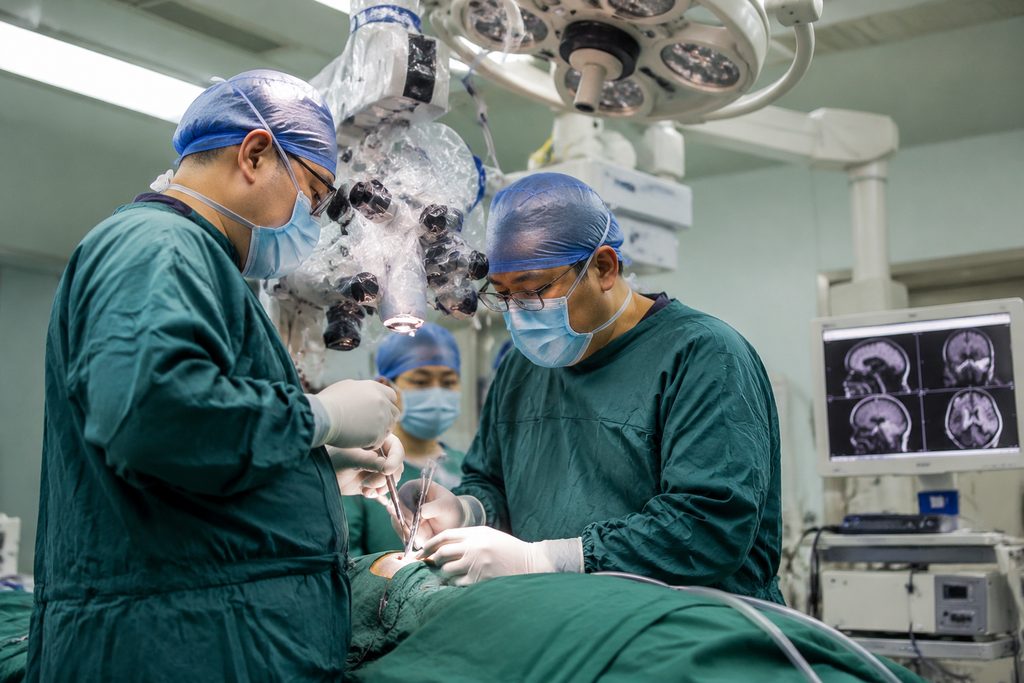
You have probably heard that complex brain tumor surgery in China means cutting corners on safety or settling for outdated techniques. The data tells a different story. One hospital in Beijing performs over 15,000 neurosurgical procedures every single year. That is more than any other center on the planet. For a patient who has been told their tumor is inoperable back home, that volume is not just a number. It is a statistical shift in the odds of finding a surgeon who has seen a case like yours before.
Key Takeaways
- Beijing Tiantan Hospital completes more than 15,000 neurosurgeries annually, making it the highest-volume neurosurgical center globally — a factor directly linked to better outcomes in complex cases.
- A tumor labeled “inoperable” in one system is often a tumor that a specific surgeon or hospital lacks the case volume or intraoperative technology to approach safely — not a universal medical truth.
- The brain tumor surgery Beijing Tiantan Hospital cost typically ranges from $25,000 to $45,000 USD for complex resections, compared to $150,000 to $300,000+ in the United States.
- Navigating a Chinese public hospital independently as a non-Mandarin speaker is genuinely difficult. The system is not built for international self-service. Professional coordination is not a luxury — it is a practical necessity.
The Problem: When “Inoperable” Is a Local Verdict, Not a Biological One
“Inoperable” is a word that lands like a door slamming shut. For patients with gliomas nestled in eloquent brain regions — areas controlling speech, motor function, or vision — the verdict often comes after a single consultation. Maybe two. The surgeon reviews the MRI, traces a finger along the tumor margin abutting the basal ganglia or wrapping around the optic chiasm, and delivers the news. The risk of catastrophic deficit is too high. Go home. Pursue radiation. Manage symptoms.
What gets lost in that moment is context. “Inoperable” is a judgment based on a specific surgeon’s experience, a specific hospital’s intraoperative monitoring capabilities, and a specific health system’s tolerance for complex case risk. A 2018 study published in Neurosurgery found that patients with glioblastoma who underwent maximal safe resection at high-volume centers — defined as more than 50 cases annually — had median survival of 16.5 months versus 11.2 months at low-volume centers. The surgeon’s annual caseload was an independent predictor of survival. Not the tumor genetics. Not the patient’s age. The sheer number of times that surgeon had stood at the microscope and made a decision about where to cut.
This is the gap that Beijing Tiantan Hospital occupies. Its neurosurgical faculty operates at a scale that fundamentally changes the risk calculus for tumors that invade critical structures. A tumor deemed inoperable by a surgeon who sees 20 similar cases a year may look very different to a surgeon who sees 200.
Who We Are
We are not a hospital. We do not provide medical treatment, surgical opinions, or clinical diagnoses. China Medical Services functions as your logistical architects — we bridge the gap between you and China’s top-tier medical institutions. Our team handles the practical architecture of your medical journey: translating and formatting your medical records for Chinese neurosurgeons, coordinating with hospital international departments to secure consultations, arranging bilingual medical companions who stand beside you through every appointment, and managing the visa and accommodation logistics that would otherwise consume your energy. We do not promise miracles. We promise that if a surgical option exists at a center like Beijing Tiantan, you will get a fair hearing — without the language and system barriers that would otherwise block your path.
Why Beijing Tiantan Hospital Delivers Different Answers for Complex Brain Tumors
Surgical Volume That Reshapes What “Routine” Means
Beijing Tiantan Hospital houses the China National Clinical Research Center for Neurological Diseases. The numbers are difficult to contextualize without comparison. The hospital’s neurosurgery department performs over 15,000 procedures annually across 21 subspecialty wards. The busiest neurosurgical centers in the United States — places like Barrow Neurological Institute or Mayo Clinic — report annual volumes in the 5,000 to 7,000 range. Tiantan operates at roughly double that scale.
Why does volume matter for a tumor labeled inoperable? Because rare presentations become common when your denominator is large enough. A brainstem glioma with a particular vascular involvement pattern might appear once every two years at a typical major center. At Tiantan, that same presentation might walk through the door monthly. The surgical team develops protocols. They know which intraoperative monitoring setup gives the best margin of safety. They have seen the complications and learned the bailout techniques. This is not theory. A 2023 analysis in the Journal of Neurosurgery examined outcomes for insular gliomas — tumors notoriously difficult to access — and found that centers performing more than 25 such resections annually achieved gross total resection rates of 72% with permanent deficit rates below 4%. Centers below that threshold had resection rates under 50% and deficit rates above 10%.
Intraoperative Technology Deployed at Scale
The question of whether a tumor can be removed safely often hinges on what tools are available in the operating room. Tiantan’s neurosurgical suites integrate several technologies that directly expand the definition of operable disease:
Awake craniotomy with cortical and subcortical mapping is standard for tumors in language or motor areas. The patient is woken mid-procedure and asked to speak, move, or identify objects while the surgeon stimulates brain tissue. Tissue that produces a functional response when stimulated cannot be cut. Tissue that is silent can be removed. This technique transforms tumors that appear diffusely infiltrating eloquent cortex on MRI into clearly demarcated surgical targets. The tumor is not inoperable — it just requires a mapping approach that many centers lack the anesthesia and neuropsychology infrastructure to support routinely.
Intraoperative MRI (iMRI) allows the surgeon to scan the patient mid-surgery and check whether residual tumor remains. If it does, they can return to the field and resect further before closing. A 2021 meta-analysis covering 12 studies and over 1,300 patients found that iMRI-guided glioma surgery increased gross total resection rates from 45% to 72% without increasing neurological complication rates. Tiantan’s iMRI suite is integrated directly into the neurosurgical operating complex — the patient does not need to be transported across the hospital mid-procedure.
Fluorescence-guided surgery using 5-aminolevulinic acid (5-ALA) causes glioma cells to glow pink under specific operating microscope filters. The surgeon sees a color contrast between tumor and healthy brain that is invisible under white light. This technology is not unique to China, but its routine use — rather than exceptional use — at Tiantan means that even complex, infiltrative tumors get the benefit of fluorescence guidance as a matter of protocol.
Brain Tumor Surgery Beijing Tiantan Hospital Cost: The Structural Reasons Behind the Numbers
Let us address the question that sits behind every international patient inquiry: how much does brain surgery cost at Tiantan Hospital? The answer requires understanding why the number is what it is.
For a complex craniotomy with tumor resection — the kind of case a patient with an “inoperable” tumor would require — the total hospital bill typically falls between $25,000 and $45,000 USD. This includes the surgeon’s fee, anesthesiology, operating room time, intraoperative neuromonitoring, iMRI if indicated, ICU stay, and ward hospitalization. The range reflects case complexity. A straightforward convexity meningioma lands at the lower end. A multi-hour awake craniotomy for an insular glioma with iMRI guidance and extended ICU monitoring pushes toward the upper end.
| Procedure Type | Beijing Tiantan (USD) | United States (USD) | Germany (USD) |
|---|---|---|---|
| Standard craniotomy for tumor resection | $25,000 – $35,000 | $100,000 – $180,000 | $45,000 – $70,000 |
| Awake craniotomy with cortical mapping | $30,000 – $45,000 | $150,000 – $250,000 | $60,000 – $90,000 |
| iMRI-guided complex glioma resection | $35,000 – $50,000 | $180,000 – $300,000+ | $70,000 – $110,000 |
These are not promotional figures. They reflect the structural economics of Chinese healthcare. A neurosurgeon’s salary in China’s public system is a fraction of what a US neurosurgeon earns — not because of lower skill, but because of different labor market dynamics and a hospital funding model that subsidizes clinical care. The same MRI machine, the same Zeiss operating microscope, the same intraoperative neuromonitoring equipment costs less to deploy per case when surgical volumes are high and capital costs are amortized across thousands of procedures annually.
The lower cost does not imply lower quality. Tiantan’s neurosurgery department reports surgical mortality rates and permanent neurological deficit rates that are comparable to — and for certain high-volume procedures, better than — published benchmarks from major Western centers. The 2022 Chinese Neurosurgical Society outcomes report documented a 30-day mortality rate of 1.2% for elective craniotomy across Tiantan’s glioma service, against a US national benchmark of 1.4% from the American College of Surgeons NSQIP database. These are statistically indistinguishable numbers produced at dramatically different price points.
What You Need to Know Before Pursuing Brain Tumor Surgery in China Alone
The clinical case for seeking a second surgical opinion at Beijing Tiantan is strong. The practical barriers to doing so independently are real. We describe them not to discourage you, but because walking into this process blind is the fastest way to fail at it.
- Visa Requirements Are Specific: Medical treatment in China requires an S2 visa with a medical purpose annotation. The application demands an invitation letter from the treating hospital — a document that public hospitals like Tiantan do not issue to unregistered patients. You need a confirmed consultation or hospitalization arrangement first. But you cannot get that arrangement without someone on the ground facilitating it. This is the circular problem that stops most independent attempts before they start. Family members accompanying you also need S2 visas, not tourist L visas. The M visa is for commercial business only and will be rejected if the consular officer identifies the actual purpose as medical treatment.
- The Hospital Does Not Speak English — Structurally: Beijing Tiantan is a Chinese public hospital serving predominantly Chinese patients. Registration kiosks display Mandarin characters. Lab result printers output Chinese-language reports. Nurses on the neurosurgery ward do not routinely speak medical English. The neurosurgeons may read English-language journals, but their clinical workflow operates in Mandarin. Showing up without a bilingual medical companion means you cannot communicate your symptoms, understand your discharge instructions, or even find the right floor of the right building. Tiantan’s campus is enormous — over 1,600 inpatient beds spread across multiple towers. Getting lost is not a metaphor.
- Payment Is Upfront, Not Insurance-Model: Chinese public hospitals require deposit payments before major procedures. You will be asked to place a deposit — typically 50% to 100% of the estimated surgical cost — before a surgery date is confirmed. International insurance with direct billing arrangements is extremely rare in the public system. You pay the hospital, then seek reimbursement from your insurer. This requires meticulous documentation in both Chinese and English, which the hospital billing office is not set up to provide in insurance-friendly formats on its own.
- Medical Records Must Be Professionally Translated: The neurosurgeon reviewing your case needs your imaging (DICOM format on CD or USB), pathology reports, operative notes from prior surgeries, and a detailed clinical summary — all translated into medical-grade Chinese. Google Translate is not adequate for describing a tumor’s relationship to the corticospinal tract. Errors in translation lead to errors in surgical planning.
How We Help You Navigate This
These barriers are not arbitrary. They exist because China’s top public hospitals are optimized to serve a domestic patient population at extraordinary scale. International patients are an exception to the workflow, not a design consideration. Our role is to build a functional bridge across that gap.
Before you travel, we collect and translate your medical records. Our team includes native Chinese speakers with medical terminology training — not general translators. We format your imaging studies for submission through Tiantan’s international consultation channel. We coordinate with the hospital’s international department to secure a surgical consultation slot. This is not a shortcut or a queue-jump. It is using the official channel that exists for foreign patients, which is simply not navigable without Chinese-language capability and local presence.
When you arrive, a bilingual medical companion meets you. This person handles registration, guides you to the correct consultation room, interprets your conversation with the neurosurgeon in real time, and ensures you understand every question asked and every answer given. They collect your lab results, translate discharge instructions, and manage pharmacy pickups. You focus on your health. They focus on the system.
If surgery is recommended and you proceed, we coordinate the hospital deposit, admission paperwork, and post-operative follow-up scheduling. We arrange accommodations for family members near the hospital. We stay involved through discharge and the early recovery period, ensuring that wound care instructions, medication schedules, and follow-up imaging plans are clearly understood in English before you travel home.
For patients who cannot travel immediately, we facilitate remote video consultations with Tiantan neurosurgeons. The fee for a written second opinion from a Tiantan specialist typically runs $300 to $500 USD, while a live video consultation with a senior neurosurgeon ranges from $500 to $800 USD. If you later decide to travel for surgery, those consultation fees are credited in full toward our on-the-ground coordination service — a one-time credit applied to the coordination fee, never to hospital treatment charges.
Frequently Asked Questions
There is no universal answer to this question, and anyone who gives you a flat “yes” without reviewing your imaging is being irresponsible. What we can say is this: Beijing Tiantan’s neurosurgeons operate at a case volume and with intraoperative technology that routinely expands the definition of operable disease. A tumor that cannot be safely approached under standard white-light microsurgery at a low-volume center may be resectable with awake cortical mapping, iMRI guidance, and fluorescence visualization — all of which are standard workflow at Tiantan, not exceptional measures. The only way to know is to have your imaging reviewed by a Tiantan neurosurgeon. That is what we facilitate.
For complex tumor resections, the all-in hospital bill typically ranges from $25,000 to $45,000 USD. This covers the surgeon, anesthesiologist, operating room, intraoperative monitoring, ICU stay, and ward care. It does not include pre-operative imaging if repeat scans are needed, nor does it include travel, accommodation, or our coordination services. The final number depends entirely on your specific case — tumor location, planned surgical approach, anticipated OR time, and expected length of stay all shift the quote. We help you obtain a formal price estimate from the hospital’s international department before you commit to travel.
Beijing Tiantan’s neurosurgical ICU is one of the most experienced neurocritical care units in the world, managing thousands of post-craniotomy patients annually. The hospital’s 30-day elective craniotomy mortality rate of approximately 1.2% is statistically comparable to top US centers. That said, brain surgery carries inherent risks anywhere — infection, bleeding, neurological deficit, and anesthetic complications are possible regardless of where the operation takes place. We strongly recommend that you discuss specific complication rates for your tumor type and planned procedure directly with the surgeon during your consultation. We also recommend that you have a clear plan for follow-up care in your home country after returning, as post-operative complications can arise weeks after discharge.
Plan for a minimum of four to six weeks. The typical timeline looks like this: initial consultation and pre-operative testing (3-5 days), surgery and ICU stay (2-5 days), ward recovery (7-14 days), and a post-discharge observation period in Beijing before you are cleared to fly (1-2 weeks). Your surgeon will want to see you for at least one follow-up visit after discharge to check wound healing and review a post-operative MRI before you leave the country. Flying too soon after a craniotomy carries risks related to intracranial pressure changes and venous thromboembolism. Do not book a return flight with a fixed date until your surgeon approves your discharge plan.
You cannot book surgery directly from overseas. Chinese public hospitals require an in-person consultation before scheduling any operation. The neurosurgeon must examine you, review your imaging personally, and assess your clinical status face-to-face. What we can do is secure a consultation appointment before you travel, so you arrive with a confirmed date and time — not a hope and a prayer. If the surgeon recommends surgery and you consent, the procedure is then scheduled, typically within one to three weeks depending on OR availability and your pre-operative clearance. The process is sequential: consultation first, then surgical scheduling. Anyone offering to “book your surgery” sight-unseen is not being honest about how Chinese public hospitals operate.
Your Next Step
A tumor labeled inoperable at your local hospital may or may not be operable at Beijing Tiantan. The only honest answer is that it depends on your specific imaging, your tumor’s location and biology, and your overall clinical condition. What is not in doubt is that Tiantan’s neurosurgeons operate at a scale and with a technological toolkit that gives you the best possible chance of a different answer — if a different answer exists. The question is worth asking.
If you want your case reviewed by a neurosurgeon at the world’s highest-volume neurosurgical center, we can make that happen. Start with a consultation — remote or in-person — and get an expert surgical opinion before making any decisions. Contact our team for a free initial discussion about your case and your options.
Medical Disclaimer: This article is for informational purposes only and does not constitute medical advice. Brain tumor surgery carries serious risks including but not limited to neurological deficit, infection, bleeding, and death. No surgical outcome is guaranteed. Always consult a qualified neurosurgeon about your specific case. China Medical Services does not provide medical treatment or clinical diagnoses. We facilitate access to hospitals and coordinate logistical support for international patients.
For more medical information and treatment options in China, visit chinamedservices.com (China Medical Services).
