Why Chinese Specialist Clinics See 100 Patients Per Session: Volume, Safety, and What It Means for You
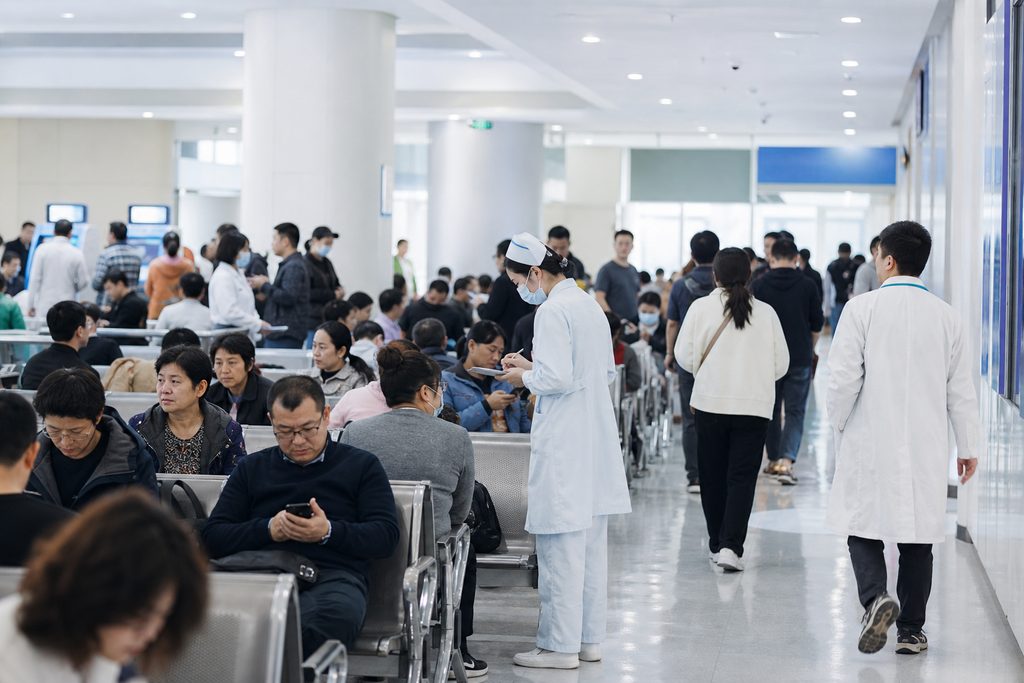
Have you ever looked at the sheer patient volume in a top Chinese hospital and felt a mix of awe and deep unease? You are not alone. For a Western patient, the image of a specialist seeing 100 patients in a single morning session triggers an immediate question: how can Chinese doctors see 100 patients a day without something critical being missed? This isn’t just a cultural curiosity. It is the central question of safety, quality, and attention that every international patient must answer before booking a flight.
Key Takeaways
- Top-tier Chinese specialists often manage 80-120 consultations in a half-day session, a volume driven by an assembly-line efficiency model that separates diagnosis from administrative tasks.
- Clinical outcome data for high-volume procedures in China—such as cardiac surgery at Fuwai Hospital with a 0.6% mortality rate for CABG—often rivals or surpasses Western benchmarks despite the consultation speed.
- The biggest safety risk for foreigners isn’t the doctor’s speed but the gap in communication; navigating a 10,000-patient-a-day hospital without Mandarin support is the real danger.
- Understanding the “gatekeeper” system is essential: the doctor you see in a 3-minute consultation is often confirming a diagnosis already shaped by extensive pre-screening tests completed the same day.
The Problem: Reconciling Speed with Safety
A typical specialist at Peking Union Medical College Hospital (PUMCH) might start consultations at 8:00 AM and finish 100 patients by noon. Do the math. That leaves roughly 2.4 minutes per patient. In the United States, a specialist consultation averages 18 to 24 minutes. The gap feels terrifying on paper. If a doctor spends less than three minutes with you, how can they possibly know what is wrong?
The fear is visceral. You imagine a blurred face, a stamped prescription, and a shove out the door. But the math is misleading because it ignores a structural truth: in China’s top-tier public hospitals, the “consultation” is not the start of the diagnostic journey. It is the end of it. By the time a patient sits down, they have often already completed blood work, imaging, and a preliminary nurse triage that same morning. The specialist’s job is rapid pattern recognition on a pre-assembled data set, not a slow, exploratory interview.
This system is not designed for comfort. It is designed for throughput. And for the 35,000+ hospitals in China, the top 5%—the 340+ top-ranked hospitals we work with—have turned this volume into a clinical science. The real question isn’t “how do they survive the pace?” It is “does the pace hurt outcomes?” The data says no, but the context matters enormously.
Why High-Volume Specialist Clinics Deliver Results
Clinical Volume Drives Better Outcomes
There is a hard truth in medicine: practice makes perfect. It is called the volume-outcome relationship. A surgeon who performs 300 knee replacements a year simply has better complication rates than one who performs 30. This principle applies to diagnosis, too. A Chinese pulmonologist reviewing 120 CT scans a day develops a visual fluency for early-stage lung adenocarcinoma that a doctor seeing 15 scans a day cannot match.
Look at Fuwai Hospital in Beijing. It is the world’s largest cardiovascular center, performing over 14,000 cardiac surgeries annually. Their in-hospital mortality rate for coronary artery bypass grafting (CABG) sits at approximately 0.6%. The US national average hovers around 2-3%. The volume is not a bug; it is the engine of their expertise. When you search for the best specialist clinic packages China offers, you are essentially buying access to this high-repetition diagnostic machinery. The doctor isn’t guessing. They are comparing your scan against a mental library of tens of thousands of similar cases they saw just this year.
Technology and Efficiency at Scale
How can Chinese doctors see 100 patients a day logistically? They never touch a billing code. They never argue with an insurance company. They rarely write a full note by hand. The system is built on a strict division of labor. A junior resident or a physician assistant pre-populates the electronic medical record. A nurse handles vital signs and complaint summaries. The specialist focuses exclusively on the medical decision: looking, listening, prescribing.
Also, the integration of AI-assisted imaging triage is widespread. In many top-tier hospitals, an AI algorithm pre-reads CT scans for lung nodules, highlighting suspicious areas before the doctor even opens the file. This isn’t replacing the doctor. It is cutting their search time from 5 minutes to 30 seconds. When a patient comes in asking about a lung nodule, the doctor already has the 3D reconstruction and AI measurement on the screen. The 2.4 minutes are pure decision-making time, uncluttered by the administrative sludge that bogs down Western clinics.
Cost Advantage Without Quality Compromise
The cost of specialist consultation China vs abroad is the most obvious draw. A consultation with a top-tier specialist at a Chinese public hospital’s international department might cost $100-$300. The same level of expertise in the US, without insurance, can easily hit $500-$1,200 just to walk in the door. But patients worry: does cheap mean dirty? Does fast mean sloppy?
No. The cost differential is structural. Chinese public hospitals are state-subsidized, labor costs are lower, and the malpractice insurance burden is a fraction of what it is in the litigious US market. The high volume allows the hospital to amortize the cost of a $3 million MRI machine across thousands of scans a month, not hundreds. You are not paying for a marble lobby or a private suite in the standard public wing. You are paying for the reading of the scan and the brain that interprets it. The luxury is stripped away; the clinical value remains.
Is It Safe to See a Doctor in a Busy Chinese Clinic? The Safety Architecture
This is the only question that matters. The answer depends entirely on where you go. Walking into a random Tier-3 city hospital with no preparation is a recipe for a bad experience. But walking into a Fudan-ranked top-100 hospital’s international department is a fundamentally different event. Here is the safety architecture you need to understand.
First, infection control. A crowded waiting room in a public wing looks like a vector for every respiratory virus imaginable. That is a valid concern. However, international medical centers and VIP wings operate separate, controlled entrances with scheduled appointment slots, not chaotic walk-in queues. The high volume specialist clinic safety China protocols in these wings mirror Western standards: mask mandates during flu season, UV-C air filtration in newer buildings, and strict separation of infectious disease triage.
Second, diagnostic accuracy. The risk in a fast system is “premature closure”—the doctor makes a snap judgment and misses a rare disease. Top Chinese hospitals mitigate this with a mandatory “double-review” system for complex imaging and pathology. At West China Hospital, a pathology slide for a rare tumor is automatically flagged for a second senior pathologist’s review before the report is released. The system knows it moves fast, so it builds in checkpoints. The safety net is not the doctor’s bedside manner; it is the institutional protocol that catches the doctor if they fall.
How to Access the System Without Getting Lost in the Crowd
You cannot simply call the switchboard of a top Chinese hospital and book fast track specialist appointment China style from overseas. The public registration system is a gauntlet. Appointments are released in batches on hospital apps at specific times, often 7:00 AM a week in advance, and they vanish in seconds. The interface is in Chinese. You need a local ID number or a hospital-issued medical card to proceed. This is the wall most international patients hit.
So how do you get in? There are two paths. The first is the public path: you arrive, queue, and hope. For a specialist who sees 100 patients a day, a few “walk-in” slots might exist, but you will wait hours and the consultation will be in rapid Mandarin. The second path is the VIP international channel. This is where the best specialist clinic packages China hospitals offer come into play. These packages are not medical treatments. They are logistical wrappers: a pre-booked slot, a bilingual coordinator, and a consolidated testing schedule that compresses what might take a week of wandering into a single morning.
| Service Element | Standard Public Channel | International VIP Channel |
|---|---|---|
| Appointment Booking | Self-book via Chinese app; seconds-long window | Pre-coordinated by medical concierge team |
| Consultation Duration | 2-4 minutes; rapid Mandarin | 10-15 minutes; English-interpreted or direct |
| Daily Patient Load | 80-120 patients per session | Capped at 20-30 patients per session |
| Ancillary Staff | None; navigate independently | Bilingual companion for registration, payment, pharmacy |
| Cost (Consultation Fee) | $10-$50 (subsidized) | $100-$300 (out-of-pocket) |
The table reveals the core trade-off. You pay more to escape the volume machine. You are not paying for a better doctor—you get the same senior specialist in both channels. You are paying for time, language access, and a buffer against the chaos. For a complex oncology second opinion or a cardiac surgery decision, that buffer is not a luxury. It is a safety requirement.
Practical Considerations: Logistics Before You Land
If you decide to pursue specialist care in China, the paperwork and preparation are not trivial. The visa is the first hurdle. For medical treatment, you need an S2 visa, which is a short-stay private affairs visa annotated for medical purposes. This is not an M visa—that is strictly for commercial trade. You will need an invitation letter from the hospital, a treatment plan, and proof of accommodation. Our team handles this documentation loop, but you should budget at least 3-4 weeks for processing.
Payment is the second hard reality. Chinese public hospitals operate on a prepaid, cash-up-front model. Even in the international wing, you load a deposit onto your hospital card at the start of the day. Credit cards are accepted in major international departments, but strict daily transaction limits on foreign cards can freeze your progress. A $5,000 MRI deposit might require multiple swipes or a wire transfer. We advise patients to arrange a local payment method or ensure their bank knows they are making large medical transactions in China.
Medical records are the third piece. The volume system works because the doctor relies on data. If you arrive without recent imaging, you will spend your first day getting scanned. Bring a CD-ROM of your DICOM files, not just a printed report. Bring a translated summary of your history. The doctor who sees 100 patients a day does not have time to flip through a disorganized binder of papers. They need a one-page timeline. If you provide that, the 10 minutes you get in the VIP room will feel like 30.
Frequently Asked Questions
Honestly, no—not in the public channel. The doctor relies entirely on the electronic medical record (EMR) to reload your case history in the seconds before you sit down. In the international VIP channel, the patient load is capped much lower, and the continuity of care is stronger because the same coordinator manages your file across visits. But you will not get a “family doctor” relationship. You will get a brilliant, data-driven clinical opinion. Set your expectations accordingly.
The factory analogy is accurate for the outpatient clinic, but it breaks down in the operating room. Surgical volume in China is segregated by team. A surgeon might have a clinic day seeing 100 pre- and post-op patients, but their surgical day is dedicated to a block of 4-8 high-complexity cases. The infection rates and mortality data for top hospitals like Zhongshan Hospital or Ruijin Hospital are published and peer-reviewed. The clinic chaos does not leak into the sterile field.
This is the Achilles’ heel of the public channel. Rare diseases that require a long, meandering history and a subtle physical exam are often missed in the rapid-fire setting. That is why we steer patients with undiagnosed, complex conditions toward the international department or a multi-disciplinary team (MDT) consultation. An MDT involves a panel of specialists—radiology, pathology, oncology—reviewing your case together for 30-60 minutes. It is the opposite of the 100-patient sprint, and it is the standard of care for diagnostic mysteries in China’s top hospitals.
Always verify that the package is delivered through the hospital’s official international medical center, not an external third party operating without hospital affiliation. A legitimate package generates an official hospital invoice and a medical record within the hospital’s EMR system. If a service asks you to pay cash directly to an individual doctor or to meet at an off-site location, walk away. The packages we coordinate are all billed through the hospital’s official finance department with a traceable receipt.
Your Next Step
The image of a Chinese specialist seeing 100 patients a day is intimidating until you understand the machinery behind it. The system is not built for warmth. It is built for diagnostic accuracy at scale. For international patients, the key is not to avoid this system but to enter it through the right door. Our team at China Medical Services does not provide medical advice or diagnoses—we are not a hospital. We are the logistical bridge that gets your MRI in front of the right specialist, in the right setting, with the time you need to ask your questions. If you are considering a specialist consultation in China, start with a free conversation about your case. We will tell you honestly which channel fits your needs—and which doesn’t.
Request a free consultation to discuss your specialist appointment options.
For more medical information and treatment options in China, visit chinamedservices.com (China Medical Services).
