Pediatric Brain Tumor Surgery China: Inside Beijing Tiantan Hospital’s Pediatric Program
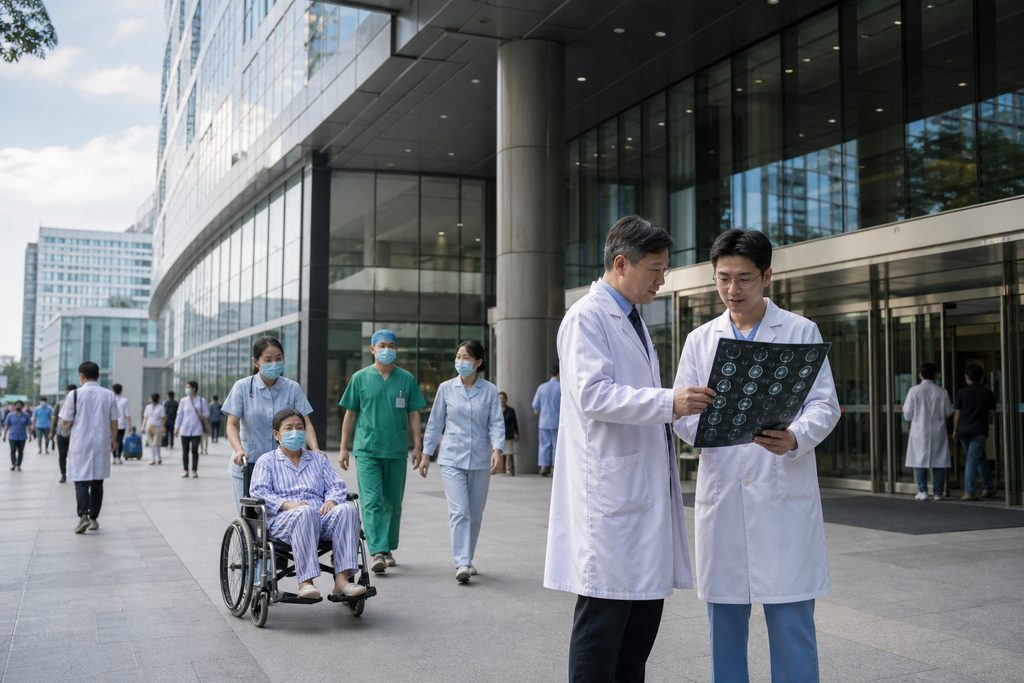
Have you ever sat in a surgeon’s office and felt the world tilt when they said “inoperable” because the tumor was too deep, too tangled with eloquent cortex? That word lands like a door slamming shut. For families of children diagnosed with brain tumors, the search for a surgical team that says “we can try” often leads across borders. Increasingly, it leads to one institution: Beijing Tiantan Hospital. Its pediatric neurosurgery program draws families from Europe, the Middle East, and Southeast Asia who have been told elsewhere that the risk is too high or the window too narrow. The driving question is always the same: what will this cost, and can we trust the outcome?
Key Takeaways
- Beijing Tiantan Hospital performs over 15,000 neurosurgical procedures annually, making it the highest-volume neurosurgery center in the world — volume that directly correlates with surgical proficiency in complex pediatric tumor resections.
- The Beijing Tiantan Hospital pediatric brain tumor surgery cost typically ranges from $25,000 to $45,000 USD for international patients, roughly one-fifth to one-eighth of comparable US surgery fees.
- China’s public hospital system does not allow overseas patients to book surgery remotely through standard channels — families must navigate a face-to-face consultation requirement, visa logistics, and language barriers before any operation is scheduled.
- Success rates for pediatric brain tumor surgery at Tiantan are not published as a single tidy statistic — outcomes depend heavily on tumor histology, location, and the child’s preoperative status, and any surgeon promising a fixed percentage should be met with skepticism.
The Reality Parents Face When a Child Has a Brain Tumor
Pediatric brain tumors are the most common solid tumors in children. The Central Brain Tumor Registry of the United States reports approximately 5.74 cases per 100,000 children annually. For parents, the diagnosis is disorienting enough. What follows is worse: a frantic scramble to find a surgeon whose hands have navigated this exact terrain hundreds of times. In many Western countries, pediatric neurosurgery is centralized in a handful of academic centers. Wait times for a first consultation can stretch weeks. Surgery dates, once approved, may be pushed back by emergency cases. And the cost? In the United States, a craniotomy for tumor resection in a child can exceed $150,000 before rehabilitation even begins. Families mortgage homes. They launch crowdfunding campaigns. They watch the calendar with a dread that is impossible to describe to anyone who has not lived it.
The pressure is not just financial. It is temporal. Some tumors grow fast. A six-week wait for a surgical slot is not just stressful — it can change the resectability of the lesion. This is the calculus that pushes families to look at China.
Who We Are
We are China Medical Services. We are not a hospital. We do not diagnose conditions, recommend specific surgeons, or make clinical promises. Our team acts as the logistical bridge between international families and China’s top-tier medical institutions — including the pediatric neurosurgery program at Beijing Tiantan Hospital. We handle case preparation, hospital matching, appointment coordination, visa guidance, and on-the-ground bilingual support. Think of us as your advance team in a complex system where language, bureaucracy, and clinical urgency all collide. We exist so you can focus on your child, not on paperwork.
Why Beijing Tiantan Hospital’s Pediatric Neurosurgery Program Draws International Attention
Surgical Volume That Builds Unmatched Experience
Beijing Tiantan Hospital is not just a leading neurosurgery center in China. It is the largest neurosurgical hospital on the planet by procedure count. The hospital’s neurosurgery department handles more than 15,000 operations each year. Within that staggering number, the pediatric neurosurgery unit manages a caseload that few Western centers can approach. A neurosurgeon at a major US children’s hospital might perform 30 to 50 pediatric tumor resections in a busy year. At Tiantan, senior pediatric neurosurgeons routinely exceed 150 similar procedures annually. Repetition matters. Studies published in The Lancet and Neurosurgery have consistently shown that higher surgeon and hospital case volumes are associated with lower complication rates and better postoperative outcomes — especially for rare, technically demanding tumor types like craniopharyngiomas, brainstem gliomas, and pineal region tumors.
That volume also means the surgical team has seen the full spectrum of presentations. They have operated on tumors that other hospitals classify as “atypical” or “rare.” For a parent whose child has a tumor in an unusual location, that breadth of experience is not a luxury. It is the whole point.
Technology Deployed at Scale
Tiantan’s neurosurgical suites are equipped with intraoperative MRI, neuronavigation systems, and advanced neurophysiological monitoring — technologies that are standard in top Western centers but are deployed here at a scale that changes workflow. Intraoperative MRI, for example, allows surgeons to scan the brain mid-procedure and confirm the extent of resection before closing. For pediatric patients, where preserving healthy brain tissue is critical for long-term cognitive and motor development, this capability reduces the likelihood of a second surgery.
Also notable is the hospital’s integration of awake craniotomy techniques for older children and adolescents, where cortical mapping helps protect language and motor function during tumor removal. The anesthesia teams are experienced in pediatric protocols that keep children calm during awake phases — a logistical feat that requires coordination few hospitals attempt regularly. At Tiantan, it is routine.
Cost Structure: Why the Numbers Are Different
Let us address the question every family asks first: the Beijing Tiantan Hospital pediatric brain tumor surgery cost. For international patients accessing care through the hospital’s international medical department, uncomplicated craniotomy for tumor resection typically falls between $25,000 and $45,000 USD. Complex cases requiring extended ICU stays, advanced intraoperative monitoring, or staged procedures may push higher — toward $55,000 or $60,000. These figures include hospital bed charges, operating theater fees, anesthesia, standard pathology, and routine postoperative care. They do not include travel, accommodation, or the services of a medical coordinator.
Compare this to the United States, where the same procedure often bills between $120,000 and $200,000. The gap is not explained by lower quality. It is structural. China’s hospital system operates on high patient throughput with lower per-case overhead. Surgeon compensation is salaried rather than fee-for-service. Pharmaceutical and device costs are negotiated differently. The result is a price point that makes treatment accessible to families who would otherwise face financial ruin — without cutting corners on the technology or expertise in the operating room.
| Cost Component | Beijing Tiantan Hospital (International Patient) | US Academic Medical Center (Estimated) |
|---|---|---|
| Craniotomy & Tumor Resection | $25,000 – $45,000 | $120,000 – $200,000 |
| ICU Stay (per day) | $500 – $800 | $3,000 – $5,000 |
| Intraoperative MRI | Often included in surgical package | $5,000 – $10,000 additional |
| Pathology & Lab Work | $1,000 – $2,500 | $3,000 – $8,000 |
These are reference ranges. Final costs vary by tumor complexity, length of stay, and whether additional interventions are required. We always recommend families budget for the upper end of the range and treat any savings as a relief, not a given.
Is Beijing Tiantan Hospital Good for Children’s Brain Tumors? What the Evidence Shows
The question “is Beijing Tiantan Hospital good for children’s brain tumors” deserves a direct answer. The hospital ranks among China’s top institutions for neurosurgery in the Fudan University Hospital Rankings, a widely referenced assessment of Chinese hospital quality. Its pediatric neurosurgery team publishes extensively in international journals, and its surgeons are regularly invited to present at global conferences including the World Federation of Neurosurgical Societies and the International Society for Pediatric Neurosurgery.
But parents do not care about conference invitations. They care about outcomes. So let us be honest: how successful is pediatric brain tumor surgery at Beijing Tiantan? There is no single published success rate that applies across all tumor types. A pilocytic astrocytoma in the cerebellum has a different prognosis than a diffuse intrinsic pontine glioma. Any institution or coordinator that quotes a flat “98% success rate” is misleading you. What Tiantan offers is not a guarantee — no ethical surgeon offers that — but a combination of high surgical volume, advanced intraoperative technology, and a pediatric-focused anesthesia and ICU team that understands the unique physiology of a child’s brain during and after surgery. For many families, that combination translates into gross total resection where other centers achieved only partial removal, or a safe subtotal resection where others deemed surgery too risky to attempt at all.
What You Need to Know Before Traveling for Pediatric Brain Tumor Surgery in China
Arranging medical tourism for child brain tumor Beijing Tiantan is not as simple as booking a flight and showing up. China’s public hospital system operates on rules that can surprise Western families.
- Visa Requirements: Foreign nationals seeking medical treatment in China must apply for an S2 visa with a medical purpose annotation. This requires an official invitation letter from the treating hospital — something the hospital will only issue after confirming the patient has been accepted for treatment. The S2 visa allows a stay of up to 180 days. For longer treatment and rehabilitation, an S1 visa may be necessary. The accompanying parent or guardian also applies for an S2 visa. This is not a tourist visa process. Paperwork errors cause delays, and delays are unacceptable when a tumor is growing.
- Face-to-Face Consultation Requirement: China’s public hospitals, including Tiantan, generally require an in-person outpatient consultation before scheduling surgery. You cannot book a pediatric brain tumor surgery China operation remotely through the standard registration system. The surgeon must examine the child, review imaging in person, and assess fitness for surgery. This means families must plan for an initial trip for consultation, then a waiting period before the operation — unless they are working through the hospital’s international VIP channel, which can streamline the timeline at a higher cost.
- Language Barrier in Daily Operations: While Tiantan’s international department has English-speaking staff, the broader hospital environment runs in Mandarin. Nurses on the ward, billing clerks, cafeteria staff — most do not speak English. A parent alone with a recovering child, unable to communicate basic needs, is in an untenable position. Bilingual support is not optional. It is the difference between a manageable experience and a crisis.
- Payment Systems: Chinese public hospitals require prepayment for services. International credit cards are not universally accepted at hospital cashier windows. Large deposits are typically paid via wire transfer or through a local payment facilitator. Insurance reimbursement is retrospective — families pay upfront and file claims with their international insurer afterward. This cash flow requirement catches many families off guard.
How We Help Families Navigate This Process
These barriers are real. They are also solvable with the right advance planning. Our team has walked dozens of families through the exact sequence of steps required to bring a child to Beijing for neurosurgery.
Before travel, we collect and translate the child’s complete medical records — imaging, pathology reports, treatment history — into Chinese medical terminology that Tiantan’s neurosurgeons can review efficiently. We coordinate with the hospital’s international department to schedule the initial consultation, ensuring the right subspecialist reviews the case. If the family needs a preliminary assessment before committing to travel, we can arrange a video consultation with a Tiantan-affiliated specialist — a step that helps both sides determine whether the case is a good fit before anyone boards a plane.
Visa support means we guide families through the S2 application, including securing the official hospital invitation letter that makes the visa possible. We do not issue visas, but we eliminate the guesswork that causes rejections.
On the ground in Beijing, our bilingual medical companions handle registration, payment deposits, queue management, and real-time translation during surgeon consultations. When the child is admitted, our team remains available for daily communication with the nursing staff, pharmacy runs, and any unexpected logistical needs. After discharge, we coordinate follow-up imaging and consultations before the family returns home. We also maintain contact for long-term follow-up coordination if the child’s oncologist back home needs to consult with the Tiantan surgical team.
We do not promise outcomes. We do not claim to book the “best pediatric neurosurgeon China” because that designation is subjective and depends entirely on the specific tumor type and surgical approach required. What we do is connect families to the right surgeon for their child’s exact diagnosis, within a system that would otherwise be opaque and exhausting to navigate alone.
Frequently Asked Questions
The Beijing Tiantan Hospital pediatric brain tumor surgery cost typically ranges from $25,000 to $45,000 USD for the hospital portion — surgery, anesthesia, ICU, standard pathology, and ward stay. Complex cases requiring extended ICU monitoring or additional intraoperative technologies may reach $55,000 to $60,000. These figures exclude international travel, local accommodation, and coordination service fees. Always budget for the upper range and confirm a detailed cost breakdown with the hospital’s international department before committing.
You cannot book pediatric brain tumor surgery China directly through the hospital’s standard public registration system from overseas. The process requires an in-person consultation first. For international families, the practical path is through the hospital’s international medical department or a reputable medical coordination service that handles translation, scheduling, and on-the-ground support. Attempting to navigate the system independently without Mandarin fluency is extremely difficult and risks critical miscommunication about the child’s medical history and surgical plan.
Beijing Tiantan Hospital has a dedicated pediatric neurosurgical ICU staffed by intensivists trained in postoperative neurological monitoring. The hospital is equipped to manage surgical complications including bleeding, infection, and raised intracranial pressure — the same complications managed in any top Western neurosurgical center. International patients should ensure they have medical evacuation insurance as a backup. Our team remains on call throughout the hospital stay to facilitate communication between the family and the medical team, so no parent is left alone trying to understand a rapidly changing clinical situation in a foreign language.
For neurosurgery specifically, surgical volume is a strong predictor of outcomes, and Tiantan’s volume exceeds that of any single Western center. The intraoperative technology — iMRI, neuronavigation, neurophysiological monitoring — is equivalent to what you would find at Boston Children’s or Great Ormond Street. Where differences exist, they are in the non-clinical experience: shared wards are more common, nursing ratios may be leaner, and the hospital environment is less geared toward Western cultural expectations. These are trade-offs families should weigh honestly. The surgery itself is world-class. The hospitality is different.
With a complete set of medical records and imaging available for review, the initial video consultation can be arranged within one to two weeks. The in-person consultation in Beijing typically follows within two to four weeks, depending on visa processing speed. Surgery is usually scheduled within one to two weeks after the face-to-face consultation, assuming no additional preoperative testing is required. In total, families should plan for a minimum of six to eight weeks from first contact to surgery day. Urgent cases can sometimes be accelerated through the hospital’s VIP channel, but this depends on surgeon availability and clinical urgency.
Your Next Step
A child’s brain tumor diagnosis forces decisions no parent is prepared to make. The search for surgical expertise, the weight of cost, the pressure of time — it all converges into a single question: where do we go from here? Beijing Tiantan Hospital’s pediatric neurosurgery program offers a combination of high-volume surgical experience, advanced intraoperative technology, and a cost structure that keeps treatment within reach for families who have been quoted impossible numbers elsewhere. The logistical path is complex, but it is well-trodden. Thousands of international families have walked it before you.
If you are considering this option, start with information — not commitment. Our team can review your child’s case, explain what a realistic timeline and budget look like, and help you understand whether Tiantan is the right fit before you spend a dollar on travel. Visit our patient coordination page to begin that conversation. No pressure. Just clarity.
Medical Disclaimer: This article is for informational purposes only and does not constitute medical advice, diagnosis, or treatment recommendation. Surgical outcomes vary by individual case. Always consult a qualified pediatric neurosurgeon regarding your child’s specific condition. China Medical Services is a logistical coordination provider, not a healthcare facility.
For more medical information and treatment options in China, visit chinamedservices.com (China Medical Services).
