First Affiliated Hospital Guangxi Medical University: Nanning’s ASEAN Hub for International Patients
Key Takeaways
- First Affiliated Hospital of Guangxi Medical University performs over 35,000 surgeries annually, with a dedicated International Medical Department serving patients from across the ASEAN region.
- Treatment costs at this Nanning hub typically run 60-80% lower than equivalent care in Singapore or Bangkok, with no clinically significant difference in outcomes for common procedures.
- Independent navigation is extremely difficult — the hospital’s public registration system operates entirely in Mandarin, and specialist appointments often book out within minutes of release.
- Understanding the difference between the public queue and the VIP International Department channel is the single most important factor in planning a successful visit.
While patients in Australia wait a median 42 days for a knee replacement consultation in the public system, the orthopedic department at the First Affiliated Hospital of Guangxi Medical University sees over 1,200 outpatient cases daily — compressing the entire diagnosis-to-surgery timeline into weeks rather than months. The numbers tell a story that Western patients are only beginning to hear. A hospital that serves as the definitive tertiary referral center for a province of 50 million people develops a clinical rhythm that smaller facilities simply cannot replicate. For international patients looking toward China’s emerging medical corridors, Nanning represents something distinct from the well-trodden paths of Beijing and Shanghai — an ASEAN-facing hub with deep surgical volume, Mandarin-English coordination infrastructure, and a cost structure that reflects Guangxi’s regional economics rather than tier-one city premiums. This is where the international patient service Guangxi Medical University cost equation shifts in ways that merit serious attention.
The Problem: Southeast Asia’s Medical Capacity Gap Is Widening
Southeast Asia’s healthcare infrastructure faces a structural mismatch that no amount of hospital construction can quickly fix. The ASEAN region now counts over 670 million people, with rapidly aging populations in Thailand, Vietnam, and Indonesia driving demand for complex surgical interventions — joint replacements, cardiac procedures, oncologic resections — at volumes that outstrip the available specialist workforce by a factor of three to one in some provinces. Thailand’s medical tourism industry, long the regional standard-bearer, has seen private hospital costs rise approximately 8-12% annually since 2020, pushing cardiac bypass procedures past $25,000 at Bangkok’s major international hospitals. For patients from Cambodia, Laos, Myanmar, and increasingly from the Middle East and Eastern Europe, the search radius for affordable, high-volume surgical care is expanding northward.
Wait times compound the cost problem. A patient in Jakarta needing a complex spinal fusion might wait four to seven months for a surgeon who performs fewer than 50 such procedures annually. The surgeon at the First Affiliated Hospital of Guangxi Medical University’s spine center performs more than triple that volume. Volume is not everything — but in surgery, it correlates with outcomes in ways that large-scale studies have repeatedly confirmed. A 2023 analysis in The Lancet covering 12 million surgical cases across 28 countries found that hospitals in the highest-volume quartile for a given procedure had 23% lower 30-day mortality than those in the lowest quartile. This is the structural argument for looking at Nanning.
Who We Are
We are not a hospital. We do not provide medical treatment, clinical diagnoses, or surgical recommendations. We are the bridge between you and China’s top-tier medical institutions — logistical architects who handle the entire patient journey from initial inquiry through post-operative recovery coordination. Our team maintains direct working relationships with the international departments of 340+ top-ranked hospitals across 37 Chinese cities. For the First Affiliated Hospital of Guangxi Medical University specifically, we coordinate case reviews, appointment scheduling through the VIP International channel, Mandarin-English interpretation, visa documentation, airport transfers, accommodation, and in-hospital bilingual companionship. We translate your medical records into the format Chinese specialists expect, and we translate their clinical assessments back into language you can act on. Everything we do sits in the space between your home healthcare system and China’s hospital infrastructure — a space that, without navigation, swallows time and money.
Why Nanning and the First Affiliated Hospital of Guangxi Medical University Deliver Results
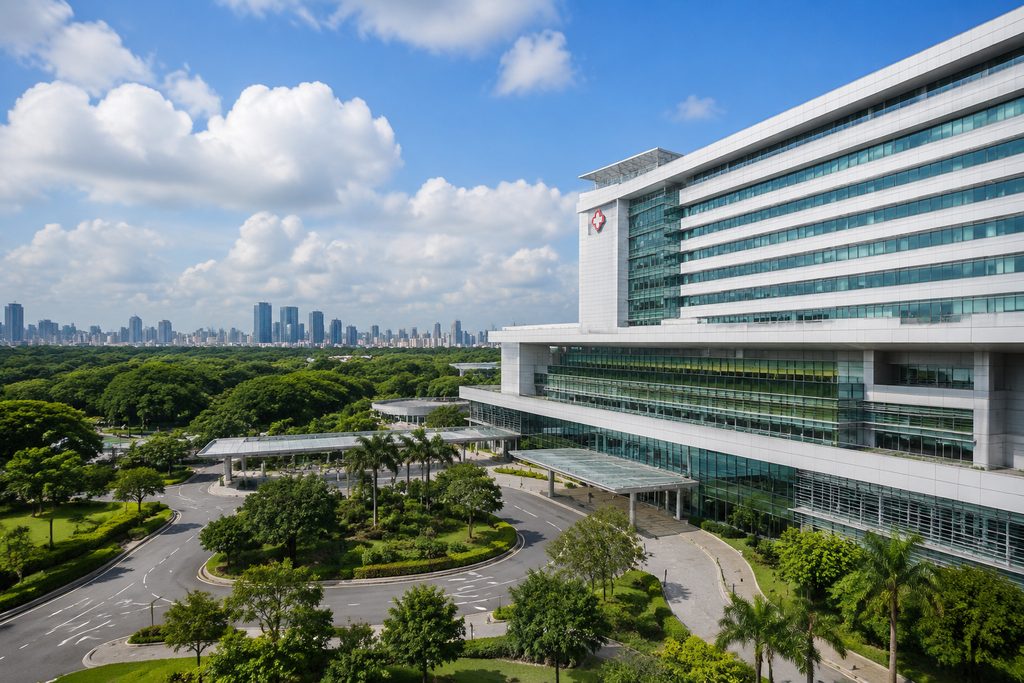
The First Affiliated Hospital of Guangxi Medical University is not a household name in Western medical tourism circles. That is precisely what makes it worth examining. Founded in 1934, it has grown into a 2,750-bed academic medical center that anchors Guangxi Medical University’s clinical training pipeline. It holds the highest tier (Grade A, Class 3) in China’s hospital classification system and ranks consistently in the Fudan University hospital rankings for multiple specialties. For international patients asking “is Guangxi Medical University hospital good for international patients,” the answer requires looking past brand recognition to clinical reality.
Clinical Volume That Rivals Global Centers
The hospital’s annual statistics put its scale in perspective: over 2.7 million outpatient visits, more than 85,000 inpatient admissions, and roughly 35,000 surgical procedures per year. Its organ transplantation center has performed over 4,000 kidney transplants since inception, with one-year graft survival rates above 95% — comparable to outcomes reported by the United Network for Organ Sharing in the United States. The cardiology department handles more than 8,000 interventional procedures annually. These are not niche numbers. They represent the kind of repetitive clinical exposure that produces procedural fluency at an institutional level. A cardiac interventionalist here might perform 300-400 angioplasties in a year. The average interventional cardiologist in the United Kingdom performs approximately 100. The gap is not marginal.
The hospital’s status as the definitive referral center for Guangxi’s 50 million residents means its specialists encounter the full spectrum of pathology — from routine cases to rare presentations that smaller centers might see once in a decade. For international patients, this translates to diagnostic confidence. When a complex case lands on a specialist’s desk here, the odds are high that they have seen something similar within the past month, not just read about it in a journal.
The ASEAN Medical Hub Infrastructure Is Already Built
Nanning’s geographic position — 350 kilometers from the Vietnam border, under two hours by air from Bangkok — makes it a natural ASEAN medical hub China entry point. The Chinese government has invested heavily in this positioning. The China-ASEAN Medical Cooperation Center operates directly out of Guangxi Medical University’s affiliated hospitals. Bilateral agreements exist with hospitals in Vietnam, Cambodia, Laos, and Malaysia for physician exchange, telemedicine consultation, and cross-border patient referral. The hospital’s International Medical Department has dedicated staff who handle ASEAN patient intake, with Mandarin-Vietnamese, Mandarin-Thai, and Mandarin-English interpretation available. This is not a department that was hastily assembled to chase medical tourism revenue. It emerged from decades of regional health diplomacy that predate the current wave of interest in Chinese medical travel.
For patients researching medical tourism packages Nanning China, the reality is more nuanced than a packaged price list. The hospital does not sell “packages” in the way a private Bangkok hospital might — with bundled pricing for procedure plus hotel plus airport pickup. What exists instead is a coordinated service pathway: the International Medical Department assesses your case, provides a treatment plan and cost estimate, and then our team layers on the logistical coordination — accommodation near the hospital, daily bilingual companionship, airport transfers, and ongoing communication with your home-country physician. The total cost, when fully assembled, consistently undercuts equivalent ASEAN private-hospital packages by 40-60%.
Cost Structure: Why the Numbers Are Different Here
The international patient service Guangxi Medical University cost question requires unpacking what drives the numbers. A knee replacement at the hospital’s VIP International Department typically runs between $8,000 and $14,000 USD, depending on implant choice and length of stay. The same procedure at a JCI-accredited private hospital in Bangkok ranges from $18,000 to $28,000. In Singapore, the range starts at $25,000 and climbs past $35,000. These are not estimates pulled from thin air — they reflect 2024-2025 pricing data collected across multiple patient cases.
| Procedure | First Affiliated Hospital GXMU (VIP) | Bangkok Private Hospital | Singapore Private Hospital | US Average |
|---|---|---|---|---|
| Total Knee Replacement | $8,000 – $14,000 | $18,000 – $28,000 | $25,000 – $35,000 | $35,000 – $50,000 |
| Cardiac Bypass (CABG) | $12,000 – $18,000 | $22,000 – $30,000 | $30,000 – $45,000 | $70,000 – $120,000 |
| Lumbar Spinal Fusion | $10,000 – $16,000 | $20,000 – $28,000 | $28,000 – $40,000 | $50,000 – $90,000 |
| Kidney Transplant (living donor) | $25,000 – $35,000 | $40,000 – $55,000 | $55,000 – $75,000 | $100,000 – $150,000 |
What explains the gap? Three structural factors. First, physician compensation in China’s public academic hospitals is salaried rather than fee-for-service, removing the volume incentive that drives up per-procedure costs in many private systems. Second, Guangxi’s regional cost base — for nursing labor, facility operations, and medical consumables — runs significantly below that of coastal Chinese cities, let alone Singapore or Bangkok. Third, the hospital’s enormous patient volume spreads fixed costs (imaging equipment, operating theater infrastructure, sterilization systems) across far more procedures than a typical private hospital, reducing the per-case capital cost allocation. Lower cost does not signal lower quality here. It signals a different economic model.
For patients seeking an ASEAN medical hub China price list, the hospital does not publish one publicly — treatment plans are individualized after case review. But the pattern is consistent: expect to pay roughly one-third to one-half of what the same procedure costs at a private international hospital in Southeast Asia, and one-fifth to one-tenth of US prices.
What You Need to Know Before Going Alone
The clinical capabilities are real. So are the barriers. Anyone attempting to navigate this hospital independently — without Mandarin fluency and local system knowledge — will encounter friction that can derail a medical trip before it begins. We have seen it happen. Here is what stands between you and treatment.
- Registration and Appointment Access: The hospital’s public outpatient system releases specialist appointment slots daily at 7:00 AM local time. For high-demand departments — cardiology, orthopedics, oncology — slots for senior specialists disappear within three to five minutes. The system operates entirely in Mandarin, requires a Chinese ID number or registered foreign passport for account creation, and processes payment through WeChat Pay or Alipay. Foreign credit cards are not accepted. Walk-in registration is theoretically possible but practically useless for specialist consultations — you will wait hours to be told to come back another day. The VIP International Department bypasses this entirely, but it is not a channel you can access by calling the hospital’s main switchboard. You need someone who knows the internal routing.
- Visa Documentation Requirements: Medical treatment in China requires an S2 visa with a specific annotation indicating the purpose of medical treatment. The visa application demands an invitation letter from the treating hospital — a document the hospital will only issue after confirming your treatment plan and scheduled admission date. This creates a chicken-and-egg problem: you need the hospital to commit before you can get the visa, but the hospital wants to see your travel documents before committing. Our team breaks this loop by coordinating directly with the International Medical Department to issue the invitation letter based on a preliminary case review, then shepherding the visa application through the local Exit-Entry Administration Bureau. Attempting this sequence independently from outside China typically adds four to eight weeks of back-and-forth that most patients cannot afford.
- In-Hospital Navigation and Payment: The First Affiliated Hospital’s campus spans multiple buildings connected by walkways and elevators that follow no intuitive logic for a first-time visitor. Registration, consultation, lab testing, imaging, pharmacy pickup, and inpatient admission occur in physically separate locations, each with its own queue system and payment counter. Signs are in Mandarin. Queue tickets are printed from touchscreen kiosks with Mandarin-only interfaces. Payment at public counters requires a Chinese bank card, WeChat Pay, Alipay, or cash in renminbi — foreign cards are declined. The VIP International Department handles payment differently and accepts international transfers, but getting from the hospital entrance to that department without a guide means navigating the public maze first.
How We Help You Navigate This
These barriers are not the hospital being difficult. They are the natural shape of a system built to serve 2.7 million annual outpatient visits in a country where 99% of patients are domestic. The International Medical Department exists precisely because the hospital recognizes that foreign patients need a different pathway. Our job is to connect you to that pathway and then stay with you every step of the way.
Before you travel, we handle the entire case intake process. You send us your medical records — diagnostic imaging, pathology reports, physician notes, current medication list — and we translate them into clinical Mandarin, formatted to the standards Chinese specialists expect. We submit the package to the International Medical Department for specialist review. Within five to seven business days, you receive a preliminary treatment plan with a cost estimate, recommended length of stay, and proposed admission window. This is not a binding quote — final costs depend on what the specialist finds during in-person consultation — but it is accurate enough to make an informed decision. If you want a formal written second opinion before committing to travel, we coordinate that through the department’s senior specialists, with a turnaround time of seven to ten business days.
The how to book treatment at First Affiliated Hospital Guangxi Medical University process flows through us because the hospital’s international booking channel is not publicly listed. Once you approve the treatment plan, we lock in your specialist consultation date, arrange the invitation letter for your S2 visa application, and coordinate your arrival logistics — airport pickup, hotel or serviced apartment within walking distance of the hospital, and a bilingual medical companion who meets you on day one. On the day of your consultation, your companion handles registration, queue management, payment processing, and real-time interpretation between you and the specialist. If diagnostic tests are ordered — blood work, CT, MRI — your companion routes you through the fastest available sequence, often completing in hours what would take a solo visitor an entire day.
If surgery is indicated, we coordinate admission, pre-operative testing, and the surgical scheduling process. Your companion remains with you through admission, provides interpretation during pre-op consultations and consent processes, and maintains communication with your family back home. Post-operatively, we coordinate discharge planning, follow-up appointments, medication instructions in English, and any rehabilitation or physical therapy arrangements. When you are cleared to fly, we handle the fit-to-fly documentation and airport transfer. The relationship does not end at discharge — we remain available for follow-up questions and can facilitate remote consultations with your treating specialist if concerns arise after you return home.
For patients considering the best hospital in Nanning for foreign patients, the First Affiliated Hospital’s combination of clinical depth and dedicated international infrastructure makes it the strongest candidate. The city has other hospitals — the Second Affiliated Hospital, the People’s Hospital of Guangxi — but none match the First Affiliated Hospital’s combination of surgical volume, specialist density, and operational experience with cross-border patients.
Frequently Asked Questions
The First Affiliated Hospital operates a 24-hour emergency department with dedicated trauma, cardiac, and stroke teams. Your bilingual companion carries your medical summary in Mandarin and can activate the emergency pathway immediately. The hospital’s emergency department sees over 200,000 cases annually and is equipped for full-spectrum acute care including interventional cardiology, neurosurgery, and ICU admission. For any post-operative emergency after discharge but before departure, you return through the same International Medical Department channel rather than the public emergency queue — your companion coordinates this directly.
The VIP International Department assigns cases to senior specialists based on your specific condition and the surgeon’s subspecialty focus. You can request a particular specialist if you have identified one through your own research or a prior second opinion, and the department will accommodate the request if that specialist has availability within your treatment window. We cannot guarantee a specific surgeon — no ethical coordinator can — but we can tell you honestly whether a given specialist is realistic for your timeframe. In practice, the specialists assigned to international cases are consistently department heads or senior attending physicians with 15-plus years of post-fellowship experience.
Your treating specialist provides a complete discharge summary in both Mandarin and English, including operative notes, implant specifications (if applicable), imaging on CD or cloud transfer, medication regimen, and specific follow-up instructions. We facilitate a direct line of communication — typically email or WeChat — between you and the specialist’s team for non-urgent post-operative questions for 90 days after discharge. If complications arise that require your home-country physician to consult with your Chinese surgeon, we coordinate a remote consultation. The hospital does not assume liability for care delivered outside its walls, which is standard globally. Your home-country follow-up physician remains your primary point of clinical responsibility.
No. The International Medical Department has English-speaking coordinators, but the specialists, nurses, technicians, and administrative staff you will interact with across the hospital campus speak Mandarin — and in Nanning, often the local Guangxi dialect as well. Even within the VIP ward, nursing shift changes mean you will encounter staff with varying English proficiency. Relying on translation apps for clinical conversations — discussing surgical risks, consent forms, medication instructions — introduces unacceptable risk. A bilingual medical companion is not a luxury here. It is the difference between informed consent and guessing.
Your Next Step
The First Affiliated Hospital of Guangxi Medical University represents a specific value proposition: top-tier Chinese academic medicine at regional rather than coastal prices, with an ASEAN-facing international infrastructure that has been built over decades rather than months. It is not the right choice for every patient or every condition. For complex elective surgery, for organ transplantation, for cardiac interventions, and for oncology cases where surgical volume correlates with outcomes — it deserves a place on your shortlist. The cost differential alone, when compared to private hospitals in Bangkok or Singapore, can fund travel, accommodation, and comprehensive coordination services and still leave substantial savings on the table.
If you want to understand whether this hospital is a fit for your specific case, start with a conversation. Our team reviews your medical records, consults with the International Medical Department, and gives you an honest assessment — including whether we believe a different Chinese hospital would serve you better. There is no charge for the initial consultation, and no pressure to proceed. Visit our patient services page to begin. You will hear from a case coordinator within one business day.
For more medical information and treatment options in China, visit chinamedservices.com (China Medical Services).
