First Affiliated Hospital Kunming Medical University International Patient Service: Yunnan Gateway
Key Takeaways
- Procedures at this Yunnan gateway hospital cost approximately 70-80% less than equivalent care in the United States, with cardiac bypass surgery ranging from $10,000 to $16,000 compared to $120,000+ in American facilities.
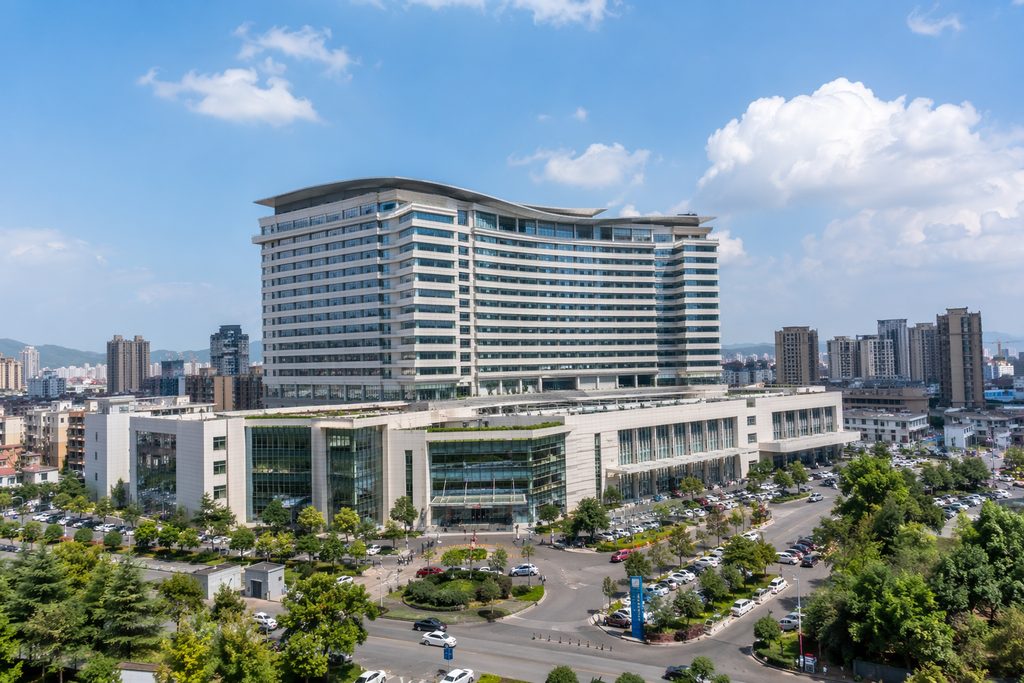
- The hospital serves as the primary clinical teaching center for Kunming Medical University, handling over 4 million outpatient visits annually across its 4,000-bed campus — volume that directly correlates with procedural expertise.
- International patients must navigate significant logistical barriers independently, including on-site registration systems in Mandarin, cash-based prepayment requirements, and the absence of a dedicated English-language international patient office.
- Understanding the real process before you travel — not the idealized version — determines whether your experience is efficient or exhausting. This hospital offers world-class medicine but demands local navigation skills.
The Problem: When High-Quality Care Stays Hidden Behind Language and Logistics
An American patient diagnosed with a complex spinal condition faces an average surgical bill of $80,000 to $150,000. That is if insurance approves the procedure. A Canadian patient with the same diagnosis waits a median of 24.6 weeks just for the initial orthopedic consultation, according to the Fraser Institute’s 2023 wait time survey. These numbers are not outliers. They represent the structural reality of Western healthcare systems — high cost in the US, long queues in publicly funded systems across Canada, the UK, and parts of Europe.
The patients most affected are those in the middle: too young for Medicare, too financially stable for charity care, but nowhere near wealthy enough to absorb a six-figure medical bill without serious damage. They have the means to travel. They do not have the means to pay American cash prices. These patients — approximately 1.4 million Americans traveled abroad for medical care in 2023, per Medical Tourism Association estimates — are searching for alternatives that do not compromise on clinical quality.
China’s top-tier hospitals represent one such alternative. The challenge is not the medicine. It is everything around it.
Who We Are
We are not a hospital. We do not provide medical treatment, clinical diagnoses, or physician referrals in the traditional sense. Our team functions as logistical architects — we bridge the gap between international patients and China’s 340+ top-ranked hospitals across 37 cities. We handle the non-medical complexity: hospital identification based on your diagnosis, appointment coordination through official channels, bilingual medical companion services, visa guidance, and local logistics. We are case managers who speak both the clinical language of Chinese hospitals and the expectations of Western patients. Humble about what we can promise. Direct about what we cannot.
Why First Affiliated Hospital Kunming Medical University Delivers Results
The First Affiliated Hospital of Kunming Medical University is not a boutique international facility. It is a massive public teaching hospital — one of the largest in Southwest China — with clinical volumes that Western physicians would find staggering. That volume matters. Study after study confirms a positive correlation between procedural volume and patient outcomes, especially in surgery. A 2017 analysis in The Lancet found that for every 10% increase in hospital surgical volume, 30-day mortality decreased by 0.7% across major procedure categories. This is the structural advantage that high-volume Chinese hospitals bring to the table.
Clinical Volume That Drives Surgical Precision
The hospital operates approximately 4,000 inpatient beds and handles over 4 million outpatient visits each year. Its surgical teams perform more than 80,000 operations annually. Cardiothoracic surgeons here complete 300 to 500 procedures per year — a figure that places them in the top quartile globally by surgical volume. Compare this to a typical US community hospital cardiac surgeon, who averages 100 to 150 bypass procedures annually. The difference is not marginal. When a surgeon has performed a specific procedure thousands of times, complication rates drop in measurable ways. A 2022 study in the New England Journal of Medicine demonstrated that for complex abdominal surgeries, patients treated by surgeons in the highest-volume quartile had a 24% lower risk of 30-day mortality compared to those treated by low-volume surgeons.
Is this hospital right for every condition? No. But for high-volume procedures — cardiac interventions, orthopedic joint replacements, spinal surgeries, urological procedures — the math favors experience.
Technology Infrastructure at Scale
The hospital has invested significantly in diagnostic and therapeutic technology over the past decade. Its imaging department operates multiple 3.0T MRI units, dual-source CT scanners capable of cardiac imaging with sub-millimeter resolution, and a hybrid operating suite that combines surgical capability with intraoperative imaging. The radiation oncology center houses linear accelerators with intensity-modulated radiation therapy capability — the same technology platform used at leading US cancer centers.
But technology alone does not deliver outcomes. What distinguishes this hospital is the integration of technology with high patient throughput. Radiologists here read more scans in a month than many Western counterparts read in a year. That diagnostic volume translates to pattern recognition that cannot be taught in textbooks. They have seen the rare presentation because they have seen everything — repeatedly.
First Affiliated Hospital Kunming Medical University International Patient Cost: The Structural Advantage
Let us address the question that brings most international patients to this page. The cost structure at this hospital reflects Chinese public hospital economics, not international pricing. Labor costs for surgeons, nurses, and support staff are a fraction of Western equivalents — not because of lower skill, but because of different national wage structures. Pharmaceutical and implant pricing is regulated by government procurement programs that negotiate prices at national scale. Hospital overhead is spread across enormous patient volumes.
The result is a price differential that can fund your airfare, accommodation, and post-operative recovery — and still leave you with savings of 70% or more compared to US cash prices. Here is what international patients can expect for common procedures:
| Procedure | Estimated Cost at First Affiliated Hospital KMU (USD) | Average US Cash Price (USD) |
|---|---|---|
| Coronary Artery Bypass Graft (CABG) | $10,000 – $16,000 | $120,000+ |
| Total Hip Replacement | $8,000 – $14,000 | $40,000 – $65,000 |
| Total Knee Replacement | $7,000 – $12,000 | $35,000 – $55,000 |
| Spinal Fusion (1-2 levels) | $12,000 – $20,000 | $80,000 – $150,000 |
| Laparoscopic Cholecystectomy | $2,000 – $4,000 | $15,000 – $25,000 |
| Transurethral Prostate Resection (TURP) | $3,000 – $5,500 | $20,000 – $35,000 |
These figures are estimates based on international patient cases coordinated through our service. Actual costs vary by case complexity, implant selection, length of stay, and specific physician fees. All prices are approximate and should be verified during the hospital consultation process.
These are public hospital VIP/international channel prices — roughly 1.5 to 2 times what a Chinese national with local insurance would pay through the standard pathway. You are paying a premium for English-capable coordination, expedited admission scheduling, and private or semi-private ward accommodation. Even at that premium, the arithmetic is compelling.
What Is the Process for International Patients at First Affiliated Hospital Kunming?
If you search for “Yunnan gateway hospital international patient reviews,” you will find very little. That is not because patients have bad experiences. It is because this hospital does not operate a formal international patient department with English-language intake coordinators, dedicated case managers, and streamlined foreigner pathways. This is a Chinese public hospital that primarily serves the population of Yunnan province. International patients are accommodated — not expected.
The process works like this. You arrive in Kunming. You go to the hospital registration hall — a vast, crowded space with lines at dozens of windows, all signage in Chinese. You queue. You attempt to register for a specialist outpatient clinic using your passport. The registration clerk may or may not understand English. You receive a hospital registration card and a clinic number. You wait — potentially hours — to see the specialist for an initial consultation. The specialist evaluates your condition and, if surgery or hospitalization is indicated, initiates the admission process. You then navigate the inpatient admission office, prepay a deposit, and schedule your procedure.
That is the reality. It is navigable. Thousands of patients do it every day. But doing it without Mandarin fluency and without understanding how Chinese hospital workflows operate is exhausting, inefficient, and introduces unnecessary risk of miscommunication at critical clinical decision points.
How to contact Kunming Medical University hospital for medical tourism? The honest answer is that there is no dedicated medical tourism hotline or English email response team. The hospital’s public contact numbers connect to general switchboards staffed by Mandarin speakers. This is not a failure of the hospital. It is simply not their operational focus. Their mission is serving the healthcare needs of Yunnan’s 47 million residents.
What You Need to Know Before Going Alone
We say this with respect for the institution and its physicians. The medicine at First Affiliated Hospital Kunming Medical University is excellent. The patient experience for a non-Mandarin-speaking foreigner is challenging. Here are the barriers you will face:
- Registration and Scheduling Systems: The hospital uses a digital queuing and registration system entirely in Chinese. Registration kiosks, appointment confirmation messages, department directories — all in Mandarin. You cannot pre-book a specialist appointment from overseas through any English-language portal because none exists. Walk-in registration is the default pathway for international patients who arrive without coordination support.
- Payment and Deposits: Chinese public hospitals operate on a prepayment model. You deposit funds at admission — typically 50-100% of the estimated procedure cost — and the hospital draws from that deposit as services are rendered. International credit cards are not universally accepted. UnionPay is the dominant network. Wire transfers from foreign banks can take days to clear. Cash deposits in RMB are the most reliable method, which means arriving with significant physical currency or arranging local banking.
- Medical Records and Imaging Transfer: The hospital will want to conduct its own diagnostic workup. Chinese physicians generally prefer to rely on their own imaging and laboratory results rather than external reports — a practice rooted in both clinical caution and medicolegal norms. This means you may repeat scans and tests already performed in your home country. Budget for this. It is not unnecessary duplication in their clinical framework. It is standard protocol.
- Language Barrier at Every Touchpoint: The surgeon may speak some English. The nursing staff, ward clerks, pharmacy dispensers, billing office, and discharge coordinators almost certainly will not. Every interaction — medication instructions, consent form explanations, discharge planning — requires Mandarin capability or a translator.
How We Help You Navigate This
These barriers are not insurmountable. They are structural features of a system designed for domestic patients. Our role is to overlay an international patient coordination layer on top of that system — working with the hospital’s existing processes rather than against them.
We start with your diagnosis and medical records. Our team translates and formats your clinical documentation for Chinese physician review. We identify the appropriate department and specialist based on your condition — not from a marketing list, but from actual clinical subspecialty alignment. We coordinate your initial outpatient consultation through the hospital’s international/VIP channel, which means a confirmed appointment time rather than a walk-in queue number. We arrange a bilingual medical companion who meets you at the hospital, handles registration, translates during consultations, explains medication instructions, and navigates the admission and discharge processes.
For patients who need surgical or inpatient care, we coordinate the admission deposit, ward selection, and procedure scheduling. We do not promise a specific surgery date — Chinese hospitals schedule procedures based on clinical priority and surgeon availability, not patient convenience — but we ensure your case moves through the system efficiently. After discharge, we assist with follow-up appointment scheduling and medication procurement. If you require ongoing rehabilitation or traditional Chinese medicine support, we connect you with appropriate services in Kunming.
Our coordination fee starts from $300 for appointment arrangement, with comprehensive bilingual companion services from $200 per day. These are logistics and translation fees. They are separate from hospital charges and do not influence clinical decision-making. We do not accept commissions from hospitals. We work for you.
Medical Treatment Packages Yunnan China Cost: What to Budget
Beyond the procedure itself, international patients should budget for the full episode of care. A realistic budget for a surgical patient traveling to Kunming looks like this:
| Expense Category | Estimated Range (USD) | Notes |
|---|---|---|
| Procedure and Hospitalization | $8,000 – $20,000 | Varies by procedure; see table above |
| VIP Ward Surcharge | $80 – $200 per day | Private room, English-speaking nursing |
| Pre-operative Diagnostics | $500 – $2,000 | Imaging, labs, cardiac clearance |
| Bilingual Companion Service | $200 per day | Full-day hospital accompaniment |
| Accommodation (Recovery Period) | $40 – $100 per night | Serviced apartment near hospital |
| Airport Transfer (Round-trip) | $200 | Kunming Changshui International Airport |
| Visa and Documentation | $140 – $300 | S2 visa application fees, document translation |
Total all-in cost for a major procedure: typically $15,000 to $30,000. That includes surgery, hospitalization, diagnostics, coordination support, accommodation, and logistics. Compare this to the procedure cost alone in the US, and the financial case becomes clear.
Best Hospital in Kunming for Foreign Patients Prices: Understanding Your Options
Kunming has several hospitals that international patients might consider. The First Affiliated Hospital of Kunming Medical University is the largest and most academically prestigious — it is the primary teaching hospital of the provincial medical university and carries the strongest reputation for complex tertiary care. But it is not the only option.
Kunming also has private international clinics that offer English-speaking service, direct insurance billing, and Western-style patient experiences. These facilities are better suited for routine consultations, health checkups, and minor procedures. They are not equipped for major cardiac surgery, complex neurosurgery, or advanced oncology treatment. For serious conditions requiring high-acuity care, the public teaching hospitals remain the only viable choice in Yunnan.
The trade-off is clear. Private international clinics offer comfort and convenience but limited clinical depth. Public teaching hospitals offer world-class medicine but demand navigation skills. Our recommendation depends entirely on your clinical needs. For a comprehensive health screening or a minor dermatological procedure, the private sector works well. For a cardiac bypass or spinal fusion, the First Affiliated Hospital is where you want to be — with coordination support.
If you are researching hospitals across China beyond Yunnan, our top-ranked hospitals database covers institutions across 37 cities, organized by specialty and ranked by the Fudan University hospital ranking system — the most authoritative hospital evaluation methodology in China.
Frequently Asked Questions
The hospital does not operate a dedicated English-language international patient office. Their public contact numbers connect to Mandarin-speaking switchboard operators. Direct English-language coordination is not currently available through the hospital’s general administration. This is why most international patients work through a coordination service — we handle the Mandarin communication, document translation, and appointment scheduling on your behalf using the hospital’s official channels.
Formal English-language patient reviews for this hospital are scarce. This reflects the low volume of Western international patients, not the quality of care. Chinese domestic patient satisfaction surveys rate the hospital highly, particularly for cardiology, orthopedics, and urology. The patients we have coordinated through this facility report satisfaction with surgical outcomes and physician expertise. The consistent friction point — mentioned by virtually every international patient we have served here — is the language barrier and the complexity of hospital administrative processes. Setting realistic expectations about the patient experience is as important as understanding the clinical capabilities.
Plan for a minimum of two to three weeks for a major procedure. This includes: initial consultation and pre-operative diagnostics (2-3 days), the procedure and acute inpatient recovery (5-10 days depending on the surgery), and early post-discharge recovery before long-haul air travel is advisable (5-7 days). Your surgeon will clear you for travel based on your specific procedure and recovery progress. Do not book a return flight immediately after your expected discharge date. Build in buffer time for clinical contingencies and recovery.
The S2 visa is the correct visa category for short-term medical treatment in China. You will need an invitation letter from the treating hospital — this is a standard document that the hospital’s medical records or international coordination office can issue once your consultation is confirmed. Processing time at Chinese embassies and consulates typically ranges from 4 to 10 business days. The application requires your passport, completed visa form, passport photo, hospital invitation letter, and evidence of sufficient funds for treatment and accommodation. We provide visa guidance and document preparation support as part of our coordination service. The visa itself is not difficult to obtain if the documentation is complete. The challenge is obtaining the hospital invitation letter without local coordination — another reason international patients engage our team.
Chinese public hospitals have internal patient complaint and quality assurance mechanisms. These operate in Mandarin and follow domestic regulatory frameworks. International patients have the same rights as domestic patients within the Chinese healthcare system, but enforcing those rights without language capability and local legal knowledge is extremely difficult. This is the hard truth. We mitigate this risk through careful hospital selection — we only coordinate with top-tier teaching hospitals that have strong clinical governance — and through continuous companion presence during your hospitalization. Our bilingual companions serve as your advocates, identifying potential issues early and escalating concerns through proper channels. We cannot prevent every complication. We can ensure you are not navigating a complication alone in a system you do not understand.
Your Next Step
The First Affiliated Hospital of Kunming Medical University offers genuine clinical excellence at a price point that makes high-acuity care accessible to patients who would otherwise face financial hardship or interminable waits. The medicine is real. The savings are real. The logistical barriers are also real — and they are the reason most international patients choose not to navigate this system alone.
If you are considering treatment at this hospital or elsewhere in China, start with a conversation. Tell us about your diagnosis, your treatment history, and what you are hoping to achieve. We will give you an honest assessment of whether Chinese medical care is a good fit for your specific situation — including when it is not. No pressure. No sales pitch. Just the information you need to make a clear-eyed decision. Contact our patient coordination team to begin that conversation.
Medical Disclaimer: This article is for informational purposes only and does not constitute medical advice, diagnosis, or treatment recommendation. Always consult a qualified healthcare provider about your specific medical condition. Treatment costs cited are estimates based on historical international patient cases and may vary significantly based on individual clinical circumstances, hospital pricing changes, and currency fluctuations.
For more medical information and treatment options in China, visit chinamedservices.com (China Medical Services).
