Brain Tumor Surgery China: Tiantan Hospital Awake Craniotomy & Second Opinion
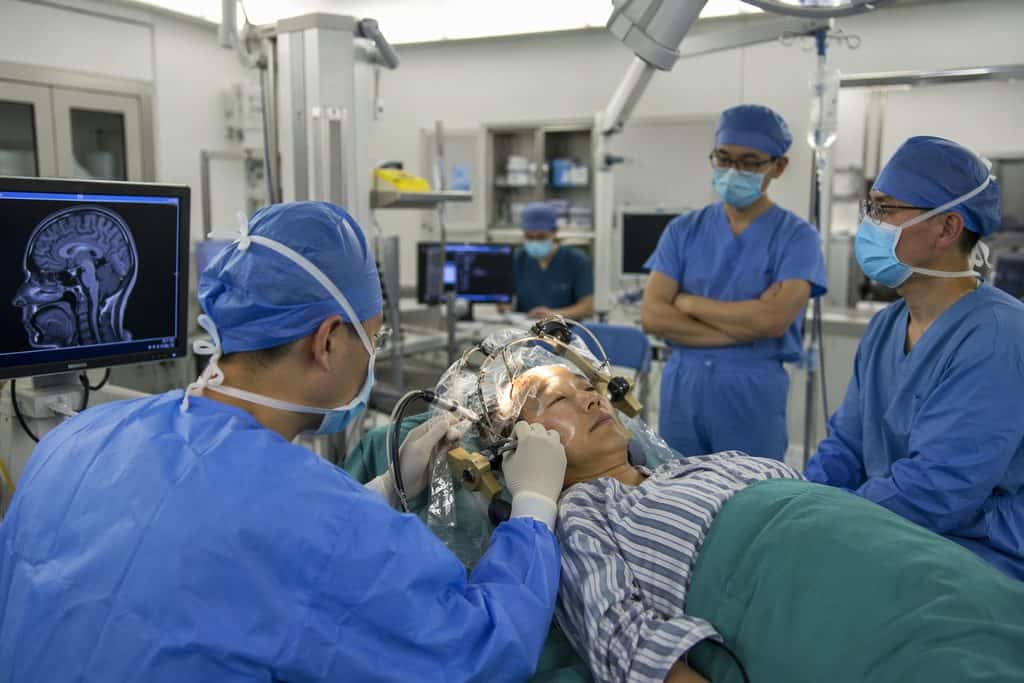
While a patient in the United States faces a median bill exceeding $100,000 for an awake craniotomy, Beijing Tiantan Hospital — the largest neurosurgical center on the planet — performs over 15,000 brain tumor surgeries annually. The cost differential is not 20% or 30%. It is a structural chasm, often landing between $25,000 and $45,000 for international patients. But price alone is a dangerous shortcut. The real question is not just how much cheaper it is. The real question is whether the clinical outcomes and the logistical pathway justify the journey.
Key Takeaways
- Beijing Tiantan Hospital performs approximately 15,000 neurosurgical procedures each year, making it one of the highest-volume brain tumor centers globally.
- An awake craniotomy in China typically costs 70-80% less than the US cash price, even when factoring in international patient coordination fees.
- Navigating China’s public hospital system without Mandarin fluency and local guidance is extremely difficult — the VIP international pathway is the only realistic option for independent overseas patients.
- A structured second opinion from Tiantan’s specialists can confirm your diagnosis and surgical candidacy before you ever book a flight.
The Problem: When a Brain Tumor Diagnosis Meets a Broken System
Receiving a brain tumor diagnosis is disorienting enough. What makes it worse is discovering that the recommended surgery — an awake craniotomy — comes with a six-month wait in the UK or a bill that threatens bankruptcy in the US. Even with solid insurance, out-of-network surprises and deductibles routinely push the patient’s share past $30,000. For the uninsured or underinsured, the numbers are simply non-starters.
That financial shock forces terrible choices. Some patients delay surgery to fundraise. Others accept a less precise resection at a lower-tier center because it is all they can afford. Neither path is acceptable when a glioma or meningioma is pressing against eloquent cortex — the brain regions controlling speech, movement, and personality.
And then there is the second opinion gap. A local neurosurgeon may recommend an aggressive resection. But was that recommendation shaped by the limits of their own surgical volume? A center performing 50 awake craniotomies a year simply cannot match the intraoperative judgment of a team doing 500. The patient rarely gets to hear that truth spoken plainly.
Who We Are
We are not a hospital. We do not perform surgery, interpret MRI scans, or prescribe treatment protocols. China Medical Services functions as your logistical bridge — we translate medical records, coordinate with the international departments of China’s top-ranked neurosurgery hospitals, and arrange the bilingual support you need on the ground. Our team connects you with institutions like Beijing Tiantan Hospital, but the clinical decisions always remain between you and the attending neurosurgeon. We handle the complexity so you can focus on the decision that matters most.
Why Beijing Tiantan Hospital Delivers Results for Complex Brain Tumor Surgery
Tiantan is not simply “good” at neurosurgery. It is the reference center against which other high-volume programs measure themselves. The hospital’s Department of Neurosurgery operates more than 1,200 beds and runs over 30 dedicated operating rooms for cranial procedures. That scale creates a feedback loop: more cases sharpen surgical technique, which improves outcomes, which attracts more complex referrals. It is a virtuous cycle that smaller centers cannot replicate.
Clinical Volume That Reshapes Surgical Intuition
A neurosurgeon at a busy Western academic center might perform 30 to 60 awake craniotomies per year. At Tiantan, that number can exceed 200 for a single attending surgeon. This is not a marginal difference. Intraoperative mapping — the electrical stimulation that identifies functional brain tissue while you are awake on the table — depends heavily on pattern recognition. The surgeon must interpret subtle language hesitations, motor twitches, and sensory reports in real time. Volume builds that instinct. Studies published in The Lancet and Journal of Neurosurgery have repeatedly linked higher surgical volume with lower rates of permanent neurological deficit in glioma resection. When someone searches “is Beijing Tiantan Hospital good for neurosurgery,” the data answers with a clear yes — but the reason is structural, not magical.
Awake Craniotomy as a Standardized Protocol, Not an Exception
At many hospitals, an awake craniotomy is a special event. Extra staff are called in. The workflow adjusts around the case. At Tiantan, it is a standard Tuesday. The anesthesia team, neuropsychologists, and speech therapists who run intraoperative language mapping work together daily. This routinization matters. It reduces the cognitive load on the team and lowers the probability of process failures — the small miscommunications that can cascade into complications. For a patient researching “what is awake brain surgery recovery like,” the answer begins before the incision closes. A smoothly run intraoperative phase means less brain retraction, shorter anesthesia time, and a faster neurological rebound.
Cost Structure That Reflects Economics, Not Compromise
Let us address the obvious question directly. The awake craniotomy cost at Beijing Tiantan Hospital lands in the $25,000 to $45,000 range for international patients using the VIP pathway. That includes the surgeon’s fee, hospital stay, anesthesia, intraoperative mapping, and postoperative imaging. The same procedure in the United States commonly exceeds $100,000 — and can reach $150,000 at coastal academic centers. Why the gap? It is not because Chinese surgeons are paid less and therefore less motivated. The gap exists because China’s hospital system operates at enormous scale with lower administrative overhead, lower pharmaceutical device markups in public institutions, and a labor-cost structure that simply does not carry the same burden as the US fee-for-service model. Quality is maintained through volume-driven expertise and rigorous departmental oversight, not through high prices. When evaluating brain tumor surgery China price comparison data, the takeaway is not “cheap.” It is “structurally more efficient.”
What You Need to Know Before Going Alone
Arriving in Beijing with a suitcase and a translated MRI report is not a plan. It is a recipe for wasted time and crushing frustration. China’s public hospitals serve massive domestic patient populations — Tiantan’s outpatient halls process tens of thousands of visits daily. The system was not designed for walk-in international patients. Here is what stands between you and the operating room if you try to navigate this alone:
- Appointment Access: Public registration counters operate in Mandarin only. The online booking platforms require a Chinese ID number. Even if you get through, a standard outpatient slot does not guarantee access to the senior neurosurgeon whose name you researched. The VIP international department bypasses this — but you cannot simply call and book it without a local coordinator who understands the referral pathway.
- Medical Record Translation: Your pathology slides, operative notes, and radiology reports must be professionally translated into Simplified Chinese before any surgeon will review them. A mistranslated term in a glioma grading report can derail the entire consultation. Machine translation is not sufficient for histopathology.
- Informed Consent and Intraoperative Communication: An awake craniotomy requires you to speak, name objects, and follow commands while your brain is mapped. If the surgical team cannot communicate with you clearly during the procedure, the mapping fails. Bilingual support is not a luxury here — it is a safety requirement.
How We Help You Navigate This
These barriers are real, but they are not permanent. They are the result of a system optimized for domestic scale, not international accessibility. Our role is to build the bridge without pretending the river does not exist.
We start with your medical records. Our team arranges certified translation and submits them through the proper channel to Tiantan’s international department. The goal is a written second opinion — a formal assessment from a senior neurosurgeon that addresses your diagnosis, the proposed resection strategy, and whether awake mapping is indicated. This document costs between $300 and $500 and serves as your decision-making foundation. If you then choose to proceed, that fee is credited in full toward our on-the-ground coordination service.
Once you decide to move forward, we coordinate the VIP pathway appointment, arrange your S2 visa invitation letter, and book a bilingual medical companion who stays with you from registration through discharge. During the awake craniotomy itself, this companion is not in the sterile field — but they ensure that every preoperative conversation, consent form, and postoperative instruction is fully understood. After discharge, we remain available for follow-up coordination and translation of recovery documentation for your home neurologist.
Frequently Asked Questions
The total package typically ranges from $25,000 to $45,000 USD. This covers the surgeon’s fee, hospital stay, anesthesia, intraoperative neuromonitoring and mapping, and postoperative imaging. The final figure depends on tumor complexity, length of stay, and whether additional adjuvant therapies are initiated during the same admission. This does not include travel, accommodation, or our coordination fee — but it does represent the core medical expense, and it is a fraction of the US cash price.
Yes — and the claim is measurable. Tiantan’s neurosurgery department is consistently ranked among China’s top three in the Fudan University specialist reputation rankings. It is the national clinical research center for neurological diseases and trains a significant portion of China’s neurosurgical workforce. The department publishes extensively in peer-reviewed international journals and maintains sub-specialization across neuro-oncology, skull base surgery, functional neurosurgery, and cerebrovascular disease. The volume alone — over 15,000 cranial procedures annually — places it in a category that only a handful of centers worldwide occupy.
Most patients spend one night in the neuro-intensive care unit for close monitoring, then transfer to a standard ward for 3 to 7 days. The immediate postoperative period involves fatigue, scalp soreness, and sometimes mild speech hesitancy or word-finding difficulty — these typically resolve within days to weeks as surgical swelling subsides. The advantage of awake mapping is that the surgeon knows exactly which areas to avoid, so the risk of permanent language or motor deficit is substantially lower than with asleep resection. Full recovery timelines vary by tumor type and location, but many patients are walking and conversing normally within 48 hours. A formal rehabilitation plan should be discussed with your home neurologist before you travel.
The pathway is straightforward but requires proper documentation. You need a recent contrasted MRI (DICOM format preferred), a histopathology report if a biopsy has been performed, and a summary of your clinical history. We arrange certified translation and submit these materials through Tiantan’s international consultation channel. A written second opinion from a senior neurosurgeon costs between $300 and $500. This document tells you whether the surgeon believes an awake craniotomy is appropriate, what the resection goals would be, and what risks are specific to your tumor location. It is not a prescription — it is an expert assessment that either validates or challenges your current treatment plan. That fee is fully credited toward our coordination service if you proceed to surgery within 90 days.
Technically, yes. Practically, it is extraordinarily difficult. The public registration system operates in Mandarin, requires in-person queuing, and does not guarantee access to the specific senior neurosurgeon you want. The VIP international department does accept direct inquiries, but response times vary and the language barrier remains significant. Most independent international patients lose weeks navigating logistics that a local coordinator resolves in days. If your tumor is stable and you have unlimited time, the direct route is possible. If your glioma is enhancing and you need surgery within a defined window, the coordination cost pays for itself in time saved and risk avoided.
Your Next Step
A brain tumor diagnosis forces decisions that feel impossibly heavy. But the decision to seek a second opinion — especially from a center that performs more awake craniotomies in a month than most hospitals do in a year — is one of the few moves that adds clarity rather than confusion. You are not committing to surgery by requesting a review of your scans. You are simply testing the assumptions in your current treatment plan against a team that has seen almost every variation of your disease.
If you are ready to explore what Tiantan’s neurosurgeons would recommend for your specific case, we can help you start that conversation. Request a free consultation with our team to discuss your diagnosis and the documentation you will need.
Medical Disclaimer: This article is for informational purposes only and does not constitute medical advice. Treatment decisions, including the suitability of awake craniotomy for your specific tumor type and location, must be made in consultation with a qualified neurosurgeon after a thorough clinical evaluation. Never disregard professional medical advice or delay seeking it because of something you have read here.
For more medical information and treatment options in China, visit chinamedservices.com (China Medical Services).
