Glioma Care in China: How the Pathway Works for Families
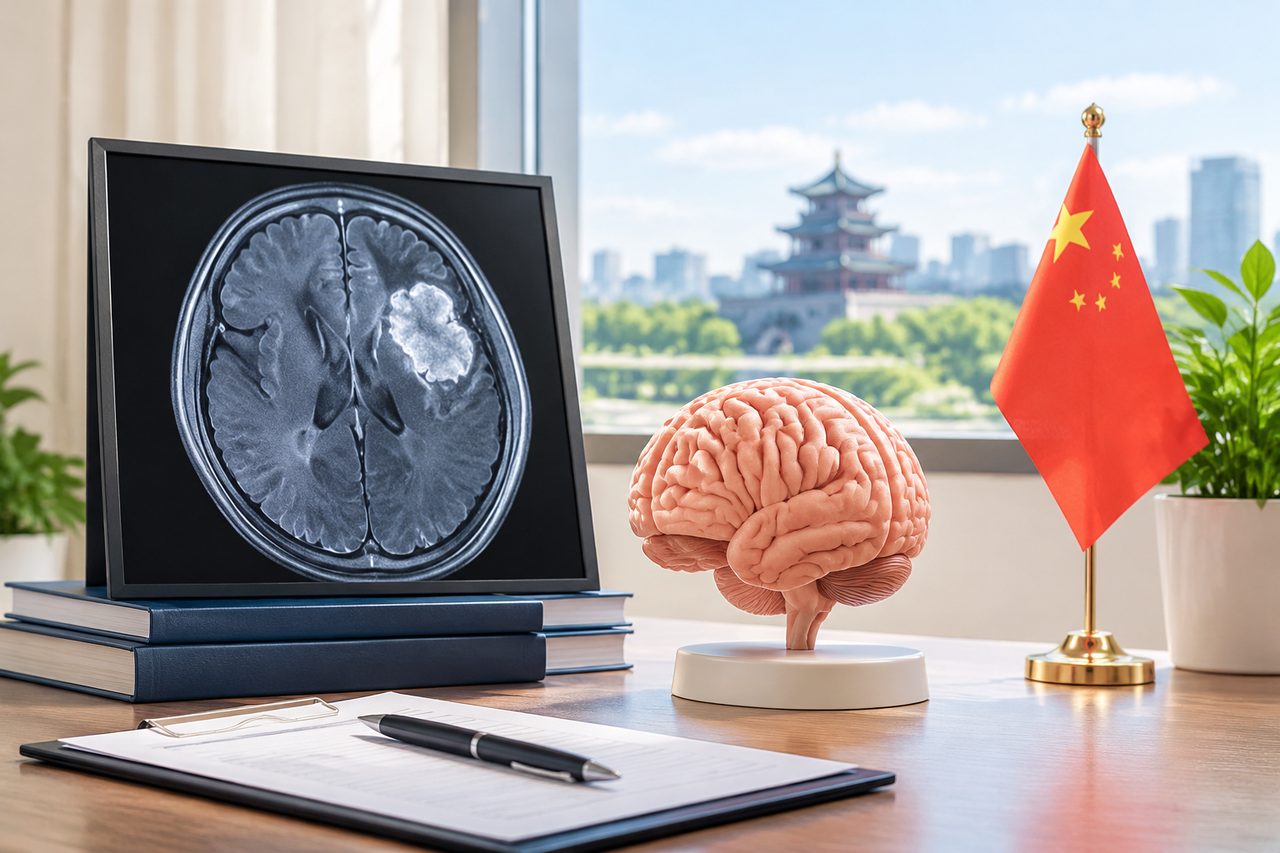
Glioma care in China: how the pathway works is a question of sequence as much as of hospital choice. For an international patient, the pathway normally runs through five stages: assembling records, obtaining a written second opinion from a Chinese neurosurgery or neuro-oncology team, agreeing a feasible plan, coordinating an appointment through a hospital’s international department, and then traveling with the right visa category and realistic expectations. No service can promise surgery, a specific surgeon or a particular date, because Chinese public hospitals schedule treatment only after an in-person consultation. What can be organized in advance is the review, the communication and the logistics.
How This Actually Works, Step by Step
Most families arrive at this subject after a diagnosis has already been made and a treatment plan proposed, often under time pressure. The practical steps below describe what a coordinated pathway typically involves. They are a planning framework, not medical advice; every clinical decision belongs to a qualified treating team.
- Step 1 — Gather the record set. A useful glioma review needs more than a diagnosis line. Expect to send MRI images (DICOM files rather than photographs of a screen), the radiology report, the histopathology report including molecular markers where available, operative notes if surgery has already occurred, and a current medication and treatment history. Incomplete imaging is the most common reason a review comes back vague.
- Step 2 — Have the records reviewed. A written second opinion means the relevant Chinese specialty reads the existing reports and returns written analysis, treatment suggestions and direction. A video consultation adds a live discussion with the specialty team about symptoms, goals and what the team would recommend. Neither replaces an in-person examination.
- Step 3 — Clarify what is feasible. The output should tell you which options are realistic, what further imaging or tests would be needed on arrival, and roughly what stage of care you would be entering. If the answer is that travel adds little, that is a legitimate result.
- Step 4 — Coordinate the appointment. Public hospital outpatient registration generally cannot be secured from abroad in advance; international departments and VIP channels exist precisely to pre-arrange specialist consultations with English-language support, typically at around 1.5 to 2 times the standard-channel price. A proxy consultation, in which a designated city, hospital, department or specialist is visited on your behalf using your materials, is another way to test fit before committing to travel.
- Step 5 — Travel and in-person assessment. Surgery and admission are arranged only after the hospital’s own specialists see the patient and agree a plan. Any later admission remains subject to hospital rules.
Which Chinese Hospitals Actually Treat Glioma
Glioma sits within neurosurgery and oncology, and China’s strongest centers for both appear in the Fudan specialty reputation rankings, which list a top ten by specialty rather than a single overall order. Rather than relying on overall hospital fame, look for departments ranked among China’s top ten for oncology or neurosurgery, and confirm that the specific team handles neuro-oncology rather than general oncology alone. The specialty listings on our department rankings page are organized this way, and the Fudan Top 100 hospitals by city shows where those centers cluster — Beijing, Shanghai and Guangzhou hold the largest concentrations.
Two practical distinctions matter more than prestige. First, public tertiary hospitals and private international hospitals operate differently: public institutions usually require prepayment with insurance reimbursement afterward, while many private international hospitals offer English-speaking staff, JCI accreditation and direct insurance billing. Second, scale cuts both ways. A leading Chinese hospital may see more than ten thousand outpatients a day, which is exactly why navigation support has value for a patient who does not speak Mandarin. For a broader view of how these institutions are classified, see the overview on China Medical Services.
A Realistic Timeline
Glioma pathways are rarely fast, and the waiting steps families forget are administrative rather than clinical. The ranges below are planning estimates only; they vary by hospital, department workload and case complexity.
| Stage | Typical duration | What causes delay |
|---|---|---|
| Record collection and translation | 3–10 days | Missing DICOM images; pathology reports not yet issued; translation of non-English documents |
| Written second opinion | About 1–2 weeks | Specialty review queue; requests for additional imaging |
| Video consultation scheduling | Several days to 2 weeks | Time-zone alignment; interpreter availability |
| Appointment coordination via international department | 1–4 weeks | Department capacity; whether a specific specialist is requested |
| S2 visa application | Varies by consulate; allow several weeks | Invitation and hospital supporting documents; appointment slots |
| In-person consultation and workup | Days to 2 weeks after arrival | Additional imaging, labs, anesthesia assessment |
| Surgery scheduling after assessment | Days to several weeks | Theater availability; pre-operative optimization |
Families often assume the visa is the long pole. In practice, incomplete records and the interval between consultation and theater date usually consume more time.
What Can Go Wrong — and What Happens Then
Honesty here is more useful than reassurance. The common failure modes for glioma care in China are predictable, and each has a recourse.
- The records are insufficient for a real opinion. You receive general commentary rather than case-specific direction. Recourse: request the missing imaging or pathology addendum before paying for a higher-level review.
- The recommended plan differs from what you expected. Chinese teams may propose a different sequence, additional molecular testing or a different adjuvant approach. Recourse: ask for the reasoning in writing, and consider a multidisciplinary team consultation so several specialties respond to the same record set.
- The appointment cannot be secured. Public-channel registration is genuinely difficult from abroad. Recourse: use international-department coordination with a clear refund term if the stated appointment cannot be arranged, and treat any promise of a named surgeon or fixed surgery date as a warning sign.
- The visa is refused or delayed. Medical travel uses the S2 category for short stays, with S1 for stays beyond 180 days, subject to the latest embassy or consulate requirements and supporting hospital documents. Approval is never guaranteed. Recourse: apply early, keep documents consistent, and do not book non-refundable travel before the visa is issued.
- The clinical picture changes on arrival. Further imaging may alter the plan, including toward less intervention. Recourse: build flexibility into tickets and accommodation.
How to Judge Whether the Pathway Is Worth It
The decision is not “is China good” but “does this pathway add something my current options lack.” Three criteria help. First, incremental clinical value: does the review surface a genuinely different option, such as a technique, a trial-adjacent approach or a molecularly guided plan? Second, time: if your home system has a long interval to the next scan or operation, an earlier assessment may matter; if not, the case for travel weakens. Third, total cost and burden, which includes flights, accommodation, companion time and follow-up after return — not just the surgical quote.
On cost, glioma surgery in China is generally priced below Western equivalents, but we do not publish a figure here because it depends on hospital tier, tumor location, whether awake craniotomy or neuromonitoring is used, ICU days and adjuvant therapy. Ask any provider for an itemized breakdown covering surgeon fees, anesthesia, ICU, imaging, pathology and rehabilitation, and separate those from coordination fees. Coordination, consultation and evaluation fees are billed separately from hospital medical charges, and no credit or offset toward later treatment costs is offered.
A final caution about numbers: a foreign study or another country’s pricing does not establish Chinese hospital prices, access or scheduling. Treat any unsourced figure with suspicion.
Practical Considerations: Records, Visa, Payment and Follow-Up
Records. Send original imaging files, not compressed screenshots. Include molecular pathology where available, since glioma management increasingly depends on it.
Visa. Plan around S2 for treatment and for accompanying family members, with S1 for longer stays. The M visa is a commercial and trade category and is not a medical visa; do not use it for treatment travel.
Payment and insurance. Public hospitals generally require prepayment, with reimbursement claimed later from your insurer. Confirm in advance whether your policy reimburses overseas care and what documentation it requires.
Language. Assume English is not routine in public corridors. Bilingual accompaniment covers registration, queuing, payment, wayfinding and interpretation; it does not guarantee access to a named specialist.
Follow-up at home. Ask before traveling how imaging and pathology will be shared with your home team, and request copies of everything before discharge. Continuity of scans matters more in glioma than in many conditions.
Frequently Asked Questions
Not reliably. Public hospital outpatient registration is generally not available for advance booking from overseas, and surgery is scheduled only after an in-person consultation. International departments can pre-arrange the specialist consultation, but the operation itself follows the hospital’s own assessment and rules.
The S2 category is used for short-stay medical treatment and private affairs, with S1 for stays exceeding 180 days, subject to current embassy or consulate requirements and supporting hospital documents. Accompanying family members apply in the same category. Approval is never guaranteed.
Generally the surgical and hospital components are lower than in the United States or Western Europe, but there is no single figure. Cost varies by hospital tier, tumor complexity, ICU stay and adjuvant therapy. Request an itemized estimate and keep coordination fees separate from medical charges.
Your Next Step
The core message is simple: glioma care in China can be organized thoughtfully, but it begins with records and a written opinion, not with a flight. Our team helps international patients obtain written second opinions, arrange video consultations and proxy visits, coordinate hospital appointments and provide bilingual accompaniment — we do not diagnose, treat or promise admission, priority or outcomes. If you would like an honest read on whether this pathway fits your situation, start with a free consultation through our patient support page.
This article is for general information only and is not medical advice. Treatment decisions should be made with qualified clinicians who have reviewed your individual case.
For more medical information and treatment options in China, visit chinamedservices.com (China Medical Services).
