Dr Qin Shukui Oncologist China: Liver Cancer Expert at Jinling Hospital
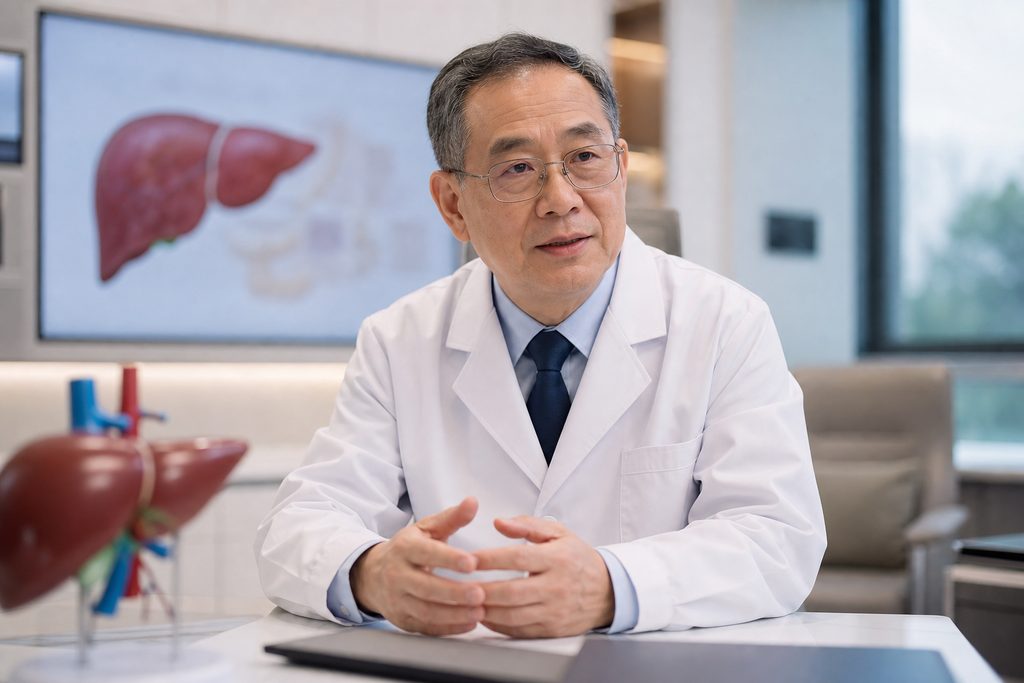
When 42-year-old Michael first heard the diagnosis, he had no idea where to start looking for treatment. Intrahepatic cholangiocarcinoma. His local oncologist laid out a standard protocol, but Michael wanted a second perspective. He started searching. “Best biliary tract cancer specialist China” became a late-night search that led him to one name repeatedly: Dr. Qin Shukui at Jinling Hospital in Nanjing. The question that followed was inevitable — what would the Dr Qin Shukui liver cancer treatment price actually be, and could he even get an appointment?
That is the precise moment most international patients hit a wall. You find the expert. Then you face a maze of hospital portals, language barriers, and opaque pricing that no amount of Googling can solve.
Key Takeaways
- Dr. Qin Shukui leads one of China’s highest-volume oncology departments at Jinling Hospital, with a clinical focus on liver cancer and biliary tract malignancies that draws patients from across Asia and the Middle East.
- Treatment costs in China for liver cancer typically range from $15,000 to $40,000 for comprehensive care — roughly 20% to 35% of what comparable treatment costs in the United States or Western Europe.
- Jinling Hospital’s public system does not accept direct international bookings. You cannot simply email the hospital and reserve a consultation slot with Dr. Qin. The pathway exists, but it requires navigating a specific institutional channel.
- No reputable service can guarantee a specific surgeon or surgery date before a face-to-face consultation. Anyone promising otherwise is not being honest about how Chinese public hospitals operate.
The Problem: When a Rare Cancer Demands a Specialist Few Hospitals Truly Have
Liver cancer remains one of the deadliest malignancies worldwide. It kills approximately 830,000 people each year. Biliary tract cancers — cholangiocarcinoma and gallbladder cancer — are rarer but no less aggressive. Combined, they affect roughly 1 in 50,000 adults annually in Western countries. The incidence is significantly higher in East Asia.
What makes these cancers punishing is how they hide. Symptoms arrive late. By the time a patient feels something is wrong, the tumor has often progressed beyond easy surgical margins. That means the oncologist you choose matters enormously. First-line therapy selection, timing of surgical intervention, integration of targeted therapy based on genetic profiling — these decisions are not interchangeable between specialists.
Most Western cancer centers treat liver and biliary cancers as a subset of their general GI oncology program. A specialist might see 20 to 40 such cases annually. That is not a criticism. It is a function of epidemiology. The disease burden simply is not large enough in North America or Europe to support hyper-specialization at every center.
China is different.
Who We Are
We are not a hospital. We do not provide medical treatment or clinical diagnoses. Our team functions as your logistical architects — we bridge the gap between you and China’s top-tier medical expertise. We maintain verified relationships with international departments at hospitals across China’s 37-city network of 340+ top-ranked institutions. We handle appointment coordination, medical document translation, bilingual accompaniment, and the thousand small frictions that make seeking care in a foreign country exhausting. We do not promise outcomes. We promise process.
Why Dr. Qin Shukui at Jinling Hospital Draws International Attention
Dr. Qin Shukui is not a name that appears randomly in search results. He chairs the oncology department at Jinling Hospital, a military-affiliated institution in Nanjing with a reputation built over decades. The department he leads is one of the highest-volume centers for liver cancer and biliary tract cancer treatment in eastern China.
When patients ask us “is Dr Qin Shukui a good oncologist,” the answer is not a simple yes or no. The better question is: what kind of expertise does your specific case require? Dr. Qin’s published research concentrates on advanced hepatocellular carcinoma and biliary tract cancers. His clinical trial portfolio includes immunotherapy combinations and targeted agents for patients who have exhausted first-line options. That profile matters if your case involves treatment-resistant disease or if you are seeking access to clinical protocols not yet widely available elsewhere.
Clinical Volume Creates Pattern Recognition
Jinling Hospital’s oncology service manages thousands of liver cancer cases annually. Not hundreds. Thousands. This is not unique to Nanjing — it reflects the epidemiological reality of liver cancer in China, where hepatitis B prevalence has historically driven incidence rates far above Western baselines. The result is a clinical environment where certain presentations that feel rare elsewhere are simply Tuesday morning here.
Volume alone does not guarantee better outcomes. But it does create something valuable: pattern recognition. An oncologist who has managed 500 biliary tract cases has seen treatment responses, complications, and disease trajectories that a specialist managing 30 cases annually may encounter only over a decade or more. That accumulated experience informs judgment in ways that protocol-driven care cannot fully replicate.
Access to Clinical Trials and Combination Protocols
China’s oncology research infrastructure has expanded rapidly. Dr. Qin’s department participates in numerous clinical trials, including studies on PD-1 inhibitors combined with tyrosine kinase inhibitors for advanced hepatocellular carcinoma. For patients who have progressed on standard therapies, trial access can represent a meaningful option. It is not a guarantee of response. No trial is. But having options beyond what is commercially available in your home country changes the conversation.
Some of these trials accept international participants. Most do not. Determining eligibility requires a detailed case review and direct communication with the research team — exactly the kind of coordination that becomes nearly impossible without boots on the ground.
Cost Structure That Changes the Calculus
Let us address the question patients actually lose sleep over. How much does liver cancer treatment cost in China? The honest answer is that it varies enormously by stage, treatment modality, and hospital tier. But we can provide ranges grounded in real cases.
| Treatment Component | Estimated Cost in China (USD) | US Comparison (USD) |
|---|---|---|
| Initial consultation with top specialist (international channel) | $500–$1,200 | $700–$2,500 |
| Comprehensive diagnostic workup (imaging, labs, pathology review) | $2,000–$5,000 | $8,000–$20,000 |
| Surgical resection (hepatectomy) | $10,000–$25,000 | $50,000–$150,000 |
| Chemotherapy course (3–6 months) | $5,000–$15,000 | $30,000–$100,000 |
| Immunotherapy (per cycle, drug-dependent) | $1,500–$4,000 | $8,000–$20,000 |
| Radiation therapy (SBRT course) | $4,000–$10,000 | $25,000–$65,000 |
These figures reflect treatment at top-tier public hospitals through their international or VIP channels. They are not the prices a Chinese citizen pays through the public insurance system. They are the prices an international patient pays for expedited access, English-capable coordination, and senior specialist involvement. And they still represent a fraction of US costs.
Why? Structural economics. Labor costs for highly skilled nursing and support staff are lower. Hospital overhead is different. Pharmaceutical pricing for domestically manufactured targeted therapies and immunotherapies can be substantially below US list prices. None of this implies lower quality. It reflects different market dynamics.
The Jinling Hospital oncology consultation cost through international channels falls in that $500–$1,200 range, depending on whether you need a written second opinion or a face-to-face consultation with full workup coordination. That is the number to budget for the initial engagement. Everything flows from there.
What You Need to Know Before Going Alone
We need to be direct about something. Jinling Hospital is a public institution. It serves a massive domestic patient population. The international patient pathway exists, but it is not a walk-in service.
- Appointment Access: You cannot book an appointment with Dr. Qin Shukui at Jinling Hospital through a public-facing website or by calling the general hospital line. The international department handles these requests. They require translated medical records, a clear treatment history, and a referral rationale before they will schedule a consultation. This screening process exists because demand for senior specialists far exceeds available consultation slots.
- Visa Requirements: Medical treatment in China requires an S2 visa with a notation specifying the treatment purpose. The hospital must provide an invitation letter and treatment confirmation before the visa application can proceed. Processing times vary by consulate. Rushing this step creates problems that delay everything downstream. Family members accompanying you also need S2 visas. M visas are for business visitors and will not work for medical purposes.
- Payment Reality: Chinese public hospitals operate on a prepayment system. You deposit funds. Treatment proceeds against that deposit. When the balance runs low, you replenish it. International insurance is almost never directly billed by public hospitals. You pay upfront and seek reimbursement from your insurer afterward. Private international hospitals in China offer direct billing. Jinling Hospital, as a public institution, does not.
- Language Barrier: Dr. Qin and his team conduct clinical work in Mandarin. Some staff speak English. Most do not. Medical translation is not a courtesy service — it is a clinical necessity. Misunderstanding a treatment protocol or a consent form has consequences that no amount of goodwill can undo.
How We Help You Navigate This
These barriers exist for structural reasons, not because anyone is being difficult. A public hospital managing tens of thousands of patients cannot also operate a concierge service for international visitors. That is not its mandate. Our role is to fill that gap.
We start with your medical records. Our team arranges certified translation into Chinese — not machine translation, but clinical document translation reviewed by medically literate bilingual staff. We submit your case to the international department at Jinling Hospital with a structured summary that highlights the clinical questions you need answered. This step alone saves weeks of back-and-forth.
Once the hospital confirms they will accept your case and schedules a consultation, we handle the invitation letter for your S2 visa application. We coordinate your travel logistics and arrange a bilingual medical companion who meets you at the hospital on consultation day. That companion handles registration, guides you to the correct department, sits with you during the consultation, and ensures you understand every word exchanged. After the consultation, you receive a written summary in English covering the diagnosis, recommended treatment plan, and next steps.
If treatment proceeds, we remain involved. Admission coordination, deposit management, scheduling follow-up appointments, translating discharge instructions — all the operational details that let you focus on recovery instead of paperwork.
Our coordination fees start from $300 for appointment coordination. Bilingual medical companionship runs from $200 per day. These are separate from hospital charges. And any consultation coordination fee you pay is credited in full toward on-the-ground coordination if you proceed with treatment within 90 days. That means the initial engagement cost effectively folds into your broader treatment coordination — you do not pay twice for the same service pathway.
Frequently Asked Questions
No. And we would be suspicious of anyone who tells you otherwise. What we can do is submit your complete case file through the proper channel, advocate for your consultation based on clinical urgency and fit with Dr. Qin’s expertise, and confirm the appointment before you book a flight. If the hospital cannot schedule you with Dr. Qin specifically, we will tell you that clearly and present alternatives — either another senior oncologist within the same department or a comparable specialist at another top-tier center. Our appointment coordination fee carries a full refund if we cannot secure the appointment we commit to.
For liver resection surgery, plan for a minimum of four to six weeks in China. That includes pre-operative assessment, the procedure itself, initial post-operative recovery in the hospital, and a period of monitored recovery before you are cleared to fly. Complex cases may require longer. Your surgeon will provide a specific timeline after your evaluation. We help arrange extended-stay accommodation near the hospital and can coordinate follow-up appointments during your recovery period.
At Jinling Hospital and similar top-tier Chinese institutions, the answer for liver and biliary cancer care is yes — and in some respects, the volume of experience may exceed what is available at all but the largest Western cancer centers. Jinling Hospital is ranked among China’s top 100 hospitals by the Fudan ranking system, which evaluates clinical capacity, research output, and reputation across specialties. Its oncology department participates in international clinical trials and publishes in peer-reviewed global journals. The surgical teams perform procedures at volumes that generate genuine subspecialty expertise. The equipment — surgical robots, linear accelerators, interventional radiology suites — is modern and well-maintained. The variable is the patient experience layer: language support, care coordination, and the softer aspects of hospital stays. That is where having a coordination partner changes the experience materially.
Dr. Qin’s clinical focus centers on advanced hepatocellular carcinoma and biliary tract cancers, with particular expertise in integrating systemic therapies — chemotherapy, targeted agents, immunotherapy — for patients with complex or treatment-resistant disease. If your case involves early-stage resectable disease, the surgical team at Jinling Hospital may actually be the more relevant first point of contact. If you have progressed on first-line therapy or have a rare biliary tract histology, Dr. Qin’s medical oncology perspective becomes especially valuable. We help triage this before submission by reviewing your records with a clinical coordinator who understands the department’s internal referral patterns. The goal is not to get you in front of a famous name. The goal is to get you in front of the right specialist for your specific situation.
Your Next Step
Finding a specialist for a life-threatening diagnosis is not a transaction. It is a series of decisions made under pressure, often with incomplete information. What we have tried to provide here is a clear picture: who Dr. Qin Shukui is, what Jinling Hospital offers, what it costs in real terms, and what stands between you and a consultation. The barriers are real. They are also navigable with the right support.
If you are considering liver cancer or biliary tract cancer treatment in China and want to understand whether Dr. Qin’s team at Jinling Hospital is a viable option for your case, we can help you make that determination based on your actual medical records — not a generic website inquiry. Reach out for a free initial consultation and we will walk you through the process, the timeline, and the honest assessment of whether this path makes sense for you.
For more medical information and treatment options in China, visit chinamedservices.com (China Medical Services).
