Pediatric Dentistry in China: A Practical Guide for Foreign Families
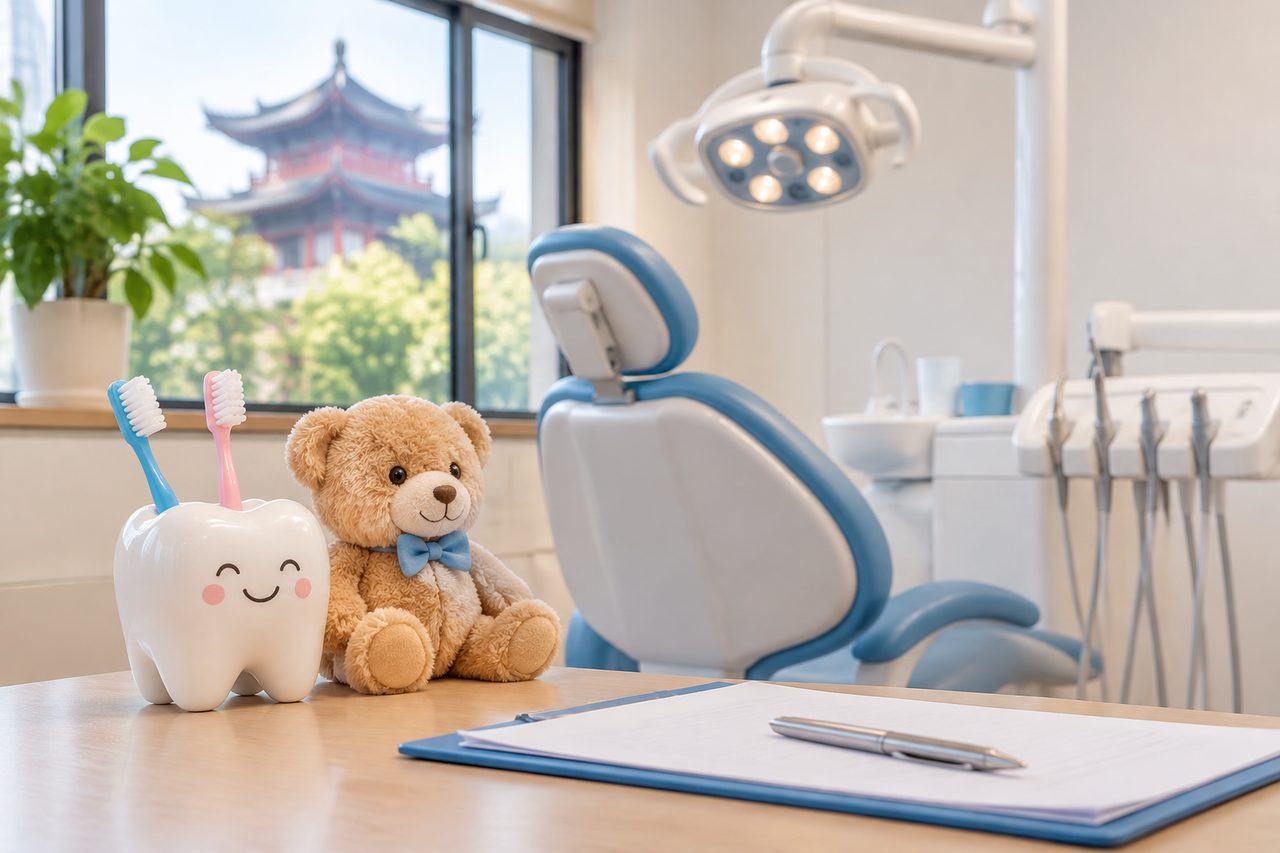
Pediatric Dentistry in China: A Practical Guide for Foreign Families
Pediatric dentistry in China is widely available in major cities, but access works differently from what most foreign families expect. Public dental hospitals generally do not let you reserve a routine pediatric appointment from overseas; you register on the day, in person, and pediatric slots fill early. Private and international clinics do accept advance bookings, usually in English, at roughly 1.5 to 2 times the public-channel price. Understanding that split — and what pediatric dentist cost China actually looks like across both channels — is the single most useful thing you can learn before you book flights.
This guide is written for parents who are considering treatment for a child in China, whether they live here, are visiting, or are weighing a dedicated trip. It covers the real sequence of steps, the safety question honestly, a realistic timeline, and the failure modes that catch families out.
How This Actually Works, Step by Step
The path from “my child needs a dentist in China” to “treatment is complete” follows a fairly consistent order. Here is what each stage involves.
1. Decide which channel fits your child. There are three: a public stomatology hospital or a public hospital’s dental department; a private international clinic; or a public hospital’s international/VIP department. Public general dentistry is the least expensive and the busiest. Private international clinics are the easiest to book and the most expensive. The VIP channel sits between them — senior specialists, English support, shorter waits, higher fees.
2. Send existing records before anything is booked. Dental X-rays, photographs of the teeth, previous treatment notes, and a short description of the problem. For a child, note age, cooperation level, and any sedation history. A written second opinion from a Chinese specialty team can be arranged from these materials alone, without travel.
3. Get a remote assessment. A pediatric dentistry team reviews the records and returns written analysis and treatment direction. If the case is unclear or the parents have questions, a video consultation adds a live conversation. This step exists to prevent a wasted trip: many pediatric dental problems can be handled in one or two visits, and knowing that in advance changes the planning entirely.
4. Book the appointment through the correct channel. Private clinics and international departments accept advance booking. Standard public outpatient pediatric dentistry does not — you attend and register on the day. If a child needs general anesthesia or day-surgery, a prior in-person consultation is normally required before any operating slot is arranged.
5. Attend, treat, and plan follow-up. Bring the original records, a payment method accepted by the facility, and a bilingual companion if no one in the family speaks Mandarin. Confirm at the visit how follow-up will be handled — in China or with your dentist at home.
What Pediatric Dentist Cost China Really Looks Like
It depends heavily on the channel and the treatment. Simple procedures at a public hospital are inexpensive by Western standards; complex care under general anesthesia is a hospital-level cost driven by the anesthesia team and theater time rather than the dental fee. Ask for an itemized plan separating dental treatment from facility and anesthesia charges, and treat any figure quoted without an examination as a range, not a quote.
For a top-tier hospital with a dedicated pediatric anesthesia team, the standards and monitoring are comparable to large teaching hospitals elsewhere. The variable is facility quality, not nationality. Ask specifically whether a separate pediatric anesthesia team handles the case, how pre-operative assessment is conducted, and what post-anesthesia observation is provided. No provider can guarantee an outcome, and any that does should concern you.
It happens often and is not a reflection of the clinic. Pediatric dental teams commonly use gradual behavioral techniques first. If cooperation is not achievable, the plan shifts to sedation or general anesthesia, which requires separate scheduling and adds cost. Building a rest day into the itinerary before the appointment reduces the chance of this happening.
Your Next Step
The core message is simple: pediatric dentistry in China is accessible and often excellent, but the access rules — public versus private versus VIP, same-day versus advance booking — determine whether the trip works. Get those right, and the clinical side is usually straightforward.
China Medical Services is a coordination service, not a clinic. We do not provide dental treatment, do not guarantee appointments with named specialists, and do not promise clinical outcomes. What we do is help families send records for a written second opinion, arrange video consultations, coordinate appointments through the appropriate hospital channel, and provide bilingual support on the day. If you are at the planning stage, a free consultation is a reasonable place to start — no commitment, just a clearer picture of what your child’s case would involve.
This article is for general information only and is not medical advice. Treatment decisions for a child should always be made with a qualified dentist or physician who has examined the patient.
For more medical information and treatment options in China, visit chinamedservices.com (China Medical Services).
