Xiangya Hospital Orthopedics for International Patients: Costs, Booking & Quality Guide
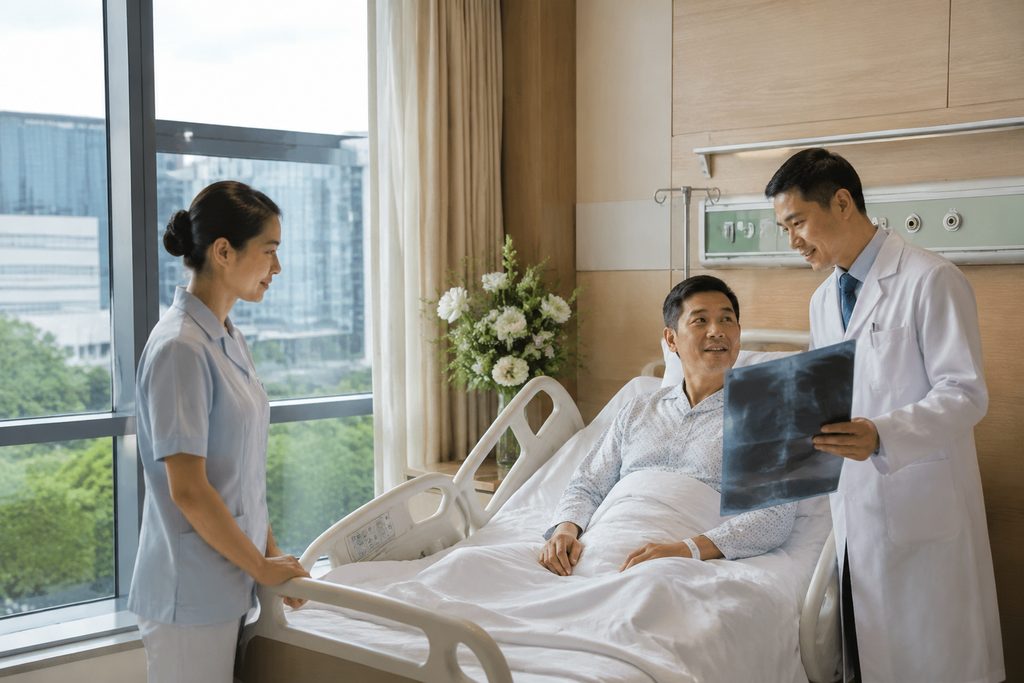
You’ve probably heard that getting orthopedic surgery in China means gambling on quality. The data says otherwise. Xiangya Hospital, part of Central South University in Changsha, consistently ranks in the top tier of Chinese hospitals. Its orthopedics department handles complex joint replacements, spinal corrections, and trauma cases at volumes few Western centers match. But what does Xiangya Hospital orthopedic surgery cost for foreigners actually look like? And can an international patient realistically navigate the process? The short answer: yes, with the right preparation. A total knee replacement at Xiangya typically runs between $8,000 and $15,000, roughly one-fifth to one-tenth of the $50,000 to $70,000 you’d pay out-of-pocket in the United States. The catch? Xiangya is a massive public hospital. Its regular outpatient clinics don’t take advance bookings from overseas. You need the international department or a coordination service to make it work.
Xiangya Hospital Orthopedics: The Short Answer
Is Xiangya Hospital good for joint replacement? The evidence points to yes. Central South University’s Xiangya Hospital is one of China’s oldest Western-medicine institutions, founded in 1906. Its orthopedics department is a national key clinical specialty. The hospital performs thousands of joint replacements annually. For international patients, the real question isn’t clinical quality. It’s access. You can’t simply email the orthopedics department and book a surgery date. The public system requires in-person registration for first visits. That’s where the international patient pathway becomes essential.
But there’s a nuance. Xiangya’s international department exists precisely for patients like you. It offers English-speaking staff, priority scheduling, and direct access to senior specialists. The cost runs higher than the standard public channel — typically 1.5 to 2 times more. Even so, the total bill remains far below Western prices.
Who This Is Right For — and Who It Isn’t
Traveling to China for orthopedic surgery is a serious decision. It suits some patients perfectly. Others should stay closer to home.
Good candidates for Xiangya orthopedic care:
- Patients needing elective joint replacement (knee, hip) who face long wait times at home
- Uninsured or underinsured patients who can pay cash and want significant savings
- Patients with complex revision surgeries where high case volume matters
- Those already planning extended travel or business in China
- Patients with family or cultural ties to Hunan province or southern China
Who should think twice:
- Patients requiring emergency trauma surgery — don’t fly across the world with an acute fracture
- Anyone with unstable cardiovascular or pulmonary conditions that make long-haul flights risky
- Patients whose insurance requires in-network care and won’t reimburse overseas treatment
- Those who need extensive post-operative rehabilitation and can’t stay in China for at least 2-4 weeks
- Patients unwilling to navigate language and cultural differences, even with a companion
Being honest about who shouldn’t come is what makes the rest of this guide credible.
The Options, Compared
When weighing Xiangya Hospital orthopedic surgery cost for foreigners, you should compare it against other realistic paths. Here’s how the main options stack up for a total knee replacement:
| Option | Typical Cost (USD) | Wait Time | Language Support | Key Trade-off |
|---|---|---|---|---|
| Xiangya Hospital (international dept.) | $8,000 – $15,000 | 2–4 weeks after records review | English coordinators available | Public hospital environment, less hotel-like |
| Private international hospital in China (e.g., United Family) | $25,000 – $40,000 | 1–2 weeks | Fully English-speaking | Higher cost, smaller orthopedic volume |
| Public hospital standard channel (no coordination) | $6,000 – $10,000 | Unpredictable, in-person registration required | Minimal | Nearly impossible for non-Chinese speakers |
| United States (uninsured cash pay) | $50,000 – $70,000 | Variable | Native | Highest cost by far |
| Thailand or India (private hospital) | $12,000 – $18,000 | 2–3 weeks | English widely spoken | Lower orthopedic research profile than Xiangya |
If cost is your primary driver and you want a top-tier academic orthopedic department, Xiangya’s international pathway delivers the strongest value. If you prioritize hotel-style amenities and zero language friction, a private international hospital in Shanghai or Beijing might suit you better. The standard public channel at Xiangya is technically cheapest, but without Chinese language ability, it’s a non-starter for most foreigners.
How to Book Orthopedic Surgery at Xiangya Hospital
So you’ve decided Xiangya is worth pursuing. What does the booking process actually look like? It’s not like calling a US surgery center and picking a date.
The pathway runs through the international patient department. You start by submitting your existing medical records — X-rays, MRI reports, surgical history, current medications. A bilingual coordinator translates these into Chinese for the orthopedic team. The specialists review your case and determine whether surgery is indicated and feasible. This remote evaluation typically takes 5 to 10 business days.
After the review, you’ll receive a written treatment plan and cost estimate. If you agree, the hospital issues an invitation letter. That letter supports your S2 visa application — the short-stay visa category used for medical treatment and private affairs in China. Do not apply for an M visa. M is for commercial trade activities, not healthcare. Your accompanying family members also apply for S2 visas using the same hospital documentation.
Once your visa is approved, you fly to Changsha. Your first in-person visit includes a physical examination, updated imaging, and a face-to-face consultation with the orthopedic surgeon. Surgery is typically scheduled within one to two weeks after that initial consultation, assuming no new clinical issues emerge.
Practical tip: Send complete records the first time. Missing imaging or unclear MRI reports are the number one cause of delayed reviews. Include a typed summary of your symptom history and any prior surgeries.
Xiangya Hospital International Patient Department Orthopedics: What to Expect
The Xiangya Hospital international patient department orthopedics experience differs from the standard public flow. You’ll have a dedicated coordinator who handles registration, appointment scheduling, and interpretation during consultations. The department arranges priority access to imaging — CT, MRI, X-ray — so you’re not waiting in the same queues as the thousands of domestic patients who pass through daily.
But understand what this is and isn’t. It’s not a luxury concierge clinic. The hospital is enormous. Hallways are crowded. The pace is fast. Your surgeon may spend 15 minutes with you, not 45. The care is excellent, but the bedside manner is often more direct and less conversational than many Western patients expect. If you arrive expecting a spa-like experience, you’ll be disappointed. If you arrive expecting high-volume surgical expertise at a fraction of Western cost, you’ll likely be satisfied.
One more thing worth knowing: Xiangya’s orthopedic surgeons regularly perform procedures that Western surgeons see less frequently. Severe deformities, neglected trauma, complex revision cases — these walk through the door daily. That case volume translates into technical proficiency that’s hard to replicate in lower-volume centers.
Knee Replacement Price Changsha China: Breaking Down the Numbers
Let’s get specific about knee replacement price Changsha China. The figures below reflect the international department pathway at Xiangya. Standard public channel pricing runs lower, but as noted, it’s impractical for most foreign patients.
Total knee replacement (unilateral): $8,000 – $15,000
Total hip replacement (unilateral): $9,000 – $16,000
ACL reconstruction: $4,000 – $7,000
Spinal fusion (single level): $10,000 – $18,000
Arthroscopic meniscus repair: $3,000 – $5,000
What drives the variance? The implant brand matters significantly. Imported prostheses from Zimmer, Stryker, or DePuy cost more than domestic Chinese implants, which are now clinically comparable in many cases. Your surgeon’s seniority also affects pricing — chief specialists command higher fees than associate professors. Length of hospital stay, typically 5 to 10 days for joint replacement, adds to the total. And whether you need a private room versus a shared one changes the bill.
These prices include the surgery, anesthesia, standard implants, hospital bed, routine medications, and basic post-operative care. They do not include your flights, visa fees, accommodation before admission, companion services, or extended rehabilitation after discharge. Budget an additional $3,000 to $6,000 for those logistics depending on your needs.
Practical Considerations: Records, Visas, Payment, and Follow-Up
Several logistics deserve your attention before you commit to surgery in Changsha.
Medical records. You need comprehensive documentation. Recent X-rays and MRI within the last six months, ideally. A typed medical summary from your current physician. A list of all medications including dosages. Any prior surgical notes. If your records are in a language other than English or Chinese, get them professionally translated first.
Visa timing. S2 visa processing typically takes one to three weeks depending on your home country’s Chinese embassy or consulate. Apply as soon as you have the hospital invitation letter. Do not book flights until the visa is in your passport.
Payment methods. Chinese public hospitals require prepayment. The international department typically accepts international credit cards, wire transfers, and sometimes cash. Insurance reimbursement is your responsibility — the hospital provides itemized receipts and medical reports for you to submit to your insurer. Most Western insurers won’t pay upfront; you pay, then claim.
Language. The international department provides interpretation for consultations and key moments. But outside those appointments — in the cafeteria, at the pharmacy, in the elevator — you’re on your own. A bilingual medical companion who stays with you throughout the day fills that gap. From $300 per day, a companion handles registration, queueing, payment, directions, and translation. It’s not mandatory, but for most foreign patients, it transforms the experience from overwhelming to manageable.
Follow-up after returning home. Your surgeon will want to see you at the 2-week and 6-week marks if possible. If you’ve already left China, video follow-up consultations are available through the international department. You’ll also need a local orthopedic surgeon at home to manage long-term rehabilitation and any complications. Chinese hospitals do not assume responsibility for post-operative care once you leave the country.
Frequently Asked Questions
Xiangya’s orthopedics department is among the strongest in central and southern China. It’s a national key clinical specialty with high surgical volumes. That said, Beijing’s Jishuitan Hospital and Shanghai’s Sixth People’s Hospital are also top-tier for orthopedics. Xiangya’s advantage for international patients is its established international department and lower cost of living in Changsha compared to Beijing or Shanghai.
Yes. The international patient department offers written second opinions based on your submitted records. Expect to pay between $300 and $500 for a senior specialist review. The opinion is for reference only — it’s not a prescription and doesn’t guarantee surgical acceptance. But it’s a cost-effective way to confirm whether Xiangya’s team believes surgery is appropriate for your case before you spend thousands on travel.
It happens. Sometimes the remote review suggests surgery, but the in-person examination reveals a better non-surgical path. If that occurs, the surgeon will explain the recommendation. You’re under no obligation to proceed. Your prepaid hospital deposit is refundable for unused portions, minus any consultation and imaging fees already incurred. This is why the remote evaluation and video consultation steps matter — they reduce, but don’t eliminate, the risk of a wasted trip.
Plan for a minimum of three weeks. Most patients stay in the hospital for 5 to 10 days after surgery. After discharge, you’ll need at least one follow-up visit for suture removal and wound assessment, typically at the 2-week mark. Flying long-haul immediately after joint replacement increases deep vein thrombosis risk. Your surgeon will advise on the safest departure window based on your recovery.
Some international insurers reimburse treatment at Chinese public hospitals if the facility meets their quality standards. Xiangya’s international department is generally recognized. But you must check your policy’s out-of-network and overseas treatment clauses before committing. Most patients pay upfront and seek reimbursement afterward. The hospital provides detailed itemized invoices and medical documentation to support your claim.
Your Next Step
Xiangya Hospital offers a compelling combination: top-tier orthopedic expertise, high surgical volumes, and prices that undercut Western hospitals by 70 to 90 percent. The trade-off is a system that wasn’t designed for foreigners. The international patient department bridges that gap, but it still helps to have someone on your side who knows the process.
That’s what we do at China Medical Services. We’re not a hospital, and we don’t provide diagnoses or medical advice. We handle the coordination: records translation, department matching, appointment scheduling, visa documentation support, and bilingual companionship on the ground in Changsha. If you’re considering orthopedic surgery at Xiangya, start with a written second opinion or a video consultation. It’s the lowest-risk way to get clarity on your case before you book a flight. Tell us about your situation, and we’ll help you figure out whether Xiangya is the right fit.
The bottom line: Xiangya’s orthopedics department delivers world-class surgical care at a fraction of Western prices. The challenge isn’t quality — it’s navigation. Understand the pathway, prepare your records, and you’ll make an informed decision about whether Changsha is worth the journey.
For more medical information and treatment options in China, visit chinamedservices.com (China Medical Services).
