Bed-to-Bed International Transfer to China: Full Hospital Coordination Explained
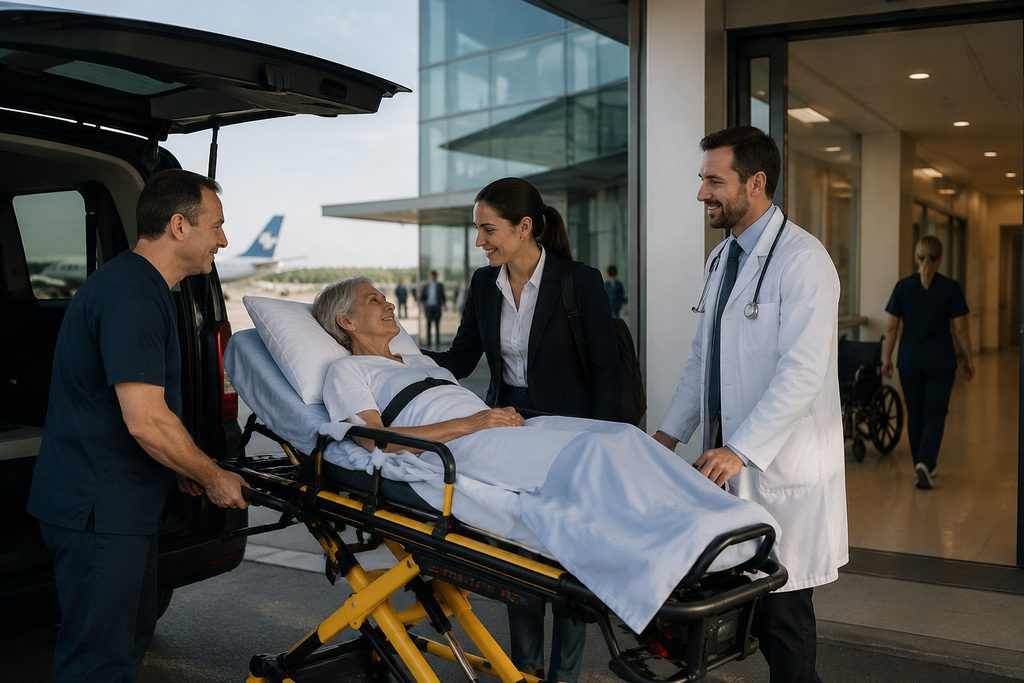
When 42-year-old Michael first heard the diagnosis, he had no idea where to start looking for treatment. A complex spinal condition. Surgery recommended. The wait time back home in London was 11 months. The pain wouldn’t wait that long. He started searching for alternatives and found himself staring at a screen, reading about a completely different world of medicine. The phrase that stopped him: “bed-to-bed international transfer service to China.” It sounded impossibly seamless. A service that picks you up from your hospital bed at home and delivers you to a hospital bed in Shanghai or Beijing, with every step managed in between.
That is exactly what this service is designed to do. But the reality is more layered than the phrase suggests. It is not a single product you buy off a shelf. It is a carefully choreographed sequence of medical, logistical, and administrative steps. Our team coordinates these transfers regularly, and we have seen what works, what fails, and what families need to know before they commit.
Key Takeaways
- A full bed-to-bed transfer involves medical escort, ground ambulance at both ends, and hospital admission coordination—not just a flight booking.
- The all-in hospital to hospital transfer service China cost typically ranges from $15,000 to $45,000 depending on distance, medical escort needs, and whether a dedicated air ambulance is required.
- China’s top hospitals perform procedures at 5 to 10 times lower cost than US equivalents, which can offset the transfer expense for major surgeries.
- Language barriers and hospital admission rules mean you cannot simply book a bed remotely; a local coordinator is essential for navigating the system.
The Problem: When Your Local Hospital Cannot Deliver What You Need
Medical travel is not a luxury decision for most people. It is born from a gap. A 2022 survey by the Medical Tourism Association found that 62% of international patients cite long wait times as their primary reason for seeking care abroad. Another 28% point to prohibitive costs in their home country. For patients in Canada, the UK, and parts of Europe, waiting 6 to 18 months for a hip replacement or spinal surgery is not unusual. In the United States, the barrier is financial: a cardiac bypass that costs $120,000 or more simply exceeds what many insurance plans will cover without crippling out-of-pocket exposure.
And then there is the third group. Patients with conditions that require a specific expertise or technology not available locally. A rare cancer protocol. A minimally invasive cardiac procedure performed at high volume in only a handful of centers worldwide. For these patients, the question is not whether to travel. It is how to do it safely.
Why China’s Hospital System Delivers Results for International Transfers
The logic of traveling to China for major surgery rests on three structural advantages. None of them are secrets. They are simply facts of scale, investment, and cost structure that most Western patients never encounter until they look.
Clinical Volume That Reshapes Surgical Skill
Volume is not just a number. It is the difference between a surgeon who performs a procedure 20 times a year and one who performs it 20 times a week. Fuwai Hospital in Beijing completes over 14,000 cardiac surgeries annually—the highest volume of any cardiac center in the world. A top Chinese orthopedic surgeon at a major public hospital may complete 300 to 500 joint replacements per year. The average US orthopedic surgeon performs roughly 65. Research published in The Lancet in 2019 found a clear inverse relationship between surgical volume and 30-day mortality for complex procedures. The hospitals in our network, drawn from the top 5% of China’s 35,000+ hospitals as ranked by Fudan University’s national hospital assessment and JCI accreditation standards, operate at volumes that simply do not exist in most Western systems.
Technology Deployed at Scale
Chinese hospitals adopted robotic surgery platforms, hybrid operating theaters, and AI-assisted diagnostic tools during a decade of heavy healthcare infrastructure investment. A hospital like Zhongshan Hospital Fudan University in Shanghai runs multiple da Vinci robotic systems and performs complex minimally invasive procedures that in other countries might be centralized at one or two national referral centers. The difference for an international patient is practical: you can often schedule a robotic-assisted procedure within weeks rather than months.
The Cost Equation
Let’s address the obvious question. Does lower cost mean lower quality? The structural answer is no. Chinese hospital costs are lower because of different labor economics, higher patient throughput, and a public hospital system that subsidizes infrastructure. Clinical outcomes for many high-volume procedures are comparable to or better than Western benchmarks. A spinal fusion that costs $80,000 to $110,000 in the United States may cost $15,000 to $25,000 at a top Chinese public hospital’s international department. The gap is wide enough that even after adding the cost of a full bed-to-bed transfer, the total spend can be significantly lower than staying home.
How a Bed-to-Bed Transfer Actually Works: Step by Step
This is the section that answers what a family in Michael’s position really needs to know. The term “bed-to-bed” sounds simple. The execution involves at least six distinct stages, each with its own documentation, timing, and clinical judgment calls.
Stage 1: Clinical Assessment and Hospital Matching. Before any transfer happens, the receiving hospital in China must review the patient’s medical records, imaging, and current status. This is not a formality. A hospital will not accept a transfer unless its specialists confirm that treatment is appropriate and that the patient is stable enough for the journey. Our team facilitates this through a written second opinion process, where the patient’s existing reports are reviewed by the relevant Chinese specialty department. Without this step, you cannot secure a hospital bed reservation.
Stage 2: Medical Escort Determination. A doctor or critical care nurse must assess whether the patient can travel on a commercial flight with a medical escort or requires a dedicated air ambulance. This decision depends on mobility, oxygen requirements, pain levels, and the risk of deterioration during transit. Most stable patients can travel via commercial business class with a nurse escort. Patients requiring continuous monitoring or intravenous medication need an air ambulance configured as a mobile ICU.
Stage 3: Ground Ambulance Coordination at Both Ends. “Bed-to-bed” means ambulance transport from the discharging hospital to the departure airport, and from the arrival airport to the receiving hospital in China. Both must be booked in advance with medical crews who understand the patient’s condition. In China, this means coordinating with a registered medical transport provider that can navigate local hospital admission protocols.
Stage 4: Visa and Documentation. The patient and any accompanying family members apply for an S2 visa, which covers short-term private affairs including medical treatment. The receiving hospital must issue an invitation letter confirming the treatment arrangement. Consulates require this documentation. Processing times vary by country, but 2 to 4 weeks is a realistic window.
Stage 5: Admission and Handover. Upon arrival at the Chinese hospital, the patient is admitted through the international department or VIP channel. Medical records are formally handed over. The receiving team conducts its own assessment and confirms the treatment plan. This is the moment the transfer is complete—the patient is now under the care of the Chinese medical team.
Stage 6: Post-Treatment and Return Planning. The bed-to-bed concept extends to the return journey. After discharge, the patient may need a recovery stay near the hospital before being fit to fly. The return transfer follows the same process in reverse, often with a lower-acuity escort if the patient has recovered well.
What Determines the Hospital to Hospital Transfer Service China Cost
No single price fits every transfer. The hospital to hospital transfer service China cost breaks down into components that shift dramatically based on the patient’s condition and origin country. Here is what families should budget for.
| Cost Component | Range (USD) | What Affects It |
|---|---|---|
| Medical escort (nurse, commercial flight) | $5,000 – $8,000 | Flight duration, escort qualifications |
| Air ambulance (dedicated medical jet) | $25,000 – $60,000 | Distance, ICU configuration, medical team size |
| Ground ambulance (each leg) | $500 – $2,000 | Distance, medical crew requirements |
| Hospital admission coordination | $1,500 – $3,000 | Hospital international department fees, documentation processing |
| Visa support and documentation | $300 – $800 | Consulate fees, expediting if needed |
| Total estimated range (commercial escort) | $15,000 – $25,000 | For stable patients on commercial flights with nurse escort |
| Total estimated range (air ambulance) | $35,000 – $70,000 | For critical patients requiring dedicated medical aircraft |
These figures cover the transfer itself. They do not include the hospital treatment costs in China, which are billed separately by the hospital. The good news: those treatment costs are substantially lower than Western equivalents, as discussed earlier. A patient paying $20,000 for a bed-to-bed transfer and $18,000 for a cardiac procedure in China still spends far less than the $120,000+ they would face in the US for the surgery alone.
Choosing the Right Medical Transfer Partner: What Separates Good from Risky
Not all companies offering medical repatriation China bed to bed services operate to the same standard. Some are travel agencies with a medical-sounding name. Others are legitimate medical transport providers but lack hospital relationships inside China. Asking the right questions before you commit can prevent a dangerous situation.
First, confirm that the company has direct relationships with the Chinese hospitals it names. A real coordinator can tell you which international department they work with, the name of the admitting channel, and the typical documentation timeline. If they are vague about hospital names or claim they can “get you into any hospital,” walk away. Admission is always at the hospital’s discretion.
Second, ask who provides the medical escort. Is it a registered nurse or paramedic with flight experience? What equipment do they carry? A legitimate medical escort service will provide the clinician’s credentials and a detailed list of onboard medical supplies. If the answer is “we handle everything,” ask for specifics.
Third, understand the insurance picture. Most international health insurance policies do not cover medical repatriation to China unless it is pre-authorized and deemed medically necessary. Some do not cover treatment in China at all. Patients typically pay out of pocket and seek reimbursement afterward. Get clarity on this before you make financial commitments.
Companies that describe themselves as the best medical transfer companies China should be able to provide references from previous international patients or at minimum a clear breakdown of their process. If you are trying to book bed to bed ambulance service China, do it through a coordinator who can also handle the hospital admission side. Booking transport without a confirmed receiving bed is a recipe for a medical crisis in a foreign airport.
Practical Considerations: Documentation, Visas, and What to Pack
In most cases, one family member can accompany the patient on a commercial medical escort flight if they book a seat on the same flight and the patient’s condition permits. On a dedicated air ambulance, one family member can usually ride along, though this must be confirmed with the air ambulance provider in advance. Space is limited, and the medical crew’s needs take priority. Additional family members should travel separately on commercial flights and meet the patient at the receiving hospital.
This is the reason medical escorts and air ambulance crews exist. A commercial medical escort carries emergency medications, oxygen, and monitoring equipment, and has protocols for in-flight medical emergencies including diversion to the nearest suitable airport. An air ambulance is effectively a flying ICU with a physician or critical care nurse, advanced life support equipment, and the ability to manage a deteriorating patient throughout the journey. The decision about which level of escort you need is made during the pre-transfer clinical assessment specifically to minimize this risk.
No. The term “bed-to-bed” describes the coordination model, not the patient’s mobility. It means the service handles every step from your starting hospital bed to your destination hospital bed—even if you can walk onto the plane yourself. Many patients who use this service are mobile but want the security of knowing that ground transport, hospital admission, and medical handover are managed by professionals who speak the language and understand the system. The service adapts to your actual medical needs.
Your Next Step
The decision to travel internationally for medical care is never easy. What makes it manageable is having clear information and a team that handles the complexity so you can focus on your health. Our organization connects international patients with China’s top-ranked hospitals, managing everything from initial record review and hospital matching to bed-to-bed transfer logistics and bilingual coordination on the ground. We do not provide medical care or make clinical decisions—we are the bridge between you and the medical expertise you need. If you are considering treatment in China and want to understand what a coordinated transfer would look like for your specific situation, reach out for a free consultation. There is no obligation and no pressure. Just a conversation about your options.
Frequently Asked Questions
Yes. The hospitals used for international patients are JCI-accredited and follow the same international safety standards as top hospitals in the US and Europe. Surgical teams perform high volumes of procedures — often more than their Western counterparts — which studies show leads to better outcomes.
Costs vary by procedure and hospital, but international patients typically save 40-80% compared to US prices — even when factoring in travel and accommodation. A consultation with our team will give you an exact, all-inclusive quote with no hidden fees.
Send us your existing medical reports to get started. We handle everything from hospital selection and appointment scheduling to visa assistance and post-operative recovery planning. Your medical records are reviewed by the specialist before you even book a flight.
For more medical information and treatment options in China, visit chinamedservices.com (China Medical Services).
