Clear Aligners in China: Costs, Safety, and What to Expect
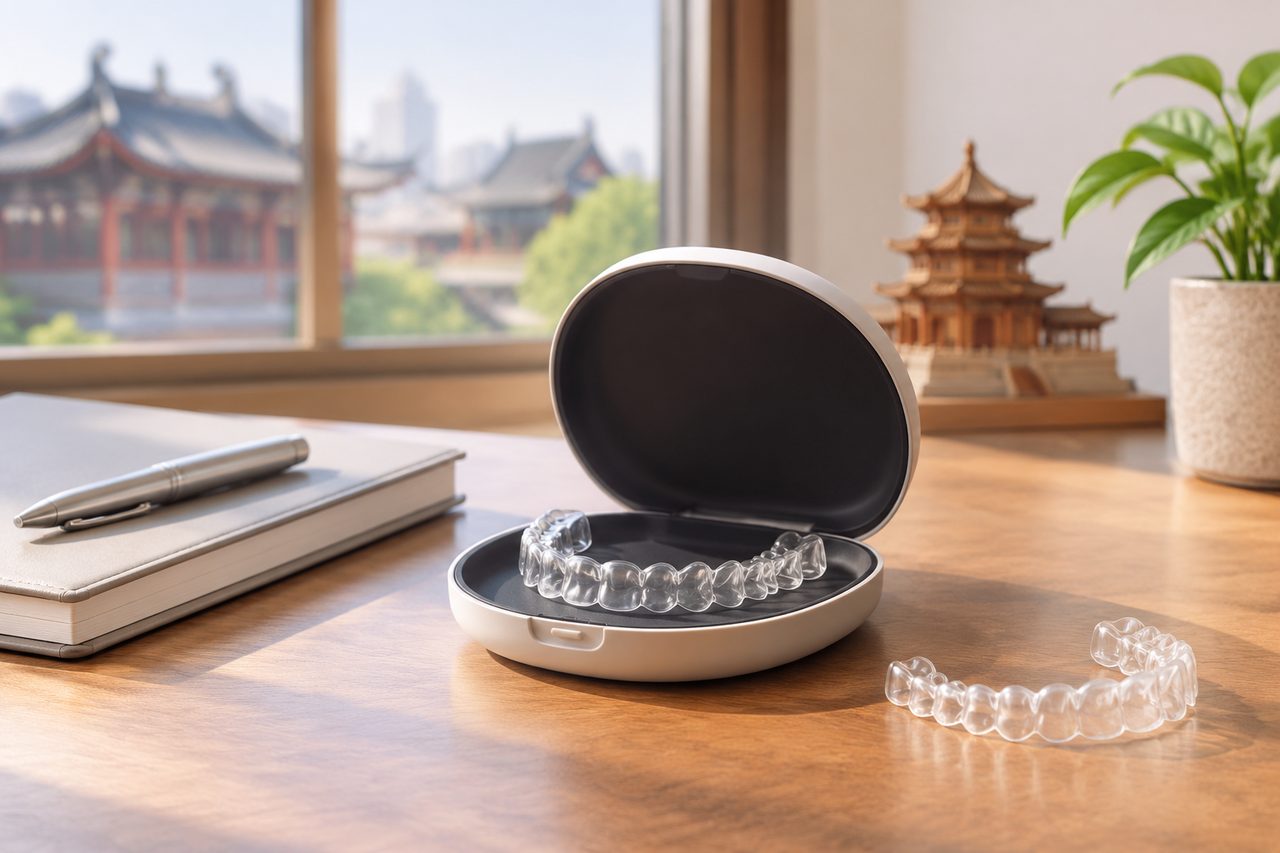
Clear Aligners in China: What to Expect
Clear aligners in China sit within the same regulated dental system that produces millions of orthodontic cases each year, and the clear aligners cost China patients pay is typically a fraction of Western private-practice pricing. What you should expect is a legitimate, well-equipped treatment pathway — but one that runs on different logistics from what you may be used to at home. Public dental hospitals generally do not let overseas patients book a first consultation from abroad, treatment plans are built in person, and aligner therapy depends on follow-up visits that you need to plan around before you start. This guide explains how the process actually works, what drives price, and where the real risks lie.
How This Actually Works, Step by Step
Orthodontic care in China follows a predictable sequence, and understanding it early prevents most disappointments. Here is the realistic path for an international patient.
Step 1 — Send your records for a remote review. You gather what you already have: recent panoramic and cephalometric X-rays if available, intraoral photographs, dental history, and a note on what you want corrected. A Chinese stomatology department can review these and tell you whether aligner therapy is plausible for your case, what additional imaging they would need, and roughly what the plan would involve. This is a written second opinion, not a treatment commitment.
Step 2 — Clarify the treatment model before you travel. This is the step most overseas patients skip. Ask directly whether the clinic expects to supervise the entire aligner course in China, or whether it will hand over an active case to an orthodontist in your home country. Some will; many will not. Getting a clear answer here determines whether a short trip is realistic or whether you need a longer stay.
Step 3 — Book an in-person consultation. In Chinese public hospitals, registration for a specialist outpatient appointment is generally taken on the day, and treatment is arranged only after an in-person examination. Private international dental clinics operate more like Western practices and may accept advance bookings. Either way, the clinical plan — scans, bite assessment, attachment placement, extraction decisions if any — is finalized face to face.
Step 4 — Start treatment and agree the follow-up schedule. Aligner therapy is not a one-visit purchase. You wear a series of trays, change them on a schedule, and are reviewed periodically to confirm teeth are tracking. If you leave the country mid-course, that supervision has to continue somewhere. Plan this before the first tray goes in.
Step 5 — Retainers and handover. Every aligner case ends with retention. Ask in advance how retainers will be fabricated and delivered if you are back home by then.
What Drives the Clear Aligners Cost in China
There is no single national price for clear aligners, and any article quoting one flat figure is guessing. What can be said honestly is that Chinese private dental pricing for aligner therapy is generally well below Western private-practice fees, and that the final number depends on several variables you can actually interrogate.
The first variable is the aligner system. Domestic clear aligner brands are widely used in China and cost less than imported systems; imported brands carry a premium. Neither is inherently inferior — both are regulated medical devices — but the brand affects the quote significantly.
The second is case complexity. Mild crowding in the front teeth may need a short tray series; significant bite correction, spacing, or cases involving extractions require more trays, more review visits, and more clinical time. Complexity, not the aligner alone, drives much of the cost.
The third is the setting. A department within a large public stomatology hospital, a private international dental clinic, and a VIP or international department each carry different fee structures. Public hospital pricing is generally lower; private international clinics charge more but offer English-speaking staff, advance booking, and a Western-style service model.
The fourth is what is bundled. Ask whether the quote includes scans, the aligner series itself, review visits, refinements, and retainers — or whether some of these are billed separately. A lower headline price that excludes refinements and retainers is not a lower total cost.
For context on how Chinese hospital pricing generally compares with Western systems across specialties, our overview of top-ranked hospitals in China explains the public versus private cost structure. Dental care follows a similar pattern: public institutions are cheaper, private international clinics cost more and are easier to navigate in English.
A Realistic Timeline
Aligner treatment is measured in months, and the logistics around it add weeks. The table below shows realistic ranges, not promises — every case and every clinic differs.
| Stage | Typical Duration | What Happens |
|---|---|---|
| Records gathering at home | 1–2 weeks | X-rays, photos, dental history compiled and translated |
| Remote written review | 1–2 weeks | Chinese stomatology team assesses suitability and requests missing imaging |
| Travel and visa preparation | 2–6 weeks | S2 visa application with hospital supporting documents; flights and accommodation |
| In-person consultation and scans | 1–3 days | Examination, digital scanning, treatment plan discussion, consent |
| Aligner fabrication | 1–3 weeks | Trays manufactured to the digital plan |
| Active aligner phase | 6–24 months | Tray changes on schedule with periodic review; varies widely by complexity |
| Retention phase | Ongoing | Retainers fitted; long-term wear to hold the result |
The waiting steps people forget are the middle rows. Document translation, appointment lead time at a busy public hospital, and visa processing can each add weeks. If your plan depends on starting treatment during a single trip, build those weeks into the calendar before you book flights.
What Can Go Wrong — and What Happens Then
Honest failure modes exist, and knowing them is protective.
The case is unsuitable for aligners. Some bite problems, severe crowding, or cases needing significant tooth movement are better handled with fixed braces or a combined approach. A responsible orthodontist will say so at consultation. If a clinic promises aligners will fix anything without examining you, treat that as a warning sign.
You start treatment and then leave the country. This is the most common practical failure. Aligner therapy needs supervision; if teeth stop tracking, trays stop fitting and the plan needs adjustment. If you cannot return for reviews and no local orthodontist will take over an in-progress case, you may end up paying twice. The recourse is prevention: confirm the handover arrangement in writing before the first tray.
The quote excluded refinements or retainers. Refinement trays are common in aligner therapy. If they were not in the original quote, you may face an additional bill later. Ask explicitly what happens if refinement is needed.
Communication breaks down. Large Chinese public hospitals are busy, and English-speaking staff are not universal outside international departments. Misunderstandings about appointment times, payment, or aftercare instructions are avoidable with a bilingual companion present. Our bilingual medical companion service exists precisely for this — registration, payment, translation, and being escorted through each visit.
The result does not match expectations. Aligners move teeth; they do not change jaw structure or gum health. If your expectations were built on marketing images rather than a clinical assessment, the consultation is where that gap should be closed — before payment, not after.
Is It Safe to Get Clear Aligners in China?
The honest answer is that safety depends far more on the clinic and the clinician than on the country. China has large, well-established stomatology hospitals with experienced orthodontists, and clear aligner systems used there are regulated medical devices. The question is whether the specific provider you choose follows proper diagnostic and consent practices.
Signs of a sound provider: they take imaging before proposing a plan, they discuss limitations and alternatives, they give you a written treatment plan and itemized quote, they explain the follow-up schedule, and they are clear about what happens if you leave the country mid-course. Signs of concern: a plan proposed without examination, pressure to pay on the first visit, vague answers about who supervises your case, or a quote with no itemization.
For patients considering Shanghai specifically, the question of the best orthodontist Shanghai for clear aligners usually comes down to two paths: a stomatology department within a major public hospital, or a private international dental clinic. Public hospital specialists are highly experienced but harder to book from abroad; private international clinics are easier to access in English and typically more expensive. Neither is automatically better — match the setting to your logistics and budget, and verify credentials at consultation.
If you want a remote assessment before committing to travel, a written second opinion from a Chinese specialty team can tell you whether aligner therapy is appropriate for your case and what the plan would involve. Details are on our consultation page.
Evaluating a Provider: What the Numbers Mean
When you compare quotes, a few distinctions matter more than the total.
- Aligner brand and tray count. Ask which system is proposed and roughly how many trays the plan involves. More trays usually means more complexity and more cost.
- Who supervises. Confirm that a qualified orthodontist — not only a sales consultant — reviews your progress.
- What is included. Scans, tray series, review visits, refinements, and retainers should each be listed. A quote that omits refinements is incomplete.
- Handover terms. If you will leave China mid-course, get the handover arrangement in writing.
- Language support. Confirm who will explain aftercare and emergencies in your language.
A cheap quote with unclear inclusions is not a bargain. A higher quote with itemized scope and a clear supervision plan is often the safer spend.
Practical Considerations: Records, Visa, Payment, and Follow-Up
Records. Bring recent dental X-rays, photographs, and any prior orthodontic history. If you have had braces or aligners before, say so — it changes the assessment.
Visa. For medical treatment in China, the applicable short-stay category is the S2 visa, used for medical treatment and private affairs, subject to the latest embassy or consulate requirements and supporting hospital documents. Accompanying family members apply under the same category. The M visa is for commercial and trade activities and is not a medical visa. Processing times vary by country; build them into your timeline.
Payment. Public hospitals generally require prepayment, with insurance reimbursement handled afterward. Private international clinics may bill insurers directly. Confirm the payment model before treatment begins.
Insurance. Most international insurance plans do not routinely cover elective orthodontic treatment abroad. Check your policy before assuming reimbursement.
Follow-up at home. This is the decisive practical question. If your aligner course will not finish before you leave China, confirm in writing who will supervise the remainder and how records will be transferred.
Frequently Asked Questions
There is no single national price. Cost depends on the aligner system, case complexity, whether you choose a public hospital department or a private international clinic, and what the quote includes. Ask for an itemized written quote covering scans, trays, review visits, refinements, and retainers, and compare totals rather than headline fees.
You can usually complete consultation, scanning, and planning during a short trip, and aligners can be fabricated within a few weeks. The difficulty is supervision afterward. If you leave before the course finishes, you need a confirmed handover to an orthodontist at home. Arrange this before starting.
Safety depends on the provider, not the country. Chinese stomatology hospitals have experienced orthodontists, and aligner systems used there are regulated devices. Verify that the clinic takes imaging before planning, explains limitations, provides a written plan, and clarifies supervision and follow-up. Avoid any provider that proposes treatment without examination.
The applicable short-stay category for medical treatment is the S2 visa, subject to current embassy or consulate requirements and supporting hospital documents. Accompanying family members apply under the same category. The M visa is for commercial and trade activities and is not used for medical treatment.
A responsible orthodontist will tell you at consultation and discuss alternatives such as fixed braces or a combined approach. This is a normal outcome, not a failure. A remote written review before you travel can identify this early and save you an unnecessary trip.
Your Next Step
Clear aligners in China can be a sensible, well-regulated option — provided you plan the supervision and follow-up before the first tray, not after. The main risks are logistical, not clinical: unclear quotes, unconfirmed handover, and language gaps at busy public hospitals. China Medical Services helps international patients navigate exactly these steps — hospital matching, appointment coordination, bilingual accompaniment, and visa guidance. We are not a dental provider and we do not give clinical advice; we connect you with qualified Chinese specialists and help the process run smoothly. If you would like an informal conversation about your situation, you can request a free consultation — no obligation, just a clearer picture of what your options look like.
This article is for general information only and does not constitute medical advice. Treatment decisions should be made with a qualified orthodontist who has examined you.
For more medical information and treatment options in China, visit chinamedservices.com (China Medical Services).
