Metabolic Rate Test in China: How It Works, Costs, and Top Hospitals
You have probably heard that getting a proper diagnostic workup in China means long queues, confusing paperwork, and a language barrier you cannot cross. That is the old story. For something as specific as a metabolic rate test, the reality is more interesting: China runs some of the highest-volume endocrinology and nuclear medicine departments on earth, and a growing number of them now serve international patients directly. The tricky part is not the science. It is knowing which hospital does what, what a metabolic rate test cost China clinics actually charge, and how to book it without wasting a trip.
This guide is written for people outside China who are trying to understand the practical side. We are not doctors. We are the team that connects international patients with Chinese hospitals, so what follows is the logistics, the numbers, and the honest limits.
How This Actually Works, Step by Step
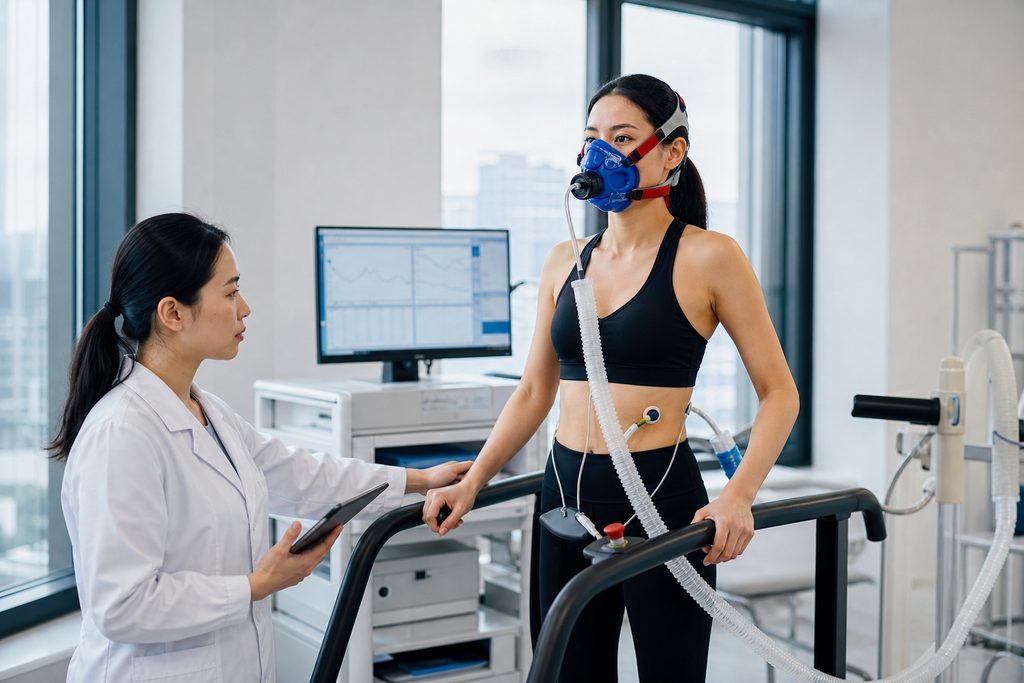
Start with what a metabolic rate test even is, because the phrase covers more than one thing. In most clinical settings it means a measurement of how much energy your body burns at rest — indirect calorimetry, usually reported as resting metabolic rate or RMR. Sometimes patients mean a thyroid panel (TSH, free T3, free T4) or a nuclear medicine thyroid uptake scan. Sometimes they mean a full metabolic assessment tied to weight management or diabetes. The test you need changes the department, the price, and the timeline.
Here is the real sequence for an international patient.
Step one — you send records. You email your existing lab results, imaging, medication list, and a short note about your symptoms and goal. A metabolic assessment is only as good as the context around it. If you have recent thyroid labs from home, send them. If you have a diagnosis of hypothyroidism or type 2 diabetes, say so.
Step two — a Chinese specialty reviews them. This is a written second opinion. A physician in the relevant department — endocrinology, nuclear medicine, or bariatric/metabolic medicine — reads your file and tells you which test is appropriate, whether it can be done in one visit, and roughly what it will cost.
Step three — you decide on format. You can stop at the written opinion. You can upgrade to a video consultation and speak with the team directly. Or you can move to an in-person visit, which is where the actual testing happens.
Step four — appointment coordination. If you travel, we handle registration, the hospital medical card, and the department booking through the hospital’s international office. Public hospital general clinics in China do not accept overseas pre-booking in the ordinary queue. The international or VIP channel does, and that is the route international patients use.
Step five — the test day itself. You arrive fasting if required, complete the measurement, and usually receive results the same day or within 48 hours depending on the test.
What a Metabolic Rate Test Cost China Patients Pay — and Why It Varies
This is the question everyone asks first, so let’s put real ranges on the table. A metabolic rate test cost China patients pay depends heavily on which test is meant, which hospital tier you use, and whether you go through the standard or international channel.
| Test type | Typical range (USD) | Notes |
|---|---|---|
| Indirect calorimetry (RMR) | $80 – $250 | Often bundled into a weight-management or nutrition consult |
| Full thyroid panel | $60 – $180 | TSH, free T3, free T4, antibodies |
| Thyroid uptake / scan (nuclear medicine) | $200 – $600 | Requires nuclear medicine department; not available everywhere |
| Comprehensive metabolic panel + hormones | $150 – $500 | Depends on how many markers are ordered |
| International/VIP channel surcharge | 1.5x – 2x standard | English service, senior specialists, shorter waits |
For comparison, the same indirect calorimetry test in a US hospital or private clinic commonly runs $150 to $500 before insurance, and a nuclear thyroid scan can exceed $1,000. That gap is why metabolic rate test medical tourism China options have grown — not because the technology differs, but because the cost structure does.
Two caveats. First, prices vary by hospital and case complexity, and the ranges above are reference points, not quotes. Second, the international channel costs more than the standard queue. That is not a markup for foreigners; it is the price of English-speaking staff, a senior physician’s time, and scheduling that works around a flight.
A Realistic Timeline
People underestimate how much of the calendar is eaten by paperwork and visa processing. Here is a grounded version.
| Stage | Realistic duration | What happens |
|---|---|---|
| Records collection | 3 – 10 days | Gathering labs, imaging, translated summaries |
| Written second opinion | 3 – 7 business days | Chinese specialty reviews your file and recommends tests |
| Video consultation (optional) | Within 1 – 2 weeks | Scheduled around time zones |
| Appointment coordination | 1 – 3 weeks | International office booking, medical card creation |
| S2 visa processing | 1 – 3 weeks | Depends on your consulate; requires hospital documents |
| Travel and test day | 2 – 4 days on the ground | Consult, test, results |
| Results and follow-up plan | Same day – 1 week | Written report, sometimes a follow-up consult |
Total, from first email to holding results: roughly three to eight weeks for a straightforward case. If you need a nuclear medicine scan, add time — those departments have tighter scheduling and not every hospital runs one.
What Can Go Wrong — and What Happens Then
Honest failure modes matter more than optimistic ones.
You booked the wrong test. This is the most common problem. A patient arrives expecting a metabolic rate measurement and discovers the physician ordered a thyroid panel instead, or vice versa. The fix is the written second opinion stage. Get the department to confirm in writing which test is indicated before you book flights.
The hospital cannot see you on your preferred date. Senior specialists at top hospitals are busy. Popular departments can be booked out weeks ahead. If a specific date is non-negotiable for you, say so early and be prepared to consider a different hospital in the same city.
Your visa is delayed. S2 processing times shift with consulate workload and season. Never book a non-refundable flight before the visa is in hand.
Results need interpretation you cannot get locally. A report in Chinese is not useful to your doctor at home. Ask for an English summary, and expect that a follow-up video consultation may be needed to walk through what the numbers mean.
Is Metabolic Rate Testing Safe in China — and Which Hospitals Do It Well
On safety, the answer is straightforward. Indirect calorimetry is non-invasive and carries essentially no risk. Blood draws carry the usual minor risks. A thyroid uptake scan involves a small radioactive tracer dose, which is standard nuclear medicine practice worldwide and is not recommended during pregnancy or breastfeeding.
The more useful question is where to go. The best hospitals for metabolic testing Beijing and Shanghai offer sit inside the Fudan-ranked tier — the top 5% of China’s 35,000-plus hospitals. Endocrinology and nuclear medicine strength tends to cluster in the same large academic medical centers that dominate other specialties.
Beijing has the densest concentration, with 21 Fudan Top 100 hospitals. Shanghai follows with 18, and Guangzhou with 10. Names that come up repeatedly for endocrine and metabolic work include Peking Union Medical College Hospital, Ruijin Hospital, and Zhongshan Hospital Fudan University. For patients who prefer an English-first environment, private international hospitals such as United Family and Jiahui offer direct insurance billing and Western-style service, usually at higher prices.
If you want to see how these hospitals are grouped by city and specialty, our directory of top-ranked Chinese hospitals breaks them down, and the department-level rankings show which facilities lead in endocrinology and related fields.
One practical note: if your goal is a broader metabolic assessment tied to weight or diabetes management, some patients combine conventional testing with Traditional Chinese Medicine support for long-term lifestyle management. That is a separate track and worth reading about on its own.
Practical Considerations: Records, Visa, Payment, and Follow-Up
Records. Bring everything, translated into English if possible. Chinese physicians at international departments read English fluently, but a clean summary saves time. If you have prior thyroid or metabolic labs, include the dates.
Visa. Medical travel to China uses the S2 visa, which covers short-stay visits for medical treatment and private affairs. Stays beyond 180 days fall under S1. Accompanying family members also apply for S2. Requirements change, so confirm current rules with your nearest Chinese embassy or consulate, and note that supporting documents from the hospital are typically part of the application. The M visa is for commercial and trade activity and has nothing to do with medical treatment.
Payment. Public hospitals generally require prepayment, with insurance reimbursement handled afterward in your home country. Private international hospitals often bill insurers directly. Budget for the international channel premium if you want English service and shorter waits.
Language. China’s top hospitals see tens of thousands of outpatient visits a day. Signage, queues, and payment systems are built for Chinese speakers. A bilingual companion who handles registration, queuing, payment, and translation is not a luxury in this environment — it is the difference between a smooth day and a lost one.
Follow-up at home. Ask for a written English report and, if possible, a short video consult after results come back. Your local physician will need both to act on the findings.
Frequently Asked Questions
The measurement itself is identical — indirect calorimetry using the same calibrated equipment found in Western hospitals. What differs is the logistics: you generally cannot pre-book a standard public clinic slot from abroad, so international patients use the hospital’s international or VIP channel, which adds cost but provides English service and predictable scheduling.
Yes, if you are traveling to China for the test. The applicable short-stay category for medical treatment is S2, and accompanying family members apply under the same category. Processing typically takes one to three weeks and requires supporting documents from the hospital. Always verify current requirements with the Chinese embassy or consulate in your country.
For indirect calorimetry, yes — it is non-invasive with essentially no risk. Blood tests carry routine minor risks. Nuclear medicine scans involve a small tracer dose and follow international safety standards, but are not appropriate during pregnancy or breastfeeding. Discuss any specific concern with a qualified physician.
Not through the standard public queue. Booking ahead happens through the hospital’s international office, which is exactly the channel we coordinate. We can also arrange a written second opinion first, so you know which test is appropriate before committing to travel.
That is a valid and common request. A written second opinion plus an in-person test visit can be arranged as a standalone service. Many patients use it to confirm a diagnosis or get a second data point, then continue care with their own physician at home.
Your Next Step
A metabolic rate test in China is affordable, technically solid, and genuinely accessible to international patients — provided you route through the right channel and confirm which test you actually need before booking anything. The cost advantage is real, but the planning is where most people stumble.
We are China Medical Services. We do not diagnose, treat, or promise clinical outcomes. What we do is translate your records, connect you with the appropriate specialty at a Chinese hospital, coordinate appointments through the official international channel, and provide bilingual support on the ground. If you would like to start with a written second opinion or simply ask whether a metabolic assessment makes sense for your situation, you can request a free consultation. No pressure, no obligation — just a clear next step.
This article is for general information only and is not medical advice. Always consult a qualified healthcare professional about your individual situation. Prices are reference ranges and vary by hospital and case complexity.
For more medical information and treatment options in China, visit chinamedservices.com (China Medical Services).
