Jiangsu Province Hospital Nanjing: International Patient Service Guide
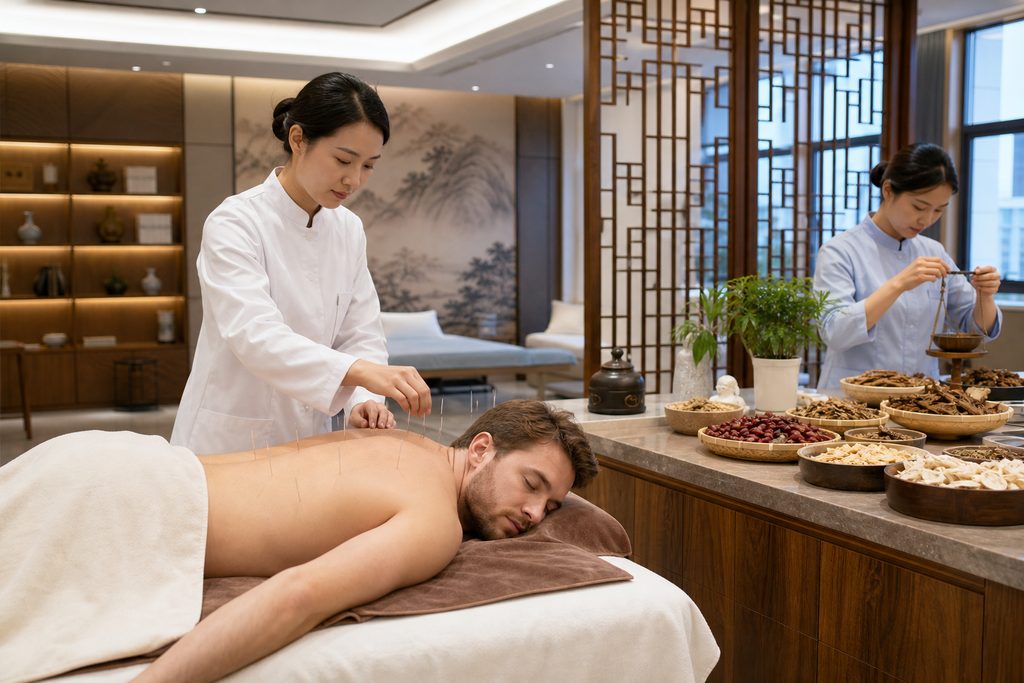
While a hip replacement in the United States can cost upwards of $40,000 out-of-pocket, the same procedure at a top-tier Chinese public hospital often falls between $8,000 and $15,000. The surgeons performing these operations at Jiangsu Province Hospital (JPH) in Nanjing complete more joint replacements in a single month than many Western surgeons do in a year. That volume gap is not incidental. It is the foundation of a system that attracts international patients seeking high-caliber care without the financial ruin.
Navigating that system from abroad, however, is not as simple as booking a flight. The hospital’s official website runs on a domestic Chinese platform. The phone lines are staffed with Mandarin speakers. The registration kiosks in the marble-floored lobby accept only Chinese ID cards. This is where the real work begins for an overseas patient. We know because we handle it daily.
Key Takeaways
- Jiangsu Province Hospital ranks in the top 5% of China’s 35,000+ hospitals, with its Rehabilitation Medicine and Urology departments earning top-10 national rankings in the Fudan University hospital excellence list.
- The hospital’s International Medical Center provides a dedicated pathway for foreigners, but you cannot simply email for an appointment from overseas without a local intermediary or VIP coordination.
- A real barrier exists: the hospital’s standard outpatient system cannot lock in a specific surgeon or surgery date before you arrive in Nanjing and complete an in-person consultation.
- Understanding the Jiangsu Province Hospital international patient price list before you travel prevents billing shock and lets you plan for deposit requirements that can reach $5,000–$10,000 upfront.
The Problem: Cutting Through the Confusion of China’s Public Hospital Giants
Searching for “best hospital in Nanjing for foreigners” returns a jumble of forum posts, outdated expat blogs, and generic travel advice. None of it answers the question that actually matters: can I, as a non-Chinese speaker, access a specific senior surgeon at Jiangsu Province Hospital for a procedure, and what will it cost me? The silence around that question is deafening. What does exist is often wrong. Some websites claim you can walk in and register with a passport. Technically true for a general outpatient visit. Functionally useless if you need a complex cardiac ablation or a total knee arthroplasty from a named specialist.
The hospital itself is a city within a city. Its full name is Jiangsu Province Hospital, also known as the First Affiliated Hospital of Nanjing Medical University. It sprawls across a massive campus on Guangzhou Road in the heart of Nanjing’s Gulou district. On a typical Monday morning, over 15,000 patients move through its corridors. The noise level rivals a train station. The signage is bilingual in spots. The registration system is not. Without a strategy, an international patient burns days just figuring out which building houses the right department. That lost time matters when you are paying for a hotel and your visa clock is ticking.
Who We Are
We are not a hospital. We do not provide medical treatment, clinical diagnoses, or surgical second opinions. China Medical Services functions as your logistical architect for accessing China’s top-tier medical institutions. Our team bridges the gap between where you are now and the care you need at hospitals like Jiangsu Province Hospital. We handle the pre-arrival coordination, the on-the-ground navigation, and the billing translation that turns an opaque system into a clear pathway. Think of us as your bilingual operational layer. We know which forms the International Medical Center requires. We know how to structure a deposit payment so it lands in the right account. And we know when a question about the Jiangsu Province Hospital international patient price list requires a direct call to the billing department rather than a guess.
Why Jiangsu Province Hospital Delivers Results for International Patients
Clinical Volume That Western Hospitals Cannot Match
Ask any surgeon what drives better outcomes and they will mention volume. A surgeon who performs 400 lumbar discectomies annually simply sees patterns that a surgeon performing 50 does not. Jiangsu Province Hospital operates at a scale that is difficult to visualize. Its Department of Urology handles a caseload that dwarfs most European centers. The hospital’s Rehabilitation Medicine department, consistently ranked among China’s top 10 in the Fudan specialist reputation list, runs a program so large it occupies its own dedicated building. For patients recovering from stroke or spinal injury, this means access to therapists who have seen your exact presentation hundreds of times. That clinical repetition cannot be faked or fast-tracked. It accumulates over decades.
Is Jiangsu Province Hospital good for international patients? The answer depends on how you define “good.” If you mean clinical expertise, the data says yes. The hospital is a Fudan-ranked A-tier institution, placing it firmly in the top 5% of all Chinese hospitals. Its research output is prolific. Its specialists train at centers in Germany, Japan, and the United States. But if “good” means a seamless English-language experience with Western-style appointment scheduling, the honest answer is: not by default. The raw capability is there. The interface is not. That gap is precisely what our coordination service exists to close.
Cost Structures That Defy Western Expectations
Let us look at the numbers that drive most international patient inquiries. A cardiac bypass graft surgery at a major US academic medical center averages $120,000 or more. At Jiangsu Province Hospital’s cardiac surgery department, the same procedure through the international VIP pathway typically ranges from $15,000 to $22,000. A knee replacement: $35,000–$50,000 in the US versus $10,000–$16,000 here. These are not low-quality bargain procedures. They use the same Stryker or Zimmer implants you would receive in Boston or Berlin. The cost differential comes from structural factors: lower physician labor costs, hospital efficiency at scale, and a medical device pricing environment that does not carry the same markup layers as the American system.
We are often asked for a medical tourism package Nanjing China cost estimate. The term “package” is a misnomer in the Chinese public hospital context. These are not resort-style medical tourism centers with bundled pricing brochures. What exists instead is a transparent but itemized billing structure. You pay for the surgeon’s fee, the anesthesiologist, the implant, the operating theater time, the inpatient bed, and the medications. Each line item appears on your final statement. Our role includes obtaining a pre-procedure estimate from the hospital’s international billing office so you can plan your financial exposure before you board the plane.
What Services Does Jiangsu Hospital Offer to Overseas Patients
The hospital’s International Medical Center (IMC) functions as the designated entry point for foreign nationals. It operates on a different model from the standard public outpatient clinics. Appointments run on a scheduled basis rather than the chaotic first-come queue system. Consultation times are longer. Some physicians assigned to the IMC speak functional English, though complex medical discussions still benefit from a bilingual companion who understands the terminology in both languages.
What services does Jiangsu hospital offer to overseas patients in practice? The IMC covers internal medicine, surgery, obstetrics and gynecology, pediatrics, and traditional Chinese medicine consultations. It can coordinate inpatient admissions to the VIP wards, which feature private rooms with space for a family member to stay overnight. These wards are a significant upgrade from the standard six-bed public rooms. They cost more. The daily room rate typically ranges from $150 to $300 depending on the specific unit. The center also facilitates imaging studies, laboratory tests, and interdepartmental referrals. If your case requires a multidisciplinary consultation involving, say, oncology and thoracic surgery, the IMC can arrange that meeting. What it cannot do is guarantee a specific professor’s availability on a specific date without weeks of lead time and a degree of flexibility on your part.
How to Book Appointment at Jiangsu Nanjing Hospital from Abroad
The question of how to book appointment at Jiangsu Nanjing hospital from abroad has a short answer and a long one. The short answer: you cannot do it directly through a public-facing online portal that works outside China. The hospital’s appointment system runs on a domestic platform tied to Chinese phone numbers and identity verification. The long answer: you can secure a confirmed appointment through the International Medical Center’s coordinator channel, but this requires a referral or a service intermediary who maintains that relationship.
Here is the actual workflow. First, you submit your medical records, translated into English or Chinese, along with your preferred specialty and any specific surgeon requests. Second, the IMC reviews your case and confirms whether the relevant department can accept an international booking within your desired timeframe. Third, you receive a preliminary appointment date and a cost estimate for the initial consultation. Fourth, you arrange your S2 visa with the hospital’s invitation letter, which the IMC can provide. Fifth, you arrive in Nanjing, attend your consultation, and only then can a surgery date be locked in. This sequence is non-negotiable. No reputable Chinese public hospital will schedule an invasive procedure without an in-person assessment first. Anyone promising otherwise is not being truthful about how the system works.
What You Need to Know Before Going Alone
We have seen patients attempt the solo route. Some succeed. Many waste time and money on avoidable dead ends. Here are the barriers that trip up even resourceful travelers.
- Payment Systems: Jiangsu Province Hospital’s international department accepts wire transfers and some international credit cards, but the standard hospital cashier windows do not. If you accidentally register through the public system instead of the IMC, you will find yourself standing in front of a payment terminal that only accepts UnionPay cards or WeChat Pay. Foreign cards fail. Cash in RMB works but requires carrying large sums. The hospital requires a deposit before admission, typically $5,000 to $10,000 depending on the planned procedure. This deposit must clear before a bed is assigned.
- Medical Records and Imaging: The hospital expects a complete dossier: recent imaging on CD or USB, pathology reports, medication lists with generic names, and a summary letter from your home physician. If these arrive untranslated or disorganized, the reviewing specialist may request repeat imaging on-site. That adds days to your timeline. CT and MRI slots at JPH are in high demand. A walk-in scan is not a realistic expectation.
- Language During Informed Consent: Before any procedure, you will sign a consent form. The standard version is in Chinese. The IMC staff will verbally translate, but nuanced discussions about surgical risk, implant choice, and anesthesia type benefit from a medically fluent interpreter. Google Translate is not sufficient for a conversation about the risks of a spinal fusion.
How We Help You Navigate This
These barriers exist for structural reasons, not because anyone is trying to be difficult. A hospital serving millions of domestic patients annually builds its systems for that population. International patients are a tiny fraction of the volume. Our job is to make you feel like the system was designed for you, even when it was not.
Before you travel, we obtain the Jiangsu Province Hospital international patient price list specific to your procedure and ward preference. We translate and organize your medical records into the format the reviewing department expects. We coordinate with the IMC to secure a consultation slot with the appropriate specialist. We arrange your invitation letter for the S2 visa application. During your stay in Nanjing, a bilingual medical companion meets you at the hospital entrance, guides you through registration, sits with you during the consultation to ensure every question gets asked and answered, and handles the pharmacy pickup and discharge paperwork. After you return home, we facilitate follow-up communication with your surgeon and help arrange remote consultations if needed. Our coordination fee starts from $300 for appointment booking, with full-day bilingual companion services from $200 per day. Any consultation fee you pay is credited in full toward on-the-ground coordination services if you proceed with treatment within 90 days.
Frequently Asked Questions
Prices vary by ward class, implant choice, and case complexity. As a reference, a total hip replacement through the VIP international ward typically ranges from $10,000 to $16,000. A laparoscopic cholecystectomy runs $3,000 to $5,000. Cardiac stent placement with one drug-eluting stent averages $6,000 to $9,000. These figures include surgeon fees, anesthesia, operating theater, standard implants, and a private room stay. They exclude airfare, visa costs, and our coordination fees. The hospital provides a formal estimate after reviewing your case.
You can request a specific senior specialist. The IMC will relay that request to the department. Whether that surgeon is available depends on their clinical schedule, teaching commitments, and whether they participate in the international service rotation. Many department directors and senior professors do see international patients, but their slots fill weeks in advance. We manage these expectations upfront. If your requested surgeon is unavailable, the department head will typically assign another senior attending physician with equivalent qualifications. You are never assigned to a junior resident without your knowledge.
Your surgeon at Jiangsu Province Hospital will provide a detailed discharge summary and operative report in English upon request. This documentation allows your home physician to manage follow-up care with full context. For surgical complications, the hospital’s IMC can arrange a remote video consultation with your original surgeon for a fee of $100 to $300. If a return trip to Nanjing becomes medically necessary, the same coordination pathway applies. We recommend all international patients secure medical travel insurance that covers post-operative complication management in their home country.
It depends on your priority. Private international hospitals in Shanghai like Jiahui or United Family offer a fully Western-style experience: English-speaking staff throughout, direct insurance billing, and hotel-like amenities. They also charge prices closer to Western levels. Jiangsu Province Hospital offers something different: direct access to Fudan-ranked specialists operating at the top of their fields, at a fraction of private hospital costs. You trade some comfort for clinical firepower and significant savings. For complex cases where the surgeon’s volume and reputation matter most, JPH is an excellent choice. For routine care or a wellness checkup where convenience is paramount, a private hospital may suit you better.
Your Next Step
Jiangsu Province Hospital represents a specific value proposition: elite clinical capability at a cost structure that makes financial sense for patients facing high deductibles, long wait times, or uninsured procedures in their home countries. Accessing that capability requires navigating a system that was not built for you. That is the work we do. If you are considering treatment at this Nanjing institution, start by understanding the real costs, the real timeline, and the real process. We can walk you through all three.
To receive a preliminary cost estimate and a feasibility assessment for your specific case, request a free consultation with our coordination team. No commitment. Just clarity.
For more medical information and treatment options in China, visit chinamedservices.com (China Medical Services).
