China Neurosurgery Robot: Brain Tumor Biopsy and DBS with Sub-Millimeter Precision
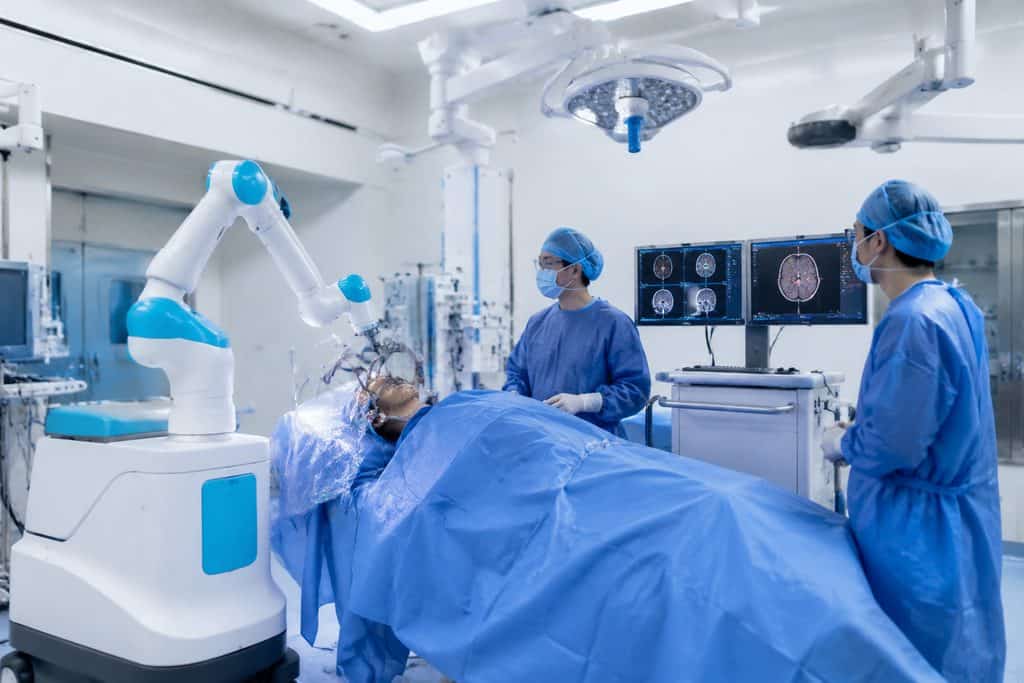
China Neurosurgery Robot: Brain Tumor Biopsy and DBS with Stereotactic Robotic Precision
According to a 2023 study published in Frontiers in Surgery, frame-based stereotactic brain biopsies carry a diagnostic yield of roughly 93.4%, but the procedure time and patient discomfort remain significant. The robotic brain tumor biopsy cost in China, paired with frameless stereotactic systems, has reshaped this equation entirely. Patients facing a deep-seated glioma or an essential tremor now have access to a pathway where the robotic arm moves with 0.1 to 0.5 millimeter accuracy. The machine does not shake. It does not get tired. It simply executes the pre-planned trajectory while the neurosurgeon supervises every micron of movement.
Key Takeaways
- China has deployed over 40 domestically developed neurosurgery robots, with some systems completing more than 30,000 stereotactic procedures nationwide.
- The robotic brain tumor biopsy cost in China typically ranges from $8,000 to $15,000 for international patients — a fraction of the $40,000 to $70,000 billed in the US for comparable robotic-assisted cranial work.
- Language logistics and hospital gatekeeping are the real barriers. Without a bilingual coordinator, you cannot simply email a top-tier Chinese neurosurgery department and book a robotic DBS slot.
- Robot-assisted DBS in China for Parkinson’s disease often uses a frameless system, cutting total operating room time by roughly 40 to 60 minutes compared to traditional frame-based methods.
The Problem: A Brain Lesion Diagnosis Stops Life Cold
You get the scan. The radiologist sees something. Maybe it is a ring-enhancing lesion in the left frontal lobe. Maybe it is a small mass in the thalamus — too deep, too risky for a casual open biopsy. Suddenly you are thrust into a world of calculated surgical trajectories, vascular mapping, and waiting lists. In Canada, the median wait time for a neurosurgery consult stretches past 20 weeks in some provinces. In the UK, the NHS target for a first consultant-led appointment is 18 weeks, but complex stereotactic cases often drift far beyond that. Time is not neutral when a glioma might be growing. Every week of uncertainty compounds the psychological weight.
Stereotactic brain biopsy is the gold standard for tissue diagnosis. But the traditional method involves screwing a heavy metal frame to the patient’s skull under local anesthesia. The frame stays on during the CT scan. It stays on during transport. It stays on while the surgeon calculates coordinates. Patients describe it as medieval. The robot changes that. A frameless stereotactic robot uses fiducial markers and a 3D camera to register the patient’s anatomy in real time. The robot arm aligns itself to the pre-planned entry point and holds the trajectory rigidly. The surgeon makes a small burr hole. The biopsy needle advances through the robot’s guide. That is it. No heavy frame. Less pain. Faster recovery.
But accessing this technology as an international patient is not a simple matter of booking a flight. China’s top neurosurgery centers are inside massive public hospitals that serve tens of thousands of local patients daily. The outpatient hall at Huashan Hospital in Shanghai sees over 10,000 visitors on a busy Monday. You cannot navigate that alone. You need a bridge.
Who We Are
We are China Medical Services. We are not a hospital. We do not provide medical treatment or clinical diagnoses. We are your logistical architects — the team that connects you with China’s top-tier neurosurgery departments, coordinates your visa paperwork, places a bilingual medical companion at your side, and ensures that your pre-operative MRI gets to the right neurosurgeon’s workstation before you even land. We bridge the gap between your diagnosis and the robotic precision waiting in Shanghai, Beijing, or Guangzhou. No magic. Just deep local knowledge and relentless coordination.
Why Robotic Stereotactic Neurosurgery in China Delivers Results
Clinical Volume That Sharpens Surgical Judgment
A neurosurgeon at a high-volume Chinese center may perform 150 to 250 stereotactic brain biopsies annually. That is not an exaggeration. The Department of Neurosurgery at Huashan Hospital, Fudan University in Shanghai handles over 17,000 neurosurgical procedures per year, making it one of the highest-volume centers on the planet. Compare that to a busy academic center in the United States, where a neurosurgeon might do 30 to 50 stereotactic biopsies a year. Volume does not guarantee outcomes. But in neurosurgery, where the margin between a clean diagnostic sample and a hemorrhagic complication is measured in millimeters, repetition matters. The surgeon who has navigated a biopsy needle past the basal ganglia 200 times has an internalized spatial intuition that no textbook can replicate.
China’s domestic neurosurgery robot market has matured rapidly. The Remebot system, developed in Beijing, has completed over 30,000 procedures since its clinical introduction. Sinovation’s SR series has been deployed in more than 40 hospitals. These are not experimental prototypes. They are workhorse platforms that neurosurgery teams use daily for brain tumor biopsies, deep brain stimulation electrode placement, and stereoelectroencephalography for epilepsy mapping. The robot’s software integrates pre-operative CT, MRI, and diffusion tensor imaging to map white matter tracts. The neurosurgeon plans the trajectory on a 3D reconstruction, avoiding eloquent cortex and major vessels. The robot executes the alignment. The surgeon remains in control at every step.
How Does Stereotactic DBS Work for Parkinson’s — and Why the Robot Matters
Deep brain stimulation is not a cure for Parkinson’s disease. It is a neuromodulation therapy that delivers electrical impulses to specific brain nuclei — typically the subthalamic nucleus or the globus pallidus internus — through implanted electrodes. The electrodes connect to a pulse generator placed under the skin of the chest, like a cardiac pacemaker for the brain. When activated, the stimulation can suppress tremor, rigidity, and bradykinesia. The effect can be dramatic. A patient who could not hold a cup steady may pour tea without spilling. But the outcome depends entirely on electrode placement accuracy. A deviation of 1 millimeter can mean the difference between excellent symptom control and unwanted side effects like dysarthria or muscle contractions.
The robot eliminates the manual frame-setting step. In traditional frame-based DBS, the patient arrives on the morning of surgery. The stereotactic frame is fixed to the skull. A CT scan is taken. The surgeon calculates coordinates manually. The frame guides the electrode insertion. It works. It has worked for decades. But it is slow, uncomfortable, and introduces potential for human calculation error. A frameless robotic system registers the patient’s head using optical tracking. The robot arm positions itself automatically to the planned trajectory. The surgeon inserts the electrode through the robot’s guide tube. Multiple studies, including a 2022 meta-analysis in Neurosurgical Review, have shown that robot-assisted DBS achieves radial errors of 0.5 to 1.2 millimeters — comparable to or better than frame-based methods — with significantly shorter operating times. For an awake patient undergoing DBS, shaving 45 minutes off the procedure is a meaningful improvement in comfort and cooperation.
The best hospital for DBS surgery Shanghai candidates typically includes Huashan Hospital and Ruijin Hospital, both affiliated with Shanghai Jiao Tong University School of Medicine. Ruijin’s functional neurosurgery team has implanted over 1,000 DBS systems and published extensively on robotic-assisted techniques. These are not hidden gems. They are internationally recognized centers that regularly host visiting neurosurgeons from Europe and Southeast Asia for observation and training.
The Stereotactic Neurosurgery Robot Price Abroad — and Why China’s Cost Structure Differs
Let us talk about money directly. The stereotactic neurosurgery robot price abroad — meaning the cost of the robotic system itself — is not what patients pay. Hospitals amortize the capital cost of a $500,000 to $1.5 million robot across thousands of procedures over years. What matters to you is the procedure cost. In the United States, a robot-assisted stereotactic brain biopsy can bill between $40,000 and $70,000, depending on the hospital, the length of stay, and whether complications arise. A DBS implantation for Parkinson’s disease in the US often exceeds $100,000 when you include the electrode, the pulse generator, the surgeon’s fees, and the hospital stay.
In China, the robotic brain tumor biopsy cost for international patients typically falls between $8,000 and $15,000. That includes the surgeon’s fee, the robot-assisted procedure, the hospital bed for 2 to 3 nights, and basic post-operative imaging. DBS surgery — bilateral electrode implantation with pulse generator — ranges from $25,000 to $45,000 for international patients at top-tier hospitals. The price gap is not explained by lower quality. It is explained by structural economics: lower physician labor costs, higher patient throughput, domestic manufacturing of robotic systems that reduces capital amortization per procedure, and a hospital system designed for volume rather than margin maximization.
| Procedure | Estimated Cost in China (International Patient) | Estimated Cost in United States | Typical Hospital Stay |
|---|---|---|---|
| Robot-Assisted Brain Biopsy | $8,000 – $15,000 | $40,000 – $70,000 | 2 – 3 nights |
| Bilateral DBS Implantation (Parkinson’s) | $25,000 – $45,000 | $80,000 – $130,000+ | 5 – 7 nights |
| SEEG Electrode Implantation (Epilepsy) | $18,000 – $30,000 | $50,000 – $90,000 | 7 – 10 nights |
These are not fixed prices. They vary by hospital, by the specific robot system used, by the complexity of the case, and by whether you require an extended ICU stay. A biopsy of a brainstem lesion is riskier and more expensive than a superficial cortical biopsy. DBS costs depend on whether you choose a rechargeable or non-rechargeable pulse generator. Our team provides a detailed cost breakdown after reviewing your imaging and medical history — never before we understand your case.
Is Robotic Brain Biopsy Safe in China?
Safety is the question every patient asks. And it is the right question. The short answer: yes, when performed at a high-volume center with an experienced team. The longer answer requires data. A 2021 study from Beijing Tiantan Hospital, published in Journal of Neurosurgery, reported a diagnostic yield of 97.8% for robot-assisted stereotactic biopsies, with a symptomatic hemorrhage rate of 1.2%. That is consistent with international benchmarks. The Mayo Clinic reports a symptomatic hemorrhage rate for stereotactic brain biopsy of approximately 1.3%. The robot does not change the fundamental risk of piercing brain tissue. A blood vessel can still be nicked. But the robot reduces trajectory error. Pre-operative planning software fuses contrast-enhanced MRI and CT angiography to map vessels. The surgeon plans a path that avoids major arteries and venous sinuses. The robot holds that path rigidly. Human hand tremor is removed from the equation. The biopsy needle goes exactly where it is supposed to go.
China’s regulatory environment for surgical robots has tightened considerably in the past five years. The National Medical Products Administration requires extensive clinical trial data before approving a neurosurgery robot for market. The Remebot and Sinovation systems both underwent multi-center trials with hundreds of patients before receiving approval. Post-market surveillance continues. These are not unregulated devices. They are Class III medical devices subject to the same regulatory scrutiny as implantable pacemakers.
But — and this matters — safety is also about the team. A robot is a tool. A brilliant tool in the hands of a tired, distracted, or inexperienced team is still dangerous. The centers we connect patients with perform robotic neurosurgery daily. The scrub nurses know the robot’s drape sequence. The anesthesiologists understand the hemodynamic nuances of a patient in a stereotactic head clamp. The residents have logged hundreds of trajectory plans under supervision. That institutional familiarity is a safety layer that no technology can replace.
Medical Tourism Packages Neurosurgery China: What to Expect
The phrase “medical tourism packages neurosurgery China” suggests a neat, all-inclusive bundle. Reality is messier. Brain surgery is not a dental implant. You cannot fly in on Tuesday, get your biopsy on Wednesday, and fly home Friday. A responsible timeline looks more like this:
You send us your imaging — MRI with contrast, CT if available, any prior pathology reports. Our team translates and formats the files for the Chinese hospital’s PACS system. We forward your case to the neurosurgery department for a preliminary review. This takes 3 to 5 business days. The neurosurgeon confirms that your lesion is accessible via robotic biopsy and that you are a suitable candidate. We then coordinate a video consultation — a written second opinion is available for $300 to $500, and a live video consult with the neurosurgeon ranges from $500 to $800. Any fee you pay for the consultation is credited in full toward the on-the-ground coordination service if you proceed within 90 days.
Once you decide to move forward, we handle the S2 visa invitation letter from the hospital. The visa process typically takes 1 to 2 weeks, depending on your home country’s Chinese embassy workload. We book your airport transfer — $200 round-trip. We arrange a bilingual medical companion who meets you at the hospital entrance on day one. The companion handles registration, payment deposits, queue management, and real-time translation during every conversation with the neurosurgery team. That companion stays with you through pre-op imaging, the procedure day, and post-op discharge. The cost starts from $200 per day.
The hospital stay for a brain biopsy is usually 2 to 3 nights. A DBS implantation requires 5 to 7 nights, with a post-operative CT to confirm electrode placement before discharge. You will need a follow-up appointment to remove sutures and review pathology results — or, for DBS, to activate and program the pulse generator. Programming typically happens 2 to 4 weeks after implantation, once the brain has settled from surgery. Some patients choose to stay in China for initial programming. Others return home and have programming done by a local neurologist familiar with the DBS system. We coordinate both paths.
What You Need to Know Before Going Alone
Some patients try to arrange robotic neurosurgery in China independently. A few succeed. Most hit walls. Here is what they encounter:
- Visa requirements are rigid: Medical treatment in China requires an S2 visa with the specific purpose of medical care noted. The hospital must issue an official invitation letter with its institutional stamp. You cannot apply for an S2 visa without this letter. You cannot use a tourist L visa for surgery. The Chinese embassy in your country will check. If the purpose does not match the visa category, your application will be rejected. We have guided hundreds of patients through this exact process.
- Language is not optional: The neurosurgeon may speak some English. The nurses on the neurosurgery ward almost certainly do not. The pharmacist who dispenses your post-operative medications does not. The cashier who processes your deposit does not. A single miscommunication about medication dosage or discharge instructions can have serious consequences. A bilingual companion is not a luxury. It is a safety requirement.
- Payment systems do not work the way you expect: Chinese public hospitals require a cash deposit upfront — typically the full estimated cost of the procedure — before you are admitted. International credit cards are not always accepted at public hospital cashier windows. WeChat Pay and Alipay dominate. Your companion helps you transfer funds through a system that actually works.
How We Help You Navigate This
We do not insert ourselves between you and the neurosurgeon. We remove the obstacles that would otherwise keep you from reaching the neurosurgeon at all. Before you travel, we translate and transmit your medical records, coordinate the video consultation, and secure the visa invitation letter. During your treatment, your bilingual companion is physically present — translating consent forms, relaying your questions to the surgical team, and ensuring you understand every step. After discharge, we coordinate follow-up imaging, pathology review, and DBS programming sessions. If you need a hotel near the hospital for recovery before flying home, we arrange it. If your pathology report comes back with a diagnosis that requires oncological follow-up, we connect you with the appropriate department — neurosurgery, neuro-oncology, radiation oncology — within the same hospital network.
Our coordination fee starts from $300 for hospital appointment coordination. VIP end-to-end coordination, which includes all logistics from airport pickup to discharge and follow-up, ranges from $5,000 to $8,000. The level of service you choose depends on your needs and your budget. We never upsell. We present options and let you decide.
Frequently Asked Questions
Yes. The international medical centers at major hospitals in Beijing and Shanghai have English-speaking staff. But the neurosurgery ward itself operates in Mandarin. A bilingual medical companion bridges this gap — translating during rounds, explaining medication instructions, and ensuring nothing is lost in translation. We provide this companion as part of our coordination service.
Plan for 10 to 14 days minimum. The hospital stay for bilateral DBS implantation is typically 5 to 7 nights. You will need a few days before surgery for pre-operative MRI and consultation, and a few days after discharge before you are cleared to fly. Initial DBS programming usually happens 2 to 4 weeks post-implantation. Some patients stay in China for this. Others return home for programming with a local neurologist. We help you coordinate whichever path you choose.
No biopsy technique — robotic or otherwise — guarantees a definitive diagnosis. The diagnostic yield for robot-assisted stereotactic biopsy is approximately 95 to 98% at experienced centers. If the initial sample is non-diagnostic, the neurosurgeon may recommend a repeat biopsy targeting a different area of the lesion, or an open biopsy if the lesion is surgically accessible. We coordinate the follow-up procedure and adjust your stay accordingly. This is a known risk in neurosurgery, not a failure unique to any one hospital or country.
China uses both imported and domestic systems. Some hospitals have the ROSA robot, manufactured by Zimmer Biomet. Others use the Remebot or Sinovation platforms, which are Chinese-developed and approved by the National Medical Products Administration. The core principle is the same: frameless stereotactic navigation with sub-millimeter accuracy. The specific robot matters less than the team operating it. We connect you with centers that have deep experience with their particular platform — whichever one that is.
Most Western insurance plans do not directly cover elective surgery in China. Some international health insurance policies with global coverage may reimburse partially. You will likely need to pay upfront and seek reimbursement afterward. We provide detailed invoices and translated medical records to support your insurance claim. We cannot guarantee reimbursement. We can guarantee that we will give you the documentation your insurer requires.
Your Next Step
Robotic stereotactic neurosurgery in China is not science fiction. It is daily practice at high-volume centers that have integrated these platforms into their standard workflow. The technology is mature. The outcomes data is published and peer-reviewed. The cost advantage is structural, not a discount on quality. The real barrier is not the medicine. It is the logistics — the visa, the language, the hospital gatekeeping, the payment systems. That is where we work. If you have a brain lesion that needs a diagnosis, or if Parkinson’s disease is stealing your steady hands, we are ready to start the conversation. No pressure. No sales pitch. Just a clear-eyed assessment of whether China’s neurosurgery robot pathway fits your situation.
Visit our patient coordination page to request a free consultation. Send us your imaging. Let us show you what is possible.
For more medical information and treatment options in China, visit chinamedservices.com (China Medical Services).
