Huashan Hospital Shanghai: Tropical Medicine & Infectious Disease Care for International Patients
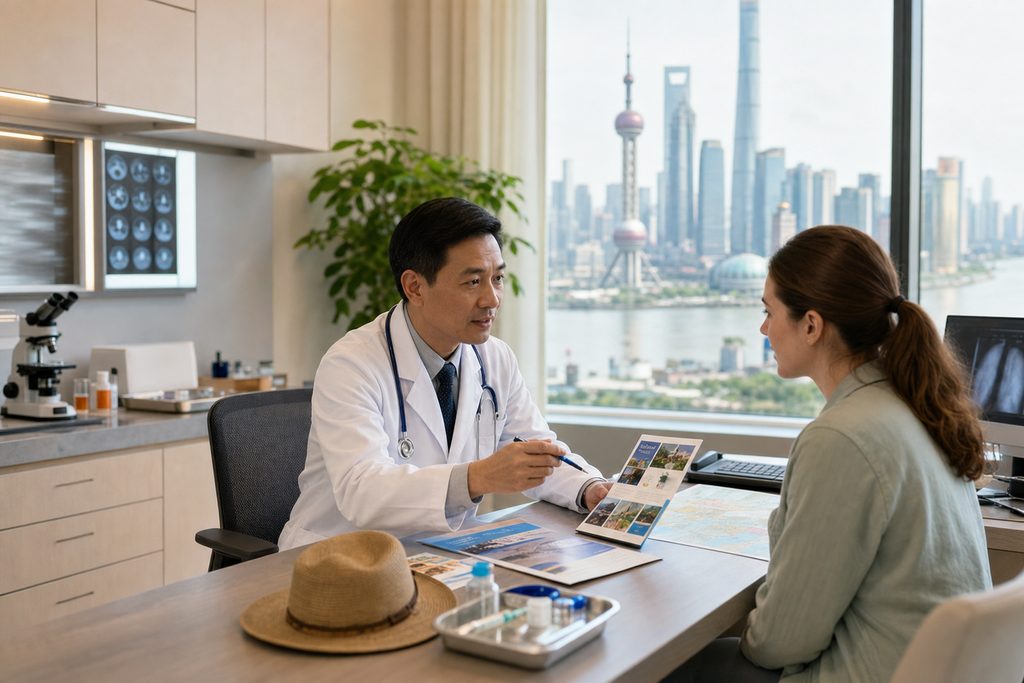
When 34-year-old David, an exploration geologist based in Ghana, tested positive for a persistent febrile illness that local antibiotics could not touch, his company’s medical advisor suggested evacuation. The differential was messy. Malaria. Maybe typhoid. Possibly a rickettsial infection picked up at a mining site. David needed a center that saw complicated tropical cases daily — not once a year. His insurer pointed him toward Shanghai. The question that followed was blunt: is Huashan Hospital good for tropical infections, and what would it actually cost?
The short answer is that Huashan Hospital, affiliated with Fudan University, runs one of China’s most respected infectious disease departments. Its physicians manage a caseload that includes cerebral malaria, dengue hemorrhagic fever, schistosomiasis, melioidosis, and a range of imported parasitic infections rarely encountered in Western clinics. For an international patient, the challenge is not clinical quality — it is navigating a system built for domestic throughput. Our team handles that part.
Key Takeaways
- Huashan Hospital’s Department of Infectious Diseases is ranked among China’s top-tier programs and manages over 200,000 outpatient infectious disease visits annually — volume that directly shapes diagnostic speed for rare tropical presentations.
- The Huashan Hospital tropical medicine cost for a full inpatient workup and treatment typically ranges from $3,000 to $12,000 USD, roughly one-fifth to one-eighth of comparable care at a major US academic medical center.
- International patients cannot simply walk into the public outpatient clinic and expect English-language coordination. The hospital’s International Medical Center (IMC) is the designated entry point, and appointments require advance scheduling through official channels.
- Visa logistics, payment deposits, and post-discharge follow-up planning all require preparation before travel. Understanding these structural realities before booking a flight prevents costly delays.
The Problem: Tropical Infections Demand Experience That Most Hospitals Lack
Febrile illness in a returning traveler or expatriate worker is a diagnostic puzzle that general infectious disease departments frequently fail to solve on the first attempt. A 2023 GeoSentinel surveillance report analyzing over 80,000 ill travelers found that 35% of patients with systemic febrile illness received an incorrect initial diagnosis when evaluated at centers without dedicated tropical medicine units. The consequence is not abstract: delayed treatment for falciparum malaria, for instance, carries a case fatality rate approaching 15-20% once cerebral involvement develops.
This is not a critique of individual physicians. It is a structural reality. A hospital in Frankfurt or Vancouver might see two cases of leptospirosis in a year. Huashan’s infectious disease wards see that volume in a week. When a patient presents with fever, thrombocytopenia, and transaminitis after a stint in rural Cambodia, the differential that leaps to mind for a Shanghai specialist — scrub typhus, murine typhus, leptospirosis, dengue, and hantavirus all at once — is simply broader. That breadth is not theoretical. It comes from repetition.
But accessing that expertise from outside China raises a different set of questions. What does it cost? How does an English-speaking patient actually book an appointment? And is the process survivable without Mandarin? Those are the questions this article answers.
Who We Are
Huashan’s microbiology and parasitology laboratories maintain in-house capacity for thick and thin blood film microscopy, rapid diagnostic tests for malaria and dengue NS1 antigen, Weil-Felix serology, leptospiral MAT (microscopic agglutination testing), and PCR panels covering a wide range of tropical pathogens. Many of these tests are send-outs at Western hospitals, adding 48-72 hours to the diagnostic timeline. At Huashan, results often return same-day or within 24 hours — a meaningful difference when managing a febrile patient with dropping platelets.
The hospital also serves as a national reference center for antimicrobial resistance surveillance, which carries a practical benefit: when a patient arrives with a multidrug-resistant enteric infection acquired in South or Southeast Asia, the infectious disease team is not guessing at empiric antibiotic selection. They are working from local resistance data that is updated continuously.
Cost Structure That Reflects Systemic Economics, Not Inferior Care
The Huashan Hospital tropical medicine cost question deserves a direct answer. Based on our coordination experience with international patients treated through the IMC channel, here is what patients can expect:
| Service Component | Estimated Cost (USD) | Comparable US Cost (USD) |
|---|---|---|
| Initial specialist consultation (IMC) | $150 – $300 | $400 – $800 |
| Comprehensive tropical disease lab panel (malaria smear, dengue serology, blood culture, leptospira serology, rickettsial panel) | $200 – $500 | $1,500 – $3,000 |
| Inpatient stay per day (private IMC ward) | $400 – $800 | $3,000 – $5,000 |
| 7-day inpatient workup and treatment for complicated tropical infection (typical total) | $3,000 – $12,000 | $25,000 – $60,000 |
| Outpatient follow-up consultation post-discharge | $100 – $200 | $300 – $500 |
These figures vary by case complexity, length of stay, and specific medications required. The structural reason for the cost differential is straightforward: Chinese hospital labor costs, pharmaceutical pricing, and operational overhead are all substantially lower than in the US or Western Europe, while clinical outcomes for infectious disease management are comparable. This is not discount care. It is care delivered in a different economic system.
For patients seeking the best tropical disease treatment China can offer, Huashan consistently appears alongside Peking Union Medical College Hospital and the First Affiliated Hospital of Zhejiang University in specialist rankings. The Fudan Hospital Ranking — China’s most authoritative hospital evaluation system — places Huashan’s infectious disease program in the top tier nationally, a designation earned through peer recognition and clinical output metrics rather than marketing.
How to Get Treatment for Malaria in Shanghai: The Practical Pathway
The phrase how to get treatment for malaria in Shanghai implies a simple answer. The reality involves several steps that international patients consistently underestimate. Here is the actual pathway:
The public outpatient clinic at Huashan operates on a same-day registration system. Patients arrive early, queue for a registration number, and wait to see the available specialist. For a non-Mandarin speaker with a complicated febrile illness, this approach is not viable. The public queue system does not accommodate advance booking from overseas, provides no interpreter support, and assumes the patient can navigate a hospital campus that serves over 10,000 outpatient visits daily.
The correct entry point for international patients is Huashan’s International Medical Center. The IMC operates on an appointment basis, provides English-speaking coordination staff, and offers private consultation rooms and inpatient wards. Appointments are scheduled in advance — often with a lead time of 3-7 business days for non-emergency consultations. The IMC also coordinates directly with the infectious disease department to ensure the consulting physician has the relevant subspecialty expertise for the patient’s presentation.
This is where the Shanghai infectious disease hospital international patient price question becomes nuanced. The IMC charges a premium over public clinic rates — typically 50-100% higher for consultations and inpatient stays. That premium buys English-language coordination, private rooms, expedited scheduling, and a liaison who handles registration, payment, and inter-departmental navigation. For a patient managing a serious tropical infection, that premium is not a luxury. It is the difference between a coherent care experience and a bewildering one.
What You Need to Know Before Going Alone
We have coordinated care for enough international patients at Huashan to know where the process breaks down. These are the barriers that catch people off guard:
- Visa Requirements: Medical treatment in China requires an S2 visa with the specific purpose of medical treatment noted. This is not a tourist visa (L) and not a business visa (M). The application requires an invitation letter from the treating hospital — which Huashan’s IMC can provide once an appointment is confirmed. Processing time varies by consulate but typically takes 5-10 business days. Showing up on a tourist visa and attempting to convert status after arrival creates complications that are avoidable with planning.
- Payment Deposits: Chinese public hospitals, including Huashan’s IMC, require upfront deposits before inpatient admission. The deposit amount is estimated based on the anticipated length of stay and treatment plan — typically $5,000-$15,000 for a tropical disease workup and treatment. International insurance is rarely accepted for direct billing at public hospital IMCs; patients pay upfront and seek reimbursement from their insurer afterward. Private international hospitals in Shanghai like Jiahui or United Family accept direct insurance billing, but they lack Huashan’s depth of tropical medicine expertise.
- Medical Records and Translation: The consulting physician needs prior medical records in English or Chinese. If records are in French, German, or Arabic, professional medical translation is necessary before the consultation. Our team handles this as part of case preparation, but patients attempting the process independently often arrive with untranslated records that delay the initial assessment.
Is Huashan Hospital Good for Tropical Infections: What the Data Shows
The question is Huashan Hospital good for tropical infections is best answered by looking at what the institution actually does, rather than marketing claims. Huashan’s Department of Infectious Diseases operates a dedicated Tropical Disease Research Unit that collaborates with the Chinese Center for Disease Control and Prevention on imported parasitic disease surveillance. The department contributed to national treatment guidelines for malaria, schistosomiasis, and echinococcosis. Its physicians publish regularly in journals like the International Journal of Infectious Diseases and PLOS Neglected Tropical Diseases — not as reviewers or commentators, but as primary investigators reporting case series and treatment outcomes.
For a patient, the practical implication is this: if you arrive with a febrile illness acquired in sub-Saharan Africa, Southeast Asia, or the Amazon basin, the consulting physician at Huashan is not starting from a textbook chapter. They are drawing on direct clinical experience with that presentation, supported by in-house lab capability that returns actionable results quickly. That combination — experience plus infrastructure — is what makes the department worth traveling for.
Patients considering this path often also explore options through our broader network of top-ranked hospitals across China. While Huashan is the strongest choice for infectious disease in Shanghai, certain co-morbidities or concurrent conditions might make another center more appropriate — a determination we help make during the initial case review.
How We Help You Navigate This
These barriers exist for structural reasons, not because anyone designed the system to exclude international patients. Chinese public hospitals evolved to serve a massive domestic population efficiently. The International Medical Center layer was added later — it works, but it assumes the patient has someone who speaks the language and understands the workflow.
Our involvement begins before travel. We collect the patient’s medical history, arrange professional translation where needed, and submit the case summary to Huashan’s IMC for physician review. This step confirms that the case falls within the department’s scope and that the appropriate specialist will be available. We then coordinate the appointment date, request the hospital invitation letter for visa purposes, and provide a detailed estimate of expected costs based on the preliminary case assessment.
On the ground in Shanghai, a bilingual medical companion meets the patient at the hospital, handles registration and payment procedures, accompanies them into consultations to ensure accurate communication, and manages the logistics of lab tests, imaging, and pharmacy visits. The companion does not make clinical decisions — that is the physician’s role — but ensures that nothing is lost in translation and that the patient understands each step. For inpatient stays, the companion provides daily check-ins and acts as the liaison between the patient, the nursing staff, and the attending physician.
After discharge, we coordinate follow-up consultations, assist with obtaining medical records and billing documentation for insurance reimbursement, and can arrange ongoing care coordination if the patient requires continued treatment after returning home. The goal is continuity — a patient who arrives with a complicated tropical infection should leave with a clear diagnosis, a treatment plan, and complete documentation, not a stack of Chinese-language forms they cannot read.
For those who want to book an appointment at Huashan Hospital infectious disease international center, the first step is a free consultation with our coordination team. We assess the case, confirm suitability, and provide a transparent cost breakdown before any commitment is made.
Frequently Asked Questions
What is the typical Huashan Hospital tropical medicine cost for an uninsured international patient?
For a complete episode — outpatient specialist consultation, comprehensive lab workup, and 5-7 days of inpatient treatment — the range is $3,000 to $12,000 USD. Outpatient-only evaluation with lab testing typically runs $400 to $1,000. These figures assume care through the International Medical Center channel and include the IMC coordination premium. Public clinic rates are lower but come without English-language support or advance booking capability.
How quickly can I book an appointment at Huashan Hospital for an infectious disease consultation?
Through the IMC channel, non-emergency appointments are typically available within 3-7 business days of case submission. Urgent cases — documented falciparum malaria, suspected meningococcemia, or febrile patients with hemodynamic instability — can be escalated for next-day or same-day consultation. This is not the emergency department pathway; patients in acute distress should go directly to the hospital. But for subacute presentations requiring specialist evaluation, the timeline is measured in days, not weeks.
What if my diagnosis is unclear and I need multiple specialists?
Huashan’s IMC can coordinate multi-department consultations. A patient with fever of unknown origin might need infectious disease, hematology, and rheumatology input. The IMC liaison arranges these consultations sequentially — often within the same day or over two days — and ensures the specialists have access to the same lab and imaging results. This is not a formal multi-disciplinary team conference (MDT) in the Western sense, but it achieves a similar result through rapid sequential consultation. If a formal MDT is required, we can coordinate that separately, with costs typically in the $1,500-$2,000 range.
Can I use my international health insurance at Huashan Hospital?
Most international insurers do not have direct billing agreements with Huashan’s IMC. Patients pay upfront — by cash, UnionPay, or international credit card — and submit claims for reimbursement. The IMC provides detailed English-language invoices and medical reports formatted for insurance submission. We assist patients in obtaining complete documentation before discharge. If direct insurance billing is non-negotiable, Shanghai’s private international hospitals offer that option, but their tropical medicine depth is not comparable to Huashan’s. This is a trade-off worth discussing during case review.
Is Huashan Hospital good for tropical infections compared to going to Bangkok or Singapore?
This is a fair question. Bangkok’s Hospital for Tropical Diseases and Singapore’s National Centre for Infectious Diseases are both excellent. Huashan’s advantage is volume and lab integration — the department’s caseload and in-house diagnostic capability are hard to match. The cost is also lower than private hospital care in Singapore. The trade-off is language and process complexity: Bangkok and Singapore private hospitals are built around international patient flow in a way Chinese public hospital IMCs are not. That gap is what our coordination service exists to
For more medical information and treatment options in China, visit chinamedservices.com (China Medical Services).
