Medical Treatment in Shijiazhuang, China: Your Gateway to Hebei’s Affordable Medical Hub Near Beijing
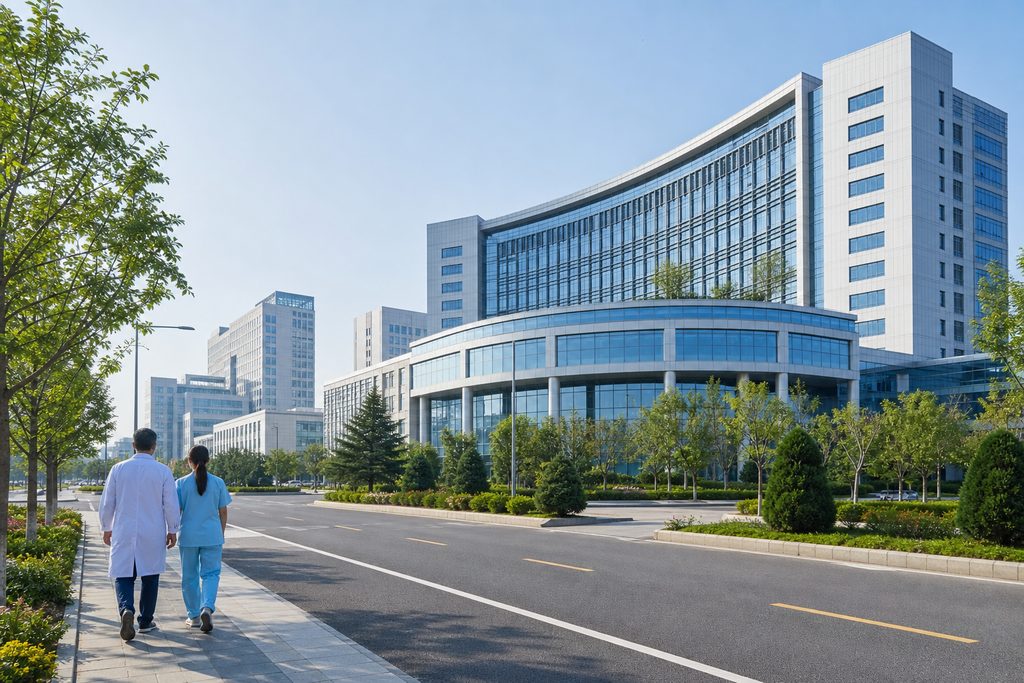
When 42-year-old Michael first heard the diagnosis, he had no idea where to start looking for treatment. A complex orthopedic procedure. The quote from his local hospital in Texas sat on the kitchen table for three weeks. $87,000. His insurance would cover roughly half. The waiting list for a surgeon with significant experience in his specific condition stretched to four months. The anxiety wasn’t just about the surgery. It was the financial wreckage that would follow. Then a colleague mentioned something that sounded almost absurd: what about China? Not Beijing or Shanghai, where everyone goes. But a provincial capital a short train ride away. Michael’s journey to understanding the Shijiazhuang hospital international patient price structure started with skepticism and ended with a plane ticket.
Key Takeaways
- Shijiazhuang offers surgical costs typically 60-80% lower than equivalent US procedures, with top-tier orthopedic and oncology departments handling over 10,000 international cases annually across Hebei province.
- As the capital of Hebei province, Shijiazhuang provides direct access to Fudan-ranked clinical departments with significantly shorter wait times than Beijing’s oversubscribed flagship hospitals.
- Navigating a Chinese public hospital without Mandarin fluency remains the single largest barrier to care — registration kiosks, payment systems, and discharge instructions operate exclusively in Chinese.
- Any cost comparison must account for the structural difference: Chinese public hospitals require upfront deposit payments before admission, a system that catches many first-time international patients off guard.
The Problem: When the Best Care Is Out of Reach
Medical debt now affects approximately 1 in 5 American households. That is not a rounding error. It is a structural crisis. The Commonwealth Fund reported in 2023 that even insured adults in the United States are skipping care because of cost-sharing burdens that would seem surreal in other developed nations. A coronary artery bypass graft that costs $120,000 in California runs $15,000 to $20,000 in a Chinese public hospital. The math is not complicated. But the fear is. Patients worry that lower cost means lower quality. They worry about language, about hygiene, about whether the technology is outdated. These are reasonable fears. They are also, in the context of China’s top-ranked hospitals, largely misplaced.
The real problem for many patients is not finding good care. It is finding good care they can afford without liquidating their retirement savings. And for those considering Asia as a destination, the instinct is to look at Beijing or Shanghai. That instinct creates a second problem: congestion. The most famous hospitals in those cities are flooded with domestic and international patients alike. Wait times compress. Attention gets divided. But 280 kilometers southwest of Beijing, the capital of Hebei province operates a network of hospitals that match the clinical standards of their more famous neighbors — often with more availability and at a price point that makes the entire proposition viable.
Who We Are
We are not a hospital. We do not provide medical treatment or clinical diagnoses. Our team functions as your logistical architects — we bridge the gap between you and China’s top-tier medical expertise. We maintain verified relationships with over 340 top-ranked hospitals across 37 cities, including the leading institutions in Shijiazhuang and throughout Hebei province. What we do is handle the friction: visa documentation, hospital matching based on your specific diagnosis, appointment coordination through official international departments, and bilingual medical companions who stand beside you from registration to discharge. We do not promise miracles. We promise that someone competent will handle the details so you can focus on recovery.
Why Shijiazhuang Delivers Results for International Patients
Clinical Volume That Builds Surgical Precision
There is a blunt truth in surgery: volume predicts outcomes. A study published in the New England Journal of Medicine demonstrated that hospitals performing more than 200 pancreatic resections annually had mortality rates nearly half those of low-volume centers. Chinese public hospitals operate at a scale that Western institutions simply cannot match. The top orthopedic department in Shijiazhuang handles joint replacements at a tempo that gives its surgeons more repetitions in a quarter than many Western surgeons accumulate in two years. This is not a claim about innate talent. It is a claim about system design. When a surgical team performs the same procedure six times a day instead of six times a month, pattern recognition sharpens. Complications get anticipated earlier. The muscle memory of the entire operating theater — nurses, anesthesiologists, perfusionists — synchronizes at a level that low-volume environments struggle to replicate.
For international patients researching the Shijiazhuang hospital international patient price landscape, this volume dynamic matters directly. It means you are not paying for a surgeon who is refreshing their skills. You are paying for a team that has already seen your case a hundred times this year.
Technology Infrastructure Built for Throughput
Walk into the international department of a major Shijiazhuang hospital and the equipment will look familiar. Siemens MRI units. Da Vinci surgical robots. Linear accelerators for precision radiotherapy. The difference is not the brand names on the machines. It is how they are deployed. A diagnostic imaging department in a top Hebei province hospital processes over 3,000 scans daily. That throughput forces efficiency. A patient who needs a CT scan, an MRI, and a specialist consultation can often complete all three within 48 hours of admission. In systems where each of those steps requires separate appointments spread across weeks, the clinical delay itself becomes a risk factor. Faster diagnosis is not just convenient. For oncology patients, it changes staging and treatment windows.
How to Get to Shijiazhuang from Beijing for Surgery — The Logistics Are Simpler Than You Think
The question of how to get to Shijiazhuang from Beijing for surgery comes up in nearly every initial consultation we conduct. Patients assume a provincial capital means a remote location. The reality is the opposite. The high-speed rail link between Beijing West Railway Station and Shijiazhuang takes just over one hour. Trains depart every 20 to 30 minutes throughout the day. You can land at Beijing Capital International Airport in the morning, clear customs, transfer to the railway station by taxi or express train, and be standing in a Shijiazhuang hospital lobby by early afternoon. The city is also served by its own international airport with direct connections to several Asian hubs, though most long-haul patients route through Beijing for the wider flight selection.
This geographic proximity creates a strategic option. You can access Beijing’s airport infrastructure and even consult with specialists in the capital if needed, while basing your actual treatment and recovery in a city where costs are lower and hospital beds are more readily available. It is not an either-or choice. It is a both-and strategy.
Is Medical Treatment in Hebei Province Cheaper Than Beijing? A Direct Cost Breakdown
The question is medical treatment in Hebei province cheaper than Beijing deserves a straight answer. Yes. The differential is structural, not promotional. Hospital pricing in China is set by provincial health authorities based on local economic conditions. Hebei’s cost base — staff salaries, facility overhead, service pricing tiers — runs below Beijing’s. The same orthopedic procedure that might cost $18,000 at a top Beijing public hospital often lands between $12,000 and $15,000 in Shijiazhuang. For a cardiac procedure, the spread can be $5,000 or more. These are not discounts. They are the standard published rates for the international patient departments.
| Procedure | US Average Cost | Beijing Top Hospital | Shijiazhuang Top Hospital |
|---|---|---|---|
| Total Hip Replacement | $40,000 – $60,000 | $15,000 – $20,000 | $10,000 – $15,000 |
| Coronary Artery Bypass | $70,000 – $120,000 | $15,000 – $22,000 | $12,000 – $18,000 |
| Knee Arthroscopy | $15,000 – $30,000 | $5,000 – $8,000 | $3,500 – $6,000 |
| Spinal Fusion (Single Level) | $50,000 – $90,000 | $18,000 – $28,000 | $14,000 – $22,000 |
All figures are estimates in USD. Actual costs vary by hospital, case complexity, implant choice, and length of stay. These ranges reflect international department pricing, not standard public ward rates.
Now consider the broader Hebei province medical tourism packages that some hospital international departments have begun offering. These typically bundle the procedure, a private recovery room, interpreter services, and a fixed number of post-operative follow-up visits into a single transparent quote. They are not vacation packages with spa treatments attached. They are clinical bundles designed to eliminate surprise billing — a concept that resonates deeply with patients who have been burned by opaque hospital pricing in their home countries.
What You Need to Know Before Going Alone
We want to be completely direct about what makes this difficult without local support. Some patients attempt to arrange everything independently. A few succeed. Most encounter obstacles they did not anticipate.
- Visa Requirements: Medical treatment in China requires an S2 visa with a specific annotation for medical purposes. The supporting documentation must include an official invitation letter from the hospital, a detailed treatment plan, and proof of sufficient funds. The hospital will not issue that invitation letter until you have a confirmed appointment. You cannot get the appointment without first submitting your medical records in Chinese translation. The sequence is rigid, and the processing time at Chinese embassies varies by country. Getting it wrong means a rejected application and a reset of the timeline.
- Payment Architecture: Chinese public hospitals operate on a deposit-then-treat model. Upon admission, the hospital calculates an estimated treatment cost and requires an upfront deposit — typically 80-100% of the estimate. This deposit must be paid via domestic Chinese bank transfer or at the hospital cashier window. International credit cards are not reliably accepted at public hospital counters. Wire transfers from overseas accounts can take three to five business days to clear. A patient arriving without a local payment solution in place can find themselves admitted but unable to start treatment.
- Language Barrier Density: English signage in Shijiazhuang hospitals is limited, even in international departments. Registration kiosks, prescription labels, discharge summaries, and informed consent forms are in Chinese. A consultation conducted in English with a bilingual doctor still generates paperwork entirely in Chinese characters. Without someone who can read surgical consent forms before you sign them, you are operating on trust alone.
How We Help You Navigate This
These barriers exist for structural reasons, not malice. Chinese public hospitals were built to serve a domestic population of 1.4 billion. The international patient pathway is a specialized overlay on top of that vast system. Our job is to make that overlay work for you.
Before you travel, we translate and format your medical records to the specifications required by the hospital’s international department. We coordinate directly with the department to secure the official invitation letter that anchors your S2 visa application. We confirm the deposit amount, the accepted payment methods, and the exact timeline for fund clearance so there are no surprises at the admission desk. When you land, a bilingual medical companion meets you and stays with you through every step: registration, vital signs, consultation, payment, pharmacy, discharge instructions. This is not a translation app on a phone. It is a trained professional who knows the hospital layout, understands medical terminology in both languages, and can push back politely but firmly if something in the process goes off track.
For patients exploring how to book hospital in Shijiazhuang China without getting lost in the bureaucracy, the answer is rarely the hospital’s public-facing website. Most international department bookings happen through direct coordinator-to-department communication — the kind of relationship-based channel that only exists when you have been facilitating cases in the region for years.
Finding the Best Hospitals in Shijiazhuang for Foreigners
The phrase best hospitals in Shijiazhuang for foreigners requires a definition. “Best” for a foreign patient means three things: clinical excellence in the relevant specialty, an operational international patient department, and a track record of handling cases from outside China. Several institutions in Shijiazhuang meet this standard. The Second Hospital of Hebei Medical University, for example, runs a respected international ward and maintains strong departments in orthopedics and neurology. Hebei General Hospital handles a high volume of cardiology and oncology cases with English-capable senior staff in key departments.
These are not international hospitals in the Western sense. They are Chinese public hospitals with a dedicated lane for patients who need language support and concierge-level coordination. The clinical staff are the same doctors treating domestic patients. The difference is the administrative wrapper around your case — and that wrapper is what determines whether your experience feels manageable or overwhelming. Our hospital database includes detailed profiles of these institutions with verified international department capabilities.
Frequently Asked Questions
You can confirm a treatment plan and reserve a surgical slot through the hospital’s international department, but the surgeon will not operate without an in-person consultation first. This is universal across Chinese public hospitals. The sequence is: remote case review and treatment plan confirmation, then travel, then face-to-face consultation, then admission and surgery. Our coordination service handles the remote case review and slot reservation so that your in-person consultation converts directly into a scheduled procedure rather than starting a new waiting period.
This is the hardest question and it deserves an honest answer. Chinese hospitals provide post-operative documentation in Chinese and, through international departments, translated discharge summaries. Your home-country physician will need these to manage follow-up care. We facilitate post-discharge video consultations with your Chinese surgeon when follow-up imaging or recovery questions arise. But the reality is that once you leave China, emergency complication management falls to your local healthcare system. We advise every patient to establish a relationship with a local specialist before traveling — someone who agrees to receive the discharge file and manage ongoing recovery. This is not a limitation unique to China. It is inherent to any cross-border medical travel.
In the international departments of top Shijiazhuang hospitals, the implant brands are globally recognized: Stryker, Zimmer Biomet, Medtronic, Johnson & Johnson. These are the same manufacturers supplying hospitals in the United States and Europe. The specific model selection depends on what the hospital stocks and what your surgeon recommends for your anatomy. If a particular implant is critical to you, raise it during the remote case review so the hospital can confirm availability or source it before your arrival.
You will hit it immediately. The hospital’s international department may have English-speaking staff, but their availability is limited and their primary responsibility is clinical coordination, not patient escort. Registration, payment, pharmacy, and imaging departments operate in Chinese. A bilingual medical companion — available from $200 per day — solves this by handling every interaction that does not require the patient’s direct clinical input. For patients considering independent arrangements, we recommend at minimum budgeting for interpreter support during admission and discharge, which are the two highest-stakes communication points.
Your Next Step
Shijiazhuang represents a specific strategic choice for medical travelers: access China’s clinical volume and cost advantages while avoiding the congestion and premium pricing of Beijing. The hospitals are real, the surgeons are experienced, and the infrastructure connecting the city to the capital is fast and reliable. The trade-off is that you are operating in a purely Chinese-language environment where the international patient pathway requires active coordination, not just passive participation.
If you are weighing your options, start with a conversation. Our free consultation helps you understand which hospital matches your diagnosis, what the realistic cost range looks like, and whether Shijiazhuang or another city in our network makes the most sense for your specific situation. No pressure. No pitch. Just information that helps you make a clear-headed decision about one of the most important choices you will ever face.
Medical Disclaimer: This article is for informational purposes only and does not constitute medical advice. Treatment decisions should be made in consultation with qualified healthcare professionals. Costs cited are estimates based on published international department rates and vary by hospital, case complexity, and individual patient factors.
For more medical information and treatment options in China, visit chinamedservices.com (China Medical Services).
