DBS Surgery: Healing and Adjusting Afterward in China
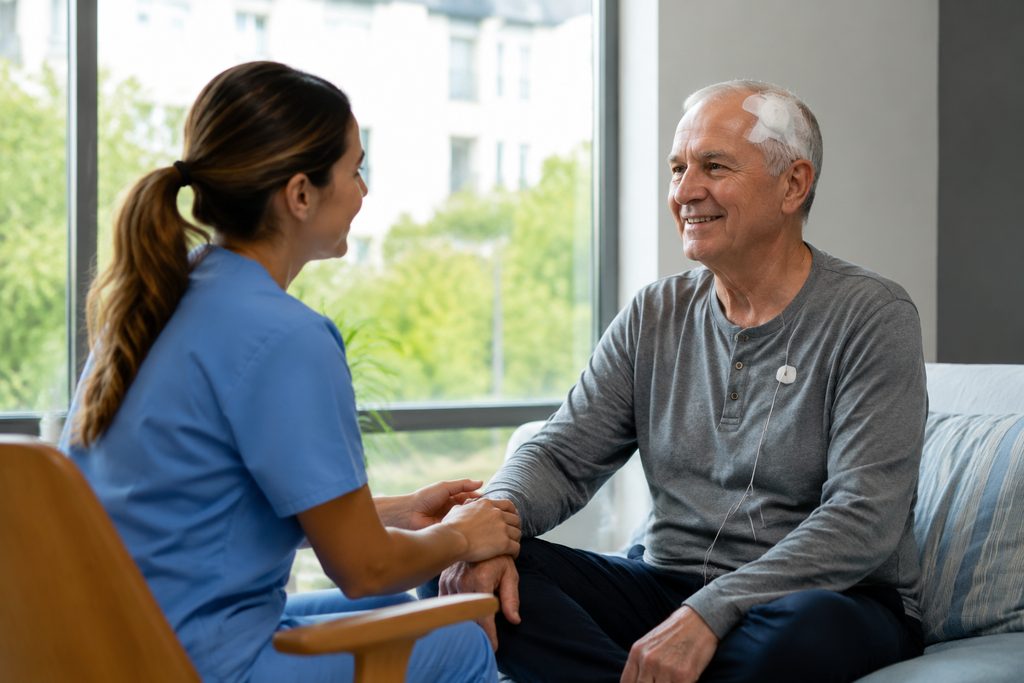
Have you just had deep brain stimulation surgery, or are you planning it and wondering what the weeks after actually feel like? The hardware is in. The real work is only starting. You are now managing a new relationship with your own nervous system—one that requires patience, precise programming adjustments, and a recovery timeline that surprises many patients.
For international patients, the healing phase raises a different set of questions. How do you handle follow-up programming if you flew home? What if the settings feel wrong at week three? And what did the DBS surgery cost China actually include—does it cover the months of tuning afterward? These are the practical concerns that determine whether the procedure delivers the quality of life you came for.
Our team at China Medical Services has walked through this phase with patients from Europe, the Middle East, and Southeast Asia. Here is what the healing and adjusting period really looks like—week by week, risk by risk, and decision by decision.
How This Actually Works, Step by Step
Deep brain stimulation does not end in the operating room. It ends—or rather, it begins—in a small programming room where a neurologist adjusts voltage, pulse width, and frequency through a remote controller held against your chest. Here is the sequence for an international patient.
Step one: you send your existing records—brain MRI, neurological assessment, medication history, and any prior surgical notes. A movement disorder specialist reviews them. If you are a candidate, you get a written second opinion with a proposed electrode target (usually the subthalamic nucleus or globus pallidus interna for Parkinson’s, or the ventral intermediate nucleus for essential tremor).
Step two: you travel. The hospital’s international department coordinates your admission. Surgery itself typically takes three to six hours, with part of it performed awake so the team can test stimulation effects in real time. You stay in the hospital for five to ten days.
Step three: the pulse generator is switched on—usually one to four weeks after electrode placement, once brain swelling has subsided. This is when the real adjustment begins. A neurologist maps the optimal contact points on the electrode and starts conservative settings.
Step four: you go home. But the programming does not stop. Most patients need four to six programming sessions in the first six months. Some do these remotely via video consultation with the Chinese team. Others return once at the three-month mark. The coordination is part of what separates a smooth recovery from a frustrating one.
The First Six Weeks: What Healing After DBS Actually Feels Like
The most common question we hear is how long does it take to heal after DBS. The honest answer: surgical healing takes two to four weeks. Therapeutic benefit takes three to six months. Those are very different timelines, and confusing them leads to unnecessary panic.
Days one through seven are about the incision and the hardware. You will have two surgical sites—one on the skull (or two, one per hemisphere) and one near the collarbone where the pulse generator sits. Pain is usually moderate and well-controlled with standard medication. Swelling around the eyes is common if the electrode passes near the frontal sinus. It resolves within a week.
Weeks two through four bring a strange phase. The “micro-lesion effect” from electrode insertion can temporarily improve symptoms even before stimulation is turned on. Some patients feel dramatically better and think they are cured. Then the effect fades. This emotional rollercoaster is normal but rarely explained well. You should expect it.
Weeks four through six is when stimulation programming begins in earnest. This is also when patients notice cognitive and mood shifts. Verbal fluency can dip slightly. Some report feeling “flat” or unusually impulsive. These are stimulation-related, not brain damage. They are adjusted through programming, not medication. But they require honest reporting to your neurologist.
A Realistic Timeline
Here is what the full arc looks like for an international patient coming to China—including the waiting steps that catch people off guard.
| Stage | Typical Duration | What Actually Happens |
|---|---|---|
| Record review and remote consultation | 1–2 weeks | You send imaging and reports. A specialist reviews and confirms candidacy. Document translation takes 2–3 days if needed. |
| Visa processing (S2) | 2–4 weeks | With the hospital invitation letter and medical records, most patients get an S2 visa within this window. Timing varies by consulate. |
| Travel and hospital admission | 2–3 days | Arrival, pre-operative workup (blood tests, repeat MRI if needed), anesthesia clearance. |
| Surgery | 3–6 hours | Electrode implantation, often with awake testing. Pulse generator may be placed same day or days later. |
| Hospital stay | 5–10 days | Observation, initial device check, wound care, first programming session if swelling allows. |
| Initial stimulation “on” | Week 2–4 post-op | First real settings applied. Symptom response assessed. Medication may be reduced. |
| Programming optimization | Month 1–6 | Four to six adjustment sessions. Some remote, some in person. Medication titration alongside. |
| Stable settings | Month 6–12 | Most patients reach a plateau. Battery life is 3–5 years for non-rechargeable, 15+ for rechargeable models. |
The part people forget is the gap between surgery and optimal programming. You do not fly home two weeks after surgery with everything dialed in. You fly home with a working device that still needs tuning. Plan for that.
What Can Go Wrong — and What Happens Then
Deep brain stimulation has a strong safety record, but pretending complications never happen helps no one. The published serious adverse event rate across major centers is roughly 1–3% for infection, 1–2% for hemorrhage, and under 1% for hardware malfunction. Those are the numbers you should carry in your head.
Infection is the most common serious issue. It usually appears within the first three months—redness, swelling, or drainage at the chest or scalp incision. Superficial infections are treated with antibiotics. Deep infections involving the hardware sometimes require removing the pulse generator, treating with IV antibiotics, and re-implanting months later. This is rare but real. Ask any center about their infection protocol before you commit.
Hemorrhage during electrode placement can cause neurological deficits. The risk is higher in older patients, those with vascular disease, and certain target regions. Pre-operative imaging and intraoperative microelectrode recording reduce but do not eliminate this risk. If it happens, the response is immediate CT, possible electrode repositioning, and intensive monitoring.
Stimulation side effects are more common but less dangerous. Speech changes, balance issues, mood shifts, and eyelid opening difficulty can all emerge during programming. The fix is usually adjusting contact selection or voltage—not another surgery. But it requires access to a skilled programmer. This is exactly why we tell international patients to confirm follow-up programming arrangements before booking surgery, not after.
And hardware can fail. Leads can fracture. Batteries deplete faster than expected in some patients. The manufacturer warranty typically covers device replacement, but surgical revision costs are separate. In China, revision surgery at a top center costs a fraction of Western prices, but you should still know the number before you need it.
Is DBS Surgery Safe in China? Evaluating Quality Honestly
Safety depends less on the country and more on the specific center’s volume and protocol. China has both world-class movement disorder programs and facilities you should avoid. The difference is knowable.
The strongest signal is annual DBS case volume. Centers performing 100+ DBS implantations per year have demonstrably lower complication rates than low-volume centers. Several Beijing and Shanghai hospitals fall into this high-volume category, with dedicated movement disorder teams, intraoperative MRI or CT verification, and standardized programming follow-up. The Beijing programs in particular have published outcomes comparable to major Western centers.
A second signal is the awake testing protocol. High-quality centers perform intraoperative microelectrode recording and test stimulation while you are awake to confirm symptom improvement and avoid side effects. If a center offers only asleep surgery without explaining why, ask harder questions. Asleep DBS is legitimate for some patients, but the center should have a clear rationale.
The third signal is follow-up infrastructure. The surgery is only half the value. A center that implants and then hands you a booklet is not the same as one with a structured programming schedule, remote adjustment capability, and a named neurologist responsible for your case. When international patients ask us is DBS surgery safe in China, our answer is: at the right center, yes—and the right center is identifiable by these markers, not by marketing.
What DBS Surgery Cost China Actually Includes
Several Beijing centers perform high-volume DBS with dedicated movement disorder teams. The key is annual case volume above 100, intraoperative testing capability, and structured follow-up programming. We can match you to a specific center based on your diagnosis, age, and device preference. The top-ranked hospitals list is a starting point, not a final answer.
Yes, in most cases. The pulse generator can be adjusted remotely through a patient programmer device and video consultation with your Chinese neurologist. Some adjustments require in-person visits, particularly early in the process. Confirm the remote programming policy before you book surgery.
Plan for $35,000–$55,000 for the surgical episode at a top public hospital. Add $1,000–$3,000 for the first year of programming sessions, depending on whether they are remote or in-person. Device choice and package inclusions shift these numbers meaningfully. Always request an itemized quote.
At high-volume, protocol-driven centers, the safety profile matches international benchmarks. Infection risk is 1–3%, hemorrhage risk 1–2%, and hardware complications under 1%. The safety question is really about center selection—verify case volume, awake testing protocol, and follow-up structure before committing.
Your Next Step
Healing after DBS is not a passive wait. It is an active process of tuning, reporting, and adjusting—one that continues for months after the surgical wounds have closed. The patients who do best are the ones who understand this from the start.
Our team at China Medical Services does not perform surgery and does not make medical decisions. We handle the logistics that make treatment feasible: record translation, hospital matching, appointment coordination, bilingual accompaniment, and follow-up programming arrangements. If you are considering DBS in China or have already had surgery and need help with the adjustment phase, request a free consultation. We will help you understand your options clearly—no pressure, just information.
Frequently Asked Questions
Yes. The hospitals used for international patients are JCI-accredited and follow the same international safety standards as top hospitals in the US and Europe. Surgical teams perform high volumes of procedures — often more than their Western counterparts — which studies show leads to better outcomes.
Costs vary by procedure and hospital, but international patients typically save 40-80% compared to US prices — even when factoring in travel and accommodation. A consultation with our team will give you an exact, all-inclusive quote with no hidden fees.
Send us your existing medical reports to get started. We handle everything from hospital selection and appointment scheduling to visa assistance and post-operative recovery planning. Your medical records are reviewed by the specialist before you even book a flight.
For more medical information and treatment options in China, visit chinamedservices.com (China Medical Services).
