Lebanese Patients Choosing China for Cosmetic Surgery: The Full-Service Reality
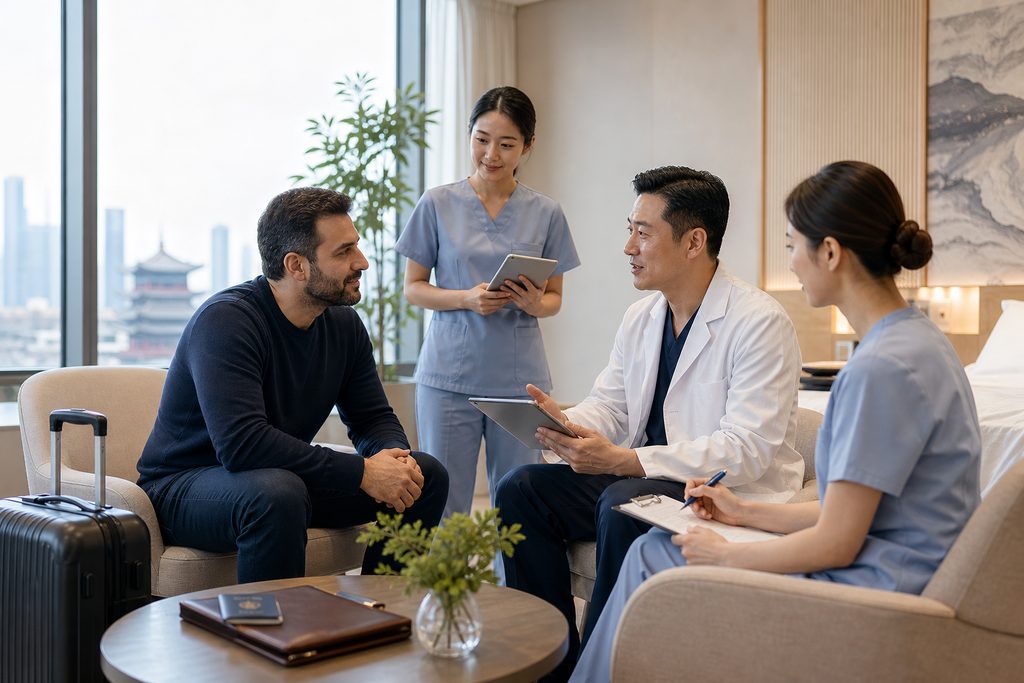
When 34-year-old Nour from Beirut started researching rhinoplasty options, she hit a wall. The quotes from local surgeons she trusted were high. The prices in Dubai and Europe were even higher. A friend mentioned she’d had a complex procedure done in Shanghai and came back looking natural, not “done.” Nour was intrigued but immediately overwhelmed. How do you even start? What about the language? Is it safe? Who picks you up from the airport? Nour’s questions are the exact ones we answer daily. For a growing number of Lebanese patients, the search for cosmetic surgery packages China for Lebanese isn’t a wild gamble. It’s a calculated decision based on surgeon volume, price transparency, and a full-service infrastructure that didn’t exist a decade ago.
The draw isn’t just a lower price tag. It’s the combination of high surgical volume—surgeons in top-tier Chinese hospitals often perform more rhinoplasties or reconstructive flaps in a month than many Western surgeons do in a year—and a medical concierge layer that handles the chaos. We’re not a hospital. We don’t hold a scalpel. Our team sits between you and a system of 340+ top-ranked hospitals across 37 cities, translating both the language and the logistics. This article walks through what that actually looks like, from the first WhatsApp message to the follow-up back in Lebanon. No sugarcoating.
How This Actually Works, Step by Step
The process isn’t a black box, but it’s also not like booking a hotel. Medical travel to China for plastic and reconstructive surgery follows a logical sequence. Skip a step, and you’ll be sitting in a hospital lobby with no appointment and a translator app that doesn’t understand the Lebanese accent.
You start by sending us your medical records and a clear description of what you want. For cosmetic cases, that means photos from multiple angles, any prior surgical history, and a written summary of your goals. For reconstructive work—post-trauma, post-burn, or congenital corrections—we need diagnostic images, operative notes from past surgeries, and a current physician’s clearance for travel.
Our team translates these materials into clinical Chinese and routes them to the appropriate department head or international patient center at a hospital that matches your need. Not every hospital excels at every procedure. A facility famous for craniofacial reconstruction isn’t necessarily the right choice for a deep-plane facelift. We match based on the Fudan University hospital rankings, which classify China’s top 100 hospitals by specialty reputation.
What comes back is a written preliminary assessment. The surgeon reviews your file and states whether they believe they can help, what technique they’d likely use, and what the in-person consultation must confirm. This document costs $300–500 as a standalone written second opinion. But here’s the practical part: if you decide to proceed and travel to China within 90 days, that fee is credited in full toward our on-the-ground coordination service. You’re not losing money by testing the waters.
Once you give the green light, we coordinate the visa invitation letter from the hospital. Lebanese passport holders apply for an S2 short-stay visa, with the hospital’s documentation specifying the medical purpose. We guide you through the consular requirements but never guarantee approval—that’s between you and the embassy. Simultaneously, we lock in your surgical consultation slot. This is the part that surprises people: you cannot pre-book a surgery date before the surgeon sees you in person. That’s non-negotiable at any legitimate Chinese hospital. What you’re booking is the face-to-face evaluation. The surgery date gets confirmed after that appointment.
You fly in. Our bilingual medical companion meets you at the airport. Over the following days, they accompany you to every appointment, translating in real time, handling registration, paying temporary deposits on your behalf, and making sure you understand every consent form before you sign it. The companion is not a tour guide. They’re a logistics professional who knows how to navigate hospitals that see 10,000 outpatient visits a day. That service starts at $300 per day.
Why Lebanese Patients Are Looking East for the Operating Room
Lebanon once had a reputation as the cosmetic surgery hub of the Middle East. That’s changed. The economic crisis gutted purchasing power. Many of the most experienced surgeons relocated to the Gulf or Europe. Equipment upgrades stalled. For Lebanese patients today, staying local often means paying premium prices for a shrinking pool of specialists. Going to Europe means facing visa hurdles and costs that can easily exceed €8,000 for a single procedure. South Korea markets aggressively, but the language barrier for Arabic speakers is absolute, and the post-operative infrastructure for foreign patients is built for quick turnover, not extended recovery support.
China occupies a specific niche that’s becoming more visible. The country’s top plastic surgery departments handle staggering caseloads. Shanghai Ninth People’s Hospital, for instance, runs one of the largest plastic and reconstructive surgery centers on the planet. Their surgeons see the full spectrum: routine cosmetic blepharoplasty in the morning, complex microsurgical free flaps after cancer resection in the afternoon. That volume breeds a particular kind of technical fluency. When a surgeon has repaired 300 cleft lips in a year, the 301st isn’t an event. It’s Tuesday.
The financial math is blunt. A primary rhinoplasty at a top-tier Chinese public hospital’s international department runs between $4,000 and $7,000. A full facelift, $8,000 to $15,000. Reconstructive procedures vary wildly by complexity, but the baseline how much does reconstructive surgery cost in China question typically lands at 40% to 60% of the equivalent U.S. or Western European quote. That’s not a marketing claim. It’s a function of lower operational overhead in China’s hospital system and the sheer scale of patient throughput.
But cost alone doesn’t explain the decision. Lebanese culture places a high premium on discretion and natural-looking results. The Chinese aesthetic in cosmetic surgery, particularly in Shanghai and Beijing’s top departments, leans conservative. Surgeons trained in the tradition of Shanghai Ninth or Peking Union Medical College Hospital tend to prioritize structural integrity and long-term stability over dramatic, trend-driven transformations. For a Lebanese patient who wants to look refreshed but not “operated on,” that philosophy aligns.
A Realistic Timeline
Medical tourism timelines published on glossy websites are often fiction. Here’s what the calendar actually looks like when you account for document translation, hospital administrative rhythms, and visa processing.
| Stage | What Happens | Duration |
|---|---|---|
| Week 1–2 | You gather and send medical records, photos, and a personal summary. Our team translates and formats for clinical review. | 5–10 business days |
| Week 3–4 | Records are submitted to the selected hospital’s international department. The relevant surgeon reviews and issues a written preliminary opinion. | 7–14 business days |
| Week 5 | You review the opinion. If you choose to proceed, we request the hospital’s visa invitation letter and coordinate a consultation slot. | 3–5 business days |
| Week 6–8 | You apply for the S2 visa at the Chinese embassy or consulate in Beirut. Processing times vary; plan for 2–4 weeks. | 2–4 weeks |
| Week 9 | You arrive in China. Bilingual companion meets you. In-person surgical consultation happens within 1–2 days of arrival. | 2–3 days |
| Week 10 | Surgery date (set after in-person evaluation). Procedure performed. Hospital stay for recovery as required by the specific operation. | 1–7 days inpatient |
| Week 11–14 | Post-operative recovery locally. Sutures removed, follow-up appointments attended. Companion assists with all interactions. | 2–4 weeks |
| Month 3 | You return to Beirut. Final follow-up communication with the surgeon happens via our coordination channel. | Ongoing |
This timeline assumes no major revisions are needed after the in-person consultation. If the surgeon decides on a different approach than the preliminary opinion suggested, the schedule shifts. That’s not a failure of planning. It’s good medicine. The in-person evaluation is the real decision point.
What Can Go Wrong — and What Happens Then
Let’s be direct about the failure modes. They exist. Pretending otherwise would be dishonest and dangerous.
The first risk is a mismatch between your expectations and the surgeon’s assessment. You might arrive convinced you need a certain procedure, only to have the surgeon tell you it won’t deliver what you want, or that your anatomy makes it risky. This happens. When it does, you have a choice: accept the surgeon’s revised plan or walk away. If you walk away, you’re out the cost of travel and the coordination fee for the days already spent. No one can refund a flight because you disagreed with a medical opinion. Our role here is to have facilitated a candid conversation, not to pressure you into a surgery you’re unsure about.
The second risk is a surgical complication. Infection, hematoma, asymmetry, scarring beyond what’s typical—these are statistical realities in any surgical field, in any country. Chinese hospitals manage complications according to established protocols. The question Lebanese patients rightly ask is: what happens if something goes wrong after I’m back in Beirut? The answer depends on the hospital and the surgeon. Many top-tier international departments will offer a follow-up video consultation at no additional charge within a defined post-operative window. Corrective surgery, if needed, may involve additional costs. We state this plainly because some facilitators promise “guaranteed results.” No honest medical professional does that.
The third risk is logistical. Your visa gets delayed. The surgeon you wanted is suddenly unavailable due to an academic conference. Your recovery takes longer than expected and you need to extend your stay. These are not catastrophes if you’ve planned for them. Our coordination service includes rebooking support and communication with the hospital to reschedule where possible. But you should budget for a buffer—an extra week of accommodation and living expenses—just as you would for any major international undertaking.
How to Evaluate a Hospital and a Surgeon from 7,000 Kilometers Away
You can’t tour the operating room from Beirut. But you can and should demand specific verifiable information before you commit to anything. The question best plastic surgery hospitals in China for international patients isn’t answered by a single ranking list. It’s answered by cross-referencing three things.
First, ask for the hospital’s Fudan ranking in plastic surgery. The Fudan University hospital ranking is the most authoritative public classification in China. The overall hospital top 100 is tiered from A++++ to A, without specific numerical ranks. But the specialty reputation rankings—45 specialties, including plastic surgery—do list the top 10 hospitals by name. If a hospital appears on that plastic surgery top 10 list, you’re looking at a department with national-level recognition. Shanghai Ninth People’s Hospital, Peking Union Medical College Hospital, and West China Hospital consistently appear. You can browse our specialty rankings to see which hospitals lead in plastic and reconstructive surgery.
Second, ask about the specific surgeon’s annual case volume for your procedure. A surgeon who does 200 rhinoplasties a year is operating in a different league from one who does 30. Chinese surgeons in high-volume centers often exceed 150–200 primary rhinoplasties annually. This isn’t a guarantee of a perfect outcome, but it’s a strong proxy for technical consistency.
Third, confirm the hospital’s international patient infrastructure. Does the international department have English-speaking staff who handle admission, billing, and discharge specifically for foreign patients? Do they provide translated consent forms and post-operative care instructions? If the answer to either is no, you’ll be entirely dependent on your own companion for every interaction. That’s workable but adds friction. The full service medical tourism China plastic surgery model works best when the hospital’s own international office and your external coordinator reinforce each other.
Safety is the underlying anxiety in the question is cosmetic surgery in China safe for Lebanese patients. The honest answer: safety depends on the hospital and surgeon you choose, not the country as a monolith. A JCI-accredited international department in Shanghai operates under protocols comparable to any accredited Western facility. A back-alley clinic in a third-tier city does not. The difference matters. Our database includes only hospitals in the top 5% of China’s 35,000-plus facilities, filtered by Fudan ranking or JCI accreditation. That’s the starting point.
Practical Considerations: Visas, Payments, and Post-Op Life
The S2 visa is the correct category for medical treatment in China. It’s a short-stay visa, typically issued for 30 to 90 days, and can be extended once inside China if your recovery requires more time. The hospital’s invitation letter is the critical supporting document. Without it, the consulate has no basis to issue an S2. We coordinate that letter as part of the hospital appointment coordination, which starts at $300.
Payment is upfront. Chinese public hospitals, including their international departments, operate on a deposit-and-reimbursement model. You’ll place a deposit before surgery, and the final bill is settled upon discharge. Private international hospitals like United Family or Jiahui may offer direct insurance billing, but for most Lebanese patients paying out of pocket, the public hospital international department route is more cost-effective. Expect to pay by international wire transfer or credit card at the hospital. Carry some cash in RMB for daily expenses.
Language is the elephant in the room. Outside of the international department bubble, almost no one in a Chinese public hospital speaks functional English, let alone Arabic. Signage, billing statements, pharmacy instructions—all in Chinese characters. This is not a minor inconvenience. It’s the single biggest practical barrier. Our bilingual medical companion handles every point of linguistic contact: registration counters, pharmacy windows, pre-op consultations, post-op dressing changes. Without that layer, a Lebanese patient with no Mandarin is functionally illiterate inside the hospital. That’s not a scare tactic. It’s the reality of a system designed for 1.4 billion Chinese speakers.
Follow-up back in Beirut requires planning. Before you leave China, your surgeon should provide a detailed post-operative care plan in English, including suture removal timelines, scar management protocols, activity restrictions, and warning signs of complications. We ensure that document is translated and reviewed with you before discharge. If your local Lebanese physician needs to communicate with the Chinese surgeon later, we facilitate that exchange. The relationship doesn’t end when you board the plane.
Frequently Asked Questions
The phrase book reconstructive surgery China all inclusive suggests a resort-style package with a fixed price covering flights, hotel, surgery, and aftercare. That’s not quite how it works. Some private international hospitals offer bundled pricing that includes the procedure, hospital stay, and basic post-op care. But flights, visa fees, extended accommodation, and our coordination service are separate line items. We can provide a consolidated cost estimate before you travel, but it’s a breakdown, not a single lump sum. Transparency matters more than tidy packaging.
Reconstructive cases—post-mastectomy breast reconstruction, scar revision after burns, congenital hand differences—are a core strength of China’s top plastic surgery departments. The same surgeons who do aesthetic work also handle complex reconstruction. The evaluation process is identical: send records, receive a preliminary opinion, travel for an in-person consultation. The surgical complexity is higher, so plan for a longer hospital stay and a longer local recovery period. The cost question how much does reconstructive surgery cost in China doesn’t have a single answer, but for planning purposes, major reconstructive procedures typically range from $8,000 to $25,000 depending on the number of stages and microsurgical requirements.
Medically, sometimes yes. A rhinoplasty and chin augmentation are frequently done together. A facelift and neck lift, similarly. But there are limits. Combining a major body contouring procedure with a facial surgery may extend anesthesia time beyond what the surgeon considers safe. This is decided case by case during the in-person consultation. Don’t book flights expecting four procedures in one week. The surgeon’s safety judgment is final.
Revision surgery is a sensitive topic. Most surgeons will not consider a revision until at least 6 to 12 months post-op, when swelling has fully resolved and tissues have settled. If a revision is medically indicated—as opposed to a subjective aesthetic preference—the original surgeon may offer a reduced fee. This is not guaranteed and varies by hospital policy. Our role is to maintain the communication channel so you’re not left without recourse. We don’t control surgical outcomes, and we don’t make promises on behalf of surgeons.
Your Next Step
The decision to travel 7,000 kilometers for surgery isn’t made in a single afternoon. It’s made through a series of smaller, lower-risk steps: sending your records, reading a surgeon’s preliminary opinion, understanding the real costs line by line. That’s how you move from curiosity to confidence. Our team at China Medical Services handles the coordination, the translation, and the on-the-ground logistics. We don’t perform surgery. We don’t push you toward a specific hospital. We put the right information and the right people in front of you, in a language you understand, and let you decide.
If you’re ready to see what’s possible—or just want to understand your options without any commitment—start with a free consultation. Tell us what you’re considering, and we’ll outline the path. No pressure. Just clarity. Get a free consultation here.
For more medical information and treatment options in China, visit chinamedservices.com (China Medical Services).
