Spine Surgery With Osteoporosis: China Cost, Safety, and How to Book
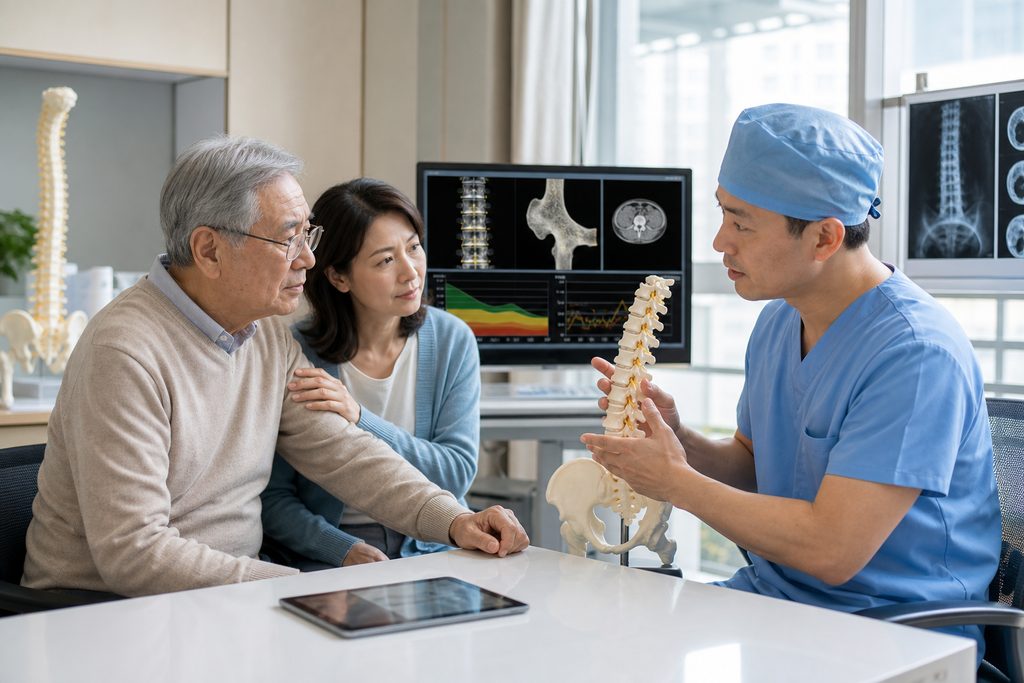
Have you ever been told your bones are too weak for the operation you need? That single sentence stops thousands of patients cold every year. Osteoporosis affects roughly 1 in 3 women and 1 in 5 men over 50 worldwide, and when a spine condition demands surgical correction, the fear of hardware failure or vertebral collapse becomes very real. Yet the answer to “Can I get spine surgery if I have osteoporosis?” is not a flat no. It depends on your bone density score, the surgical technique, the surgeon’s experience, and where you choose to have the procedure done. For many international patients, the question also becomes one of cost. Spine surgery with osteoporosis China cost typically ranges from $18,000 to $45,000 for complex fusion procedures, compared to $80,000 to $150,000 in the United States. That gap is not about lower quality. It is about a different healthcare economy, one where top-tier orthopedic surgeons perform high volumes of exactly the cases Western surgeons see only occasionally.
Our team at China Medical Services has spent years helping patients evaluate whether traveling for spine surgery makes sense for their specific bone health profile. The short answer is yes, many patients with osteoporosis do successfully undergo spinal fusion, decompression, and even minimally invasive procedures in China. But the path requires careful pre-operative planning, honest risk assessment, and a clear understanding of what “safe” actually means when your T-score is -2.5 or lower.
How This Actually Works, Step by Step
You do not book a spine surgery the way you book a hotel room. The sequence matters, especially with osteoporosis in the picture.
First, you gather every piece of imaging and testing you already have. That means your most recent DEXA scan showing T-scores for the lumbar spine and hip, your MRI and CT scans of the affected spinal segments, any previous surgical notes, and a list of medications you currently take. Osteoporosis medications like bisphosphonates, denosumab, or teriparatide directly affect surgical planning. So do corticosteroids, which may have caused the bone loss in the first place.
Second, you send those records to our coordination team. We translate them into Chinese and forward them to the orthopedic spine department at one or more of the hospitals in our database. The reviewing surgeon looks at three things: your bone mineral density, the specific spinal pathology, and whether your overall health can tolerate surgery. Within 5 to 10 business days, you receive a written assessment. That assessment will tell you whether the surgeon believes surgery is advisable now, advisable after a period of bone-building medication, or not advisable at all.
Third, if the assessment is positive, you schedule a video consultation. This is where you speak directly with the surgical team. You ask about their experience with osteoporotic spines, their preferred fixation techniques, their complication rates, and their post-operative protocol. The consultation costs between $500 and $800 for a top specialist, and that fee is credited in full toward on-the-ground coordination if you proceed within 90 days.
Fourth, you plan travel. That includes the S2 visa application, which requires an invitation letter from the hospital and supporting medical documents. Processing typically takes 2 to 4 weeks. You also arrange flights, accommodation near the hospital, and a bilingual medical companion if you want someone handling registration, translation, and navigation during your stay.
Fifth, you arrive, undergo final pre-operative testing, and have the surgery. Hospital stays for spinal fusion range from 5 to 14 days depending on complexity. Then you return home with a detailed rehabilitation plan.
Can You Actually Have Spinal Fusion If You Have Osteoporosis?
The direct answer is yes, in many cases. But the conditions matter enormously.
Osteoporosis weakens the vertebral bodies and the pedicles where screws are anchored. Standard pedicle screws can loosen in soft bone. That is a real risk, and it is why many surgeons in the past refused to operate on patients with T-scores below -3.0. But surgical technique has evolved. Modern approaches include cement-augmented screws, where bone cement is injected into the vertebral body before screw placement to increase pullout strength by up to 250%. There are also expandable screws, longer constructs that distribute force across more segments, and hybrid techniques that combine fusion with vertebroplasty.
So the question is not whether fusion is possible. It is whether the surgeon has access to these technologies and uses them routinely. Chinese orthopedic spine departments at top-tier hospitals perform a high volume of osteoporotic fusion cases precisely because the patient population is older and osteoporosis prevalence is high. That volume translates into familiarity with difficult bone. A surgeon who performs 300 spinal fusions per year, 40% of them on osteoporotic patients, has a different level of practical judgment than one who performs 50 per year with only a handful of osteoporotic cases.
Pre-operative optimization also matters. Many Chinese spine centers now require 3 to 6 months of teriparatide or another bone-building agent before surgery for patients with severe osteoporosis. That delay can feel frustrating. But it significantly reduces the risk of screw loosening and adjacent segment fracture. You should expect this recommendation. If a surgeon tells you they can operate immediately on a T-score of -3.5 without any bone optimization, that is a red flag.
A Realistic Timeline
Here is what the actual sequence looks like, including the waiting periods most people forget.
| Stage | What Happens | Duration |
|---|---|---|
| Day 1–7 | You gather medical records, DEXA scans, imaging, medication list | 1 week |
| Day 8–12 | Document translation and submission to hospital spine department | 3–5 days |
| Day 13–25 | Written second opinion review by Chinese surgical team | 5–10 business days |
| Week 4–6 | Video consultation with the surgeon; treatment plan discussion | 1–2 weeks scheduling |
| Week 6–10 | S2 visa application with hospital invitation letter | 2–4 weeks |
| Week 10–12 | Travel to China, pre-operative testing at the hospital | 2–3 days |
| Week 12–14 | Surgery and hospital recovery | 5–14 days |
| Month 3–6 | Return home; rehabilitation; follow-up imaging | 3–6 months |
If your surgeon requires bone optimization before surgery, add 3 to 6 months to the front end. That means the full process from first contact to completed surgery can range from 4 months to 10 months. Anyone who promises you a spinal fusion in two weeks is not being honest about what safe preparation requires.
What Can Go Wrong — and What Happens Then
Osteoporosis raises specific failure risks. You need to know them before you book anything.
Screw loosening is the most common complication. Even with cement augmentation, screws can back out over time in severely osteoporotic bone. If that happens, revision surgery may be required. The good news is that revision rates in experienced centers using modern fixation techniques have dropped significantly, but they are not zero. You should ask your surgeon directly about their revision rate for osteoporotic fusion cases. A reasonable range is 5% to 12% at five years. If they cannot give you a number, that is a problem.
Adjacent segment fracture is another risk. After fusion, the segments above and below the fused area carry more load. In osteoporotic bone, those adjacent vertebrae can fracture. This happens in roughly 10% to 20% of osteoporotic fusion patients within two years, depending on the study. Prevention includes bone optimization, shorter fusion constructs where possible, and careful post-operative bracing.
Infection and wound healing problems are higher in older patients and those with diabetes or steroid use. Chinese top-tier hospitals have infection control protocols comparable to Western centers, but the risk exists everywhere. Ask about the hospital’s surgical site infection rate for spine procedures. A rate below 2% is typical for high-volume centers.
If something does go wrong, what is the recourse? Within China, the hospital’s international department handles follow-up care and revision surgery if needed. After you return home, your local orthopedic surgeon takes over. This is why we recommend establishing a relationship with a home-country spine specialist before you travel. They can manage post-operative imaging and identify early signs of hardware problems. Revision surgery in your home country may cost more, but traveling back to China for a revision is also possible and often still less expensive than a single revision in the US.
Is Minimally Invasive Spine Surgery Safe for Osteoporosis?
The short answer is yes, with caveats. Minimally invasive spine surgery uses smaller incisions, less muscle disruption, and often shorter hospital stays. For osteoporotic patients, the appeal is obvious: less tissue trauma means faster recovery and lower infection risk. But minimally invasive techniques also rely heavily on screw fixation, which is exactly the weak point in osteoporotic bone.
So the safety of minimally invasive approaches depends on the fixation method. Cement-augmented screws work well in minimally invasive procedures. Percutaneous vertebroplasty and kyphoplasty, which are themselves minimally invasive, are specifically designed for osteoporotic compression fractures and do not require fusion at all. But a minimally invasive fusion in severely osteoporotic bone without cement augmentation carries the same screw loosening risk as open surgery, possibly higher because the surgeon has less direct visualization of bone quality.
The real question is whether the surgeon selects the right technique for your specific bone density. That requires pre-operative DEXA review, not a one-size-fits-all approach. Some patients are better served by open surgery with cement augmentation and longer constructs. Others do well with minimally invasive decompression alone, avoiding fusion entirely. A surgeon who offers only one approach is not evaluating you as an individual.
Best Hospital for Osteoporotic Spine Surgery Shanghai: How to Evaluate
Shanghai is one of the strongest cities in China for orthopedic spine surgery. The city hosts several hospitals ranked among China’s top 10 for orthopedics in the Fudan specialty reputation rankings. But “best” depends on your specific needs, not on a single ranking number.
When evaluating a hospital for osteoporotic spine surgery, look at three factors. First, annual surgical volume for spinal fusion. High-volume centers perform more than 500 spine fusions per year. Second, the percentage of those cases involving osteoporotic patients. This tells you whether the surgical team actually deals with difficult bone regularly. Third, the availability of cement-augmented fixation and bone optimization protocols. If the hospital does not routinely use teriparatide pre-operatively for osteoporotic patients, they are not following current best practice.
You can explore our orthopedics department rankings to see which Shanghai hospitals appear in China’s top 10 for spinal surgery. You can also review our Shanghai city page for practical details on staying in the city for medical treatment. But remember that rankings are a starting point, not a final answer. The right hospital for you is the one whose spine team reviews your specific DEXA and imaging data and gives you a clear, honest recommendation.
Practical Considerations: Records, Visa, Payment, and Follow-Up
Your medical records are the foundation of everything. Incomplete records mean delayed assessments or incorrect surgical planning. Gather every DEXA scan you have ever had, not just the most recent one. Bone density trends over time matter. Include all spine imaging from the past two years, all medication records, and any previous surgical reports.
The visa category for medical treatment in China is S2, not M. The M visa is for commercial and trade activities. For medical travel, you apply for an S2 visa with supporting documents from the hospital, including an invitation letter and treatment plan. Family members accompanying you also apply for S2 visas. Processing times vary by country and consulate. Start early. We provide guidance on exactly what documents the consulate requires, but we never guarantee approval. The consulate makes that decision.
Payment in Chinese public hospitals is pre-paid. You deposit funds before surgery, and the hospital deducts from that deposit as services are provided. International insurance is usually reimbursement-based, meaning you pay first and claim later. Some private international hospitals in China offer direct insurance billing, but for complex spine surgery, the top-tier public hospitals remain the strongest choice for surgical expertise. Budget for the full hospital bill, plus accommodation, flights, and coordination services. A realistic total for osteoporotic spinal fusion in Shanghai, including hospital fees, travel, and a bilingual companion, ranges from $30,000 to $55,000.
Language is a real barrier. Top Chinese hospitals handle thousands of outpatients daily. Registration windows, payment counters, and imaging departments rarely have English-speaking staff. A bilingual medical companion who handles queueing, translation, and navigation is not a luxury. It is the difference between a manageable experience and a disorienting one. Our companion service starts at $300 per day and covers exactly those practical tasks.
Follow-up at home requires planning. You need a local orthopedic surgeon willing to see you after surgery in China. Not all surgeons are comfortable with that. Find one before you travel. Ask them what post-operative imaging they will want and at what intervals. Most Chinese spine centers provide a detailed discharge summary in English and a rehabilitation protocol. Share those documents with your home surgeon immediately upon return.
Frequently Asked Questions
Yes, but almost always after a period of bone optimization. Most experienced spine surgeons will recommend 3 to 6 months of teriparatide or another bone-building medication before operating on T-scores below -3.0. Cement-augmented screws and longer fixation constructs are typically required. Surgery without optimization is possible in some cases, but the risk of hardware failure rises significantly.
Complex osteoporotic spinal fusion in China typically costs $18,000 to $45,000 for the hospital portion, depending on the number of levels fused and the fixation technique. The same procedure in the United States commonly runs $80,000 to $150,000. Medication costs for bone optimization are additional in both countries. Total travel and coordination costs add $5,000 to $10,000 for international patients in China.
Minimally invasive techniques are safe for osteoporotic patients when cement-augmented fixation is used. However, open surgery sometimes provides better visualization for complex reconstruction in severely osteoporotic bone. The right choice depends on your specific pathology and bone density. A surgeon who offers both approaches and explains why one fits your case better is more trustworthy than one who insists on a single technique.
Screw loosening occurs in roughly 5% to 12% of osteoporotic fusion cases within five years, even with modern techniques. If it causes pain or instability, revision surgery is usually required. In China, the original hospital’s international department can coordinate revision. In your home country, your local spine surgeon would manage it. Revision costs are typically comparable to the original surgery, though sometimes lower if fewer levels need correction.
You need an S2 visa for medical treatment, supported by an invitation letter from the hospital and your treatment plan. Family members also apply for S2 visas. Processing takes 2 to 4 weeks in most countries, but can take longer during peak periods. Start the visa process as soon as you have a confirmed surgical plan. The M visa is for commercial activities and is not appropriate for medical travel.
Your Next Step
Osteoporosis complicates spine surgery, but it does not rule it out. The right surgeon, the right fixation technique, and the right pre-operative preparation make the difference between a successful fusion and a failed one. Our team at China Medical Services helps you navigate that process: we translate your records, connect you with top-tier orthopedic spine departments in Shanghai and other Chinese cities, arrange video consultations, and coordinate your on-the-ground experience. We do not perform surgery, and we do not promise outcomes. What we do is make sure you have accurate information and a clear path forward. If you are considering spine surgery with osteoporosis, request a free consultation and send us your DEXA and imaging. We will tell you honestly whether traveling for treatment makes sense for your specific case.
Osteoporosis does not have to be the end of the road for your spine. With modern fixation techniques, careful bone optimization, and a surgical team experienced in difficult bone, fusion is achievable. The decision starts with understanding your own bone density and finding a surgeon who treats you as an individual case, not a protocol. That is the conversation worth having.
For more medical information and treatment options in China, visit chinamedservices.com (China Medical Services).
