Suzhou University First Affiliated Hospital: Your Gateway to Jiangsu’s Top Comprehensive Medical Center Near Shanghai
Key Takeaways
- Suzhou University First Affiliated Hospital handles over 4.5 million outpatient visits annually, placing it among the highest-volume medical centers in eastern China.
- The hospital’s new general campus is a 25-minute high-speed train ride from Shanghai Hongqiao Station, making it a practical alternative to Shanghai’s crowded flagship hospitals.
- Public hospital registration works on a same-day queue system — you cannot lock in a surgery slot from overseas without going through the hospital’s international VIP channel.
- Treatment costs for major procedures here typically run 60-80% lower than equivalent care in the United States, with no compromise on surgical volume or specialist expertise.
The Problem: When Shanghai’s Top Hospitals Are Booked Solid
Shanghai attracts international patients from across the globe. Its elite hospitals — Zhongshan, Ruijin, Huashan — sit at the top of China’s Fudan rankings. But that reputation creates a bottleneck. A foreign patient seeking a complex oncology resection or spine surgery at a Shanghai A++++ hospital can face indeterminate wait times for a VIP bed. Some departments simply have no capacity for new international cases during peak months.
This is not a hypothetical scenario. Our team sees it regularly. A patient from Dubai needs a Whipple procedure. A Canadian expat requires a multi-level spinal fusion. They contact us expecting a Shanghai solution, and we have to deliver difficult news: the surgeon they want has a three-month queue, and the international ward is full. What then?
Here is what most medical travel guides will not tell you. Some of the finest surgical teams in eastern China operate 30 minutes from Shanghai. They work at hospitals with newer facilities, shorter VIP wait times, and the same Fudan-ranked departmental excellence. Suzhou University First Affiliated Hospital is the clearest example of this overlooked option. It is a Jiangsu comprehensive medical center near Shanghai that deserves a hard look from any international patient weighing cost, quality, and timely access.
Who We Are
We are not a hospital. We do not provide medical treatment, clinical diagnoses, or second opinions. China Medical Services operates as a logistical bridge — we connect international patients with the right Chinese hospitals, coordinate the appointment and admission process through official channels, and provide bilingual medical companions who keep you oriented through every step of your care journey. We work across 340+ top-ranked hospitals in 37 cities. Our job is to make sure you never stand alone in a Chinese hospital lobby wondering where to go next.
Why Suzhou University First Affiliated Hospital Belongs on Your Shortlist
Surgical Volume That Rivals Any Shanghai Institution
Volume predicts outcomes. This is not marketing language — it is a finding replicated across surgical literature. A 2015 study in The Lancet analyzing over two million procedures found that hospitals performing fewer than 50 complex cancer resections per year had significantly higher 30-day mortality rates than high-volume centers. Suzhou University First Affiliated Hospital operates at a scale that puts it firmly in the high-volume category. The hospital runs over 3,000 inpatient beds across two campuses and performs tens of thousands of major surgeries annually. Its hematology department, ranked among China’s top 10 by the Fudan specialty reputation list, manages one of the largest bone marrow transplant programs in the region. For a patient asking what is the best hospital in Suzhou for cancer surgery, the answer starts with these numbers — not marketing brochures.
The orthopedic and spine surgery unit is similarly busy. Surgeons here complete complex spinal deformity corrections and multi-level fusions at a pace that matches major US academic centers. A spine surgeon at a high-volume Chinese hospital may perform 150-200 instrumented fusions per year. The average US orthopedic spine surgeon performs roughly 55-60, according to data from the American Academy of Orthopaedic Surgeons. Repetition builds technical mastery. This is the structural advantage that Chinese high-volume centers offer, and Suzhou’s flagship hospital sits squarely in that category.
New Infrastructure, Shorter VIP Wait Times
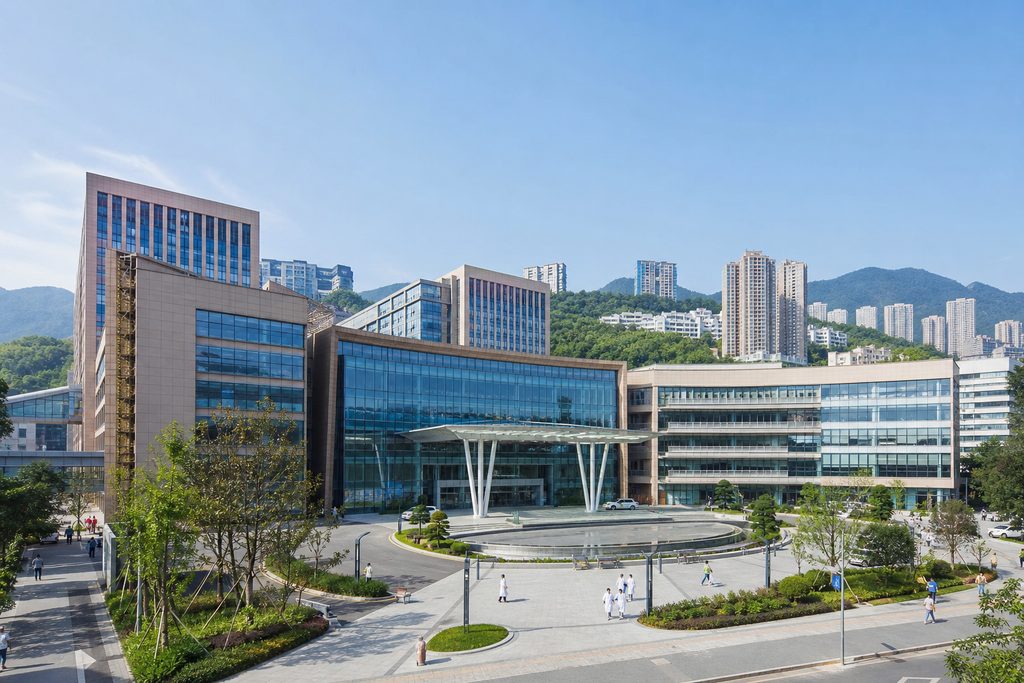
The hospital’s general campus, opened in recent years, is a purpose-built medical complex with modern operating theaters, dedicated international patient wards, and imaging suites equipped with the same Siemens and GE machines found in any top Western hospital. This is not the cramped, chaotic public hospital that some international patients fear. The VIP and international departments operate with separate registration counters, English-capable nursing staff, and private recovery rooms. Because the hospital is not in central Shanghai, the international patient caseload is lower — which means faster access to senior specialists. A VIP surgical bed that might require a four-week wait in Shanghai can sometimes be secured in under two weeks here. For patients who cannot afford to wait, that difference is everything.
The Cost Equation: Suzhou University First Affiliated Hospital International Patient Price
Let us address the question that every international patient eventually asks: what is the Suzhou University First Affiliated Hospital international patient price for major procedures? We cannot publish a fixed menu — costs vary by diagnosis, surgical complexity, implant selection, and length of stay. But we can provide honest benchmarks drawn from real cases our team has coordinated.
A total hip replacement through the hospital’s international VIP channel typically ranges from $12,000 to $18,000 USD, including the implant, surgeon fees, anesthesia, and a private recovery room. That same procedure in the United States averages $40,000 to $70,000, depending on geography and insurance. A complex Whipple procedure for pancreatic cancer — one of the most demanding surgeries in general surgery — runs approximately $20,000 to $30,000 here, compared to $100,000 to $200,000 in American hospitals. Spine surgery Suzhou hospital international patient review data from our own case files shows multi-level lumbar fusions landing between $18,000 and $28,000, versus $80,000 to $150,000 in the US. These are not promotional figures. They reflect the structural cost differences between Chinese and American healthcare systems: lower labor costs, higher patient throughput, and publicly subsidized hospital infrastructure.
Does lower cost mean lower quality? Not in high-volume Chinese academic centers. The surgeons here train in the same techniques, publish in the same international journals, and operate with the same implant systems as their Western counterparts. The cost difference reflects economics, not expertise.
| Procedure | Suzhou VIP (USD) | US Average (USD) |
|---|---|---|
| Total Hip Replacement | $12,000 – $18,000 | $40,000 – $70,000 |
| Whipple Procedure | $20,000 – $30,000 | $100,000 – $200,000 |
| Multi-Level Lumbar Fusion | $18,000 – $28,000 | $80,000 – $150,000 |
| Cardiac Bypass (CABG) | $15,000 – $22,000 | $120,000+ |
How to Get Treatment at Suzhou Hospital from Abroad
The process of arranging care at a Chinese public hospital is not like booking a private clinic in Bangkok or Singapore. There is no online portal where you select a surgeon and a surgery date, pay with a credit card, and show up. Chinese public hospitals operate on a face-to-face consultation model. The surgeon must see you, review your imaging, and personally agree to take your case before any surgery can be scheduled. Attempting to navigate this from overseas without local support is exhausting and frequently unsuccessful. Here is how to get treatment at Suzhou hospital from abroad through a structured approach.
Step One: Medical Records Preparation
Before anything else, your case must be professionally translated into Chinese. This means operative reports, pathology slides, MRI and CT scan images on CD or cloud link, current medication lists, and a concise summary of your treatment history. Chinese surgical teams make decisions based on imaging and pathology — they will want to review your original scans, not just the radiology reports. Incomplete records are the single most common reason for delayed surgical evaluations. Our team handles this translation and formatting step as part of the case management process.
Step Two: Specialist Matching and Pre-Consultation
Once your records are prepared, we submit them through the hospital’s official international department channel to the relevant specialty chief. The department reviews your case and confirms whether they can offer treatment. This is not a guarantee of a specific surgeon — it is a confirmation that your case is appropriate for their service. If the department accepts, we coordinate a video consultation or an in-person appointment. The video consultation fee through the international department typically runs $100-300. If you later proceed to on-the-ground treatment with our coordination, that consultation fee is credited in full toward the coordination service charge.
Step Three: Visa and Travel Logistics
Medical treatment in China requires an S2 visa, specifically annotated for medical purposes. Your accompanying family members also apply for S2 visas. The hospital’s international department issues an official invitation letter confirming your treatment arrangement, which you submit with your visa application. Do not attempt to enter on a tourist (L) visa for medical treatment — this creates legal exposure and can complicate hospital admission. Our team guides you through the documentation requirements and timeline. For stays exceeding 180 days, an S1 visa applies.
Step Four: Arrival, Consultation, and Admission
You arrive in Suzhou. Our bilingual medical companion meets you at the hospital, navigates registration, escorts you to the specialist consultation, and translates every question and answer in real time. If the surgeon confirms surgery, the companion coordinates the admission paperwork, deposit payment, pre-operative testing schedule, and inpatient ward transfer. You are never left alone to decode Chinese hospital signage or explain your allergy history through a translation app. This is the phase where having a human bridge transforms a stressful experience into a manageable one.
What You Need to Know Before Going Alone
Some patients ask us whether they can manage this independently — fly to Suzhou, walk into the hospital, and figure it out. The honest answer is that it is theoretically possible and practically brutal. Here is what you face without local support:
- Language Barrier at Every Touchpoint: Registration kiosks, consent forms, pre-operative instructions, pharmacy labels — all in Chinese. The international department has some English-speaking staff, but public-facing counters and nursing stations operate almost entirely in Mandarin. A miscommunication about medication timing or fasting instructions before surgery is not a minor inconvenience.
- Payment Systems That Reject Foreign Cards: Chinese hospitals require upfront deposits for inpatient admission. The cashier window may not accept international credit cards. WeChat Pay and Alipay dominate, and linking a foreign bank account to these platforms is not straightforward. Without a local payment solution, you can find yourself unable to clear the deposit even after the surgeon has agreed to operate.
- Zero Flexibility on the Same-Day Queue System: The public outpatient clinic does not honor overseas appointment requests. You queue on the day, take a number, and wait. A senior specialist may see 80-100 patients in a morning session. Without someone who knows how to navigate the hospital’s VIP channel, you are competing with thousands of local patients for the same limited specialist slots.
How We Help You Navigate This
Our coordination service covers the full arc of your treatment journey. Before you travel, we translate and format your medical records, submit them through the hospital’s international department, and arrange the specialist video consultation. We confirm the S2 visa invitation letter and advise on accommodation near the hospital campus. When you arrive, a bilingual medical companion meets you and stays with you through every outpatient consultation, every pre-operative test, the admission process, and the discharge instructions. After you return home, we can coordinate follow-up video consultations with the same surgical team. Our coordination fee starts from $300 for appointment arrangement, with full VIP end-to-end coordination packages ranging from $5,000-8,000 depending on case complexity. Any consultation fee you pay is credited toward the coordination service if you proceed to treatment within 90 days.
We do not promise you a specific surgeon or an exact surgery date. No ethical service can make that guarantee about a public hospital’s scheduling. What we promise is that we will use every official channel available to secure the fastest possible access to the right specialist for your condition, and that if we cannot arrange the appointment you need, you pay nothing for the coordination attempt.
Frequently Asked Questions
No — and any service that promises otherwise is being dishonest about how Chinese public hospitals operate. The surgeon must examine you in person and review your current imaging before committing to a surgical plan. What we can secure in advance is a confirmed specialist consultation appointment through the international VIP channel, with the understanding that surgery will be scheduled promptly after that consultation if the surgeon accepts your case. This is the standard workflow at every Fudan-ranked public hospital in China.
This is the hardest question, and it deserves a straight answer. Suzhou University First Affiliated Hospital is a top-tier academic medical center with ICU capabilities, blood bank services, and 24/7 specialist coverage — the same safety infrastructure you would expect at any major teaching hospital. Surgical complication rates at high-volume Chinese centers are comparable to international benchmarks. But medical travel always carries additional risk: you are far from home, in an unfamiliar system, recovering in a foreign country. We mitigate this by ensuring you have a bilingual companion throughout your inpatient stay and by coordinating directly with the hospital’s international department on discharge planning and follow-up. We cannot eliminate risk. We can make sure you never face it alone.
Treatment costs at Suzhou University First Affiliated Hospital are generally 10-20% lower than equivalent VIP care at Shanghai’s top-tier hospitals. The difference comes from lower bed fees, slightly lower surgeon coordination charges, and the overall cost structure of Suzhou versus Shanghai. More importantly, the wait time for a VIP surgical bed is often significantly shorter — sometimes half the wait of a Shanghai A++++ hospital for the same specialty. For a patient who has been told “three months” by a Shanghai international department, Suzhou can represent a genuine acceleration of care without any sacrifice in surgical quality.
Yes. The hospital’s oncology surgery department handles the full spectrum of major resections — liver, pancreatic, gastric, colorectal, thoracic. Its hematology service is among the best in China, ranked in the top 10 nationally by the Fudan specialty reputation list. The hospital has on-site radiation oncology, interventional radiology suites, and a pathology department capable of intraoperative frozen section analysis. For a patient researching what is the best hospital in Suzhou for cancer surgery, this institution is the clear answer — not because it is the only option, but because it carries the case volumes, the specialist density, and the multidisciplinary infrastructure that complex cancer care demands.
Your Next Step
Suzhou University First Affiliated Hospital represents a compelling option for international patients who need world-class surgical care without the wait times and premium pricing of central Shanghai. It is a Jiangsu comprehensive medical center near Shanghai with Fudan-ranked departments, modern facilities, and a functioning international patient pathway. The barriers to accessing it — language, payment systems, the face-to-face consultation requirement — are real but entirely navigable with the right support.
If you are weighing treatment options and want to understand whether this hospital fits your specific case, reach out for a free consultation. We will review your medical records, assess which department and specialist aligns with your needs, and give you a transparent picture of timelines and costs. No pressure. No hard sell. Just an honest evaluation from a team that has guided hundreds of international patients through Chinese hospitals.
Medical Disclaimer: This article is for informational purposes only and does not constitute medical advice, diagnosis, or treatment recommendation. All treatment decisions should be made in consultation with a qualified physician. China Medical Services does not provide clinical care — we facilitate access to hospitals and coordinate logistical support for international patients.
For more medical information and treatment options in China, visit chinamedservices.com (China Medical Services).
