Chongqing Children’s Hospital: Accessing Southwest China’s Largest Pediatric Center
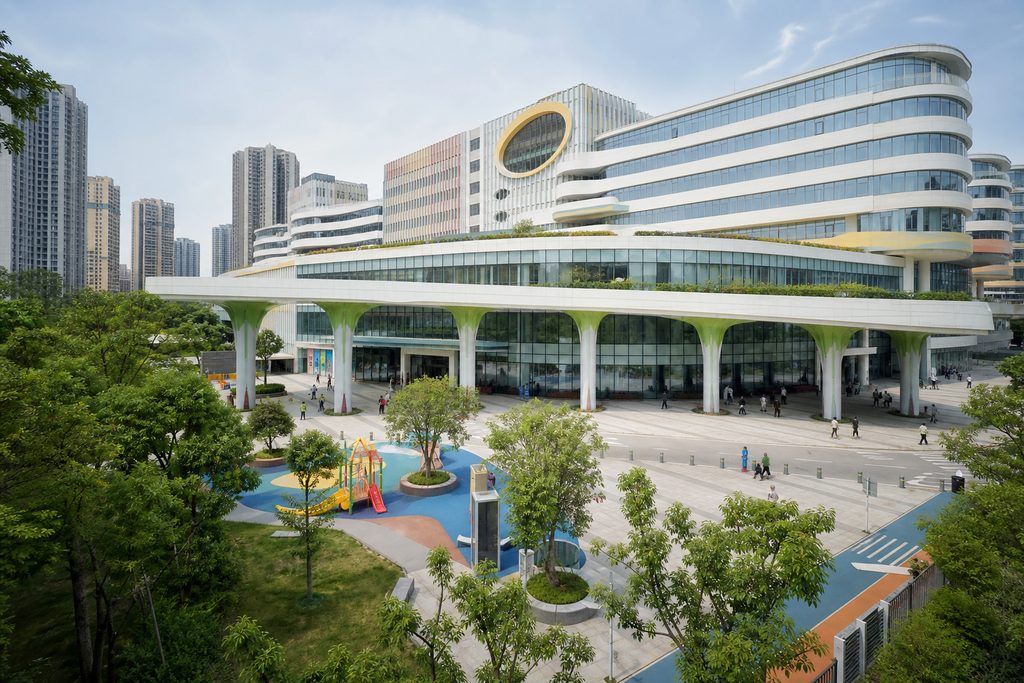
What if the pediatric specialist your child needs isn’t available in your home country — or the wait time stretches past the point where waiting feels safe?
That question drives more families than you might think to look abroad for answers. And increasingly, their search leads them to one institution in the heart of southwestern China.
Chongqing Children’s Hospital, affiliated with Chongqing Medical University, handles over 3 million outpatient visits annually. It is the largest pediatric medical center in southwest China. For families facing complex neonatal conditions, rare congenital heart defects, or pediatric neurosurgical needs, this hospital represents something specific: concentrated clinical experience at a scale that is difficult to find elsewhere. Our team at China Medical Services has helped families from over a dozen countries coordinate care at this institution. We know what the process actually looks like — the parts that work smoothly and the parts that don’t.
Key Takeaways
- Chongqing Children’s Hospital is southwest China’s largest pediatric facility, with approximately 2,500 inpatient beds and a neonatal intensive care unit that admits over 6,000 critically ill newborns each year.
- The hospital’s Pediatric Neurosurgery and Cardiovascular Surgery departments routinely handle case volumes that surpass most Western children’s hospitals, which correlates with better surgical outcomes for rare procedures.
- Without Chinese language ability and local system knowledge, navigating registration, payment, and inpatient admission independently is extremely difficult — this is not a hospital designed for walk-in international patients.
- Understanding the real costs, the S2 visa pathway, and the difference between the public outpatient system and the hospital’s international/VIP channel is essential before committing to travel.
The Problem: When Your Child’s Diagnosis Exceeds Local Options
Approximately 1 in every 100 children is born with a congenital heart defect. Many are mild. Some are not. The ones that require surgical correction in the first year of life put families on an urgent clock — and in countries with centralized public healthcare systems, the wait for a pediatric cardiac surgical slot can stretch to 6 months or longer. The UK’s NHS, for example, has reported pediatric cardiac surgery waiting times exceeding 18 weeks for non-emergency cases in recent years. For a condition like Tetralogy of Fallot, that delay carries real developmental consequences.
Then there is cost. In the United States, a complex congenital heart surgery for a child — think arterial switch operation or Norwood procedure — can generate hospital bills exceeding $200,000. Even with insurance, out-of-pocket maximums and coverage gaps leave families facing financial decisions no parent should have to make. This is the intersection where medical tourism stops being a luxury concept and starts being a practical problem-solving tool. The question shifts from “should we travel?” to “where should we go, and how do we do this safely?”
Who We Are
We are not a hospital. We do not provide medical treatment, clinical diagnoses, or any form of healthcare delivery. China Medical Services is a medical concierge organization that functions as your logistical bridge to China’s top-tier hospital system. Our team handles the structural complexity — hospital matching based on your child’s specific diagnosis, appointment coordination through official hospital international departments, bilingual medical companion services on the ground, and visa guidance for the S2 medical treatment pathway. We work with 340+ top-ranked hospitals across 37 Chinese cities. We translate medical records, not medical advice. We coordinate access, not care. The difference matters.
Why Chongqing Children’s Hospital Delivers Results for Complex Pediatric Cases
Clinical Volume That Creates Surgical Expertise
There is a well-documented relationship in medicine between procedural volume and patient outcomes. A 2017 study published in The Lancet examining pediatric cardiac surgery across multiple centers found that hospitals performing more than 350 pediatric heart surgeries annually had significantly lower risk-adjusted mortality rates than lower-volume centers. Chongqing Children’s Hospital’s Cardiovascular Surgery department performs well above that threshold. The hospital’s surgical teams operate on cases that individual surgeons in smaller national healthcare systems might see only a handful of times in a career.
This matters most for rare conditions. A pediatric neurosurgeon here may perform over 100 epilepsy surgeries on children in a year. A craniofacial team might reconstruct a dozen complex craniosynostosis cases monthly. When you are considering something as specific as a complex heart surgery for children abroad package, you are essentially buying access to that accumulated experience — the pattern recognition that comes only from repetition. The same principle applies when families search for the best pediatric neurosurgery hospital China cost comparison. Volume drives quality. Quality drives value.
Neonatal Care Infrastructure at Scale
The neonatal intensive care unit at Chongqing Children’s Hospital is not a small ward. It is one of the largest in Asia, with the capacity to manage over 6,000 critically ill newborns per year. The unit handles extreme prematurity, complex congenital anomalies requiring immediate surgical intervention, and neonatal respiratory failure requiring advanced therapies like extracorporeal membrane oxygenation. For parents researching how to get neonatal surgery at Chongqing Children’s Hospital, the answer starts with understanding that this is a high-capacity, high-acuity environment. The hospital’s transport team retrieves critically ill newborns from across the entire southwest region — a catchment area of over 200 million people. That geographic reach means the neonatologists and neonatal surgeons here have likely managed a case similar to your child’s.
But scale creates its own challenges. The public wards are crowded. Families share rooms. Privacy, in the Western sense, is limited. This is not a criticism — it is a structural reality of a hospital serving a massive population. We tell families this directly because walking into it unprepared is disorienting. The international VIP wards offer private rooms and more familiar amenities, but they come at a higher cost. We cover that in the pricing section below.
Cost Structure: What the Chongqing Children’s Hospital International Patient Price List Reveals
Let’s address the question that brings many readers to this page: the Chongqing Children’s Hospital international patient price list. There is no single published price list that covers every procedure for international patients. Costs vary by diagnosis, surgical complexity, ward choice, and length of stay. What we can provide — based on cases we have coordinated — are realistic ranges.
| Procedure | Estimated Cost at Chongqing Children’s Hospital (USD) | US Benchmark Cost (USD) |
|---|---|---|
| Ventricular Septal Defect (VSD) Repair | $8,000 – $15,000 | $60,000 – $120,000 |
| Tetralogy of Fallot Repair | $15,000 – $25,000 | $90,000 – $200,000 |
| Pediatric Epilepsy Surgery (Lesionectomy) | $12,000 – $22,000 | $80,000 – $150,000 |
| Neonatal Abdominal Surgery (e.g., intestinal atresia) | $6,000 – $12,000 | $50,000 – $100,000 |
| Cochlear Implant (unilateral) | $15,000 – $25,000 | $50,000 – $100,000 |
These figures are for the hospital’s international department or VIP ward pathway. The public ward costs are lower — often 30-40% less — but come with the language, crowding, and navigation barriers we described. All prices are estimates that vary by hospital and case complexity. They do not include our coordination fees, travel, accommodation, or post-discharge expenses. What they do show is a consistent pattern: costs run approximately one-fifth to one-tenth of US benchmarks. This is the structural reason families ask is Chongqing Children’s Hospital good for foreign patients — the clinical quality is high, and the financial equation makes otherwise impossible care accessible.
What You Need to Know Before Going Alone
The hospital’s clinical capabilities are real. So are the barriers for foreign families attempting to navigate the system independently. We have seen families arrive without understanding these friction points. It does not go well.
- Appointment Registration Is Not International-Friendly: The standard outpatient registration system operates through a Chinese-language app (WeChat mini-program) that requires a Chinese ID number or local phone number to complete. Specialist slots — especially for the heads of pediatric neurosurgery or cardiovascular surgery departments — release at specific times and fill within minutes. If you are outside China trying to book appointment Chongqing Children’s Hospital medical tourism independently, you will hit a wall at step one. The hospital’s international department exists precisely for this reason, but it is not a walk-in service. Contact must be initiated through proper channels with complete medical documentation in hand.
- Visa Requirements Are Specific and Non-Negotiable: Medical treatment in China requires an S2 visa with a notation specifying the treatment purpose. This is not a tourist visa. It is not an M business visa. The application requires an invitation letter from the receiving hospital — a document the hospital’s international department can issue once your case has been reviewed and accepted. Family members accompanying the child also apply for S2 visas. Processing times vary by embassy, but plan for 2-4 weeks minimum. We have guided families through this process dozens of times. The documentation sequence matters.
- Payment Is Prepaid and Insurance Is Reimbursement-Based: Chinese public hospitals, including their international departments, operate on a prepayment model. You deposit funds before admission. Treatment costs are deducted from that deposit. If the balance runs low, you top it up. International health insurance — including many policies that claim global coverage — typically works on a reimbursement basis. You pay the hospital first, then submit claims to your insurer. Some private international hospitals in China offer direct billing. Chongqing Children’s Hospital, as a public institution, does not. This creates a cash flow requirement that families must plan for. The deposit for a major pediatric cardiac surgery can range from $15,000 to $30,000 upfront.
How We Help You Navigate This
These barriers are not accidents. They are the natural result of a hospital system designed to serve a domestic population of over a billion people. International patients were never the design priority. That is where we fit.
Our process starts with your child’s medical records. You send us the diagnostic reports, imaging files, and the treating physician’s summary. Our team translates these documents into clinical Chinese — not machine translation, but terminology-accurate medical translation that a Chinese specialist can review without ambiguity. We then submit the case package to the relevant department at Chongqing Children’s Hospital through the official international patient channel. The department head or a senior specialist reviews the case and determines whether they can accept it and what the treatment plan would entail. This review typically takes 3-7 business days.
If the hospital accepts the case, we move to logistics. We coordinate the invitation letter for your S2 visa application. We schedule the initial specialist consultation — the face-to-face meeting where the surgeon examines your child and finalizes the surgical plan. We arrange a bilingual medical companion who meets you at the hospital entrance on day one and stays with you through registration, consultation, payment, admission, and discharge. This person translates everything — the doctor’s explanation, the nurse’s instructions, the consent forms, the pharmacy directions. They also handle the practical chaos: which floor, which window, which queue, which form. In a hospital that sees 10,000 outpatient visits per day, that navigation alone is worth the cost.
For families considering a complex heart surgery for children abroad package, we coordinate the full stay — hospital admission, surgery scheduling, ICU monitoring period, ward recovery, and discharge planning. We do not make medical decisions. We make sure you understand the medical decisions being made. After discharge, we can arrange follow-up consultations, either in-person if you stay in Chongqing for monitoring or via remote video consultation once you return home. Our video consultation coordination service starts from $100-300, and any consultation fee paid is credited in full toward on-the-ground coordination if you later travel for treatment.
Frequently Asked Questions
The clinical quality is excellent — the hospital is consistently ranked among China’s top children’s hospitals, particularly for pediatric surgery and neonatology. But the patient experience was not designed with non-Chinese speakers in mind. The signage, the registration systems, the consent forms, the discharge instructions — all are in Chinese. The international department has some English-speaking staff, but coverage is not 24/7 and not available in every subspecialty ward. This is why we strongly recommend a bilingual medical companion for any foreign family. Without one, you will struggle to understand what is happening at critical moments.
There is no single published price list. Hospital charges are calculated per case based on the specific procedure, the implants or devices used, the length of ICU stay, the ward type, and the medications required. The international department pathway typically costs 1.5 to 2 times the standard public ward rate, but includes private rooms, some English-language coordination, and priority scheduling for specialist consultations. Our team provides a detailed cost estimate after the hospital reviews your child’s case — not before. Anyone offering a fixed price before a doctor has seen the medical records is guessing.
You cannot book directly as an overseas patient through the public registration system. The pathway is through the hospital’s international medical center, which requires a case submission with translated medical records. We handle this submission on your behalf. The hospital reviews the case, confirms they can treat the condition, and then schedules the initial consultation. This is not instant. Plan for 1-2 weeks from case submission to confirmed appointment. The alternative — showing up at the hospital without prior coordination — almost never results in seeing the right specialist on the same trip.
This is the question every parent asks, and it deserves a straight answer. Chongqing Children’s Hospital has a dedicated pediatric intensive care unit with 24/7 intensivist coverage. Complication rates for standard procedures like VSD repair are comparable to major Western centers — in the 1-3% range for serious adverse events. But complications do happen. When they do, you are in a hospital equipped to handle them. The challenge for foreign families is the communication gap during a crisis. Our bilingual companions stay with you through ICU updates and critical conversations with the medical team. We also help coordinate medical evacuation insurance — a policy we recommend every family secure before traveling. It is not expensive relative to the peace of mind it buys.
Yes. We coordinate remote video consultations with senior specialists at Chongqing Children’s Hospital. The cost ranges from $500 to $800 for a top-specialist consultation, which includes medical record translation, case submission, and a 30-45 minute video session with a qualified interpreter present. This is not a casual chat — the surgeon reviews your child’s imaging and reports beforehand and comes prepared to discuss treatment options and surgical candidacy. If you later proceed with treatment at the hospital, that consultation fee is credited in full toward our on-the-ground coordination service. It is a way to de-risk the decision before committing to international travel.
Your Next Step
Chongqing Children’s Hospital exists within a healthcare system that was not built for foreign families — but its clinical capabilities are real, its surgical volumes are exceptional, and its cost structure makes complex pediatric care accessible to families who would otherwise face impossible choices. The question is not whether the hospital can treat your child. The question is whether you have the logistical support to navigate the system safely and with full understanding at every step.
If you are considering pediatric treatment in China, start with a conversation. Send us your child’s case details. We will review the diagnosis, recommend the right hospital — whether that is Chongqing Children’s Hospital or another center from our network of 340+ top-ranked hospitals — and give you an honest assessment of what the pathway looks like. No pressure. No sales pitch. Just the information you need to make a clear-headed decision. Request your free consultation here.
For more medical information and treatment options in China, visit chinamedservices.com (China Medical Services).
