Shanghai Chest Hospital Thoracic Surgery: China’s #2 Lung Cancer & Esophageal Center
Key Takeaways
- Shanghai Chest Hospital performs over 15,000 thoracic surgeries annually — a surgical volume that places it second nationally and among the highest-volume centers globally for lung and esophageal cancer.
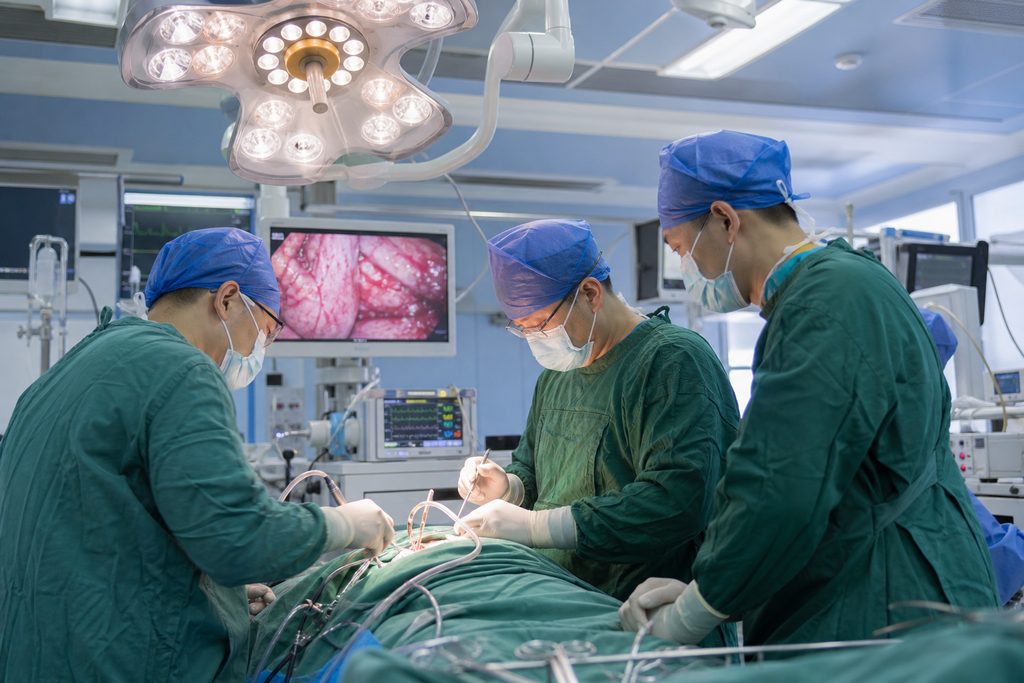
- The hospital pioneered video-assisted thoracoscopic surgery (VATS) in China and now completes roughly 90% of lung resections using minimally invasive techniques, with median hospital stays 2-3 days shorter than open surgery benchmarks.
- International patients cannot simply book surgery online. All procedures require an in-person consultation first — and navigating the hospital’s 5,000 daily outpatient visits without Mandarin support is genuinely difficult.
- Cost for a typical VATS lobectomy runs between $8,000 and $15,000 USD — roughly one-fifth to one-eighth of the $60,000-$100,000+ billed by major US hospitals for the same procedure.
The Problem: When a Lung Cancer Diagnosis Comes With a Six-Figure Bill
A lung cancer diagnosis is terrifying enough. Then the financial reality hits. In the United States, a standard minimally invasive lobectomy — the most common curative surgery for early-stage non-small cell lung cancer — costs between $60,000 and $100,000, depending on the hospital system and geography. Even with insurance, out-of-pocket maximums can reach $15,000 to $20,000 in a single plan year. For patients with high-deductible plans or coverage gaps, the numbers are worse. And that is just the surgery. Add oncology consultations, imaging, pathology, and follow-up care, and the total cost of a lung cancer treatment episode routinely exceeds $150,000 in the US.
Esophageal cancer patients face an even steeper climb. An esophagectomy in the US averages $120,000 to $180,000 in hospital charges. Recovery is long. Complications are common. The procedure itself is technically demanding, and outcomes correlate strongly with how many the surgical team performs each year. Most US hospitals do fewer than 20 esophagectomies annually.
Now consider wait times. In Canada, the median wait from specialist referral to thoracic surgery is 8 to 12 weeks. In the UK, NHS targets say 62 days from urgent GP referral to first treatment — and roughly 30% of lung cancer patients miss that window. For an aggressive malignancy, every week matters.
Patients are not wrong to ask: is there another option? One that does not mean compromising on clinical quality but also does not destroy a family’s finances?
Who We Are
We are not a hospital. We do not provide medical treatment, make clinical recommendations, or offer second opinions ourselves. What we do is remove every logistical barrier between you and China’s top-ranked thoracic surgery centers. Our team handles hospital matching, appointment coordination, bilingual medical companions, visa guidance, and post-operative recovery logistics. We work with 340+ top-ranked hospitals across 37 cities — including Shanghai Chest Hospital, which ranks second nationally in thoracic surgery on China’s authoritative Fudan Hospital Rankings specialty list. We are your operational backbone. You focus on healing. We handle everything else.
Why Shanghai Chest Hospital Delivers Results That Rival Any Western Center
Shanghai Chest Hospital is not a general hospital that happens to have a thoracic department. It is a dedicated chest hospital — one of only a handful in the world. Founded in 1957, it has spent nearly seven decades focused on diseases of the lung, esophagus, trachea, and mediastinum. That singular focus produces outcomes that are difficult for general hospitals to match.
Surgical Volume That Creates Expertise No Textbook Can Teach
The numbers tell the story. Shanghai Chest Hospital performs more than 15,000 thoracic surgeries each year. Of these, approximately 10,000 are lung cancer resections. The esophageal surgery program handles over 1,500 cases annually. To put that in perspective: the average US thoracic surgeon performs roughly 50-80 lung resections per year. A surgeon at Shanghai Chest may perform 300 to 500. Volume is not just a vanity metric. Multiple large-scale studies — including a 2019 analysis in The Annals of Thoracic Surgery covering over 400,000 lung cancer resections — have demonstrated a clear inverse relationship between hospital surgical volume and 30-day mortality. The centers that do the most have the lowest complication rates. Shanghai Chest’s 30-day mortality for lobectomy is consistently reported below 0.5%, which compares favorably with the 1-2% benchmark at major US academic medical centers.
Esophageal surgery is even more volume-sensitive. A 2021 study in JAMA Surgery found that hospitals performing fewer than 20 esophagectomies annually had nearly double the mortality rate of high-volume centers. Shanghai Chest’s program exceeds that threshold by a factor of 75.
Minimally Invasive Techniques as Standard Practice
Shanghai Chest Hospital was the first institution in China to adopt video-assisted thoracoscopic surgery, back in the early 1990s. Today, approximately 90% of lung resections at the hospital are performed using VATS or robotic-assisted techniques. This is not a boutique offering for premium patients — it is the default approach. The clinical benefits are well-documented: less postoperative pain, shorter chest tube duration, faster recovery, and median hospital stays of 4-6 days versus 7-10 days for open thoracotomy.
For esophageal cancer, the hospital has developed and refined a minimally invasive McKeown esophagectomy technique that avoids the large thoracotomy incision traditionally required. Published data from the hospital’s own series show median lymph node harvests exceeding 20 nodes — a key quality indicator — with leak rates below 5%, which is competitive with the best Western centers.
Where Does the Shanghai Chest Hospital Lung Cancer Surgery Cost Land?
This is the question most international patients ask first. A standard VATS lobectomy with lymph node dissection at Shanghai Chest Hospital typically costs between $8,000 and $15,000 USD, depending on the complexity of the case, the specific surgeon, and whether the patient goes through the standard public channel or the hospital’s international VIP department. An esophagectomy runs between $18,000 and $30,000 USD. These figures include the surgery itself, anesthesia, standard hospital stay, and basic pathology. They do not include pre-operative imaging, advanced genomic testing, or extended ICU care if complications arise — but neither do the US comparison figures.
Why are costs structurally lower? Not because corners are cut. Chinese thoracic surgeons earn less than their US counterparts — not because they are less skilled, but because China’s physician compensation model is fundamentally different. Hospital infrastructure costs are amortized across enormous patient volumes. Device and implant costs are lower due to domestic manufacturing and different supply chain economics. A da Vinci robotic system costs the same to acquire in Shanghai as in Seattle, but it is used on far more patients per year, driving the per-case capital cost down. The clinical outcomes are not inferior. They are, by multiple published metrics, equivalent or better.
| Procedure | Shanghai Chest Hospital (USD) | US Average (USD) | UK Private (USD) |
|---|---|---|---|
| VATS Lobectomy | $8,000 – $15,000 | $60,000 – $100,000 | $35,000 – $55,000 |
| Open Lobectomy | $10,000 – $18,000 | $70,000 – $120,000 | $40,000 – $65,000 |
| Minimally Invasive Esophagectomy | $18,000 – $30,000 | $120,000 – $180,000 | $65,000 – $95,000 |
| Mediastinal Tumor Resection | $6,000 – $12,000 | $35,000 – $60,000 | $25,000 – $40,000 |
All figures are estimates. Final cost varies by hospital channel, case complexity, surgeon seniority, and length of stay. US figures sourced from published hospital chargemaster data and Medicare reimbursement averages. UK figures reflect private sector pricing.
What You Need to Know Before Going Alone
Honesty matters more than marketing. Shanghai Chest Hospital is an extraordinary institution. It is also a Chinese public hospital that serves over 5,000 outpatients every single day. If you show up without preparation, without language support, and without understanding how the system works, you will be overwhelmed. Here is what you are up against.
- Visa Requirements Are Specific and Unforgiving: Medical treatment in China requires an S2 visa, endorsed specifically for medical purposes. This is not a tourist visa. You need an official invitation letter from the hospital confirming your treatment arrangement. Applying without the correct documentation means rejection. Family members accompanying you also need S2 visas. The M visa is for business — it cannot be used for medical travel. Getting this wrong at the embassy wastes weeks.
- You Cannot Book Surgery Remotely Through the Public System: The standard outpatient pathway requires you to physically queue for a registration ticket, see a specialist in person, and only then schedule surgery. There is no online portal where international patients can reserve an operating room slot months in advance. This is the rule across Chinese public hospitals. The workaround is the hospital’s International Medical Center or VIP channel, which does allow pre-arranged consultations and coordinated admission — but accessing this requires knowing exactly who to contact and how to present your case.
- Language Barriers Are Absolute: Few front-line registration staff speak English. Signage is primarily in Chinese. Payment counters, pharmacy queues, CT scheduling desks — every step of the process runs in Mandarin. Even within the clinical team, while many senior surgeons speak functional English, nursing staff and residents often do not. A bilingual medical companion is not a luxury. It is the difference between a smooth process and a non-functional one.
- Payment Is Upfront, Insurance Is Reimbursement: Chinese public hospitals require deposit payment before admission. They do not directly bill international insurance carriers. You pay first, then submit claims to your insurer afterward. If your policy does not cover overseas treatment, you are paying out of pocket. We help patients understand exactly what their policy covers before they travel — but the hospital will not handle this for you.
How We Help You Navigate This
These barriers are real. They exist for structural reasons — China’s hospital system was built to serve a domestic population of 1.4 billion, not international medical tourists. But they are navigable with the right support. Our role is to make the complexity invisible to you.
Before you travel, we collect and translate your medical records, imaging, and pathology reports into Chinese. We submit your case to Shanghai Chest Hospital’s International Medical Center for preliminary review. We coordinate a consultation appointment with a senior thoracic surgeon — not a junior resident — and confirm the date before you book a flight. We issue the official hospital invitation letter required for your S2 visa application and guide you through the consular process.
On the ground in Shanghai, a bilingual medical companion meets you at the hospital entrance. They handle registration, queue for tickets, escort you to the consultation, translate in real time during the surgeon’s assessment, and manage every administrative step — payment, imaging appointments, admission paperwork, discharge instructions. If surgery is recommended, we coordinate the admission date, pre-operative testing, and post-operative follow-up schedule. We do not provide medical care. We make sure you receive it without friction.
After discharge, we arrange follow-up consultations, assist with pharmacy visits, and help coordinate recovery accommodations if you are staying in Shanghai for post-operative monitoring. If your case requires a second opinion from another institution — say, a consultation with oncologists at Fudan University Shanghai Cancer Center for adjuvant chemotherapy planning — we coordinate that too. Our commitment is to the full treatment episode, not just the surgical event.
Many patients considering medical tourism China lung cancer treatment packages ask whether a bundled approach is available. The honest answer: true all-inclusive packages are rare in China’s public hospital system, because treatment plans change based on intraoperative findings and pathology results. What we offer is coordinated case management — a fixed coordination fee with transparent hospital costs passed through at cost. You always know what you are paying and why. If you later ask how much does esophageal surgery cost in China, we give you the real range, not a sanitized brochure number.
Our coordination fees start from $800 for in-person specialist consultation arrangement. For full VIP end-to-end coordination covering the entire surgical episode, fees range from $5,000 to $8,000. And here is a detail that matters: any consultation or second opinion fee you pay through us is credited in full toward on-the-ground coordination if you proceed with treatment within 90 days. It is a one-time credit applied to our coordination fee — never to hospital charges — but it means your initial investment in exploring this option is protected.
Frequently Asked Questions
The hospital ranks second nationally in thoracic surgery on China’s Fudan Hospital Rankings — the country’s most authoritative hospital evaluation system. It is a dedicated chest hospital, not a general department within a larger institution. Its surgeons publish extensively in international journals including The Journal of Thoracic and Cardiovascular Surgery and The Annals of Thoracic Surgery. If you want independent verification, search PubMed for “Shanghai Chest Hospital lobectomy outcomes” — the data is publicly available and peer-reviewed.
Shanghai Chest Hospital has multiple senior surgeons specializing in esophageal cancer, each performing hundreds of esophagectomies annually. The “best” surgeon depends on your specific tumor location, stage, and whether you need minimally invasive or open surgery. We do not publicly name individual surgeons — it would be inappropriate and could create unrealistic expectations about availability. What we do is match your case to the surgeon whose sub-specialization and schedule align with your clinical needs. If you want to book esophageal surgery Shanghai Chest Hospital, we handle the entire coordination process — but we never promise a specific named surgeon on a specific date. We promise to get your case in front of the right specialist and confirm the appointment before you travel.
Shanghai Chest Hospital has a dedicated thoracic surgical ICU staffed 24/7 by intensivists who manage post-operative complications. Complication rates are published and monitored. That said, no surgery is risk-free, and traveling abroad for a major procedure means you are far from your home support network. We strongly recommend patients plan for an extended stay in Shanghai — at least 2-3 weeks after discharge — to complete early follow-up before flying home. We help arrange recovery accommodations and coordinate any unexpected follow-up needs. If a complication requires longer-term management after you return home, we facilitate the transfer of complete medical records and operative notes to your local physician. We stay involved until the handoff is complete.
You can get a well-informed estimate, but not a fixed-price quote. The final cost depends on the surgical approach (VATS vs. open), the extent of lymph node dissection, the number of days in hospital, and whether any unexpected findings require additional intervention. The hospital provides a cost estimate after the in-person consultation and pre-operative workup. Our experience with hundreds of cases allows us to give you a realistic range — typically $8,000 to $15,000 for a VATS lobectomy — but the hospital’s final bill is the authoritative number. We never mark up hospital charges.
Your Next Step
Choosing where to have thoracic cancer surgery is one of the most consequential decisions you will ever make. Shanghai Chest Hospital offers surgical volume, technical expertise, and outcomes that stand comparison with any center in the world — at a fraction of Western costs. The tradeoff is complexity: a foreign healthcare system, a different language, and logistical hurdles that are real and unavoidable if you attempt this alone.
That is what we exist to solve. If you want to understand whether Shanghai Chest Hospital is the right option for your specific case, start with a free consultation. We will review your situation, explain the process in plain terms, and give you an honest assessment — no pressure, no sales pitch. Request your free consultation here. You deserve clarity before you commit to anything. We will make sure you have it.
For more medical information and treatment options in China, visit chinamedservices.com (China Medical Services).
