Medical Treatment in Taiyuan China: Shanxi Province Hospital Access and North China Treatment Guide
Key Takeaways
- Shanxi Province Hospital, specifically the Shanxi Bethune Hospital campus, handles over 2 million outpatient visits annually and houses one of North China’s most advanced robotic surgery programs — volume that directly translates to clinical expertise.
- The cost of complex surgery in Taiyuan runs approximately 60-75% lower than equivalent procedures in Beijing private international hospitals, without a proportional drop in clinical quality at the province’s top-ranked public institutions.
- Independent access remains the single largest barrier for international patients. Public hospital registration systems operate entirely in Chinese, do not accept foreign payment methods, and have no mechanism for overseas pre-booking of surgeries.
- Medical visas for Shanxi Province require an invitation letter from the treating hospital. Obtaining that letter independently — without a local coordinator who understands the internal approval chain — can take weeks or simply stall out.
The Problem: When Your Treatment Options Shrink to Zero
Waiting 18 months for a hip replacement is not unusual in parts of Canada’s public system. The NHS in England reported over 7.5 million people on treatment waiting lists in 2024. For patients facing these numbers, the question stops being “where should I get treated” and becomes “can I afford to wait.” Some cannot. A degenerative joint does not pause its decline because a health system is overloaded. A tumor does not respect a queue.
Private treatment in the patient’s home country is one answer. But the numbers are brutal. A cardiac bypass in the United States averages above $120,000. A complex spinal fusion can exceed $150,000. For uninsured or underinsured patients — and for those whose national health systems simply cannot schedule them in time — these figures represent a wall, not a door.
This is when patients start looking at medical travel. And when they look at China, they almost always start with Beijing or Shanghai. That instinct makes sense. But it also misses something. There are 35,000+ hospitals in China. The top 5% are not all in the capital. Some of them are in Taiyuan, a city of over 5 million people and the capital of Shanxi Province, about 2.5 hours west of Beijing by high-speed rail. The clinical quality at these hospitals is real. The access barriers for foreigners are also real. This guide explains both.
Who We Are
We are China Medical Services. We are not a hospital. We do not provide medical treatment, clinical diagnoses, or any form of healthcare delivery. What we provide is the logistical architecture that makes treatment in China possible for international patients. Our database covers 340+ top-ranked hospitals across 37 cities — institutions that represent the top 5% of China’s 35,000+ hospitals, ranked by the Fudan University hospital ranking system and JCI accreditation. We match patients to the right department, coordinate with hospital international offices, arrange bilingual medical companions, and guide you through the visa process. We bridge the gap between you and clinical expertise. Nothing more, nothing less.
Why Taiyuan and Shanxi Province Hospital Deserve a Serious Look
Clinical Volume That Rivals Major Metropolitan Centers
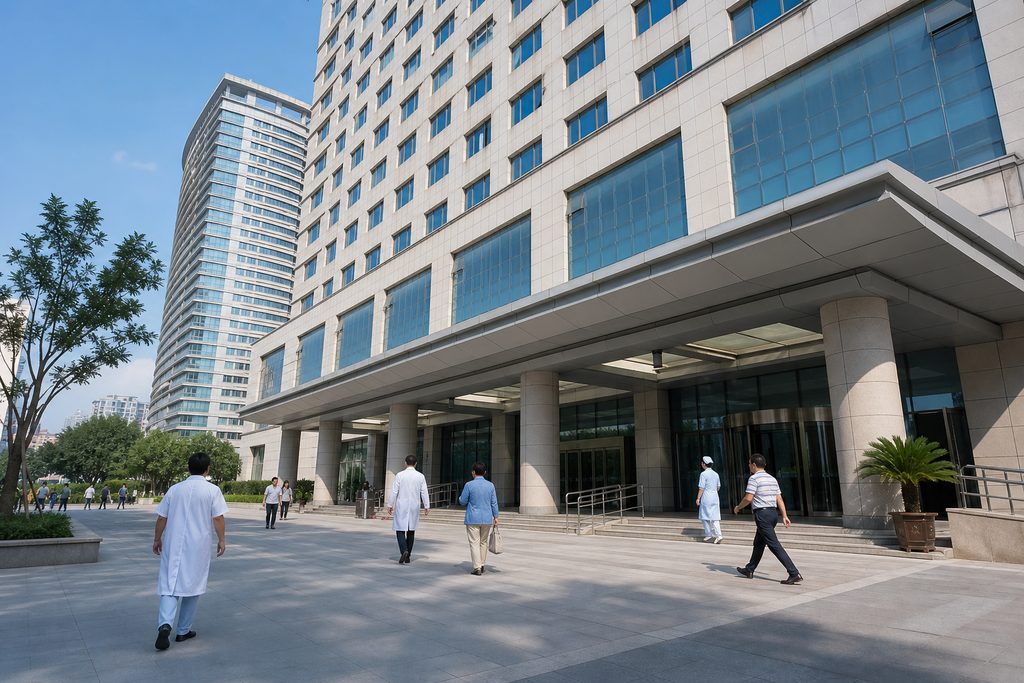
Shanxi Bethune Hospital — the primary campus operating under the Shanxi Province Hospital system — is not a small regional facility. It records over 2 million outpatient visits and more than 80,000 inpatient discharges per year. These are the kind of numbers you see at major academic medical centers. High volume matters in surgery. A team that performs 400 knee replacements annually has seen complications that a team doing 40 per year has only read about. That institutional memory translates into faster recognition of problems and better intraoperative decision-making.
The hospital’s oncology department manages a patient load that places it among the busiest in North China. Its orthopedic surgery division handles complex trauma cases referred from across Shanxi, Hebei, and Inner Mongolia. For a foreign patient considering is Shanxi Province Hospital good for cancer treatment, the honest answer is that it depends on the specific cancer and stage — but the department’s thoracic oncology program, in particular, benefits from Shanxi’s unfortunately high rates of esophageal and lung cancer, which has forced the surgical teams to develop deep subspecialty expertise. They see more of these cases in a month than some Western cancer centers see in a year.
Technology Investment Without the Brand Premium
Shanxi Bethune Hospital operates the Da Vinci surgical system for robotic-assisted procedures across urology, gynecology, and general surgery. Robotic surgery is not unique in China — many top hospitals have it. But the cost to the patient for a robotic prostatectomy in Taiyuan is substantially lower than the same procedure at a Beijing international hospital, where the brand premium of the institution gets baked into the price. The robot is the same. The surgical training pathways are comparable. The cost difference comes down to real estate, local labor economics, and institutional pricing strategy — not clinical quality.
The hospital has also invested heavily in its imaging infrastructure. 3.0T MRI, dual-source CT, PET-CT — the standard toolkit of a modern tertiary hospital is all there. For international patients who need diagnostic clarity before committing to a treatment path, this matters. You can get high-resolution imaging done in Taiyuan at a fraction of the cost of a private imaging center in London or Dubai, and the images are read by radiologists who have spent their careers looking at the specific disease patterns prevalent in the North China population.
What Medical Treatment in Taiyuan Actually Costs
The Shanxi Province Hospital international patient price structure follows the standard Chinese public hospital model: a base price for the procedure set by the provincial health authority, multiplied by a coefficient for the international or VIP ward. That coefficient typically ranges from 1.5x to 2x the standard rate. The result is still dramatically lower than what patients face in Western private systems.
Here is how the numbers compare for common procedures that bring international patients to China:
| Procedure | Taiyuan Public Hospital (International Ward) | Beijing Private International Hospital | USA Average (Uninsured) |
|---|---|---|---|
| Total Hip Replacement | $8,000 – $13,000 | $25,000 – $38,000 | $40,000 – $70,000 |
| Cardiac Bypass (CABG) | $10,000 – $16,000 | $28,000 – $42,000 | $120,000+ |
| Robotic Prostatectomy | $9,000 – $14,000 | $22,000 – $35,000 | $35,000 – $65,000 |
| Spinal Fusion (2-level lumbar) | $11,000 – $18,000 | $30,000 – $45,000 | $80,000 – $150,000 |
| Gastric Sleeve (Bariatric) | $5,000 – $8,000 | $14,000 – $22,000 | $15,000 – $30,000 |
All prices in USD. Ranges reflect variation by case complexity, implant choice, and length of stay. These are estimates — final quotes require a formal case assessment by the treating hospital. Prices do not include our coordination fees, travel, or accommodation.
When patients ask about the cost of surgery in Taiyuan China vs Beijing, the pattern is consistent: Taiyuan procedures in public hospital international wards run 40-60% below Beijing private international hospital prices for the same procedure code. The gap narrows somewhat if you compare Taiyuan international wards to Beijing public hospital international wards — but Beijing public hospital VIP wards are extremely difficult to access without a local coordinator, and their pricing has been rising steadily as demand from international patients increases.
What You Need to Know Before Going Alone
The clinical resources in Taiyuan are real. So are the barriers. Anyone telling you that how to access medical care in North China as a foreigner is straightforward has never tried to do it independently. Here is what you actually face:
- Registration systems operate entirely in Chinese. There is no English-language patient portal for Shanxi Province Hospital. The WeChat mini-program used for appointment booking requires a Chinese phone number and a Chinese ID number or a foreign passport that has already been registered in the hospital’s system — which requires an in-person visit. You cannot solve this from overseas. You need someone physically present at the hospital to open your file.
- Payment infrastructure is not built for international patients. Public hospital payment counters accept UnionPay cards, Alipay, and WeChat Pay. International Visa and Mastercard transactions fail more often than they succeed. Even when they work, daily transaction limits on foreign cards can prevent you from paying a surgery deposit in a single transaction. You need a local payment intermediary or a hospital international department that has set up alternative billing channels.
- Surgery cannot be pre-booked from abroad through the standard channel. This is the rule across Chinese public hospitals, not just in Taiyuan. A surgeon must examine you in person before scheduling an operation. The outpatient visit comes first. Only then can a surgery date be set. If you fly to Taiyuan hoping to have surgery the following week, you may find yourself waiting two or three weeks for a slot — or longer, if the surgeon you need is fully booked. The international department channel can compress this timeline, but it still requires coordination before you travel.
- Medical records must be translated into Chinese before any specialist will review them. This is not optional. A thoracic surgeon at Shanxi Bethune Hospital will not read your English-language CT report. Your imaging, pathology slides, and clinical summary all need professional medical translation — not Google Translate, which produces errors that can lead to misdiagnosis or surgical planning mistakes. We have seen cases where machine-translated records caused a surgeon to nearly decline a case because the translation made the patient’s condition appear inoperable.
How We Help You Navigate This
These barriers exist for structural reasons, not because anyone is trying to exclude foreign patients. Chinese public hospitals serve a domestic population of 1.4 billion people. Their systems are optimized for that reality. International patients are an edge case. We exist to handle that edge case.
Our process starts with your medical records. You send us what you have — imaging files, pathology reports, clinical summaries, medication lists. We arrange professional medical translation into Chinese. Then we approach the relevant department at Shanxi Province Hospital or another suitable institution in our 340+ hospital network. We do not walk in through the main registration hall. We go through the hospital’s international department or VIP coordination office, which has the authority to schedule consultations, reserve international ward beds, and arrange surgical slots on timelines that the standard outpatient channel cannot match.
Once a treatment plan is confirmed — including the procedure, the surgeon, the estimated length of stay, and the cost estimate — we provide the documentation you need for your S2 visa application. The hospital issues an invitation letter. Our team reviews your visa application package before you submit it to the Chinese embassy or consulate in your country.
When you land in Taiyuan, a bilingual medical companion meets you. This person handles registration, payment, prescription pickup, and navigation between departments. They sit with you during consultations and translate in real time. They are not clinicians, but they understand medical terminology in both languages and know how the hospital works — which window to go to, which form to fill out, which queue to stand in. In a hospital that sees 10,000+ outpatients daily, this kind of operational knowledge is the difference between a 45-minute visit and a six-hour ordeal.
After discharge, we remain involved through your recovery period. Follow-up imaging, remote consultations with your surgeon, medication adjustments — we coordinate these so you are not left trying to reach a Chinese hospital department from overseas with no one on the ground to help.
Frequently Asked Questions
Not through the standard public registration channel. A surgeon must examine you in person before scheduling. Through the hospital’s international department — which we access on your behalf — a tentative surgical window can be reserved once your translated records have been reviewed and the surgeon has confirmed the case is appropriate. This is not a guaranteed date, but it dramatically reduces the uncertainty of traveling without any scheduling commitment.
Shanxi Bethune Hospital is a tertiary Grade A hospital with full intensive care capabilities, 24-hour emergency surgical coverage, and a blood bank on site. It is equipped to handle intraoperative and postoperative complications. That said, medical error and adverse outcomes happen in every health system in the world. We strongly recommend that international patients carry medical travel insurance that covers complication management and, if necessary, medical evacuation. We can advise on insurance providers with China-compatible policies, but we do not sell insurance ourselves.
Shanxi Province Hospital requires prepayment for international patients — typically a deposit before admission, with the balance settled at discharge. Payment can be made via wire transfer to the hospital’s international account or, in some cases, through a local payment agent. The hospital provides detailed invoices and medical records suitable for insurance reimbursement. Whether your insurer reimburses you depends on your policy. Some international insurers have direct billing arrangements with private hospitals in Beijing and Shanghai but not with public hospitals in Taiyuan. We can help you understand what documentation you will receive, but we cannot guarantee your insurer’s reimbursement decision.
For the specific specialties where Shanxi Province Hospital has concentrated its resources — thoracic oncology, orthopedics, general surgery, and urology — the clinical outcomes are comparable to top-tier Beijing public hospitals. The surgeons train in the same national system, follow the same clinical guidelines, and in many cases have completed fellowships at Peking Union Medical College Hospital or other elite institutions. Where Beijing has an edge is in ultra-rare conditions that require supersubspecialized expertise and in certain pediatric subspecialties. For the procedures that bring most international patients to China — joint replacements, cardiac surgery, cancer resections, bariatric surgery — the clinical quality in Taiyuan is strong. The cost is lower. The tradeoff is that Taiyuan has fewer English-speaking amenities outside the hospital than Beijing does.
The international patient price at Chinese public hospitals reflects the cost of running a separate ward with lower patient-to-nurse ratios, private rooms, English-speaking staff coordinators, and dedicated surgical scheduling channels. It is not a surcharge for being foreign. It is the price of a different service tier. Chinese patients who choose the VIP or international ward pay the same multiplier. The base procedure cost is set by provincial health authorities and is the same for everyone. What changes is the ward fee, the nursing ratio, and the coordination overhead. You are paying for access infrastructure, not for clinical priority.
Your Next Step
Medical treatment in Taiyuan is not the right answer for every patient. But for those facing unaffordable quotes at home or wait times that their condition cannot tolerate, it belongs on the shortlist. The clinical resources are real. The cost advantage is substantial. The access barriers are surmountable — with the right coordination.
If you want to understand whether Shanxi Province Hospital or another institution in our network of 340+ top-ranked Chinese hospitals is appropriate for your specific case, start with a free consultation. Send us your medical records. We will review them, recommend hospitals and departments, and give you a clear picture of timelines and costs before you commit to anything. There is no pressure and no obligation. Request your free case assessment here.
For more medical information and treatment options in China, visit chinamedservices.com (China Medical Services).
