Medical Treatment in Zhengzhou China: Navigating the World’s Largest Hospital System
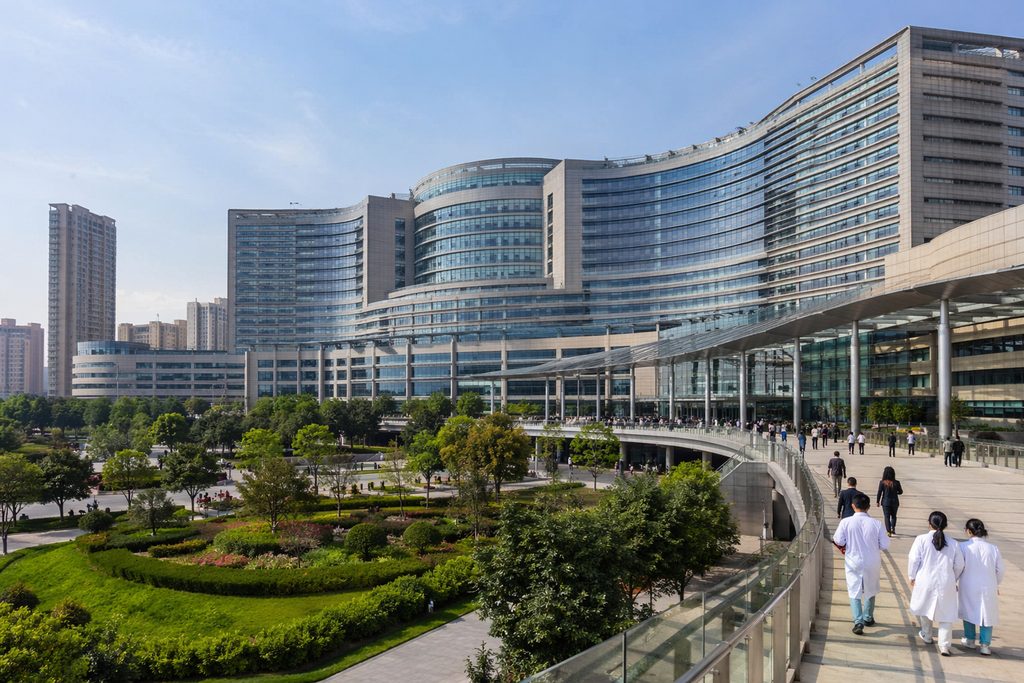
You have probably heard that seeking medical treatment in China means rolling the dice on quality. A gamble with your health. The data tells a completely different story, especially if you are looking at Zhengzhou. The city is home to the First Affiliated Hospital of Zhengzhou University. It is officially the largest hospital system on the planet. Over 10,000 beds. A patient volume that dwarfs entire Western healthcare networks. But sheer size is just a logistical marvel unless it translates to clinical excellence. And here is where the perception gap widens. This institution does not just treat a high volume of patients. Its specialists perform complex procedures—cardiac interventions, oncology resections, neurosurgery—at a frequency that creates a mastery effect. The challenge for an international patient is not finding expertise. It is navigating a system of this magnitude without getting lost in it. That is precisely where our team operates.
Key Takeaways
- The First Affiliated Hospital of Zhengzhou University operates over 10,000 beds, making it the single largest hospital entity globally, with surgical volumes that directly correlate to improved clinical outcomes.
- Targeted cancer therapies and complex cardiac surgeries in Zhengzhou cost 70–80% less than US benchmarks, without sacrificing the quality of the technology or the specialist’s technical repetition.
- The sheer scale creates a significant barrier: outpatient queues exceed 30,000 patients daily, and navigating registration, payment, and specialist access without a bilingual coordinator is structurally impossible for foreigners.
- Direct booking of a specific surgeon before arrival is not a standard outpatient function; securing a defined surgical slot requires navigating the hospital’s official International VIP channel, which operates on a different logistical track than the public queue.
The Problem: When the Best Care Feels Structurally Inaccessible
Waiting is dangerous. In publicly funded healthcare systems across Canada and the UK, the median wait time from specialist referral to treatment has stretched to 27.4 weeks. That is over half a year. For oncology patients, a delay of just four weeks can allow certain aggressive carcinomas to progress to a stage where curative resection is no longer viable. The anxiety is not just about the diagnosis. It is the helplessness of watching a calendar fill up while a pathology report sits on a desk. The alternative in Western private systems—immediate access—comes with a financial toxicity that often leaves families bankrupt. The American Medical Association has repeatedly documented that medical debt is the leading cause of personal bankruptcy in the United States. A single complex cardiac surgery can generate a bill exceeding $150,000. This is the impossible choice many patients face: wait dangerously long, or risk financial ruin.
Zhengzhou disrupts this binary. The city’s flagship hospital system has redefined throughput. They do not schedule one robotic-assisted prostatectomy per day. They schedule six. This is not assembly-line medicine. It is high-volume precision. The problem for an international patient is that the gateway to this efficiency is opaque. You cannot simply email the hospital and book a bed. The public registration system is a Mandarin-only, app-based ecosystem designed for domestic citizens with a national ID number. If you try to walk in alone, you will face a wall of noise. Literally. The outpatient hall processes the population of a small town every single morning. The expertise exists. The affordability exists. But the bridge between a foreign patient and a Zhengzhou specialist is not built by the hospital itself. It is built by coordinators who understand both the clinical landscape and the administrative architecture.
Who We Are
We are not a hospital. We do not employ surgeons, prescribe medication, or offer clinical diagnoses. We are your logistical architects. Our team bridges the gap between you and the immense clinical resources concentrated in China’s top-tier medical cities. We maintain a rigorously vetted database of over 340 top-ranked hospitals across 37 cities, representing the top 5% of China’s 35,000+ medical institutions as ranked by the Fudan University hospital rankings and JCI accreditation standards. For a patient considering medical treatment in Zhengzhou China, we function as your advance team: we translate your medical history into a format Chinese specialists can immediately act upon, we coordinate with the hospital’s International Department to secure a definitive appointment window, and we place a bilingual medical companion at your side from the moment you land. We do not sell access to a specific doctor. We sell the elimination of logistical chaos.
Why Zhengzhou Delivers Results That Rival Global Centers
It is easy to assume that a “largest hospital” title is a vanity metric. In Zhengzhou’s case, the scale is the clinical advantage. The First Affiliated Hospital of Zhengzhou University is not just one building. It is a sprawling medical campus integrating four major divisions—the main campus, the Eastern campus, the Southern campus, and the Huiji campus—with a unified clinical governance structure. This concentration creates a density of specialist opinion that is rare even in globally ranked institutions. A complex oncology case is not discussed by two specialists in a hallway. It is reviewed in a tumor board that may draw on the experience of clinicians who have seen ten times the annual caseload of a typical Western center. For the international patient asking “is Zhengzhou hospital good for foreigners,” the answer lies in the numbers. The hospital performs over 300,000 surgeries annually. Volume on that scale is not just a statistic. It is a predictor of complication rates. Studies published in The Lancet and BMJ consistently correlate high surgical volume with lower mortality across procedures ranging from esophagectomy to coronary artery bypass grafting.
Clinical Volume Drives Better Outcomes
Consider the math. A cardiac surgeon at a high-volume American center might perform 100 isolated coronary artery bypass grafting procedures a year. A senior surgeon at Zhengzhou’s cardiovascular division operates in an environment where the department handles thousands of cardiac cases annually. The muscle memory developed through this repetition is impossible to replicate in a low-volume setting. This is particularly critical in the context of the secondary keyword: cardiac surgery cost Zhengzhou China. A coronary artery bypass graft in the United States carries a sticker price between $70,000 and $200,000 depending on the complexity and the hospital’s chargemaster. In Zhengzhou, through the hospital’s official international VIP channel, that same procedure—using the same off-pump techniques and harvesting the same internal mammary artery—ranges from $12,000 to $20,000. The cost differential is not a reflection of lower standards. It reflects structural economic factors: lower physician labor costs, hospital-owned equipment without the middlemen of insurer negotiations, and a high-volume model that amortizes fixed costs across a massive patient base.
Oncology: Accessing the Best Cancer Hospital Zhengzhou Cost-Effectively
Cancer care is where speed and precision collide. The hospital’s oncology department is a designated national clinical research center. It participates in the same global clinical trials for immunotherapy and targeted agents that you would find at MD Anderson or Memorial Sloan Kettering. The difference is the price of the infusion chair. Chemotherapy regimens incorporating the latest PD-1 inhibitors can cost $10,000 to $15,000 per month in the US. In Zhengzhou, domestic manufacturing of these biologic agents and government price negotiation have driven the cost down by up to 70%. Patients searching for the best cancer hospital Zhengzhou cost are often surprised to find that a comprehensive treatment plan—including surgical resection, genomic sequencing, and adjuvant therapy—can be completed for less than the out-of-pocket maximum on a typical American insurance plan. The technology is equivalent. The PET-CT scanners are the same Siemens and GE models used in Europe. The radiotherapy linear accelerators deliver the same intensity-modulated beams. The variable is not the machine. It is the market.
Medical Tourism Packages: What Is Included
When researching Zhengzhou medical tourism packages prices, it is important to understand what you are actually buying. A legitimate coordination package is not a “surgery plus hotel” deal. It is a clinical logistics service. Packages typically range from $5,000 to $8,000 for full VIP coordination, separate from the hospital’s treatment charges which are paid directly to the hospital cashier. This coordination fee covers the pre-arrival case review by the department head, the scheduling of a specific surgical window, the preparation of a bilingual medical record summary, and the daily presence of a medical companion who handles every interaction with the hospital’s registration, laboratory, and billing systems. The hospital itself charges separately. A typical inpatient surgical package for a complex procedure might range from $15,000 to $25,000. That is a fraction of the global standard. And the 90-day rule applies: any consultation fee you pay for a remote video review is credited in full toward the on-the-ground coordination service if you decide to proceed. It is a one-time credit applied to the coordination fee, never to the hospital’s treatment charges.
What You Need to Know Before Going Alone
We want to be blunt here. Walking into the Zhengzhou world largest hospital international patients department without a local guide is not an adventure. It is a strategic error. The barriers are not malicious. They are structural. The Chinese public hospital system is designed to serve 1.4 billion citizens first. The international patient pathway exists, but it is a thin layer atop a massive domestic machine. Here is what you will face if you attempt to go it alone.
- Visa Requirements: You cannot enter China for medical treatment on a standard tourist visa. You require an S2 visa with a specific annotation indicating medical treatment purposes. The hospital must issue an official invitation letter confirming your treatment plan before the Chinese embassy or consulate will process the application. If your treatment requires a stay exceeding 180 days, you must apply for an S1 visa. A family member accompanying you also needs their own S2. The M visa is strictly for commercial trade activities and will be rejected if presented as a medical travel document.
- Payment Systems: The hospital’s public counters do not accept international credit cards. Visa and Mastercard are functionally useless at the outpatient cashier windows. You need a Chinese bank account linked to WeChat Pay or Alipay, or you need to carry a substantial amount of cash in Chinese Yuan. The International VIP department does process wire transfers and international insurance guarantees, but this channel must be established before you arrive. Walking in with a foreign debit card leaves you stranded.
- Medical Records and Coding: A pathology report written in English or French has zero legal standing in a Chinese hospital. The oncology department requires a formal translation of your biopsy slides, imaging reports, and prior treatment summaries. More importantly, they require the actual pathology glass slides and formalin-fixed paraffin-embedded tissue blocks for their own pathologists to re-examine. No reputable Chinese surgeon will operate based solely on a foreign radiology report. They will order their own confirmatory scans. This is not redundancy. It is diagnostic rigor.
How We Help You Navigate This
These barriers are real. But each one has a procedural solution. That is what we do. We do not make the hospital’s rules disappear. We make following those rules seamless for you. The process begins with a remote case evaluation. You send us your medical records. We handle the certified translation into clinical Mandarin, ensuring that the terminology aligns precisely with the diagnostic categories used by Chinese specialists. We then present your case through the hospital’s official International Department channel. This is the critical distinction. We do not ask you to queue in the public outpatient hall. We coordinate a defined appointment with a senior specialist who has agreed to review your specific case in advance. On the day of your consultation, a bilingual medical companion is with you. This person is not just a translator. They are a logistics operator. They hold your registration number. They know which floor the laboratory is on and which window processes the CT contrast dye payment. They navigate the physical space so you can focus entirely on the clinical conversation.
And here is the financial safety net embedded in our model. If you are still deciding whether to travel, you can start with a remote video consultation or a written second opinion from a Zhengzhou specialist. The cost for a written second opinion from a top-tier expert ranges from $300 to $500. A video consultation with a senior specialist ranges from $500 to $800. If, within 90 days of that consultation, you decide to move forward and travel to Zhengzhou for treatment, every dollar of that consultation fee is credited toward your on-the-ground coordination service. It is a one-time credit. It applies only to the coordination fee, not to hospital treatment charges. But it means your initial step of due diligence costs you nothing if you proceed. It also means we are aligned with your outcome. We only succeed if you receive the care you came for.
Frequently Asked Questions
You cannot book surgery directly as an overseas patient through the public website or a generic email. The standard pathway requires you to first have an in-person consultation where the surgeon evaluates you and agrees to operate. To secure a surgical slot before traveling, you must go through the hospital’s International VIP Department. This requires a coordinator to submit your translated medical records, imaging, and a preliminary treatment request. Once the department head reviews and accepts the case, a surgical window is reserved. Our team manages this entire pre-approval sequence. We do not guarantee a specific surgeon will be available on a specific Tuesday. We guarantee that if the case is accepted, a definitive surgical date is locked in before you book your flight.
The clinical expertise is world-class. The patient experience, without support, is not designed for foreigners. The hospital’s International Department has English-speaking staff, but their bandwidth is limited. They are not assigned to you full-time. The signs in the elevators, the instructions on the pharmacy bag, the dietary options in the inpatient ward—these are all Chinese by default. A foreigner without a bilingual companion will struggle with every administrative step, from loading money onto the hospital meal card to understanding the post-operative discharge instructions. With a companion, the clinical excellence becomes fully accessible. The quality of the surgery is the same whether you speak Mandarin or not. The quality of the journey depends entirely on the bridge you build.
This is the most important question to ask before any cross-border procedure. The surgeon in Zhengzhou will provide a detailed discharge summary in both Chinese and English, including operative notes, implant serial numbers, and a recommended follow-up imaging schedule. You must establish a relationship with a local physician in your home country who is willing to manage post-operative care. Chinese surgeons typically offer a secure messaging channel for follow-up questions, and remote video consultations can be arranged. However, the responsibility for managing late complications rests with your local healthcare system. We always advise patients to confirm that their home physician is aware of the travel plan and willing to handle routine follow-up before departing for Zhengzhou.
Your Next Step
The world’s largest hospital system is not a tourist destination. It is a high-throughput clinical engine that, when accessed correctly, delivers outcomes comparable to the best Western centers at a fraction of the cost and with no waiting list. The key is not just deciding to go. It is deciding to go with the right logistical infrastructure around you. We invite you to start with a conversation—not a commitment. Tell us about your diagnosis. We will tell you honestly whether Zhengzhou is the right fit, which specialist is most appropriate, and what the total financial picture looks like. No pressure. Just clarity.
To begin, visit our patient coordination page. We will walk you through the rest.
For more medical information and treatment options in China, visit chinamedservices.com (China Medical Services).
